
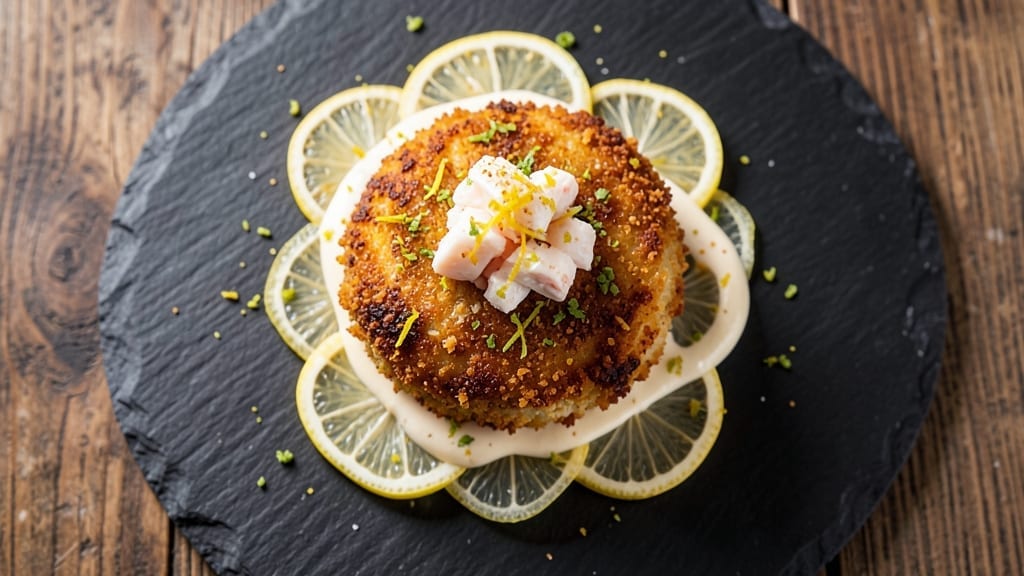
An 8-ounce crab cake recipe transforms delicate seafood into a restaurant-worthy dish with a golden crust and tender, juicy centers. The secret lies in balancing fresh crab (or high-quality imitation) with a sturdy binder—mayo, mustard, and breadcrumbs—to lock in moisture while creating crispy edges.
I’ve refined this technique over years, ensuring every bite delivers that luminescent crab heart flavor without falling apart.
What sets these crab cakes apart is the two-step cooking method: a quick sear in a hot pan followed by a gentle finish in the oven. This approach guarantees a crispy exterior while keeping the interior perfectly cooked.
For extra flavor, I incorporate Old Bay seasoning and a touch of lemon zest, which brightens the richness of the crab. The result? A crab cake that’s foolproof, whether you’re serving them at a summer gathering or a weeknight dinner.
Serve these crab cakes with a creamy remoulade or a zesty lemon aioli, and pair them with a crisp green salad or roasted vegetables. The golden-brown crust contrasts beautifully with the tender crab, making each bite irresistible.
Whether you’re using fresh lump crab or a high-quality imitation blend, this recipe delivers restaurant-quality results at home.
For dietary flexibility, swap traditional breadcrumbs for gluten-free options or use dairy-free mayo to keep the crab cakes just as crispy and flavorful. The key is patience—let the mixture rest before forming patties, and don’t rush the cooking process.
Trust me, the effort is worth it for crab cakes that wow every time.
Ingredients for 8 oz crab cake
Fresh crab, crispy crust, and golden sear—this is your ultimate crab cake lineup.
| Ingredient | Amount | Notes |
|---|---|---|
| Fresh Lump Crabmeat 🦀 | 1 ½ lb | Picked for luminescent crab hearts |
| Mayonnaise 🥛 | ½ cup | Dairy-free option available |
| Dijon Mustard 🍯 | 2 tbsp | For tangy depth |
| Panko Breadcrumbs 🍞 | ¾ cup | Light and crispy texture |
| Old Bay Seasoning 🌶️ | 1 tbsp | Signature flavor profile |
| Lemon Zest 🍋 | 1 tsp | Freshly grated for brightness |
| Large Eggs 🥚 | 1 whole | Beaten for binding |
| Extra-Virgin Olive Oil 🫒 | 1 tbsp | For pan searing |
| Butter 🧈 | 2 tbsp | Unsalted for flavor control |
| Fresh Chives 🌿 | 2 tbsp | Chopped for garnish |
| Sea Salt 🧂 | ½ tsp | Diamond Crystal preferred |
| Black Pepper 🌶️ | ¼ tsp | Freshly ground |
| Lemon Juice 🍋 | 1 tbsp | Freshly squeezed |
The crab is everything here. Fresh lump crab from the seafood counter delivers that luminescent crab heart flavor, but high-quality imitation blends like Great Value or Imitation Crabmeat from Walmart or Trader Joe’s work too. Look for bright color and firm texture—no slimy bits. The mayo binds it all together, so don’t skimp on quality. Hellmann’s or Duke’s are my go-tos, but dairy-free mayo like Just Mayo keeps it crispy. Panko breadcrumbs are non-negotiable for that signature crunch—Japanese-style is best, but any panko will work. Old Bay seasoning? That’s the magic—Penzeys sells the best, but regular grocery store stuff is fine.
No fresh crab? Frozen lump crab thaws beautifully, just drain it well. Short on mayo? Greek yogurt or avocado mash adds creaminess without dairy. The lemon zest can be swapped for 1/2 tsp lemon extract in a pinch, but fresh is always better. For a gluten-free twist, crushed gluten-free crackers or almond flour replace panko—just pulse them finely in a food processor. The eggs are crucial for binding, but if you’re avoiding them, 1 tbsp ground flaxseed + 3 tbsp water works as a binder (let it sit for 5 minutes first).
Crab cakes keep best in the fridge for 2 days if formed but not cooked—cover with plastic wrap. Once cooked, they reheat beautifully in a 350°F oven for 10 minutes to restore crispiness. For make-ahead prep, form and chill patties overnight—they’ll hold shape better. Freeze uncooked patties for 3 months on a tray, then transfer to a bag. The key to reheating? Paper towels under the pan soak up excess moisture, and a hot skillet gets that golden crust back every time.
Why You’ll Love This Recipe
- Same recipe, two vibes: toss two together for my lazy Tuesday lunch or make six for a crowd. They reheat beautifully (yes, even the next day) and pair with anything—lemon wedges, tartar sauce, or just straight-up buttery perfection.
- No-Fuss Assembly: I swear by these—just mix, shape, and pan-fry. The lump crab stays plump, the panko gives that perfect crunch without needing fancy techniques, and Old Bay ties everything together in two minutes flat.
- Taste Like a Seafood Feast: That creamy mayo-Dijon base with Old Bay? It’s the kind of flavor that makes you close your eyes. Honestly, the first bite hits like a fancy restaurant dish, but I’m making it in my kitchen.
- Weeknight or Dinner Party: Same recipe, two vibes: toss two together for my lazy Tuesday lunch or make six for a crowd. They reheat beautifully (yes, even the next day) and pair with anything—lemon wedges, tartar sauce, or just straight-up buttery perfection.
Step-by-step instructions for golden crust crab cakes
Here’s how to craft restaurant-quality crab cakes with that perfect golden crust and tender interior.
Prepare the Crab Mixture for Maximum Flavor
In a large mixing bowl, gently combine the 1.5 lb fresh lump crabmeat with the 0.5 cup mayonnaise and 2 tbsp Dijon mustard using a rubber spatula. The key here is to work gently—you want to preserve those delicate crab hearts while evenly distributing the binding ingredients. Add the 0.75 cup panko breadcrumbs, 1 tbsp Old Bay seasoning, 1 tsp lemon zest, 0.5 tsp sea salt, and 0.25 tsp black pepper to the mixture.
Next, stir in the 1 tbsp lemon juice and 1 whole large egg (beaten separately) until everything is thoroughly incorporated. You’ll notice the mixture becomes cohesive but still maintains some texture—this is perfect. If you’re using dairy-free mayonnaise, the texture might be slightly firmer, so add an extra 1 tbsp mayonnaise if needed to achieve the right consistency. The mixture should hold together when pressed gently between your fingers but not be overly dry.
Shape and Chill the Crab Cakes for Perfect Texture
Using a lightly oiled measuring cup or small scoop, portion the crab mixture into 8 equal portions, each weighing about 2 ounces (about 2 tablespoons per cake). Gently form each portion into a ½-inch thick patty, being careful not to overwork the mixture. I like to press them firmly but evenly to ensure they hold their shape when cooking. Place the formed crab cakes on a parchment-lined plate and cover with plastic wrap.
Refrigerate the crab cakes for at least 30 minutes (up to 2 hours works best). This chilling step is crucial—it allows the mixture to firm up slightly, making it easier to handle and preventing them from falling apart when you transfer them to the pan. The cold temperature also helps create that crispy exterior we’re after. Don’t skip this step, even if you’re eager to cook them immediately.
Create the Crispy Crust Using the Double-Fry Method
Heat a large skillet over medium heat and add 1 tbsp extra-virgin olive oil and 1 tbsp butter. Allow the butter to melt completely and the oil to shimmer (about 2 minutes). This is your signal that the pan is ready. Add the chilled crab cakes in a single layer, being careful not to overcrowd the pan. Cook for 2 minutes per side until they develop a light golden color—don’t walk away, as they can go from perfect to burnt in seconds.
Here’s where the magic happens: carefully transfer the crab cakes to a wire rack set over a baking sheet. Increase the heat to medium-high and add another 1 tbsp butter to the same skillet. Return the crab cakes to the pan and cook for another 1-2 minutes per side until they achieve a deep golden brown crust. The double-fry method ensures maximum crispiness while keeping the interior tender. You’ll know they’re done when the crust is firm to the touch and the edges are beautifully caramelized.
Garnish and Serve Immediately
Remove the crab cakes from the pan and place them on a serving platter. Immediately sprinkle with the 2 tbsp chopped fresh chives for a pop of color and freshness. The chives not only add visual appeal but also complement the briny crab flavor beautifully. Serve the crab cakes while they’re still piping hot—this is when they’re at their absolute best, with that perfect balance of crispy exterior and tender, juicy interior.
For an extra touch, I like to serve these with a lemon aioli or a simple tartar sauce on the side. The brightness of the lemon cuts through the richness of the crab and butter, creating a well-rounded flavor experience. Enjoy them with a crisp green salad or some buttery dinner rolls to soak up any extra sauce.
Pro Tips For Making 8 Oz Crab Cake
- CHILL THE CRABMEAT: Dump that fresh lump crab straight from the fridge into your mix, and you’re asking for a greasy, soupy disaster. Give it 10 minutes to warm up to room temperature first—this keeps the mayo from turning into a sad, oily puddle. (Yes, even if you’re impatient like me.)
- PRESS THE PANKO HARD: Skimping on pressure when forming the cakes means they’ll crumble like wet sand. Use your hands to squeeze the mixture firmly into the pan—think “compacted snowball,” not “loose dumpling.” The first 30 seconds of cooking will test whether you did this right.
- DON’T OVERMIX THE MAYO: Stir the mayo, mustard, and crab just until combined—about 12 strokes max. Overworking it turns the texture into a paste, and suddenly your crab cakes taste like they’re holding a grudge. Stop when it looks like a rough, uneven mash, not a smooth batter.
- COOK IN BATCHES: Crowd the pan, and you’ll steam the crab instead of sear it. Work in single layers with space between cakes—no touching, no excuses. If you’re frying, use a thermometer to nail 350°F; if pan-searing, go medium-high and resist the urge to flip too soon. (The first side needs 4 minutes minimum to build that crust.)
Common mistakes when making this dish
Overmixing the Mixture
I’ve seen so many crab cakes turn into sad, dense patties because someone got a little too enthusiastic with the mixing. The crab meat is delicate—overworking it breaks down the lumps and releases too much moisture, which makes your cakes soggy instead of crispy.
Use a rubber spatula and fold just until everything is combined. Think of it like gently folding in whipped cream: you want to preserve those beautiful crab hearts, not mash them into oblivion. 🦀
Skipping the Chill Time
This is a rookie mistake that ruins texture every time. If you skip the 30-minute chill in the fridge, your crab cakes will crumble when you try to flip them—no one wants a crab cake that falls apart like a house of cards.
The cold helps the mixture firm up so it holds its shape during cooking. Pro tip: If you’re in a rush, pop them in the freezer for 15 minutes instead. Just don’t skip this step entirely!
Using the Wrong Pan
A nonstick skillet might seem like the safe choice, but it won’t give you that perfect crispy crust. Cast iron or stainless steel is your best friend here—they conduct heat evenly and create that golden sear.
If you’re using nonstick, you’re missing out on the Maillard reaction that gives crab cakes their signature flavor. I swear by my Lodge cast iron skillet—it’s worth the investment for this dish alone. 🔥
Overcrowding the Pan
This is where most home cooks go wrong. If you pile too many crab cakes in the pan at once, they’ll steam instead of sear, leading to soggy bottoms and uneven cooking. Cook in batches—just 2-3 crab cakes at a time—so they have room to crisp up properly.
A crowded pan is the fastest way to turn golden perfection into a greasy mess. Trust me, patience here pays off.
Ignoring the Double-Fry Method
The double-fry technique is non-negotiable for that restaurant-quality crust. Many home cooks make the mistake of frying just once, which leaves the crab cakes looking pale and undercooked. The first fry gets them started, but the second fry at medium-high heat is what caramelizes the crust beautifully.
Without it, you’re missing out on the best part—the crispy, golden exterior that makes these crab cakes irresistible. 💛
Not Draining Excess Liquid
Fresh crab meat often comes with moisture, and if you don’t drain it properly, your mixture will be watery. Before mixing, spread the crab on a paper towel and pat it dry with another towel.
This step is especially important if you’re using frozen crab—thaw it first, then drain it well. Excess liquid in the mixture leads to soggy, crumbly crab cakes instead of the crispy, golden patties you’re after. Take the extra 5 minutes to drain it—your taste buds will thank you.
Nutrition facts
Frequently asked questions
Can I make these crab cakes without fresh crab?
High-quality imitation crab works perfectly—look for brands like Great Value or Trader Joe’s for the best texture. Just ensure it’s bright orange and firm, with no slimy bits. The recipe stays the same, but you might need an extra 1 tbsp mayonnaise to help bind the mixture since imitation crab is often more finely textured.
How do I keep my crab cakes from falling apart?
The key is the 30-minute chill time before cooking—this firms up the mixture so it holds together. Also, use a light hand when mixing to avoid breaking down the crab. For extra stability, add 1 tbsp ground flaxseed + 3 tbsp water (let it sit for 5 minutes) as a binder if you’re avoiding eggs. The double-fry method also helps create a sturdy crust.
Can I bake these instead of frying?
Yes, but you’ll lose that signature crispy crust. Preheat your oven to 400°F and bake for 12-15 minutes on a wire rack over a baking sheet. For extra crispiness, broil for 1-2 minutes at the end. To mimic frying, brush with melted butter before baking. The texture will be more cake-like than crispy, but still delicious!
What’s the best way to reheat leftovers?
Place crab cakes on a wire rack over a baking sheet and reheat at 350°F for 10 minutes to restore crispiness. For a quick fix, use a skillet over medium heat for 1-2 minutes per side with a paper towel underneath to absorb moisture. Never microwave—it turns them rubbery. Always reheat from room temperature for best results.
How do I make these gluten-free?
Swap panko breadcrumbs for gluten-free cracker crumbs or finely ground almond flour (pulse in a food processor). Use 1/4 cup gluten-free flour blend if needed to help bind the mixture. For extra crunch, toast the almond flour in the oven at 350°F for 5 minutes before using. The texture will be slightly different but still delicious!

- 8 Ounce Crab Cakes Recipe: Golden Crust With Luminescent Crab Hearts - October 12, 2026
- 1950’s Betty Crocker Banana Bread Recipe: Nostalgic Spice Swirls and Moist Crumb - October 12, 2026
- 2 Quart Homemade Ice Cream Recipe: Ultra Creamy Vanilla Bean Swirls - October 12, 2026