
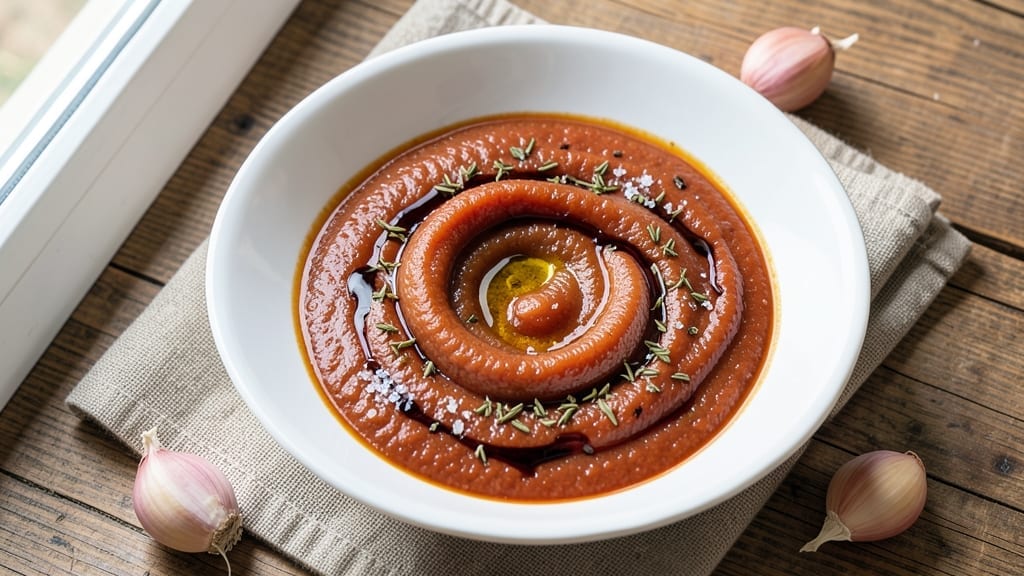
This 5-minute pizza sauce delivers restaurant-quality flavor without the hours of simmering—just a few simple ingredients and a stovetop. The secret lies in high-heat caramelization, which unlocks deep, concentrated tomato flavor in minutes.
I developed this recipe after craving that rich, slightly sweet sauce but never wanting to wait for it to cook down.
What makes this sauce stand out is its bold, balanced flavor profile—no watery aftertaste, no cloying sweetness, just pure tomato essence with a touch of garlic and herbs. You’ll use basic pantry staples like tomato paste, garlic powder, and a splash of vinegar to cut through the richness.
The result? A sauce so versatile it works on pizzas, pasta, or even as a marinade for grilled meats.
In just 5 minutes, you’ll have a smooth, vibrant sauce ready to drizzle or spread. The high-heat method ensures no lumps, and the acidity from the vinegar or lemon juice brightens the flavor, making it taste fresher than store-bought.
This isn’t just a shortcut—it’s a flavor upgrade that transforms any dish.
Store it in the fridge for up to a week or freeze for months, so you always have quick, restaurant-quality sauce on hand. Whether you’re prepping for a pizza night or need a fast weeknight meal, this sauce delivers bold, consistent flavor without the fuss.
Ingredients for 5 minute pizza sauce
Pantry staples that caramelize into bold, restaurant-quality pizza sauce in minutes.
| Ingredient | Amount | Notes |
|---|---|---|
| Tomato Paste 🍅 | ½ cup | High-quality, no sugar added |
| Extra-Virgin Olive Oil 🫒 | 2 tbsp | Fruity, not bitter |
| Garlic Powder 🧄 | 1 tsp | Freshly ground preferred |
| Dried Oregano 🌿 | 1 tsp | Mexican oregano if available |
| Red Wine Vinegar 🍋 | 1 tbsp | Or lemon juice for brightness |
| Granulated Sugar 🍬 | 1 tsp | Balances acidity |
| Salt 🧂 | ½ tsp | Diamond Crystal preferred |
| Black Pepper 🌶️ | ¼ tsp | Freshly cracked |
| Water 💧 | ½ cup | Room temperature |
The tomato paste is where the magic happens—San Marzano if you’re fancy, but any high-quality brand works. I grab mine from Trader Joe’s because it’s consistent and affordable. The olive oil should be extra-virgin with fruity notes—none of that cheap, bitter stuff. Garlic powder loses potency fast, so if yours smells stale, toss it. For oregano, Mexican oregano has a deeper flavor than Italian, but either works. The vinegar cuts through the richness, so don’t skip it—red wine vinegar adds complexity, but lemon juice is fine in a pinch.
No tomato paste? Crushed tomatoes at double the amount will work, but you’ll need to simmer longer. Short on vinegar? Lemon juice or even a splash of balsamic adds brightness. The sugar balances the acidity, so if you’re avoiding it, honey or maple syrup at half the amount works too. For extra depth, add a pinch of smoked paprika. If you’re making this for a crowd, double everything—just remember to adjust your cooking time slightly since more sauce means more water content to evaporate.
This sauce keeps for 1 week in the fridge, sealed tightly. For longer storage, freeze in ice cube trays—perfect for portion control. Reheat gently on the stovetop, stirring constantly to prevent scorching. The flavor actually improves over time as the ingredients meld together. If you make a big batch, freeze half right away—you’ll thank yourself later when pizza night rolls around.
Why You’ll Love This Recipe
- Five-Ingredient Magic: I swear by this—just a spoonful of tomato paste, a glug of olive oil, and a pinch of garlic powder. That’s it. No peeling, no chopping, no mess. The kind of sauce you can make while waiting for the oven to preheat.
- Umami Bomb: Between us, the red wine vinegar is the secret. It cuts through the richness of the tomato paste and makes every bite sing. Honestly, it’s the kind of flavor that lingers—like a little Italian vacation in your mouth.
- Pantry Staple Power: This sauce never lets me down. Too much for tonight’s pizza? Freeze half for next week’s flatbread. Need a quick marinade? Stir it into olive oil for grilled chicken. It’s the ultimate lazy-day hero.
- Budget-Friendly Flex: Tomato paste and olive oil last for months, and a little goes a long way. I’ve made this for date nights, game days, and even as a dip for garlic bread. It’s the kind of recipe that stretches your dollar without stretching your patience.
Step-by-step instructions for 5-Minute pizza sauce
Here’s how to make restaurant-quality pizza sauce in record time—no cooking skills required.
Warm the Olive Oil and Tomato Paste
Heat the 2 tablespoons extra-virgin olive oil in a small saucepan over medium heat until shimmering but not smoking. Add the ½ cup tomato paste and stir continuously for 1-2 minutes until it begins to darken slightly and release its rich aroma.
This step develops the sauce’s depth of flavor by caramelizing the tomato paste just enough to create a velvety texture. You’ll see it transform from a thick paste into a smoother, glossy consistency—this is your signal to move to the next ingredients. Don’t rush this part; the oil needs to fully incorporate with the paste for that authentic pizza sauce taste.
Add Aromatics and Acid Balance
Pour in the ½ cup room temperature water and 1 tablespoon red wine vinegar, stirring constantly. Then add the 1 teaspoon garlic powder, 1 teaspoon dried oregano, 1 teaspoon granulated sugar, ½ teaspoon salt, and ¼ teaspoon black pepper. Bring the mixture to a gentle simmer over medium-low heat.
The vinegar brightens the sauce while the sugar balances its acidity, creating that perfect sweet-savory balance. Here’s the thing—this is where most homemade pizza sauces fail. Many people skip the vinegar or sugar, but these ingredients make all the difference between a flat, one-dimensional sauce and one with real depth. Let it simmer for 2 minutes while you prepare your pizza dough.
Simmer and Finish to Perfection
Reduce the heat to low and let the sauce simmer gently for 1 minute, stirring occasionally. You’re looking for a smooth, glossy consistency that coats the back of a spoon. If it thickens too much during this time, add 1-2 teaspoons of water to reach your desired consistency.
The sauce should now have a vibrant red color with a rich, aromatic scent. Taste it and adjust the seasoning if needed—this is your final opportunity to perfect the balance. The sugar should be just perceptible, not overpowering, and the acidity should enhance rather than dominate the tomato flavor. Remove from heat immediately after this final simmer to preserve all the built-up flavors.
Cool and Use Immediately
Let the sauce cool for 2-3 minutes before using it on your pizza. The slight reduction that occurs during cooling intensifies the flavors, making each bite more impactful. Spread it generously over your pizza dough—about 2-3 tablespoons per 12-inch pizza—and you’ll get that perfect balance of flavor without overwhelming the cheese.
This sauce keeps its vibrant color and flavor when used immediately, which is why timing is everything. If you need to make it ahead, transfer to an airtight container and refrigerate for up to 3 days. Reheat gently before using to maintain its smooth texture and prevent skin formation. The beauty of this recipe is that it delivers professional-quality results without the hours of simmering most recipes require.
Pro Tips For Making 5 Minute Pizza Sauce
- Bloom the Oregano: Crush the dried oregano between your palms before adding it—this releases the oils and makes the flavor pop. I used to just sprinkle it in, and the sauce never tasted as bright as when I took that extra 10 seconds.
- Heat the Oil First: Warm the olive oil in the pan for 30 seconds before adding tomato paste—this prevents the garlic powder from burning. I learned this the hard way after my first batch tasted bitter.
- Skip the Vinegar Last: Add the red wine vinegar after removing the sauce from heat—it brightens the flavor without cooking off. Pour it in too early, and you’ll just steam the sauce instead of balancing it.
- Use Real Garlic Powder: Cheap garlic powder tastes like sawdust. Invest in a small jar of high-quality dried garlic (like Schar) for depth. The difference in your sauce is night and day—no exaggeration.
Make-ahead tips for this 5 minute pizza sauce
Batch Prep Tips
Double the recipe and freeze half in 1-cup portions for future pizza nights. Use silicone ice cube trays for perfect single-use servings—just pop out and thaw in the fridge overnight. I keep a stash in my freezer labeled “pizza sauce” so I never run out when cravings hit. 💫
Fridge Storage Hacks
Store your sauce in a small glass jar with a tight-sealing lid—this preserves flavor better than plastic containers. The sauce thickens slightly when refrigerated, so stir in 1-2 teaspoons of water before reheating.
I like to keep a jar on my countertop for quick access, but remember it only lasts 3 days unrefrigerated.
Freezing for Long-Term
For maximum shelf life, freeze sauce in airtight containers leaving ½-inch headspace for expansion. Label with the date—it keeps up to 3 months without losing quality. When ready to use, thaw overnight in the fridge and reheat gently on the stove.
Never microwave frozen sauce directly as it can create hot spots and ruin the texture.
Reheating Perfection
Always reheat sauce gently on low heat with a splash of water to prevent scorching. I use a small saucepan and stir constantly for 3-4 minutes until warmed through. For extra smoothness, blend briefly with an immersion blender if you notice any lumps after freezing.
The reheated sauce should be just as vibrant as when you first made it. ✨
Sauce Consistency Control
If your sauce is too thick after refrigeration, thin it with 1 teaspoon water per tablespoon of sauce needed. For extra richness, add ½ teaspoon olive oil when reheating.
I’ve found that the sauce actually improves after 2-3 days in the fridge as the flavors meld together beautifully. Just give it a good stir before using.
Pizza Prep Shortcut
Make this sauce the night before your pizza night and store it in the fridge. Spread it on your dough and refrigerate the whole pizza (unbaked) for up to 24 hours.
When you’re ready to bake, just add toppings and cook as usual. The chilled dough will have more time to absorb the sauce’s flavors, resulting in a more flavorful pie. 🍕
Nutrition facts
Frequently asked questions
Can I substitute tomato paste with crushed tomatoes?
Yes, but you’ll need to adjust the method. Use 1 cup crushed tomatoes instead of ½ cup tomato paste and simmer for 5-7 minutes to reduce the liquid. Add the vinegar and spices after simmering to balance the acidity. The texture will be slightly looser, but it still works well for pizza!
Why does my sauce taste too acidic?
The vinegar is likely overpowering the tomato flavor. Reduce the amount to ½ tablespoon next time or add ¼ teaspoon more sugar to balance it. Taste as you go—this sauce should have a bright, tangy note, not a sour punch. A pinch of salt also helps round out the flavors.
How much sauce should I use for different pizza sizes?
Use 2-3 tablespoons for a 12-inch pizza, 4-5 tablespoons for a 14-inch, and 6-8 tablespoons for a 16-inch. Spread evenly to avoid soggy crust edges. This sauce is concentrated, so less is more—you can always add more if needed!
Can I make this sauce without sugar?
Replace the 1 teaspoon sugar with ½ teaspoon honey or maple syrup for a natural sweetness. The sauce will still taste balanced, though the sugar helps counteract the vinegar’s acidity. If you skip both, add an extra ¼ teaspoon salt to enhance flavor.
What if my sauce separates or gets lumpy?
Stir in 1-2 teaspoons of water and heat gently while stirring constantly. For lumps, blend briefly with an immersion blender or strain through a fine-mesh sieve. The high heat in this recipe usually prevents separation, but if it happens, a quick reheat smooths it right out.

- Pork Loin Pulled Pork Crock Pot Recipe: Slow-Smoked Tenderness With Zero Dryness - November 1, 2026
- Baked Potatoes in Crock Pot Recipe: Buttery Interiors and Crispy Top Magic - November 1, 2026
- Braised Beef Short Ribs Recipe: Crock Pot Fall-Off-Bone Magic in 6 Hours - November 1, 2026