
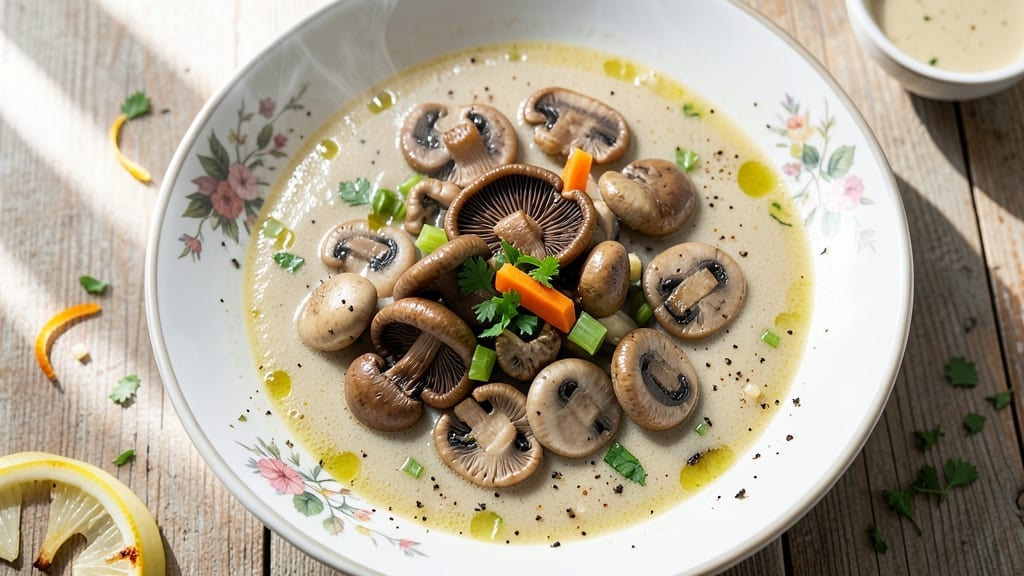
This 5 mushroom soup recipe delivers the kind of earthy, umami-rich depth that turns simple ingredients into a restaurant-worthy bowl. The secret lies in proper mushroom preparation—sautéing them until deeply caramelized unlocks their natural sweetness and creates a velvety broth that builds flavor with every sip.
What starts as a humble vegetable soup transforms into something complex and satisfying, perfect for chilly evenings or as a comforting starter.
The process is straightforward yet precise: mushrooms are cooked until golden, then simmered with aromatic vegetables and herbs to develop a rich, aromatic base. A touch of cream or butter at the end adds luxurious mouthfeel without overpowering the earthy mushroom notes.
This recipe balances simplicity with sophistication, making it ideal for both weeknight dinners and special occasions.
By the time you ladle this soup into bowls, you’ll have a dish that’s creamy yet light, packed with umami and aromatic depth. The mushrooms become tender yet retain their texture, while the broth is velvety and deeply flavorful.
Garnish with fresh herbs or a sprinkle of cheese to elevate it further—this is the kind of soup that lingers in your memory long after the last bite.
Whether you’re serving it as a starter or a hearty main, this 5 mushroom soup adapts beautifully to dietary preferences. For a vegetarian version, simply omit any meat-based broths and use vegetable stock instead. The technique remains the same, ensuring consistent results every time. Let’s get cooking!
Ingredients for 5 mushroom soup
Earthy mushrooms and aromatic vegetables transform into velvety umami-rich soup with just 14 ingredients.
| Ingredient | Amount | Notes |
|---|---|---|
| Mixed Mushrooms (cremini, shiitake, oyster, wild, button) 🍄 | 1 ½ lb | Sliced uniformly for even cooking |
| Yellow Onion 🧅 | 1 whole | Diced into 1/4-inch pieces |
| Garlic Cloves 🧄 | 4 cloves | Minced for aromatic depth |
| Carrots 🥕 | 3 medium | Peeled and cut into 1/4-inch slices |
| Celery Stalks 🌿 | 3 whole | Diced into 1/4-inch pieces |
| Vegetable Stock 💧 | 4 cups | Low-sodium preferred for balance |
| Whole Grain Mustard 🌶️ | 1 tbsp | Dijon or whole grain variety |
| Fresh Thyme 🌿 | 2 sprigs | Leaves only, finely chopped |
| Fresh Parsley 🌿 | ¼ cup | Chopped for garnish |
| Heavy Cream 🥛 | ½ cup | Full-fat for luxurious texture |
| Unsalted Butter 🧈 | 2 tbsp | European-style preferred |
| Diamond Crystal Kosher Salt 🧂 | 1 ½ tsp | Adjust to taste |
| Freshly Ground Black Pepper 🌶️ | ½ tsp | Cracked peppercorns preferred |
| Extra-Virgin Olive Oil 🫒 | 2 tbsp | High-quality for sautéing |
The mushroom selection determines depth of flavor—shiitake for earthiness, cremini for richness, and wild mushrooms for complexity. Whole Foods or specialty markets carry pre-mixed varieties, but a mix of fresh mushrooms from the grocery store’s produce section works beautifully. Look for firm, dry mushrooms with intact stems—avoid any with slimy spots. The celery should be crisp with no brown ends, and the carrots should snap when bent. For the stock, Pacific Foods or Imagine brands offer excellent low-sodium options that enhance rather than overpower the delicate mushroom flavors. Fresh thyme and parsley from the market’s herb section add bright herbal notes that cut through the richness of the mushrooms.
No shiitake? Oyster mushrooms provide a similar chewy texture and earthy flavor. Running short on vegetable stock? Mushroom broth intensifies the umami, or chicken stock works in a pinch (though it will shift the flavor profile). Substitute Greek yogurt for the heavy cream to reduce richness while maintaining creaminess. The mustard can be swapped for white wine vinegar at half the amount if you prefer tang over depth. For the butter, European-style melts more smoothly than American butter. If you can’t find Diamond Crystal salt, Morton kosher salt works equally well—just measure carefully as it’s slightly less dense.
Fresh mushrooms should be stored in a paper bag in the fridge for up to 5 days. The celery and carrots will keep for 1 week in the crisper drawer. For maximum flavor development, prepare the mushrooms and vegetables ahead and refrigerate until ready to sauté. The finished soup reheats beautifully—simmer gently on the stove for 3-5 minutes to restore its velvety texture. Portion into containers for 4-5 days of fridge storage or freeze for 3 months. Garnish with extra thyme or a sprinkle of Parmigiano-Reggiano before serving for an elegant touch.
Why You’ll Love This Recipe
- One-Pot Magic: I swear by this recipe—just toss everything into one pot, and let the mushrooms do the work. No fancy techniques, no extra dishes, and that earthy aroma fills the kitchen like a warm hug.
- Umami Bomb: Between the shiitake’s deep richness and the oyster mushrooms’ briny kick, this soup is ridiculously flavorful. The cremini and wild mushrooms add layers—it’s like a flavor party in your bowl, and I’m always the first to RSVP.
- Leftovers That Shine: Make a double batch on Sunday, and you’ve got lunch covered all week. The flavors actually get better the next day—add a splash of cream when reheating, and it’s like a cozy, restaurant-quality meal without the fuss.
- Budget Meal MVP: This soup stretches a few dollars so well—mixed mushrooms are cheaper than you’d think, and the onion, garlic, and veggies bulk it up perfectly. Honestly, it’s my go-to when I need a filling, nourishing meal that doesn’t break the bank.
Step-by-step instructions for 5 mushroom soup
Here’s how to develop deep umami richness through proper technique and layering.
Sauté the Aromatic Vegetables
Heat the 2 tablespoons extra-virgin olive oil in a large pot over medium heat. Add the 1 whole yellow onion, 3 medium carrots, and 3 whole celery stalks (all diced to ¼-inch pieces). Cook for 8-10 minutes until the vegetables soften and the onion becomes translucent.
This foundational step builds flavor through caramelization. Stir occasionally to prevent browning, but don’t rush – you want the vegetables to release their natural sweetness before adding the mushrooms. The mixture should smell distinctly sweet and earthy by the end of this stage.
Develop Umami with Mushrooms and Garlic
Add the 1.5 pounds mixed mushrooms (sliced uniformly) to the pot and cook for 10-12 minutes over medium-high heat, stirring frequently. The mushrooms should release their moisture and develop a rich brown color.
When the mushrooms are nearly done, add the 4 cloves minced garlic and continue cooking for another 1-2 minutes until fragrant. This step is critical for building depth – the mushrooms release their umami compounds when properly browned. If the pan becomes too dry, add 1 tablespoon vegetable stock to prevent burning.
Build the Broth Foundation
Pour in the 4 cups vegetable stock and scrape up any browned bits from the bottom of the pot. Add the 2 sprigs fresh thyme and bring the mixture to a gentle simmer. Reduce heat to low and let it cook uncovered for 20 minutes to allow flavors to meld.
This simmering phase develops complexity. The thyme will infuse its piney aroma while the vegetables continue to soften. You’ll notice the soup becoming more aromatic and developing a rich, earthy character. Taste occasionally – you want the broth to be flavorful but not yet fully seasoned.
Finish with Cream and Seasoning
Remove the thyme sprigs and stir in the 2 tablespoons unsalted butter and 1 tablespoon whole grain mustard. Cook for 2 minutes until the butter melts completely. Add the 0.5 cup heavy cream and simmer for another 3-4 minutes.
The cream adds luxurious body while the mustard provides subtle tang to balance the richness. Season with the 1.5 teaspoons kosher salt and 0.5 teaspoon freshly ground black pepper, adjusting to taste. The soup should be well-seasoned but not overly salty – remember the stock may already contain some sodium.
Garnish and Serve
Ladle the soup into bowls and garnish each serving with 1 tablespoon chopped fresh parsley. For an elegant presentation, you can also add a drizzle of extra-virgin olive oil or a sprinkle of cracked black pepper.
Serve immediately while hot. The soup should be velvety with distinct mushroom flavors and a well-balanced seasoning profile. Each spoonful should deliver layers of umami from the mushrooms, sweetness from the carrots, and earthy notes from the thyme and celery.
Pro Tips For Making 5 Mushroom Soup
- Sweat the Onions First: I learned this the hard way—if you toss onions in with raw mushrooms, you’ll end up with a watery, pale mess. Get a hot pan going, add 1 tablespoon of oil, and cook the diced yellow onion and celery (the “sofrito”) for 8-10 minutes until they’re soft and golden. That deepens the flavor before anything else hits the pan.
- Slice Shiitake and Oyster Lengthwise: Thinly slicing shiitake and oyster mushrooms lengthwise (not flat) keeps them intact while cooking—no mush. For wild mushrooms, tear them by hand instead of chopping; their texture holds up better. This ensures they stay recognizable in the soup and don’t turn to sludge.
- Deglaze with White Wine: After browning the mushrooms and veggies, resist the urge to splash in broth right away. Pour in ½ cup of dry white wine (or even a splash of apple cider vinegar) and let it simmer for 2 minutes. This pulls up all the stuck-on flavor bits—way better than just adding water.
- Add Carrots Late: Carrots take forever to soften, and if you cook them with the onions and celery from the start, they’ll turn to mush. Toss them in only after the mushrooms and aromatics have softened for 10 minutes. You’ll still get sweetness without the texture disaster.
Storing and reheating this dish
Fridge Storage Tips
Let your soup cool to room temperature for no more than 2 hours before refrigerating—this prevents bacterial growth. Transfer to airtight glass containers (I love Pyrex with snap-on lids) and store for up to 4-5 days. The flavors actually deepen overnight as the mushrooms and vegetables meld further. 🥣
Freezer Prep Guide
For long-term storage, portion the soup into quart-sized freezer bags (leave 1-inch headspace for expansion). Seal tightly, label with the date, and freeze for up to 3 months.
When ready to use, thaw overnight in the fridge or reheat directly from frozen using the stovetop method below. The texture remains velvety if handled gently. ❄️
Stovetop Reheating
This is my preferred method because it restores the soup’s natural creaminess. Pour the chilled soup into a pot and heat over medium-low heat for 10-15 minutes, stirring occasionally.
If it looks too thick, add 1-2 tablespoons vegetable stock or water. The goal is to reach 165°F internal temperature to ensure safety. 🔥
Microwave Shortcut
For quick reheating, transfer 1-2 servings to a microwave-safe bowl and cover loosely with a damp paper towel. Heat on 50% power for 2-3 minutes, stir, then continue in 30-second intervals until hot.
Avoid overcooking—mushroom soup can split if heated too aggressively. The texture should remain smooth, not grainy. ✨
Texture Restoration
If your reheated soup seems too thick, stir in 1 tablespoon heavy cream or butter to restore its velvety mouthfeel. For extra richness, add a splash of warm vegetable stock while reheating.
The key is gentle heat—high temperatures can break down the cream and make the soup watery. Always taste and adjust seasoning after reheating. 💫
Garnish Refresh
Before serving reheated soup, brighten it with fresh garnishes. A sprinkle of chopped parsley, a drizzle of extra-virgin olive oil, or a pinch of Parmigiano-Reggiano adds freshness and visual appeal.
For a smoky note, add a dash of smoked paprika or a few drops of hot sauce to taste. These finishing touches elevate even reheated soup to restaurant-quality. 🌟
Nutrition facts
Frequently asked questions
Can I use dried mushrooms instead of fresh?
Yes, but the flavor and texture will differ. Use ¼ cup dried mushrooms (about 1 ounce) rehydrated in 1 cup hot vegetable stock for 20 minutes. Drain well and add them to the pot after sautéing the vegetables. Dried mushrooms intensify umami but lack the meaty texture of fresh varieties.
How do I make this soup vegetarian?
Simply use vegetable stock instead of chicken or beef broth, and ensure all other ingredients are plant-based. The heavy cream can be replaced with Greek yogurt or coconut milk for a dairy-free option. The flavor profile remains rich and satisfying while keeping it fully vegetarian.
Why does my soup taste bitter?
Overcooking the mushrooms or using too much thyme can cause bitterness. For best results, sauté mushrooms until golden but not burnt (10-12 minutes over medium-high heat). Taste as you go—add a pinch of sugar or a splash of lemon juice to balance any bitterness if needed.
Can I make this soup in an Instant Pot?
Sauté the vegetables and mushrooms on Sauté mode for 10 minutes, then add the stock, thyme, and mustard. Pressure cook for 8 minutes on high, then quick-release. Finish with butter and cream on Sauté mode for 2 minutes. The Instant Pot preserves the creamy texture while speeding up the process.
What’s the best way to serve this soup?
Pair it with crusty sourdough bread or garlic toast for dipping. For a complete meal, serve with grilled chicken or seared scallops** on the side. The rich, earthy flavors complement lighter proteins beautifully—think of it as a cozy starter or hearty vegetarian main.

- 12 Bean Chili Recipe: Hearty Slow-Cooked Depth With 12 Legumes - October 17, 2026
- 5 Seed Bread Recipe: Nutty Crunch and Artisan Flavor in One Loaf - October 17, 2026
- 1 Lb Macaroni Salad Recipe: Bold, Crunchy, and Crowd-Pleasing - October 17, 2026