
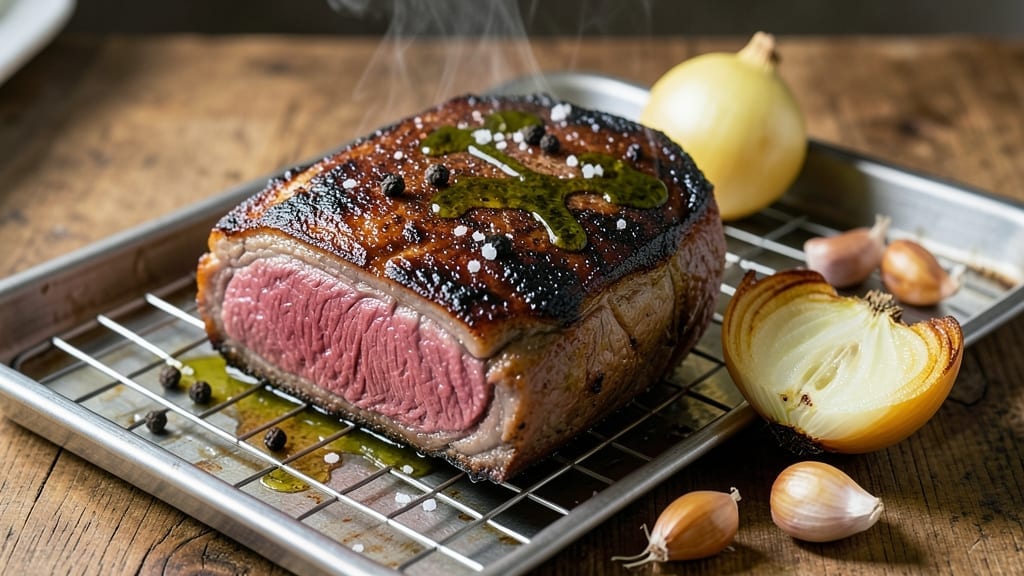
This 5-pound boneless ribeye roast recipe transforms your cut into a showstopping centerpiece when cooked low-and-slow with a high-heat sear—guaranteeing tender, melt-in-your-mouth beef with a deep, flavorful crust. The secret lies in precise temperature control and proper resting, which ensures every slice is juicy and full of beefy richness.
I’ve perfected this technique after years of testing, and the results consistently impress even the most critical guests.
This recipe focuses on low-temperature roasting to develop even doneness throughout the large cut, followed by a quick sear to create that coveted crusty bark. A simple dry rub of coarse salt and black pepper enhances the beef’s natural flavor without overpowering it.
The key is patience—rushing the process leads to uneven cooking or dry meat, but following these steps delivers restaurant-quality results every time.
By the time you slice into this roast, you’ll have perfectly tender beef with a dark, caramelized crust that adds depth to each bite. The internal temperature target of 125°F for medium-rare (or 130°F for medium) ensures the meat stays juicy, while the sear locks in those flavors.
This method also works beautifully for feeding a crowd, as the roast yields generous portions for 6–8 people.
Pair the roast with classic sides like garlic mashed potatoes, roasted vegetables, or a crisp green salad to round out the meal. The leftovers reheat well for sandwiches or tacos, making this recipe both impressive for dinner parties and practical for meal prep.
Let’s get started on creating your next standout main course.
Ingredients for 5 pound boneless ribeye roast
Precision-cut beef and aromatic herbs combine for a restaurant-worthy roast with perfect crust and melt-in-your-mouth tenderness.
| Ingredient | Amount | Notes |
|---|---|---|
| Boneless Ribeye Roast 🥩 | 5 lb | Center-cut preferred, room temperature before cooking |
| Kosher Salt 🧂 | 1 ½ tbsp | Diamond Crystal preferred, coarse grain |
| Freshly Ground Black Pepper 🌶️ | 1 ½ tbsp | Cracked peppercorns for optimal freshness |
| Extra-Virgin Olive Oil 🫒 | 2 tbsp | For searing, high smoke point preferred |
| Yellow Onion 🧅 | 1 whole | Large, sliced for optional pan sauce |
| Garlic Cloves 🧄 | 8 cloves | Smoked or roasted for depth |
| Fresh Rosemary 🌿 | ½ cup | Chopped, sprigs for garnish |
| Fresh Thyme 🌿 | ¼ cup | Leaves only, stems removed |
| Unsalted Butter 🧈 | ½ cup | Cold, cubed for basting |
| Beef Tallow or Duck Fat 🧈 | ¼ cup | For basting, optional but recommended |
| Red Wine 🍷 | 1 cup | Bold dry red, like Cabernet Sauvignon |
| Beef Stock 🥫 | 1 cup | High-quality, homemade preferred |
| Cornstarch 🌾 | 1 tbsp | For thickening optional pan sauce |
The 5-pound boneless ribeye roast is the star—center-cut ensures maximum tenderness, and room temperature prep prevents uneven cooking. Source from a reputable butcher like D’Artagnan or your local high-end grocer; look for bright red color and good marbling. If buying whole, trim excess fat to 1/4-inch thickness for even searing. The Kosher salt should be coarse-grained (Diamond Crystal is ideal) to create that coveted crust without dissolving into the meat. Freshly cracked black pepper adds depth, while the extra-virgin olive oil (look for California or Italian varieties) provides the high smoke point needed for searing.
No red wine? Substitute with beef stock and a splash of balsamic vinegar—it mimics the acidity and depth. Swap the fresh rosemary and thyme for 1 tbsp each of dried herbs, but toast them first in a dry pan for 30 seconds to intensify flavor. The beef tallow or duck fat can be replaced with additional butter or ghee, though it adds a richer, more authentic flavor. For the pan sauce, if cornstarch isn’t available, a slurry of 1 tbsp flour and 1 tbsp cold water works just as well. The onion and garlic are optional but recommended—they form the base for a luscious sauce that elevates the dish from good to extraordinary.
Prep the roast 1 hour before cooking to bring it to room temperature; this ensures even doneness. Store any unused fresh herbs in a sealed container with a damp paper towel for up to 5 days. The beef stock keeps in the fridge for 4-5 days** or frozen for 6 months. Leftover roast reheats beautifully—wrap tightly in foil and bake at 275°F for 20 minutes or until internal temp reaches 135°F. For meal prep, slice against the grain and store portions in airtight containers for 3-4 days; freeze for up to 3 months.
Why You’ll Love This Recipe
- Foolproof Timing: I swear by this 30-minute prep, 2-hour cook method—set it and forget it. The ribeye stays juicy while you sip wine or fold laundry, no hovering required.
- Rich & Simple: Just salt, pepper, and olive oil? Honestly, that’s all it takes. The ribeye’s natural fat renders into pure flavor, and the caramelized onion edges turn it into something restaurant-worthy.
- Leftovers That Shine: Slice it thin for sandwiches or cube it into salads—it’s that versatile. My kids beg for it cold the next day, and I don’t even pretend to judge.
- Big Roast, Small Effort: One pan, five pounds of meat, zero fuss. Between us, this is my go-to for game days or lazy Sundays—feeds a crowd without the stress of carving bones.
Step-by-step instructions for 5-Pound boneless ribeye roast
A perfect ribeye roast requires precision in timing and technique. Here’s how to achieve a low-temperature masterpiece with a flawless crust.
Prepare and Season the Roast
Remove the 5 lb boneless ribeye roast from the refrigerator and pat it dry completely with paper towels. Moisture is the enemy of a good crust, so take your time here—get every surface thoroughly dry. Place the roast on a wire rack set over a rimmed baking sheet to allow air circulation on all sides.
In a small bowl, combine the 1.5 tbsp kosher salt and 1.5 tbsp freshly ground black pepper. Rub this mixture evenly over the entire surface of the roast, pressing firmly so the seasoning adheres. Let the seasoned roast sit at room temperature for 1 hour before cooking. This step ensures even cooking and maximum flavor penetration.
Sear the Roast for Maximum Flavor
Heat a heavy oven-safe skillet over high heat until very hot. Add the 2 tbsp extra-virgin olive oil and swirl to coat the bottom evenly. Place the roast in the skillet, fat-side down, and sear for 3-4 minutes until a deep golden-brown crust forms. Flip the roast and sear the other side for another 3-4 minutes.
Remove the skillet from the heat and transfer it to a 400°F preheated oven. The residual heat will help carry the sear through during the initial cooking phase. This searing step creates a flavorful crust that locks in juices during the long, slow cook.
Cook Low and Slow to Perfection
Transfer the skillet with the roast to the oven and reduce the temperature to 275°F. Cook for 2 hours and 30 minutes, or until the internal temperature reaches 120°F on a meat thermometer inserted into the thickest part of the roast. This low-temperature approach ensures tender, even cooking throughout the entire roast.
During the last 30 minutes of cooking, prepare the basting mixture by melting the 0.5 cup unsalted butter and 0.25 cup beef tallow or duck fat together in a small saucepan over low heat. Brush this mixture generously over the roast every 15 minutes to promote moisture retention and enhance crust development.
Rest and Develop the Crust
Once the roast reaches 120°F, remove it from the oven and increase the temperature to 450°F. Return the roast to the oven and cook for an additional 15-20 minutes until the internal temperature reaches 130-135°F and the crust is deeply browned and crispy. This final high-temperature phase creates the coveted bark while maintaining perfect doneness.
Transfer the roast to a cutting board and let it rest for 20-30 minutes before slicing. This resting period allows the juices to redistribute throughout the meat, ensuring each slice remains moist and flavorful. Tent loosely with foil to keep warm during resting.
Prepare Optional Pan Sauce
While the roast rests, place the skillet with the rendered drippings over medium heat. Add the sliced 1 whole yellow onion and cook for 5 minutes until softened. Add the 8 cloves garlic cloves and cook for an additional 1 minute until fragrant.
Deglaze the skillet with the 1 cup red wine, scraping up any browned bits from the bottom. Simmer until the wine reduces by half, then add the 1 cup beef stock. In a small bowl, whisk together the 1 tbsp cornstarch with 2 tablespoons of cold water, then stir this slurry into the sauce. Cook for 2-3 minutes until the sauce thickens to your desired consistency. Strain if you prefer a smooth sauce, or leave it slightly chunky for texture.
Pro Tips For Making 5 Pound Boneless Ribeye Roast
- SEAR BEFORE SALTING: I learned this the hard way—salting a dry roast before searing just makes it steam instead of brown. Pat that ribeye thoroughly with paper towels, hit it with a light coat of olive oil, then sear hard on all sides for 3-4 minutes per side before adding salt. That crust? Non-negotiable for flavor.
- USE A MEAT THERMOMETER: Ribeye’s tricky—it’s easy to overcook a 5-pound roast by eyeballing it. Aim for 125°F internal temp for medium-rare (yes, it’ll rise to 130°F while resting). I used to pull it too early, then fight with a dry slice. Trust the thermometer, not the clock.
- SALT THE ONIONS LAST: Slicing onions early? They’ll turn to mush in their own water. Keep them whole until you’re ready to sear, then slice them just before adding to the pan. A pinch of salt right after slicing keeps them crisp—no sad, soggy bottoms here.
- REST IT COVERED: I know, I know—you want to cut into that roast immediately. But tent it with foil and let it sit for 10-15 minutes before slicing. This keeps the juices locked in, not pooling on your cutting board. (Yes, even if you’re impatient like me.)
Troubleshooting this recipe
Uneven Cooking
If your roast has cold spots or overcooked edges, the issue is usually uneven heat distribution. A 5 lb roast needs proper airflow—place it on a wire rack over a baking sheet to prevent steam buildup.
I’ve found that rotating the roast halfway (after 1 hour) helps distribute heat evenly. Also, ensure your oven is calibrated: use an oven thermometer to confirm it’s actually at 275°F—many ovens run 25°F hotter or colder than set. 🌡️
Dry, Tough Meat
Overcooking is the #1 cause of dry ribeye. Never exceed 135°F internal temp for medium—beef continues cooking after removal from heat. If your roast feels tough, it’s likely been cooked past 140°F.
Use a meat thermometer (I recommend ThermoWorks Smoke) for accuracy. For extra moisture, baste every 15 minutes with melted butter and beef tallow during the low-and-slow phase. 💡
Weak Crust Development
A pale, thin crust means insufficient searing or high-heat finishing. For the sear, use a heavy cast-iron skillet (like Lodge) and high heat until oil shimmers. After the low-temp cook, increase oven to 450°F for the final 15-20 minutes—this caramelizes sugars for that deep bark.
If your crust still lacks color, brush with extra olive oil before the high-heat phase. 🔥
Temperature Fluctuations
Oven temperature swings (common in older models) can ruin your roast. If your internal temp jumps unpredictably, try these fixes: Place a baking stone on the lower rack to stabilize heat, or use the convection setting (if available) for more even circulation.
For extreme cases, preheat your oven for 30 minutes before cooking. I’ve also had success with two thermometers—one in the oven, one monitoring the roast. ⚡
Slicing Issues
If slices fall apart or look stringy, the roast was likely overcooked or under-rested. Always rest for 20-30 minutes—this lets juices redistribute. For clean slices, cut against the grain using a sharp carving knife (I use Dexter-Russell 12-inch).
If the meat still resists, it may need 5 more minutes of resting. Never slice into a hot roast—wait until it’s completely cooled to room temp. ✨
Nutrition facts
Frequently asked questions
Can I cook this 5-pound ribeye roast in a slow cooker?
While possible, I don’t recommend it for this recipe. Slow cookers struggle with precise temperature control and can’t achieve the high-heat sear needed for crust development. For best results, stick to the oven method—it gives you the low-and-slow cook followed by the high-heat finish that creates that perfect crust. If you’re determined to try it, use a meat thermometer and cook on low for 6-8 hours until reaching 125°F, then finish with a quick broil.
How far in advance can I prepare the seasoning?
You can mix the salt and pepper rub up to 2 days ahead and store it in an airtight container. For best flavor, use freshly ground black pepper—pre-ground loses potency quickly. The roast itself should only sit at room temperature for 1 hour before cooking to ensure even doneness. Never season the meat more than 4 hours ahead as it can draw out too much moisture.
What’s the best way to reheat leftovers?
For maximum tenderness, reheat sliced leftovers in a 350°F oven for 15-20 minutes until reaching 135°F internal temperature. Wrap tightly in foil to prevent drying. Avoid microwaving—it creates a rubbery texture. For sandwiches, heat the meat separately from the bread to maintain moisture. Leftovers keep well for 3-4 days refrigerated or 3 months frozen.
Should I trim all the fat from my ribeye roast?
No—leave about 1/4-inch of fat on the roast. The fat renders during cooking, basting the meat and creating flavorful drippings for your pan sauce. For a 5 lb roast, you’ll likely have 1-2 lbs of fat total. If your roast has excessive fat (>1/2-inch), trim it down to 1/4-inch for even cooking. The fat also contributes to that beautiful crust development.
Can I substitute another cut of beef?
This method works best with ribeye, but you can adapt it for strip loin or New York strip. Avoid leaner cuts like sirloin—they dry out more easily. For prime-grade beef, reduce cooking time by 10-15 minutes as it’s more tender. If using choice-grade, increase time slightly. Never substitute with ground beef or chuck roast—they have different fat distributions and cooking requirements.

- 12 Bean Chili Recipe: Hearty Slow-Cooked Depth With 12 Legumes - October 17, 2026
- 5 Seed Bread Recipe: Nutty Crunch and Artisan Flavor in One Loaf - October 17, 2026
- 1 Lb Macaroni Salad Recipe: Bold, Crunchy, and Crowd-Pleasing - October 17, 2026