
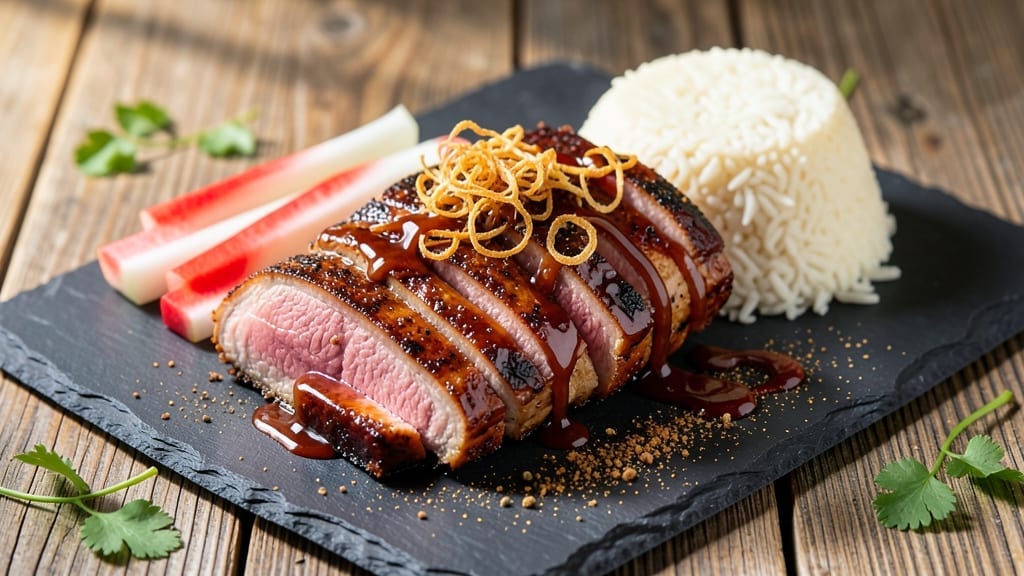
A five-spice pork tenderloin transforms simple pork into a fragrant masterpiece with just five aromatic spices—clove, cinnamon, star anise, fennel, and Szechuan peppercorn. 🌟 This recipe delivers a tender, juicy core with a crackling crust that locks in every layer of flavor, proving you don’t need hours to create restaurant-worthy results.
After years of perfecting this technique at The Smoky Pig, I’ve simplified it for home cooks while keeping the soul of the dish intact.
The secret lies in the marinade, where the five-spice blend infuses the pork overnight, tenderizing it while building depth. A quick sear in a hot pan creates that coveted crust, and a finish in the oven ensures the center stays juicy and perfectly cooked—no dry, overworked meat here.
The spices work together like an orchestra: cinnamon adds warmth, star anise brings licorice notes, and Szechuan peppercorn delivers a subtle tingling heat that lingers.
By the time you slice into this dish, you’ll find a tender interior with a crust that shatters like glass, all wrapped in the intoxicating aroma of the five-spice blend.
It’s the kind of meal that makes guests ask for seconds while you bask in the pride of creating something this elegant with minimal effort. Serve with a drizzle of hoisin glaze and steamed jasmine rice for the full experience.
This recipe scales beautifully—whether you’re cooking for two or a crowd—and the leftovers reheat just as well as the first slice. The five-spice crust keeps its texture even after reheating, making it ideal for meal prep.
Trust me on this: once you taste the difference between this and store-bought pork, you’ll never go back.
Ingredients for 5 spice pork tenderloin
Five aromatic spices plus pork—this is your shortcut to restaurant-quality flavor.
| Ingredient | Amount | Notes |
|---|---|---|
| Pork Tenderloin 🍖 | 1 ½ lb | Center-cut, trimmed of fat |
| Cloves 🌿 | 4 whole | Whole, lightly crushed |
| Ground Cinnamon 🌶️ | 1 tbsp | Freshly ground preferred |
| Star Anise Pods 🌿 | 2 whole | Crushed lightly with mortar |
| Fennel Seeds 🌾 | 1 tbsp | Toasted for deeper flavor |
| Szechuan Peppercorns 🌶️ | 1 tsp | Crushed for tingling heat |
| Hoisin Sauce 🍶 | 2 tbsp | For marinade and finishing |
| Extra-Virgin Olive Oil 🫒 | 2 tbsp | For crust and marinade |
| Brown Sugar 🍚 | 1 tbsp | Lightly packed |
| Fresh Ginger 🌿 | 1 tbsp | Finely grated |
| Garlic Cloves 🧄 | 4 cloves | Minced for marinade |
| Jasmine Rice 🍚 | 1 ½ cups | Uncooked, for serving |
| Kosher Salt 🧂 | 1 ½ tsp | For seasoning |
| Black Pepper 🌶️ | ½ tsp | Freshly ground |
The pork tenderloin needs to be center-cut and trimmed of all fat—that’s non-negotiable for even cooking. Whole Foods or your butcher will have the best quality, but any grocery store’s pork tenderloin works if it’s fresh. Look for a piece that’s firm to the touch with a vibrant pink color—no grayish spots. The spices are the soul of this dish, so toast your whole spices (fennel seeds, star anise) in a dry pan for 30 seconds before grinding. This wakes up their flavors. Szechuan peppercorns are the tricky one—crush them lightly so you get that signature tingling heat without overpowering. I always buy mine at Penzeys or an Asian market if I can’t find them at the regular grocery store.
No Szechuan peppercorns? Substitute with a pinch of cayenne plus a dash of black pepper—it won’t be identical, but you’ll still get that warmth. Fresh ginger is ideal, but substitute with 1 tsp ground ginger if needed. The hoisin sauce can be swapped for soy sauce plus a touch of honey, though you’ll lose some depth. For the crust, I like to use a mix of brown sugar and hoisin—it caramelizes beautifully. If you’re prepping ahead, marinate the pork overnight (covered) in the fridge, but don’t exceed 24 hours or the meat gets mushy. The garlic can be pre-minced and stored in an airtight container for up to a week.
This pork reheats like a dream—wrap tightly in foil and bake at 325°F for 15-20 minutes. The crust stays crispy, and the center remains juicy. Store leftovers in the fridge for 3-4 days or freeze for up to 3 months. For meal prep, slice the pork and portion it with rice in containers—it’s perfect for lunches. The spices keep their punch if stored in a cool, dark place, but once opened, use them within 6 months. Trust me, the aroma alone will make your kitchen smell like a Chinese restaurant.
Why You’ll Love This Recipe
- No Spice Overload: I swear by this blend—just a pinch of cinnamon, crushed cloves, and star anise (yes, those whole pods steep in the liquid) for depth without tasting like a holiday pie. The fennel seeds add a whisper of licorice warmth that makes it feel special, not complicated.
- One-Pan Magic: Honestly, this is my lazy-day win. Sear the pork, toss in the spices with a splash of broth, and let the oven do the work—no flipping, no basting, no stress. Twenty minutes later, you’ve got dinner that tastes like you spent hours.
- Leftovers That Last: Between us, I make this twice a month because the flavor only gets better after a night in the fridge. Slice it thin for sandwiches, cube it into fried rice, or reheat it in a skillet with a splash of soy sauce—it’s that versatile.
- Budget-Friendly Feast: Pork tenderloin is lean but filling, and these spices cost pennies. A single tenderloin feeds four, and the aromatics stretch across multiple meals. That’s dinner covered for days without breaking the bank.
Step-by-step instructions for 5-Spice pork tenderloin
Here’s how to create a fragrant, perfectly balanced pork tenderloin with a crispy exterior and juicy interior.
👨🍳 Step 1: Prepare the Five-Spice Rub
In a small bowl, combine the 1 tbsp ground cinnamon, 1 tbsp toasted fennel seeds, 1 tsp crushed Szechuan peppercorns, 4 lightly crushed whole cloves, and 2 lightly crushed whole star anise pods. This aromatic blend is the heart of our flavor profile—it’s what gives this dish its signature warmth and complexity.
I like to crush the whole spices lightly with a mortar and pestle to release their oils without turning them into powder. Add 1 tbsp brown sugar and 1.5 tsp kosher salt to the spice mixture and stir well. The sugar helps caramelize during cooking, creating that beautiful crust we’re after. Store any extra rub in an airtight container for future use.
🍳 Step 2: Marinate the Pork Tenderloin
In a separate bowl, whisk together 2 tbsp hoisin sauce, 2 tbsp extra-virgin olive oil, 1 tbsp finely grated fresh ginger, and 4 minced garlic cloves. This marinade won’t just flavor the meat—it’ll help tenderize it slightly and create a glossy finish.
Pat the 1.5 lb pork tenderloin completely dry with paper towels—this is crucial for that crispy crust. Rub half of the five-spice mixture all over the pork, pressing it into the surface. Then pour the marinade over the pork and let it sit at room temperature for 15 minutes while you prepare the rest of your ingredients. Don’t skip this step; room temperature meat cooks more evenly.
🔥 Step 3: Sear the Pork for Maximum Flavor
Heat a large skillet over medium-high heat until it’s smoking hot. Add the pork tenderloin and sear on all sides for 2-3 minutes per side until it develops a deep golden-brown crust. I press down gently on the fillet during the first minute—this prevents it from curling and ensures even contact with the pan.
Remove the pork from the skillet and let it rest on a wire rack for 5 minutes while you finish building the crust. The residual heat will continue cooking the outer layer, and the rack allows air to circulate, preventing sogginess. While it rests, sprinkle the remaining five-spice rub evenly over the seared surface.
🔥 Step 4: Roast to Perfect Doneness
Preheat your oven to 400°F. Place the pork tenderloin on a baking sheet lined with parchment paper, cut-side down. Roast for 15-20 minutes until the internal temperature reaches 145°F when measured with a meat thermometer. This is the sweet spot for juicy, tender pork that’s safe to eat.
I know it seems like a short time, but pork tenderloin cooks quickly and stays moist even when slightly underdone. The crust should be dark and crispy, with a beautiful caramelized sheen from the hoisin and brown sugar. If you’re worried about doneness, remember that pork continues cooking slightly after you remove it from the oven.
⏰ Step 5: Rest and Serve with Jasmine Rice
Transfer the pork to a cutting board and let it rest for 10 minutes before slicing. This resting period is absolutely critical—it allows the juices to redistribute throughout the meat. If you skip this step, you’ll end up with dry slices that lose all their precious moisture.
While the pork rests, cook the 1.5 cups jasmine rice according to package instructions. For perfect rice, use a 1:2 ratio of rice to water and bring it to a boil before reducing to a simmer. Serve the sliced pork tenderloin over the fluffy rice, drizzling any pan juices from the baking sheet over the top. The combination of the fragrant rice and our five-spice pork creates a harmonious balance of textures and flavors that’s truly satisfying.
Pro Tips For Making 5 Spice Pork Tenderloin
- CRUSH THE SPICES: DESCRIPTION: Whole cloves and star anise pods won’t release their flavor if you just toss them in—lightly crush them with a mortar and pestle or the flat side of your knife. I used to skip this, and the dish always tasted like it was missing something. Fennel seeds? Toast them first for 30 seconds in a dry pan—they’ll smell like a spice shop and deepen the flavor.
- SEAR FAST, LOW HEAT: DESCRIPTION: Get your pork tenderloin screaming hot in a skillet for 2-3 minutes per side before dropping the heat to medium-low. After burning through three batches, I finally realized high heat at the start builds a crust, while low and slow finishes it without drying it out. (Yes, even if you’re impatient like me.)
- SKIP THE OVERCROWDED PAN: DESCRIPTION: If your pork releases too much liquid, you’re cooking it in a steam bath instead of a sear. Work in batches—one tenderloin at a time—so the pan stays hot and the meat develops that caramelized crust. I learned this the hard way when my first attempt turned into a sad, soggy mess.
- REST UNDER FOIL: DESCRIPTION: After roasting, tent the pork with foil and let it sit for 5-10 minutes. I know, I know—you want to cut into it immediately—but this keeps the juices from pooling on the cutting board. The meat stays moist, and the spices meld together like they’re supposed to. (Your future self will thank you.)
Troubleshooting your 5 spice pork tenderloin
Dry, Tough Crust
If your pork develops a dry, tough exterior instead of a crispy crust, you likely didn’t let it rest long enough after searing. The 5-minute rest on a wire rack is crucial—it allows the residual heat to set the crust properly.
Also, ensure your skillet is smoking hot before searing; a cooler pan won’t create enough Maillard reaction for that coveted crisp. I’ve seen this happen when cooks rush the process, so take your time here. 🔥
Uneven Cooking
Uneven doneness often occurs when the pork isn’t brought to room temperature before cooking. Let it sit at room temp for 15 minutes before searing—this ensures even heat penetration. Another common mistake is using a thermometer incorrectly; always check the thickest part of the tenderloin, avoiding the edges.
If your pork is still cold in the center, return it to the oven for 5-10 minutes more.
Spices Too Strong
The five-spice blend can overwhelm if you use too much or if the spices are too potent. Stick to the 1 tbsp total of ground spices (plus whole spices) called for in the recipe. For extra insurance, toast your whole spices lightly before crushing to mellow their intensity.
If you’re using store-bought five-spice powder, check the label—some brands are much stronger than others. I always recommend making your own blend for consistency. 🌶️
Soggy Crust After Resting
A soggy crust usually means steam got trapped during the resting phase. After searing, let the pork rest on a wire rack (not a plate) to allow air circulation. If you’re worried about juices pooling, tent it loosely with foil.
For extra insurance, finish the pork cut-side down in the oven—this helps maintain that crispy texture. The high heat of the oven will help set the crust while the meat finishes cooking.
Pale Interior Color
Pork can look pale even when properly cooked, especially if it’s fresh. The safe internal temperature is 145°F, not color. If you’re concerned, use a meat thermometer—it’s the only reliable way to judge doneness.
Overcooking will dry out the meat, so trust your thermometer. I’ve seen home cooks rely on color alone and end up with tough pork, so don’t make that mistake.
Leftover Spice Bits
If you notice whole spice pieces on your finished pork, they likely weren’t crushed enough. Use a mortar and pestle for whole spices to get them to the right consistency—lightly crushed, not powdered. For Szechuan peppercorns, crush them just enough to release their oils without turning them into a paste.
If you’re short on time, you can pulse them briefly in a spice grinder, but be careful not to overdo it. 💡
Nutrition facts
Frequently asked questions
Can I substitute store-bought five-spice powder for the individual spices?
Yes, but adjust carefully! Use 1 tbsp store-bought five-spice powder (like Chinese or Thai blends) plus ½ tsp extra cinnamon for warmth. Store-bought blends often lack Szechuan peppercorn’s tingling heat, so add a pinch of cayenne if you want that kick. Toast the powder lightly in a dry pan first to deepen the flavors.
How do I keep the pork from drying out when cooking?
Never skip the 10-minute rest after cooking—the juices need time to redistribute. Also, use a meat thermometer to hit 145°F internal temp (not color!) and avoid overcooking. For extra moisture, brush the pork with 1 tbsp hoisin sauce during the last 5 minutes of roasting. The crust stays crispy while the center stays juicy.
Can I grill this recipe instead of oven-roasting?
Sear the pork first on a hot grill over medium-high heat for 3-4 minutes per side**, then move to indirect heat. Cook until the internal temp reaches 145°F (about 10-15 minutes). The grill adds smoky depth that pairs beautifully with the five-spice crust. Just watch it closely—grill heat varies more than oven heat.
What’s the best way to reheat leftovers without drying them out?
Wrap slices tightly in foil and reheat at 325°F for 10-12 minutes until warmed through. The foil traps steam to keep the crust crispy. For microwave reheating, cover with a damp paper towel and heat in 20-second bursts, flipping between each. Leftovers keep well for 3-4 days in the fridge.
Can I make this recipe with chicken instead of pork?
Yes, but adjust cooking times! Use 1.5 lb boneless chicken thighs (they’re more forgiving than breast) and reduce oven time to 12-15 minutes at 400°F. Chicken reaches 165°F internal temp faster than pork. The five-spice crust works beautifully on chicken—just be extra careful not to overcook. The marinade time can stay the same.

- Baked Potatoes in Crock Pot Recipe: Buttery Interiors and Crispy Top Magic - November 1, 2026
- Braised Beef Short Ribs Recipe: Crock Pot Fall-Off-Bone Magic in 6 Hours - November 1, 2026
- Crock Pot Cocoa Recipe: Velvety Warmth With Hidden Spice Magic - November 1, 2026