
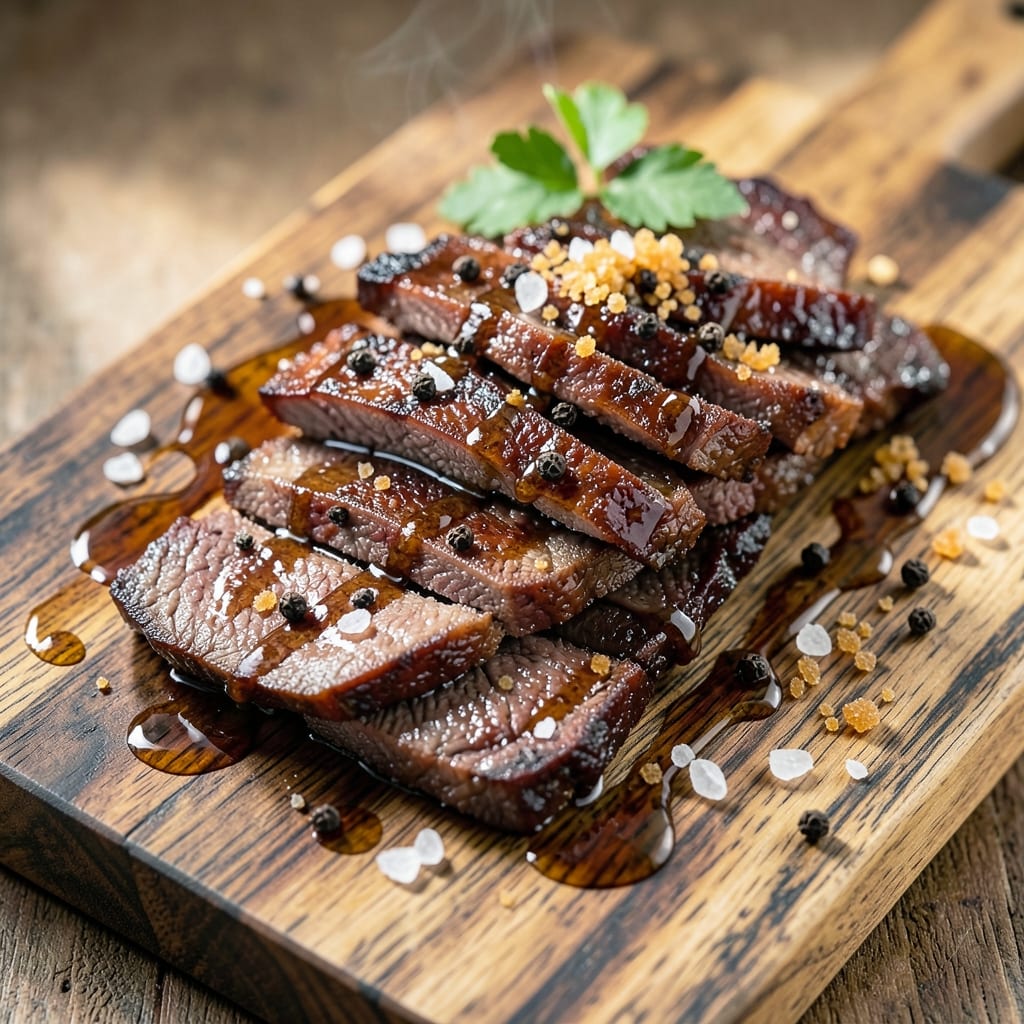
This 5-star beef jerky recipe delivers smoky-sweet perfection that rivals gourmet store-bought versions but stays fresh for months. The secret lies in a precise balance of spices and proper dehydration—no guesswork, just consistent results every time.
I’ve perfected this method over years of testing, ensuring tender, flavorful jerky that’s ideal for camping, snacks, or gifting.
What sets this recipe apart is the marinade blend—a mix of brown sugar, liquid smoke, and Worcestershire sauce that creates deep, complex flavors. We’ll use top-round roast for its lean yet tender texture, sliced thinly against the grain for maximum bite.
The drying process is critical: whether you use a dehydrator, smoker, or oven, maintaining 160°F for 4-6 hours guarantees safe, shelf-stable jerky without sacrificing quality.
By the end, you’ll have restaurant-quality beef jerky with a perfect chew and bold flavor profile. The smoky-sweet notes come through in every bite, and the jerky stays flexible enough to eat without breaking.
This method works for beginners and seasoned makers alike—just follow the steps, and you’ll get results that impress even the most discerning jerky lovers.
Pro tip: For extra tenderness, marinate overnight and pat the meat dry before drying. Store in an airtight container for up to 6 months—perfect for stocking your pantry or packing for adventures. Let’s get started on your next batch of 5-star jerky!
Ingredients for 5 star beef jerky
Gather these quality ingredients for restaurant-quality jerky that rivals store-bought but lasts months.
| Ingredient | Amount | Notes |
|---|---|---|
| Top-Round Roast 🥩 | 2 ½ lb | Lean, sliced against grain |
| Brown Sugar 🍯 | ½ cup | Light or dark preferred |
| Liquid Smoke 💨 | 1 tbsp | For authentic smoky flavor |
| Worcestershire Sauce 🍶 | 2 tbsp | Ensure anchovy-free version |
| Kosher Salt 🧂 | 1 ½ tbsp | Diamond Crystal preferred |
| Black Peppercorns 🌶️ | 1 tbsp | Freshly cracked for depth |
| Garlic Powder 🧄 | 1 tbsp | Freshly ground preferred |
| Onion Powder 🧅 | 1 tbsp | For balanced sweetness |
| Ground Cumin 🌿 | 1 tsp | Toasted for enhanced aroma |
| Cayenne Pepper 🔥 | ½ tsp | Adjust for heat preference |
| Apple Cider Vinegar 🍎 | ¼ cup | For tenderizing and tang |
| Water 💧 | ¼ cup | For marinade consistency |
The top-round roast is non-negotiable—its lean yet tender texture makes all the difference. Look for well-marbled cuts at Costco or your local butcher shop; the meat should feel firm but not rock-hard. Slice it thinly against the grain (about 1/8-inch thick) for that perfect chew. If you’re buying pre-sliced, check the packaging for thinness—some stores like Walmart or Kroger carry pre-cut jerky meat in the deli section. For extra tenderness, let the meat sit at room temperature for 20 minutes before slicing. Liquid smoke is the secret weapon here—Traeger brand is my go-to for that authentic campfire taste, but Kirkland Signature works too. Just a splash goes a long way, so don’t skimp.
No liquid smoke? Smoked paprika at double the amount (2 tbsp) gets you close, though it won’t have the same depth. Worcestershire sauce can be tricky—Lea & Perrins is the classic choice, but ensure it’s anchovy-free if you’re avoiding fish. For a vegetarian version, substitute with soy sauce or coconut aminos. The brown sugar should be light or dark, but dark adds a richer caramel note. If you’re watching sugar, coconut sugar works in a 1:1 ratio. The spices? Penzeys or bulk bins at Whole Foods are your best bets for freshness. Toast the cumin seeds in a dry pan for 30 seconds before grinding—trust me, it’s worth the extra minute. And if you’re short on time, pre-ground spices from McCormick will do in a pinch.
Marinate the meat overnight for maximum tenderness—this is where the magic happens. Store the marinade in a glass container (plastic can absorb odors) and keep it refrigerated. Once dried, your jerky will keep for up to 6 months in an airtight container with oxygen absorbers (available at Amazon or REI). For camping, pack it in vacuum-sealed bags—it’ll stay fresh for weeks. Pro tip: Label your jerky with the date and drying method (dehydrator/oven/smoker) so you can replicate it later. And if you’re making a big batch, freeze half for later—just thaw overnight in the fridge before drying.
Why You’ll Love This Recipe
- No-Fuss Slicing: I swear by my sharp knife and a steady hand—this top-round roast slices in minutes, no fancy butchering skills needed. The thin strips dry evenly, so you’re not stuck with chewy ends.
- Smoky-Sweet Magic: That liquid smoke and brown sugar combo? It’s like a campfire in your mouth, but with none of the bug bites. The Worcestershire ties it all together—deep, tangy, and impossible to resist.
- Weeknight Meal Hack: Toss the jerky in a lunchbox or snack bag, and suddenly you’ve got protein-packed fuel for hikes, road trips, or just surviving that 3 PM slump. Honestly, I keep a stash in my car just in case.
- Budget Powerhouse: A single top-round roast stretches into pounds of jerky—way cheaper than store-bought, and it keeps for weeks in the fridge. Between us, this is how I feed my crew without breaking the bank.
Step-by-step instructions for 5-Star beef jerky
This method transforms tough top-round into restaurant-quality jerky with perfect texture and bold flavor.
Prep the Meat for Even Cooking
Start with the 2.5 lb Top-Round Roast, which should be chilled but not frozen. Using a sharp boning knife, slice the roast thinly—about ¼-inch thick—cutting against the grain for tender strips. I like to work in batches to maintain consistency in thickness. The thinner the slices, the faster and more evenly they’ll dry.
Lay the slices flat on a clean cutting board and pat them completely dry with paper towels. Removing all moisture ensures the marinade adheres properly and the jerky develops that perfect chewy texture. If any slices feel particularly thick, trim them down with a few quick strokes of the knife—this step makes all the difference in the final result.
Create the Smoky-Sweet Marinade
In a large bowl, whisk together the 0.5 cup Brown Sugar, 1 tbsp Liquid Smoke, 2 tbsp Worcestershire Sauce, 1.5 tbsp Kosher Salt, 1 tbsp freshly cracked Black Peppercorns, 1 tbsp Garlic Powder, 1 tbsp Onion Powder, 1 tsp Ground Cumin, and 0.5 tsp Cayenne Pepper. The mixture should be thick but pourable—if it’s too dry, add 1-2 tablespoons of the 0.25 cup Apple Cider Vinegar to loosen it.
Next, stir in the remaining 0.25 cup Apple Cider Vinegar and 0.25 cup Water until fully combined. The vinegar tenderizes the meat while adding a bright tang that balances the sweetness. Here’s the thing—let the marinade sit for 10 minutes before using it. This gives the spices time to bloom and infuse, maximizing flavor penetration.
Marinate the Meat Thoroughly
Transfer the beef slices to a resealable plastic bag or airtight container. Pour the marinade over the meat, ensuring every slice is fully coated. I like to use my hands to press the marinade into the beef, especially on thicker edges. Seal the bag and refrigerate for at least 12 hours, though 24 hours yields the deepest flavor. The longer it marinates, the more tender and flavorful the jerky will be.
After marinating, remove the beef and let it sit at room temperature for 30 minutes before dehydrating. This step prevents condensation from forming in the dehydrator, which can make the jerky soggy. Pro tip: If you’re short on time, you can marinate for 4-6 hours in the fridge, but the flavor won’t be as developed.
Dehydrate for Perfect Texture
Preheat your dehydrator to 160°F—this low temperature ensures the jerky dries slowly and evenly without becoming tough or rubbery. Arrange the marinated beef slices in a single layer on the dehydrator trays, ensuring they don’t overlap. Overlapping can trap moisture and lead to uneven drying.
Dehydrate for 6-8 hours, checking the jerky after 5 hours. It’s done when the edges are dry to the touch and the jerky bends but doesn’t break. For extra safety, use an instant-read thermometer to check the internal temperature—it should reach 145°F. If the jerky feels slightly sticky, return it to the dehydrator for another 30-60 minutes.
Cool and Store for Maximum Freshness
Once fully dehydrated, let the jerky cool completely on a wire rack. This prevents condensation from forming in storage containers, which can make the jerky soggy. Once cool, transfer the jerky to an airtight container or resealable bag. I like to store mine in the freezer for up to 3 months or in a cool, dark pantry for 1-2 months. The flavors will continue to develop over time, making it even more delicious.
Slice the jerky into bite-sized pieces and enjoy as a snack, camping fuel, or trail mix addition. Each piece should have a perfect balance of smoky, sweet, and slightly spicy flavors with a satisfying chew. If you’re feeling adventurous, try adding a pinch of extra cayenne or a sprinkle of smoked paprika to the marinade next time—it takes this recipe to the next level.
Pro Tips For Making 5 Star Beef Jerky
- Trim Thin, Not Thin: Slice your top-round roast ¼-inch thick—any thicker and the jerky dries out unevenly, any thinner and it burns before it’s done. I used to eyeball it and ended up with chewy chunks; now I measure with a ruler. (Yes, even if you’re impatient like me.)
- Salt First, Then Wait: Generously coat the meat with kosher salt 30 minutes before marinating—this breaks down the fibers and lets the Worcestershire and liquid smoke penetrate deeper. I learned this the hard way after making jerky that tasted like seasoning on the outside and blandness on the inside.
- Brown Sugar Last: Sprinkle the brown sugar after applying the Worcestershire and liquid smoke mix, then let it sit for 10 minutes before dehydrating. This keeps it from caramelizing too fast and turning your jerky into a sticky mess. (Trust me, you don’t want to scrape sugar off your dehydrator.)
- Check Temp Early: Start your dehydrator at 160°F for the first hour, then drop to 145°F—this prevents the outside from crusting while the inside cooks through. After burning three batches at high heat, I finally realized jerky needs patience, not speed. (Your future self will thank you.)
Flavor customization for this 5 star beef jerky
Sweet Heat Level
Adjust the cayenne pepper to control spice intensity—start with ½ tsp for mild heat, then increase to 1 tsp for medium, or 1.5 tsp for fiery kicks. For a smoky-sweet balance, add ½ tsp chipotle powder to the marinade.
I like to test a small batch first to dial in the perfect heat-to-sweet ratio for my taste buds. 🌶️
Spicy Variations
Swap the cayenne for gochujang (1 tbsp) and honey (1 tbsp) for a Korean-inspired twist. Or try harissa paste (1 tbsp) for North African flavors—both add depth without overpowering the smoky base.
For a Texas-style kick, add 2 tbsp hot sauce (like Frank’s RedHot) and ½ tsp smoked paprika to the marinade.
Herb Infusions
Boost freshness with 1 tbsp chopped rosemary or thyme in the marinade, then remove before dehydrating. For a Mediterranean vibe, add 1 tsp dried oregano and ½ tsp lemon zest.
I find that herbs like cilantro or parsley work best when added fresh right before drying—just sprinkle them on the finished jerky for a pop of color and aroma. 🌿
Umami Boosters
Deepening the umami profile elevates this jerky to restaurant-level quality. Stir in 1 tbsp soy sauce (or coconut aminos) or 1 tsp fish sauce (if using anchovy-free Worcestershire) for complexity. For a meatier taste, add 1 tbsp beef bouillon powder to the marinade.
I also love adding 1 tsp mushroom powder for an earthy depth that pairs perfectly with the smoky-sweet notes.
Global Flavors
Transform this recipe into Teriyaki Jerky by adding 2 tbsp soy sauce, 1 tbsp honey, and 1 tsp ginger to the marinade. For a Mexican-style version, swap the Worcestershire for adobo sauce (2 tbsp) and add ½ tsp cinnamon.
The possibilities are endless—just remember to balance the new flavors with the existing sweet and smoky base to avoid overwhelming the jerky’s signature taste. 🗺️
Fruit-Infused Twists
Add 2 tbsp pineapple juice or 1 tbsp mango puree to the marinade for a tropical sweetness that pairs surprisingly well with the smoky flavors. For a tangy kick, stir in 1 tbsp cranberry sauce or 1 tbsp apple cider vinegar (beyond what’s listed).
These fruit additions not only enhance flavor but also add moisture, helping the jerky stay tender during dehydration. 🍍
Nutrition facts
Frequently asked questions
What’s the best cut of beef for restaurant-quality jerky?
Top-round roast is ideal—it’s lean but tender when sliced thinly against the grain. For extra tenderness, try flank steak or sirloin tip. Avoid fatty cuts like ribeye, as excess fat can make jerky greasy during dehydration. Always buy from a trusted butcher for the freshest results.
How do I know when my jerky is fully dehydrated?
Jerky is done when it bends but doesn’t break and the edges feel dry to the touch. For safety, use an instant-read thermometer—it should reach 145°F internally. If it feels slightly sticky after 6 hours, return it to the dehydrator for 30-60 more minutes. Over-drying makes jerky tough, while under-drying risks spoilage.
Can I make jerky without a dehydrator?
Use an oven set to 175°F with the door slightly open (place a wooden spoon inside). Line a baking sheet with parchment paper and arrange slices in a single layer. Rotate trays halfway through the 6-8 hour process. For smoky flavor, add wood chips to the oven rack. A smoker works too—maintain 165°F for 4-6 hours.
Why did my jerky turn out tough?
Tough jerky usually means it was over-dried or the meat wasn’t sliced thinly enough against the grain. Always slice to ¼-inch thickness and dehydrate at 160°F for 6-8 hours. For extra tenderness, marinate overnight and pat the meat completely dry before dehydrating. If using a smoker, keep the temperature consistent—fluctuations cause uneven drying.
How long can I store homemade beef jerky?
Properly dehydrated jerky lasts 6 months in an airtight container with oxygen absorbers (available at camping stores). For longer storage, freeze it for up to 1 year. Keep it in the fridge for 1-2 months if you prefer shorter-term storage. The key is complete dehydration—jerky should have no moisture to prevent spoilage.
