
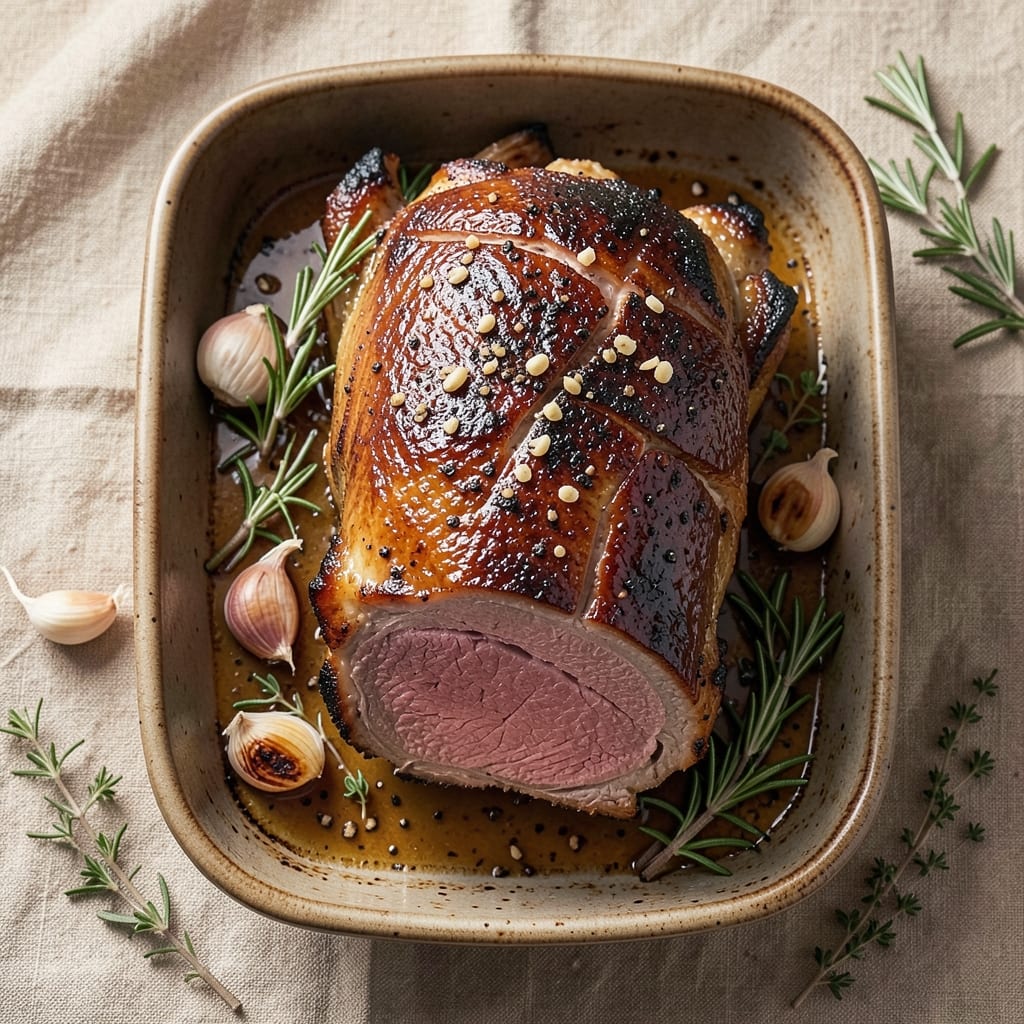
Transforming a tough 2-pound bottom round roast into juicy, pink-centered perfection requires precision—not brute force. This reverse-sear method guarantees tender, flavorful meat with a caramelized crust, proving even budget cuts can deliver restaurant-quality results.
The secret lies in low-and-slow cooking followed by a high-heat sear, a technique that unlocks deep flavor while preserving moisture.
What sets this method apart is the two-stage process: first, a gentle oven roast to reach a safe internal temperature without overcooking, then a quick broil or cast-iron sear to create that coveted crust.
No fancy equipment is needed—just time, patience, and a reliable thermometer to ensure every bite stays tender. The result? A roast that’s foolproof for weeknight dinners or special occasions, with minimal effort.
By the time you slice into this roast, you’ll find a perfectly pink center that yields to the knife, surrounded by a deeply flavorful crust. The reverse-sear technique eliminates guesswork, making it ideal for home cooks who want consistent, professional results without hours in the kitchen.
Pair it with roasted vegetables or a rich red wine sauce for a complete meal.
The beauty of this method extends beyond the main course—leftovers reheat beautifully, and the technique works for other cuts like flank steak or tri-tip. Whether you’re feeding a family or treating yourself to a special meal, this recipe delivers restaurant-quality tenderness with minimal fuss.
Let’s get started with the step-by-step process.
Ingredients for 2 pound bottom round roast
Precision-crafted ingredients unlocking restaurant-quality tenderness from an affordable cut.
| Ingredient | Amount | Notes |
|---|---|---|
| Bottom Round Roast 🥩 | 2 lb | Center-cut for even cooking |
| Kosher Salt 🧂 | 1 ½ tbsp | Diamond Crystal preferred |
| Freshly Ground Black Pepper 🌶️ | 1 ½ tsp | Coarsely cracked |
| Garlic Cloves 🧄 | 4 cloves | Smash flat for maximum flavor |
| Fresh Rosemary 🌿 | 1 tbsp | Finely chopped, fresh preferred |
| Fresh Thyme 🌿 | 1 tbsp | Leaves only, stems removed |
| Extra-Virgin Olive Oil 🫒 | 2 tbsp | High-quality, fruity variety |
| Yellow Onion 🧅 | 1 whole | Thinly sliced, for crust |
| Beef Tallow or Bacon Fat 🥓 | 2 tbsp | For high-heat sear |
| Red Wine 🍷 | ½ cup | Dry, bold variety like Cabernet |
| Beef Broth 💧 | ½ cup | Low-sodium preferred |
| Tomato Paste 🍅 | 1 tbsp | Smooth, no sugar added |
| Fresh Parsley 🌿 | ¼ cup | Chopped, for garnish |
| Meat Thermometer 🌡️ | 1 whole | Instant-read preferred |
The bottom round roast is where this recipe begins—center-cut ensures even cooking, while marbling guarantees flavor. Costco or local butcher shops often carry this cut pre-trimmed, saving time. Look for a piece with visible fat streaks (about 10% fat content) for moisture during cooking. If buying whole, trim excess fat to ¼-inch thickness for better heat penetration. Diamond Crystal kosher salt dissolves more easily than table salt, enhancing seasoning without overpowering. For the herbs, fresh is non-negotiable—dried thyme and rosemary work at half the amount, but the aroma and texture differ significantly.
No fresh rosemary? Substitute 1 tbsp dried rosemary leaves, but toast them in a dry pan for 30 seconds first to deepen flavor. Red wine can be replaced with beef broth + 1 tbsp balsamic vinegar for depth, though the acidity will differ slightly. Tomato paste from a squeeze tube (like Trader Joe’s) works perfectly—no waste, and it keeps for months. Bacon fat or beef tallow is ideal for searing, but olive oil in a pinch will still deliver a flavorful crust. The garlic can be roasted whole with the meat for a sweeter profile, then mashed before smashing the cloves. Pre-grated Parmesan (if using for a finishing touch) should be purchased fresh—it oxidizes quickly and loses flavor.
This roast reheats beautifully—wrap tightly in foil and warm in a 350°F oven for 20 minutes to retain moisture. Leftovers keep for 4-5 days in the fridge or 3 months frozen when vacuum-sealed. For long-term storage, portion into individual servings before freezing. The meat thermometer is non-negotiable—130°F internal temp before searing ensures a perfectly pink center. Rest the roast 15 minutes post-sear to redistribute juices, or risk dry slices. Garnish with fresh parsley just before serving to brighten the dish.
Why You’ll Love This Recipe
- Foolproof Roast: I swear by this—no fancy searing, no stress. Just a little salt, pepper, and garlic smashed into slits, then a sprig of rosemary tucked in. Toss it in the oven and walk away. That’s it.
- Garlic-Rosemary Magic: The moment that roast hits the table, the aroma of garlic and rosemary will have everyone leaning in. Crispy edges, tender inside—it’s the kind of flavor that makes people ask, “What’d you cook?” (Then I get to brag about the five-minute prep.)
- Leftovers for Days: This roast is perfect for meal prep. Slice it thin for sandwiches, toss it into salads, or reheat it for tacos. I’ve fed my family for three days straight from one roast—no takeout, no guilt.
- Budget Hero: Bottom round is affordable, and this recipe stretches it far. A two-pound roast feeds four, leaves plenty for leftovers, and still costs less than half the price of a fancy steak. My wallet thanks me every time.
Step-by-step instructions for reverse-seared bottom round roast
Master this technique for a roast that delivers perfect pink centers and crispy edges every time.
Prepare the Roast for Even Cooking
Remove the 2 lb bottom round roast from the refrigerator and let it sit at room temperature for 30 minutes. This allows the meat to cook more evenly. While it comes to temperature, prepare a dry brine by combining the 1.5 tbsp kosher salt and 1.5 tsp freshly ground black pepper in a small bowl.
Pat the roast dry completely with paper towels—this is critical for achieving a good crust. Rub the salt and pepper mixture all over the meat, pressing firmly so the seasoning adheres. Let it sit uncovered on a wire rack set over a baking sheet for 1 hour in the refrigerator. This dry brine enhances flavor and helps retain moisture during cooking.
Sear the Roast for Crust Development
Preheat your oven to 275°F. In a large oven-safe skillet, heat the 2 tbsp beef tallow or bacon fat over medium-high heat until it shimmers. Add the roast and sear on all sides for 2-3 minutes per side until deeply browned. This high-heat sear creates the foundation for your crust.
Transfer the skillet to the preheated oven and roast for 1 hour 30 minutes or until the meat thermometer inserted into the thickest part reads 115°F. The roast should be pink in the center but not yet fully cooked. This low-and-slow phase ensures tender, juicy meat without overcooking the center.
Build the Flavorful Sauce Base
While the roast cooks, prepare the sauce components. In the same skillet (with rendered fat still in it), add the 1 whole yellow onion sliced into thin rings and cook for 5 minutes until softened. Add the 4 cloves garlic (smash them flat first) and cook for 1 minute until fragrant.
Deglaze the pan with the 0.5 cup red wine, scraping up all the browned bits from the bottom. Let it reduce by half, then stir in the 0.5 cup beef broth and 1 tbsp tomato paste. Simmer for 5 minutes until slightly thickened. Remove from heat and stir in the 1 tbsp fresh rosemary and 1 tbsp fresh thyme.
Reverse Sear for Perfect Doneness
Remove the roast from the oven and increase the oven temperature to 450°F. Let the roast rest for 5 minutes before returning it to the skillet. Pour the sauce over the roast and transfer the skillet to the hot oven. Roast for 15-20 minutes until the internal temperature reaches 130°F—this gives you that perfect pink center.
The high heat will crisp the exterior while keeping the inside tender. Use the 2 tbsp extra-virgin olive oil to baste the roast with its own juices halfway through this final cooking phase. Remove from oven when the crust is golden brown and the meat reaches 130°F.
Rest and Serve with Fresh Garnish
Transfer the roast to a cutting board and let it rest for 10 minutes before slicing. This resting period allows the juices to redistribute throughout the meat, ensuring each slice remains moist. While it rests, spoon the reduced sauce from the skillet into a small saucepan and simmer for 2 minutes to thicken slightly.
Slice the roast against the grain into ¼-inch thick slices. Garnish each serving with the 0.25 cup chopped fresh parsley. Serve immediately with the sauce spooned over the top. The result should be a beautifully browned exterior with a perfectly pink, juicy center that practically melts in your mouth.
Pro Tips For Making 2 Pound Bottom Round Roast
- USE A MEAT THERMOMETER: The bottom round’s lean nature tricks you—it’ll hit 145°F before it’s tender. Pull it at 130°F for medium-rare (or 135°F for medium), then let it rest. I learned this the hard way after slicing into rubbery meat that needed another 20 minutes.
- SMASH THE GARLIC: Don’t just mince the cloves—smash them first with the flat side of your knife. This releases more flavor without turning your roast into a garlic paste. Sprinkle them directly on the meat after searing so they caramelize into a crust instead of dissolving into the pan.
- SALT IN LAYERS: Salt the roast twice: once 2 hours before cooking (let it sit uncovered in the fridge), then again right before searing. The first round seasons deep, the second builds that crust. Skip this, and you’ll end up with a bland exterior that flakes off like dry skin.
- SEAR HOT, THEN BASTE COLD: Sear the roast over screaming-high heat until deep brown—this locks in juices. Then, reduce to 325°F, cover loosely with foil, and baste with melted butter and rosemary every 20 minutes. The high-start sear prevents a gray, sad crust, while the low finish keeps it moist. (Yes, even if you’re impatient like me.)
Regional styles of 2 pound bottom round roast
Texas-Style Smoked Roast
In Texas, the bottom round roast often takes center stage at backyard BBQs, where it’s slow-smoked over oak or pecan wood for hours. The key difference?
A dry rub of coarse salt, black pepper, smoked paprika, and garlic powder replaces the herb blend, while the roast is smoked at 225°F for 4-5 hours until it reaches 195°F internal temp. The result is a deep, smoky flavor with a bark-like crust.
I love adding a splash of apple cider vinegar to the pan juices before basting for extra tang. 🔥
Carolina-Style Vinegar Braise
South Carolina chefs often braise bottom round roast in a tangy vinegar-based sauce with hot sauce, brown sugar, and mustard.
Start by searing the roast, then simmer it in a Dutch oven with 1 cup apple cider vinegar, 2 tbsp hot sauce, 1 tbsp brown sugar, and 1 tbsp yellow mustard for 2-3 hours until fork-tender. The acidity breaks down the tough fibers beautifully.
I prefer Crystal Hot Sauce for its balance of heat and sweetness, but Texas Pete works too. 🌶️
Italian-Style Roast with Red Wine
Italian cooks transform this cut into a rosemary-garlic roast with red wine reduction, similar to our base recipe but with added sun-dried tomatoes and olives.
After the initial sear, deglaze with 1 cup dry red wine and add ½ cup crushed sun-dried tomatoes and ½ cup Kalamata olives to the sauce. Finish with a sprinkle of Parmesan cheese before serving. The Mediterranean flavors shine when paired with polenta or crusty bread.
Mexican-Style Carnitas-Style Roast
For a bold twist, cook the roast low and slow until it shreds easily, then crisp it in a skillet with lard or vegetable oil.
Add 1 tsp cumin, 1 tsp oregano, and ½ tsp chili powder to the dry rub, and finish with a splash of orange juice in the sauce. Serve on tortillas with avocado and lime—this method turns the roast into a tender, crispy carnitas-style dish. 🌮
French-Inspired Red Wine Reduction
French chefs often prepare this cut with a bold red wine reduction and herbs de Provence. After the initial sear, braise the roast in 2 cups red wine, 1 cup beef broth, and 1 tbsp tomato paste with 1 tsp herbes de Provence for 3 hours.
Finish with a splash of brandy and a sprinkle of fresh tarragon for an elegant touch. This method works beautifully with mashed potatoes or buttered egg noodles.
Nutrition facts
Frequently asked questions
Why does this recipe use a reverse sear instead of traditional roasting?
The reverse sear method is perfect for tougher cuts like bottom round because it cooks the meat slowly first to break down fibers, then finishes with high heat to create a crust. This ensures a perfectly pink center while delivering that satisfying crust. Traditional roasting often overcooks the outside before the inside is tender enough.
Can I substitute beef tallow with butter or olive oil?
For searing, use bacon fat or beef tallow—they have higher smoke points than butter. If you must substitute, use high-quality olive oil (like extra-virgin) but avoid butter as it burns easily. The fat choice makes a big difference in crust development! For the sauce, olive oil works fine.
What’s the best way to slice the roast for maximum tenderness?
Always slice against the grain into ¼-inch thick pieces. This shortens the muscle fibers, making each bite more tender. Use a sharp carving knife and let the roast rest 10 minutes first to keep juices inside. For easier slicing, warm the knife under hot water between cuts.
How do I adjust cooking time if my roast is 1.5 or 2.5 pounds?
For a 1.5 lb roast, reduce oven time by 20-25 minutes total (both stages). For 2.5 lbs, add 20-25 minutes. Use your meat thermometer as the guide—aim for 115°F before the final sear and 130°F at the end. The reverse sear method is flexible once you trust your thermometer!
What are the best side dishes to serve with this roast?
This roast pairs beautifully with creamy mashed potatoes, roasted root vegetables, or garlic herb polenta. For a lighter option, try a simple green salad with balsamic vinaigrette. The rich, pink center works especially well with caramelized onions or grilled asparagus.
