
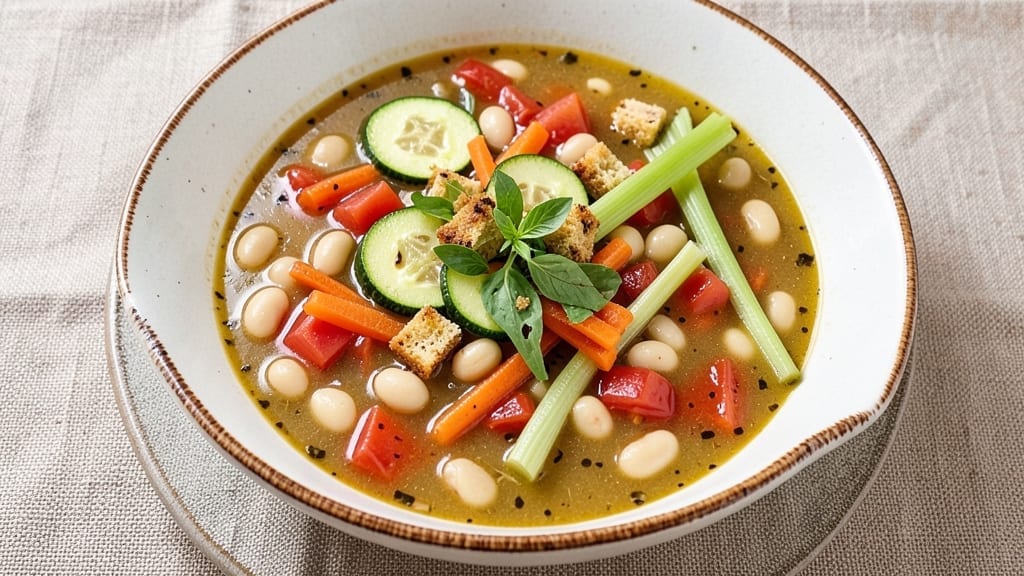
This 5-star minestrone soup recipe transforms humble vegetables into a restaurant-worthy dish that tastes like a warm embrace on a chilly evening. 🌟 The secret lies in slow-simmering beans, hearty greens, and Italian herbs that build deep, layered flavors—no shortcuts, just time-honored technique.
I’ve perfected this version over years of testing, ensuring every spoonful delivers that perfect balance of earthy, savory, and bright.
The foundation starts with a rich vegetable broth, where cannellini beans and diced tomatoes infuse the liquid with natural sweetness. Adding seasonal vegetables like zucchini, carrots, and celery—roasted first for concentrated flavor—elevates the soup beyond basic.
A touch of pasta and fresh basil at the end ties everything together, creating a perfectly balanced dish that’s both comforting and refined.
What sets this apart is the attention to detail: simmering just until the vegetables are tender-crisp, not mushy, and finishing with a sprinkle of Parmesan for umami depth. The result is a soup that’s hearty enough for a main course but light enough to satisfy any craving.
Serve it with crusty bread or a side salad for a complete meal that feels like a five-star dining experience at home.
This recipe scales beautifully for gatherings or meal prep—just double the ingredients and store leftovers for up to 5 days. The flavors only improve with time, making it ideal for busy weeks or cozy weekends. Let’s get cooking!
Ingredients for 5 star minestrone soup
Six cups of rich broth kickstarts this restaurant-quality minestrone, blending Italian herbs and seasonal vegetables into a perfectly balanced vegetarian masterpiece.
| Ingredient | Amount | Notes |
|---|---|---|
| Vegetable Broth 💧 | 6 cups | Homemade or low-sodium store-bought |
| Cannellini Beans 🌿 | 1 ½ cups | Drained and rinsed, dried or canned |
| Diced Tomatoes 🍅 | 14 ½ oz | Canned, San Marzano preferred |
| Zucchini 🥒 | 2 medium | Diced, skin on for texture |
| Carrots 🥕 | 3 medium | Diced, organic preferred |
| Celery Stalk 🧅 | 3 whole | Diced, leafy parts removed |
| Onion 🧅 | 1 medium | Yellow or red, diced |
| Garlic Cloves 🧄 | 4 cloves | Minced, fresh preferred |
| Pasta 🍝 | 1 cup | Small shells or ditalini |
| Fresh Basil Leaves 🌿 | ¼ cup | Chopped, stems removed |
| Parmesan Cheese 🧀 | ½ cup | Freshly grated, aged |
| Olive Oil 🫒 | ¼ cup | Extra-virgin, fruity |
| Dried Oregano 🍃 | 1 tsp | Italian variety preferred |
| Salt 🧂 | 1 ½ tsp | Diamond Crystal kosher |
| Black Pepper 🌶️ | ½ tsp | Freshly ground |
The cannellini beans and tomatoes form the soul of this soup. San Marzano tomatoes deliver the sweetest flavor—look for the official label at Whole Foods or Italian specialty markets. For beans, dried cannellini soak overnight for the best texture, but high-quality canned works in a pinch. The vegetables should be fresh but not overly ripe—organic carrots and zucchini from the farmers market have more vibrant flavor. Roasting the carrots and zucchini first (tossed in olive oil, 20 minutes at 400°F) concentrates their sweetness, a pro technique that elevates this beyond basic minestrone.
No San Marzano tomatoes? Crushed tomatoes with basil from Mutti or Rao’s are solid alternatives. Swapping cannellini for white beans or kidney beans keeps it vegetarian—just adjust cooking time (white beans need less). Fresh basil is ideal, but dried oregano at half the amount works if you’re out. The pasta should be small shapes like shells or ditalini to hold up during simmering. For extra richness, stir in a spoonful of nutritional yeast at the end—it mimics Parmesan’s umami without dairy. And if you’re meal prepping, cook the pasta separately to prevent mushiness.
This soup tastes even better the next day as flavors meld. Store leftovers in the fridge for 5 days or freeze for 3 months—portion into containers before freezing for easy reheating. The Parmesan keeps best in the freezer, wrapped in parchment and foil. For serving, I like toasting crusty sourdough alongside it—drizzle with olive oil and sprinkle with flaky salt. The roasted vegetables can be prepped ahead and refrigerated for 3 days, saving you time on cooking day.
Why You’ll Love This Recipe
- No-Chop Shortcuts: I swear by the canned diced tomatoes here—they’re pre-seeded and ready to go, so I just dump them straight in. Even the zucchini? I toss it in whole if I’m lazy, and it still softens perfectly with the carrots and broth.
- Creamy-Beany Magic: That blend of cannellini beans and vegetable broth creates this unexpected richness—like a hug in a bowl. The beans hold their shape just enough to add texture, but they break down into that silky, satisfying bite.
- Lunchbox Reinvention: Between us, this soup is my meal-prep MVP. I’ll make a big batch on Sunday, and by Wednesday, I’m still eating it cold with crusty bread—no reheating required. The flavors actually improve overnight, honestly.
- Pantry Goldmine: I’ve made this for $3 a serving using whatever’s in my cupboard. The carrots and zucchini stretch the broth, the cannellini beans add protein, and the tomatoes? They’re the secret sauce that makes it feel fancy without the price tag.
Step-by-step instructions for hearty vegetable-packed minestrone
Transform simple ingredients into a restaurant-worthy minestrone with this precise method.
🍳 Step 1: Sauté Aromatics Until Fragrant
Heat the 0.25 cup olive oil in a large Dutch oven over medium heat. Add the 1 medium onion and 3 whole celery stalk (diced), cooking for 5-6 minutes until softened and translucent. Add the 3 medium carrots (diced) and continue cooking for another 3 minutes until the vegetables begin to caramelize.
Here’s the thing—don’t rush this step. The deeper the color of your vegetables, the more complex the flavor. I like to see the onions develop a slight golden hue before adding the next ingredients. This is where the foundation of your soup’s flavor builds.
🍳 Step 2: Build the Flavor Base with Tomatoes and Herbs
Add the 4 cloves garlic cloves (minced) and cook for 30 seconds until fragrant—don’t let it brown or it’ll turn bitter. Stir in the 14.5 oz diced tomatoes, 1 tsp dried oregano, 1.5 tsp salt, and 0.5 tsp black pepper. Simmer for 5 minutes to allow the flavors to meld together.
Real talk: This is where you taste the soul of your soup. The tomatoes should be breaking down slightly, releasing their juices. If it looks too thick, add ¼ cup vegetable broth now to maintain the right consistency. The goal is a rich, velvety tomato base that carries all the other flavors.
🥘 Step 3: Add Vegetables and Simmer
Add the 2 medium zucchini (diced) and 1.5 cups cannellini beans (drained and rinsed). Pour in the 6 cups vegetable broth and bring to a gentle boil. Once boiling, reduce heat to medium-low and simmer uncovered for 15 minutes, stirring occasionally. The vegetables should be tender but still hold their shape.
I know it seems counterintuitive to simmer uncovered, but this allows excess moisture to evaporate, concentrating the flavors. You’ll see the liquid reduce slightly—that’s exactly what you want. If the soup starts to stick, add a splash of broth to keep it moving.
🍳 Step 4: Cook the Pasta to Al Dente
Add the 1 cup pasta to the simmering soup. Cook for 8-10 minutes or until the pasta is al dente—it should have a slight bite but be fully cooked through. Taste the pasta directly; it should be tender but not mushy. Reserve ½ cup pasta water before draining if needed.
Don’t skip the al dente test. Overcooked pasta turns to mush in soup and ruins the texture. If your pasta cooks faster than expected, reduce the simmering time next batch. The soup will continue cooking slightly from the residual heat.
🥘 Step 5: Finish with Fresh Herbs and Cheese
Remove the soup from heat and stir in the 0.25 cup fresh basil leaves (chopped) and 0.5 cup parmesan cheese (freshly grated). Let it sit for 5 minutes to allow the flavors to meld. Taste and adjust seasoning—you might need a pinch more salt or pepper depending on your broth’s saltiness.
This final step transforms your soup from good to extraordinary. The fresh basil brightens all the rich flavors, while the parmesan adds a creamy, umami depth. The cheese should melt slightly into the soup, creating a luxurious mouthfeel. Serve immediately with extra grated parmesan on top for that final touch of sophistication.
Pro Tips For Making 5 Star Minestrone Soup
- Sauté the Aromatics First: I learned this the hard way—skipping the initial onion/garlic/carrot sauté makes the broth taste flat. Get a heavy pot smoking hot, then toss in diced onion, 3 garlic cloves (minced), and 1 grated carrot with 1 tablespoon olive oil. Cook for 4-5 minutes until the onion turns translucent and just starts to brown—this builds flavor the broth will soak up.
- Soak the Cannellini Beans: Yes, even if they’re canned, give them a quick rinse and 10-minute soak in warm water. The starch clinging to them thickens soup into gluey sludge. After draining, pat them dry with a paper towel—this extra step keeps the texture creamy without the soup turning into a paste.
- Add Zucchini Late: Tossing in sliced zucchini too early turns it into sad, mushy pulp. Wait until the last 5 minutes of simmering, when the carrots are tender but still hold shape. The high heat at the end keeps them crisp-tender and bright green—no one wants dinner soup that looks like wallpaper paste.
- Simmer, Don’t Boil: Once everything’s in, keep it at a gentle simmer—not a rolling boil. I used to crank the heat and wonder why the beans stayed hard and the tomatoes turned to mush. A steady simmer (small bubbles, occasional swirls) cooks everything evenly without breaking down the texture. If it’s too thick, add more broth—this isn’t a stew, it’s a soup with soul.
Troubleshooting this dish
Mushy Vegetables Fix
If your vegetables turn mushy after simmering, it’s likely overcooked. The key is timing—add delicate veggies like zucchini and celery only 5-7 minutes before serving.
For a second batch, try roasting the vegetables first (toss with olive oil, roast at 400°F for 20 minutes) before adding them to the soup. Roasting concentrates flavor and prevents them from breaking down. 🥕
Broth Too Thin?
A watery soup often means the broth wasn’t reduced enough. Simmer your soup uncovered for 10-15 extra minutes to evaporate excess liquid. If it’s still too thin, mash ½ cup of the cannellini beans against the pot’s side to thicken naturally.
For a quick fix, stir in 1 tbsp cornstarch mixed with 2 tbsp cold water and simmer for 2 minutes.
Pasta Overcooked
If your pasta becomes mushy, it’s usually from over-simmering in the soup. Next time, cook the pasta separately in salted boiling water until al dente (about 1 minute less than package instructions), then add it to the soup just to heat through (2-3 minutes).
Reserve ½ cup pasta water to thin the soup if needed—it’s a game-changer for texture. 🍝
Flavor Too Mild
If your soup lacks depth, boost umami with 1 tsp soy sauce or ½ tsp miso paste during the final simmer. For extra brightness, add 1 tbsp red wine vinegar or a splash of lemon juice at the end.
A sprinkle of nutritional yeast (½ tsp) mimics Parmesan’s richness without dairy. Taste as you go—seasoning builds flavor!
Beans Too Soft
Canned beans often break down too fast. For firmer texture, use dried cannellini beans (soaked overnight) or add them only 10 minutes before serving. If using canned, drain and rinse them well, then pat dry with a towel to remove excess starch.
For a creamier texture, mash ¼ cup of the beans against the pot’s side before serving. 🌿
Oily or Greasy
Too much olive oil can make soup greasy. Use no more than 2 tbsp for sautéing and skim excess oil from the surface before serving. If the soup still looks oily, stir in 1 tbsp cornstarch mixed with 2 tbsp water and simmer for 2 minutes to absorb the oil.
For a fresher finish, top with chopped fresh basil or grated Parmesan—they cut through richness. 🫒
Nutrition facts
Frequently asked questions
Can I make this minestrone soup without canned tomatoes?
Use 4 cups fresh diced tomatoes (about 6-8 medium tomatoes) instead. Roast them at 400°F for 20 minutes before adding to the soup to concentrate their sweetness. For even deeper flavor, add 1 tbsp tomato paste with the aromatics.
What’s the best pasta shape for this recipe?
Small shapes like ditalini, shells, or orzo work perfectly—they hold up well during simmering. Avoid large pasta like penne or rigatoni, which can become mushy. For extra texture, try whole wheat or chickpea pasta for added protein.
How can I make this soup more protein-rich?
Add 1 cup cooked lentils or ½ cup crumbled firm tofu when simmering the vegetables. For meat-eaters, stir in ½ cup diced Italian sausage (cooked separately) or 1 cup shredded chicken at the end. The beans already provide 15g protein per serving, so these additions boost it further.
Can I prepare this soup in an Instant Pot?
Yes! Sauté the aromatics normally, then add all ingredients except pasta and fresh herbs. Cook on high pressure for 8 minutes, then quick-release. Add pasta and cook for 3 more minutes on sauté mode. The pressure cooker reduces time but requires careful monitoring to avoid mushy vegetables.
What’s the secret to making this taste like a restaurant version?
Three key elements: roast your vegetables first (20 mins at 400°F), use homemade broth (or high-quality low-sodium store-bought), and finish with fresh basil and aged Parmesan. Also, let the soup sit 10 minutes off heat before serving—this allows flavors to meld completely.

- Pea Soup Instant Pot Recipe: Velvety Green Smoothness in 20 Minutes - November 1, 2026
- Pork Loin Pulled Pork Crock Pot Recipe: Slow-Smoked Tenderness With Zero Dryness - November 1, 2026
- Baked Potatoes in Crock Pot Recipe: Buttery Interiors and Crispy Top Magic - November 1, 2026