
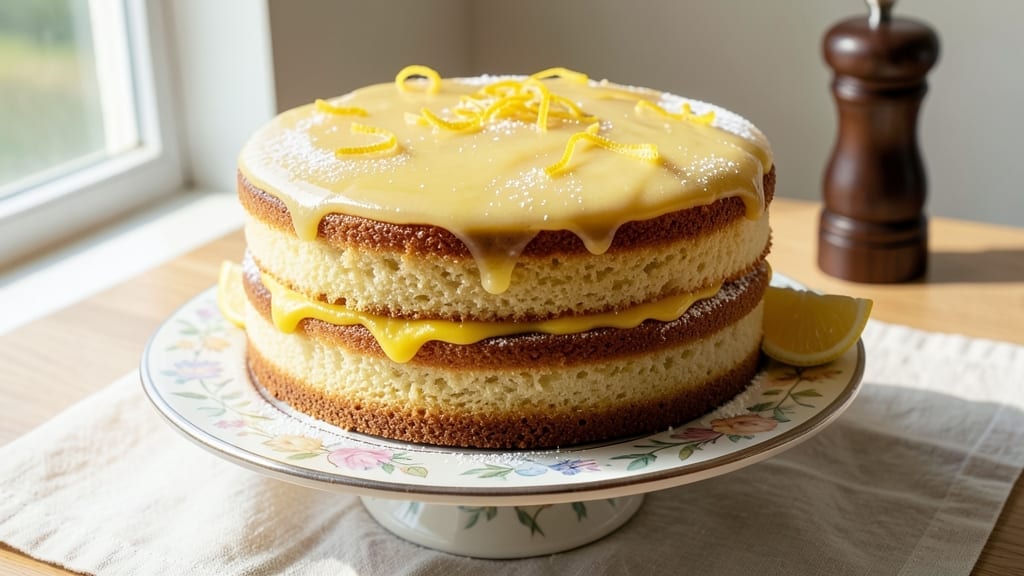
This 9-inch lemon cake recipe delivers the perfect balance of bright citrus and tender layers that’ll make your taste buds dance. 💛 The secret lies in a moist, buttery batter infused with fresh lemon zest and juice, creating a flavor so vibrant it practically glows.
I’ve baked this cake countless times for birthdays, brunch gatherings, and spontaneous dessert cravings—it never disappoints.
The cake itself is simple to make, with just a few key ingredients that come together in under 30 minutes of active time. You’ll bake two thin layers for maximum fluffiness, then sandwich them with tangy buttercream that’s light enough to let the lemon shine through.
The recipe includes foolproof steps to avoid common pitfalls like cracking or dryness, so even beginner bakers will achieve professional results.
What you’ll end up with is a cake that’s bright, moist, and bursting with lemon flavor—every slice offers a perfect harmony of citrusy zest and sweet buttery layers.
The buttercream isn’t just decoration; it’s a creamy, slightly tangy complement that ties the whole dessert together. This isn’t just a cake—it’s a celebration in every bite.
Perfect for spring and summer gatherings, this recipe scales easily for larger crowds, and the leftovers (if there are any) reheat beautifully. Whether you’re serving it at a party or treating yourself to a midweek pick-me-up, this lemon cake delivers restaurant-quality results with minimal effort. Let’s get baking!
Ingredients for 9 inch lemon cake
Bright citrus and buttery layers—just 15 ingredients for a showstopping lemon cake that’ll wow any crowd.
| Ingredient | Amount | Notes |
|---|---|---|
| All-Purpose Flour 🌾 | 2 cups | Sifted for lightness |
| Granulated Sugar 🍚 | 1 ½ cups | Superfine preferred |
| Unsalted Butter 🧈 | 1 cup | Room temperature, full-fat |
| Fresh Lemon Juice 🍋 | ½ cup | From 3-4 lemons |
| Lemon Zest 🍋 | 2 tbsp | Finely grated |
| Large Eggs 🥚 | 2 whole | Room temperature |
| Baking Powder 🍃 | 2 tsp | Diamond Crystal preferred |
| Salt 🧂 | ½ tsp | Fine sea salt |
| Vanilla Extract 🌿 | 1 tsp | Pure vanilla preferred |
| Milk 🥛 | ½ cup | Room temperature |
| Powdered Sugar 🍚 | 3 cups | For buttercream |
| Heavy Whipping Cream 🥛 | 1 cup | Cold, full-fat |
| Unsalted Butter 🧈 | ½ cup | Room temperature, cubed |
| Fresh Lemon Juice 🍋 | 1 tbsp | Extra for buttercream |
| Lemon Zest 🍋 | 1 tsp | Extra for buttercream |
The lemons are where the magic happens. Use Meyer lemons if you can find them—they’re sweeter and more fragrant, giving that extra pop of flavor. I grab mine from Trader Joe’s when they’re in season, but regular Eureka lemons work too. Zest the outer layer only—it’s brighter and more aromatic than the inner part. For the butter, room temperature is key—cold butter creates lumps, and melted butter can make the cake dense. If you’re short on time, microwave it for 40 seconds to just soften, then let it sit while you mix everything else. The powdered sugar for the buttercream? Sift it first—it makes a world of difference in how light and fluffy your frosting turns out.
No Meyer lemons? Regular lemons work just fine—just make sure they’re juicy and fresh. Running short on butter? Vegetable shortening at the same amount keeps the cake tender, though it won’t have the same rich flavor. The buttercream needs heavy cream—half-and-half won’t whip up properly. If you’re making this ahead, you can actually whip the buttercream up to a week early and store it in the fridge. Just bring it to room temperature and re-whip before assembling. The vanilla extract? Pure Madagascar bourbon vanilla adds depth, but imitation will work in a pinch. For extra zing, add a pinch of salt to the buttercream—it balances the sweetness and enhances the lemon flavor.
This cake keeps beautifully—3 days at room temperature covered loosely, or 1 week refrigerated. The buttercream layer actually improves overnight as the flavors meld. For serving, I like to dust the top with a little extra powdered sugar just before slicing—it adds that bakery-fresh look. If you’re making it for a party, assemble the cake a day ahead and refrigerate. Bring it to room temperature before serving so the layers are perfectly soft. Leftovers? Slice and reheat for 10 seconds in the microwave—they warm up beautifully and taste even better the second time around.
Why You’ll Love This Recipe
- No Mixer Needed: I swear by this recipe when my mixer’s on vacation—just creaming butter and sugar by hand until fluffy. The lemon zest clings to the butter like it’s been waiting its whole life for that moment, and honestly? That’s half the magic.
- Zesty Brightness: The moment that lemon juice hits the warm batter, your kitchen smells like a sunlit orchard. It’s not just sweet—it’s got that sharp, citrusy punch that makes every bite feel like a little vacation, even when you’re eating it with a spoon at midnight.
- Weeknight Hero: This cake bakes in one bowl, no fancy pans required, and slices neatly for breakfast or dessert. I’ve used it to impress coworkers (who thought I was a pastry chef), fed a crowd with minimal effort, and even packed it for my son’s soccer game—no one complained.
- Budget-Friendly Luxury: You’re using pantry staples here—flour, sugar, butter—and a couple of lemons, which cost pennies per serving. The result? A cake that tastes like it belongs in a bakery, not your grocery list. Leftovers? They disappear faster than I can say “second slice.”
Step-by-step instructions for 9-Inch lemon cake
Here’s how to bake layers of bright lemon flavor and silky buttercream heaven!
👨🍳 Step 1: Cream Butter and Sugar for Lightness
In a stand mixer fitted with the paddle attachment, beat the 1 cup unsalted butter and 1.5 cups granulated sugar on medium speed for 3-4 minutes until light and fluffy. You’ll see the mixture nearly double in volume and turn pale—this incorporates air for a tender cake.
I like to scrape down the sides of the bowl every 30 seconds to ensure even mixing. The butter should be completely smooth with no lumps, and the mixture should look like pale ribbon when you lift the paddle. This step is crucial for that perfect cake texture—don’t rush it!
👨🍳 Step 2: Add Eggs and Lemon Flavor
Add the 2 whole large eggs, one at a time, mixing on low speed for 30 seconds after each addition. Then stir in the 0.5 cup fresh lemon juice, 2 tbsp lemon zest, 1 tsp vanilla extract, and 0.5 tsp salt. Mix on medium speed for another 1 minute until fully combined.
The lemon zest should be finely grated—no big chunks! I press it through a microplane for the best texture. The mixture will look slightly curdled after adding the eggs, but that’s normal. The lemon flavor will infuse beautifully as we mix in the dry ingredients next.
👨🍳 Step 3: Combine Dry Ingredients Gently
In a separate bowl, whisk together the 2 cups all-purpose flour and 2 tsp baking powder. With the mixer on low speed, gradually add the dry ingredients to the wet mixture, alternating with the 0.5 cup milk, beginning and ending with the flour. Mix just until combined—no more than 30 seconds after all ingredients are added.
Overmixing develops gluten, which makes cakes tough. You’ll know it’s ready when the batter is smooth with just a few small streaks of flour remaining. The batter should be thick but pourable—like a thick pancake batter.
🔥 Step 4: Bake Two Perfect Layers
Preheat your oven to 350°F. Divide the batter evenly between two 9-inch round cake pans lined with parchment paper and greased with butter. Bake for 25-30 minutes or until a toothpick inserted in the center comes out clean and the tops spring back when touched.
I rotate the pans halfway through baking for even browning. The edges should be golden, but the centers should still look slightly underdone when you first take them out—that final touch of doneness happens during cooling. Let the cakes cool in the pans for 10 minutes, then transfer to a wire rack to cool completely.
🥘 Step 5: Make the Tangy Buttercream
In a stand mixer fitted with the whisk attachment, beat the 1 cup heavy whipping cream and 0.5 cup unsalted butter on medium-high speed until soft peaks form. Gradually add the 3 cups powdered sugar, then mix in the 1 tbsp fresh lemon juice and 1 tsp lemon zest. Beat for another 2-3 minutes until light and fluffy.
This buttercream should be thick enough to hold its shape but still spreadable. If it’s too thick, add 1-2 teaspoons milk to loosen it. The lemon zest gives it that gorgeous golden color and extra zing—don’t skip this step!
🍽️ Step 6: Assemble and Frost Like a Pro
Level the cooled cake layers if needed, then place one layer on a cake stand or plate. Spread a generous layer of buttercream on top, then place the second layer on top. Frost the entire cake with the remaining buttercream, creating smooth sides with a spatula.
For extra decoration, I pipe a simple border of buttercream around the edges or add a dusting of powdered sugar. Chill the cake for 30 minutes before slicing to help it hold its shape. Each slice should be moist, tender, and bursting with bright lemon flavor!
Pro Tips For Making 9 Inch Lemon Cake
- Cream Butter Properly: Use a stand mixer with the paddle attachment—beat the butter and sugar on medium-high until it’s light and airy, not just pale. I used to rush this, and the cake turned dense; now I wait until the butter looks fluffy enough to float a spoon in it. That’s when you know it’s ready for the flour.
- Measure Lemon Juice Accurately: Fresh lemon juice varies in acidity—weigh it if you can (about 60g for ¼ cup), or use a squeeze bottle to eyeball it. Overdoing it makes the cake bitter; underdoing it leaves it flat. If your lemons are small or weak, add a pinch of cream of tartar to boost the tang.
- Don’t Overmix the Batter: Once the flour hits the butter-sugar mix, stir just until combined—lumps are fine. I learned this the hard way when my cake turned tough; gluten develops fast, and you don’t want that in a tender lemon cake. Fold in the zest last, and stop when it’s just incorporated.
- Bake Until the Center Springs: The toothpick test is overrated—press the center with your finger instead. It should spring back slowly, not bounce like jelly. I used to pull cakes out too soon because the edges looked done, but the middle stayed gummy. A 9-inch cake needs 25–30 minutes at 350°F, but always check for doneness.
Health benefits of 9 inch lemon cake
Bright Citrus Energy
This lemon cake is packed with vitamin C from fresh lemon juice and zest—about 20% of your daily needs per slice. Vitamin C boosts your immune system and helps your body absorb iron from plant-based foods.
The bright flavor isn’t just delicious; it’s a natural energy booster that helps combat fatigue. 💛
Antioxidant Powerhouse
The lemon zest contains flavonoids like hesperidin, which act as powerful antioxidants. These compounds help protect your cells from oxidative damage and reduce inflammation. The buttercream adds extra benefits from the healthy fats in butter, supporting brain health and hormone balance.
Balanced Carbs
While this cake is a treat, it’s not overly heavy. The all-purpose flour and granulated sugar provide complex carbohydrates for steady energy release. The buttercream adds a touch of creaminess without making the cake too dense—perfect for a dessert that won’t leave you feeling sluggish.
Hydration Helper
Lemon juice is naturally hydrating, containing about 88% water. Each slice contributes to your daily hydration needs while delivering that refreshing citrus punch. The moisture in the cake also makes it easier to digest than heavier, drier desserts.
Mood-Boosting Flavors
The combination of lemon and vanilla creates a flavor profile that naturally elevates your mood. Citrus fruits stimulate the production of serotonin, your body’s “feel-good” chemical. The sweet-tart balance makes this cake perfect for brightening up any occasion or simply treating yourself after a long week. ✨
Low-Calorie Indulgence
Compared to other rich desserts, this lemon cake offers a lighter option with about 350-400 calories per slice (depending on portion size). The buttercream adds richness without excessive calories, making it a guilt-free treat when enjoyed in moderation. The high moisture content also helps keep portions satisfyingly light.
Nutrition facts
Frequently asked questions
Can I substitute powdered sugar with granulated sugar in the buttercream?
No, you can’t substitute directly—but you can make a simple conversion! For every 1 cup powdered sugar, mix 1.25 cups granulated sugar with 1 tbsp cornstarch to mimic the texture. The buttercream will be slightly grainier, but it’ll still taste delicious. For best results, sift the granulated sugar first to prevent lumps.
Why did my lemon cake turn out dry?
Dry cake usually happens from overbaking or using too much flour. Check your oven temperature with a thermometer—it might be running hot. Also, make sure you’re measuring flour correctly by spooning it into the cup and leveling, not scooping. For extra moisture, add 1-2 tbsp milk or lemon juice to the batter if needed.
How can I make this cake gluten-free?
Use a 1:1 gluten-free flour blend (like Bob’s Red Mill) and reduce the baking powder to 1.5 tsp. You may also need to add 0.5 tsp xanthan gum if your blend doesn’t contain it. The texture will be slightly denser, but the lemon flavor will still shine through. Test with a small batch first to adjust consistency.
Can I bake this lemon cake in a different size pan?
Yes! For a 8-inch pan, reduce baking time to 20-25 minutes and increase oven temperature to 375°F. For a 10-inch pan, bake at 350°F for 30-35 minutes. Adjust the buttercream amount proportionally—about 1.5 cups for an 8-inch cake and 4 cups for a 10-inch. Always check for doneness with a toothpick!
How do I store leftovers without drying out the cake?
Store your cake in an airtight container at room temperature for up to 3 days, or refrigerate for 1 week. To prevent drying, place a slice of bread or lemon wedge in the container to maintain moisture. For longer storage, freeze individual slices wrapped in plastic wrap for up to 3 months—thaw at room temperature before serving.

- Pea Soup Instant Pot Recipe: Velvety Green Smoothness in 20 Minutes - November 1, 2026
- Pork Loin Pulled Pork Crock Pot Recipe: Slow-Smoked Tenderness With Zero Dryness - November 1, 2026
- Baked Potatoes in Crock Pot Recipe: Buttery Interiors and Crispy Top Magic - November 1, 2026