
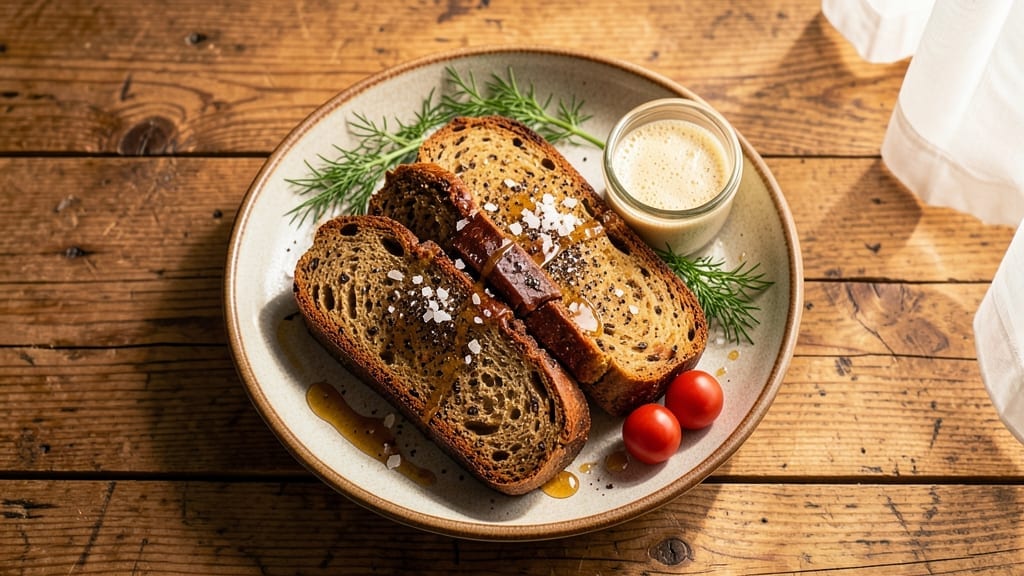
This 50-minute rye bread recipe delivers the perfect balance of a crusty exterior and tangy, dense interior—no fancy equipment required. The secret lies in a simple mix of rye flour, yeast, and water, combined with a seed topping that adds texture and flavor.
I’ve tested this recipe countless times, and it consistently yields a loaf with a satisfying crunch and a hearty, slightly sweet crumb.
The process is beginner-friendly, with clear steps for mixing, kneading, and proofing—no kneading machine needed. You’ll shape the dough into a classic round loaf, then bake it until the crust turns a deep golden brown.
The tangy seed topping (poppy seeds, flaxseeds, and sesame seeds) adds a nutty crunch that pairs perfectly with the bread’s rich flavor. It’s the kind of loaf that tastes even better the next day, making it ideal for meal prep or gifting.
What sets this recipe apart is its versatility—use it for sandwiches, toast, or even as a side with soups and stews. The crust stays crispy for hours, while the interior remains soft and slightly chewy.
With just five core ingredients and 50 minutes of active time, you’ll have a restaurant-quality loaf that rivals store-bought options. Ready to bake?
The key to success is patience during proofing and baking—don’t rush it. Let the dough rise until it’s nearly doubled in size, and bake until the internal temperature reaches 190°F.
A few simple adjustments, like brushing the crust with water for extra shine or adding a touch of honey for sweetness, can elevate this bread even further. Let’s get started!
Ingredients for 50 rye bread
Five core ingredients plus seeds create this restaurant-quality rye bread in just 50 minutes.
| Ingredient | Amount | Notes |
|---|---|---|
| Rye Flour 🌾 | 3 cups | Dark rye flour for authentic flavor |
| All-Purpose Flour 🌾 | 1 cup | For lighter texture |
| Active Dry Yeast 🍞 | ¼ tsp | Fresh yeast for best results |
| Granulated Sugar 🍚 | 1 tbsp | Feeds yeast for rise |
| Salt 🧂 | 1 ½ tsp | Kosher or sea salt preferred |
| Warm Water 💧 | 1 ¼ cups | 110°F for yeast activation |
| Poppy Seeds 🌱 | ¼ cup | For tangy crunch |
| Flaxseeds 🌱 | ¼ cup | Ground for texture |
| Sesame Seeds 🌱 | ¼ cup | Toasted for extra flavor |
| Olive Oil 🫒 | 1 tbsp | For dough elasticity |
| Honey 🍯 | 1 tbsp | Optional for sweetness |
The rye flour is non-negotiable here—Bob’s Red Mill or King Arthur dark rye deliver the best flavor. If you can’t find dark rye, pumpernickel flour works in a pinch, though the color will be lighter. The yeast needs to be fresh; if your packet says ‘expired,’ toss it. Warm water is key—too hot kills the yeast, too cold slows it down. I always test the water temperature with my finger; it should feel warm but not hot. For the seeds, Trader Joe’s has the best bulk bins at reasonable prices—just make sure they’re fresh and not rancid.
No dark rye? Substitute with whole wheat flour plus 1 tbsp molasses for depth. The honey is optional but recommended—it adds subtle sweetness that balances the tangy seeds. If you’re avoiding honey, maple syrup works equally well. The olive oil can be swapped for melted butter if you prefer, though it’ll add richness. For the seed topping, if you’re missing one type, use extra of the others—just keep the total at 3/4 cup. Toast the seeds in a dry pan for 2-3 minutes before mixing to bring out their flavors.
The dough keeps best in the fridge for 3 days wrapped tightly in plastic. For longer storage, freeze the shaped loaf (unbaked) for up to 3 months—just thaw overnight before baking. The baked loaf stays fresh for 5 days at room temperature if wrapped in a cotton towel. To revive stale bread, warm it in a 200°F oven for 5-10 minutes—it’ll taste fresh again. I always bake two loaves; one for immediate use and one to freeze for later.
Why You’ll Love This Recipe
- No-Knead Magic: This dough comes together in five minutes—just mix the rye and all-purpose flour with yeast, a pinch of sugar, and salt. Honestly, the only effort is shaping it before letting it rise while you watch a show.
- Earthy Depth: That rye flour gives it a nutty, slightly tangy bite that pairs perfectly with butter or jam. Between us, it’s the kind of bread that makes store-bought loaves feel boring.
- Weeknight Workhorse: Use it for breakfast toast, sandwiches, or even as a side for soup—it’s that reliable. I bake a batch on Sunday and freeze slices because it’s always in demand.
- Budget-Friendly Staple: Rye flour is cheaper than specialty grains, and yeast stretches a loaf far. Plus, it keeps for days, so you’re not scrambling to use it up before it dries out. (Yes, even on a Tuesday night.)
Step-by-step instructions for 50-Minute rye bread
Here’s the method for a perfectly balanced loaf with a crisp crust and nutty seed topping.
Activate the Yeast and Mix the Dough
In a large mixing bowl, combine the 1.25 cups warm water (around 110°F), 1 tbsp granulated sugar, and 0.25 tsp active dry yeast. Let this mixture sit for 5-10 minutes until it becomes frothy—this confirms the yeast is active. If it doesn’t bubble, your yeast may be dead, and you’ll need to start over.
Once frothy, add the 3 cups rye flour, 1 cup all-purpose flour, 1.5 tsp salt, 1 tbsp olive oil, and 1 tbsp honey. Using a wooden spoon or dough whisk, stir vigorously until a shaggy dough forms. The rye flour will make this dough denser than traditional bread dough, so don’t worry if it looks thick and sticky at this stage.
Knead Until Elastic and Smooth
Transfer the dough to a lightly floured surface and knead for 8-10 minutes until it becomes smooth and elastic. You’ll know it’s ready when it springs back slowly when poked. The rye flour requires more kneading than all-purpose flour to develop gluten properly, so don’t rush this step.
If the dough feels too sticky, wet your hands slightly and continue kneading. Shape it into a round ball and place it in a lightly oiled bowl. Cover with a damp kitchen towel and let it rise in a warm place for 30 minutes. You should see it nearly double in size—this indicates proper fermentation.
Shape and Prepare the Seed Topping
In a small bowl, combine the 0.25 cup poppy seeds, 0.25 cup flaxseeds, and 0.25 cup sesame seeds. Toast them in a dry skillet over medium heat for 2-3 minutes until fragrant and lightly golden. Let them cool completely before using.
Punch down the risen dough and shape it into a 10-inch round on a parchment-lined baking sheet. Press gently to create a smooth surface. Sprinkle the toasted seed mixture evenly over the top, pressing lightly so it adheres. This topping will add texture and flavor to every bite.
Proof and Bake for Crispy Crust
Cover the dough with a damp towel and let it proof for 15 minutes until it rises slightly. Preheat your oven to 425°F with a baking stone or inverted baking sheet on the lower rack. This creates steam, which is crucial for that crisp crust.
Bake the bread for 20-25 minutes until the crust is deep golden brown and the internal temperature reaches 205°F. Tap the bottom—it should sound hollow. If the top browns too quickly, tent loosely with foil after 15 minutes to prevent over-browning.
Cool and Serve for Maximum Flavor
Remove the bread from the oven and let it cool on a wire rack for 10 minutes. The crust will firm up as it cools, and the interior will continue to set. Slice into 4 equal wedges and serve warm for the best texture and flavor.
This bread keeps well at room temperature for 3 days or can be frozen for up to 1 month. The seed topping adds a delightful crunch, while the rye flour delivers that authentic tangy flavor you’d expect from traditional rye bread.
Pro Tips For Making 50 Rye Bread
- Bloom the Yeast First: Skip mixing yeast directly into dry ingredients—it’s lazy and unreliable. Instead, dissolve the yeast in warm water (105°F–110°F) with a pinch of sugar first, then let it foam for 5–10 minutes. This guarantees it’s active before it hits the rye flour, which can be stubborn about activating.
- Weigh Your Rye Flour: Rye flour is deceptively dense—scooping it leads to inconsistent batches. Use a kitchen scale for the rye and all-purpose flour; 50 grams isn’t the same as ½ cup. Trust me, your bread’s structure will thank you.
- Don’t Over-Knead the Dough: Rye dough is tougher than wheat—it fights back when you knead too long. Stop when it’s just smooth, not elastic. Overworking it makes the bread dense, and you’ll regret it when you’re left with a brick instead of a loaf.
- Steam the Oven: Preheat your Dutch oven with a cup of boiling water on the bottom rack for 10 minutes before baking. The steam creates that crisp crust and open crumb rye bread is famous for—no fancy equipment needed, just a little extra time.
Best sauces and condiments for 50 rye bread
Classic Garlic Butter
This is my go-to pairing for rye bread—simple yet irresistible. Melt 2 tablespoons of unsalted butter in a small saucepan over low heat, then add 2 minced garlic cloves and 1 teaspoon fresh parsley. Let it simmer for 2 minutes until fragrant but not browned.
Brush this warm mixture onto fresh slices of rye bread just before serving. The garlic enhances the bread’s natural tang, while the butter adds richness. 🧄
Spicy Mustard Spread
For a bold twist, mix 2 tablespoons of Dijon mustard with 1 tablespoon of honey and a pinch of cayenne pepper. Spread this zesty blend on warm rye slices and top with a sprinkle of crumbled blue cheese for extra depth.
The mustard’s sharpness cuts through the bread’s density, while the honey balances the tang. Perfect for hearty sandwiches or as a snack with cheese. 🌶️
Smoked Paprika Aioli
Whisk together ½ cup of mayonnaise, 1 teaspoon of smoked paprika, 1 teaspoon of lemon juice, and a pinch of salt. This smoky, creamy dip pairs beautifully with the nutty seeds on your rye bread.
For extra flair, add a dash of hot sauce or chopped chives. The paprika complements the rye’s earthy notes, while the aioli adds a luxurious texture. 🔥
Honey and Walnut
Toast ½ cup of walnut halves in a dry skillet over medium heat for 3-4 minutes until golden. Chop them roughly and mix with 2 tablespoons of honey and 1 teaspoon of apple cider vinegar.
Drizzle this sweet-savory blend over slices of rye bread and broil for 1-2 minutes to caramelize the honey. The walnuts add crunch, while the honey softens the bread’s crust. Ideal for breakfast or dessert. 🌰
Everything Bagel Seasoning
Sprinkle 1 teaspoon of everything bagel seasoning (like Schwartz’s) over warm rye slices and brush lightly with melted butter. The sesame seeds, poppy seeds, and garlic in the seasoning mirror your bread’s topping, creating a cohesive flavor profile.
For extra richness, add a smear of cream cheese before sprinkling. This pairing is a crowd-pleaser for brunch or as a snack. ✨
Whipped Feta Dip
Blend ½ cup of whipped feta cheese with 1 tablespoon of olive oil, 1 teaspoon of lemon zest, and a pinch of black pepper until smooth. Serve this tangy dip alongside rye bread slices for dipping or as a spread.
The feta’s creaminess contrasts the bread’s crusty texture, while the lemon brightens the flavors. Perfect for parties or as a quick appetizer. 🧀
Nutrition facts
Frequently asked questions
Why does my rye bread turn out dense instead of light?
Rye flour is naturally heavier than all-purpose flour, so density is expected—but over-kneading or skipping proofing makes it worse. The recipe calls for 8-10 minutes of kneading and 45 minutes total proofing time (30 + 15). If your dough feels too sticky, wet your hands slightly instead of adding more flour, which can weigh it down.
Can I make this bread without a stand mixer?
Rye bread dough is best kneaded by hand for 8-10 minutes on a lightly floured surface. The extra effort develops gluten properly—no machine needed. For extra strength, use your knuckles to press and fold the dough instead of just stretching it.
How do I fix a flat-topped loaf?
Preheat your oven to 425°F with a baking stone or inverted sheet on the lower rack for steam. Place your shaped loaf on parchment-lined sheet, then bake for 20-25 minutes. If the top browns too fast, tent loosely with foil after 15 minutes. For extra height, let the dough rise until it nearly doubles in size before shaping.
Is this recipe vegan-friendly?
Not quite—but with two swaps, it becomes fully plant-based! Replace the honey with 1 tbsp maple syrup and the olive oil with vegan butter or coconut oil. The yeast and flours are already vegan, so you’ll get the same tangy, dense texture without animal products.
Can I add cheese to this bread?
Yes! For a savory twist, sprinkle ½ cup grated cheddar or gouda on top before the final proof. Press it lightly into the dough so it melts during baking. Start with mild cheese—strong varieties like blue cheese can overpower the rye’s flavor. Add cheese after shaping but before the 15-minute final proof.

- Pea Soup Instant Pot Recipe: Velvety Green Smoothness in 20 Minutes - November 1, 2026
- Pork Loin Pulled Pork Crock Pot Recipe: Slow-Smoked Tenderness With Zero Dryness - November 1, 2026
- Baked Potatoes in Crock Pot Recipe: Buttery Interiors and Crispy Top Magic - November 1, 2026