
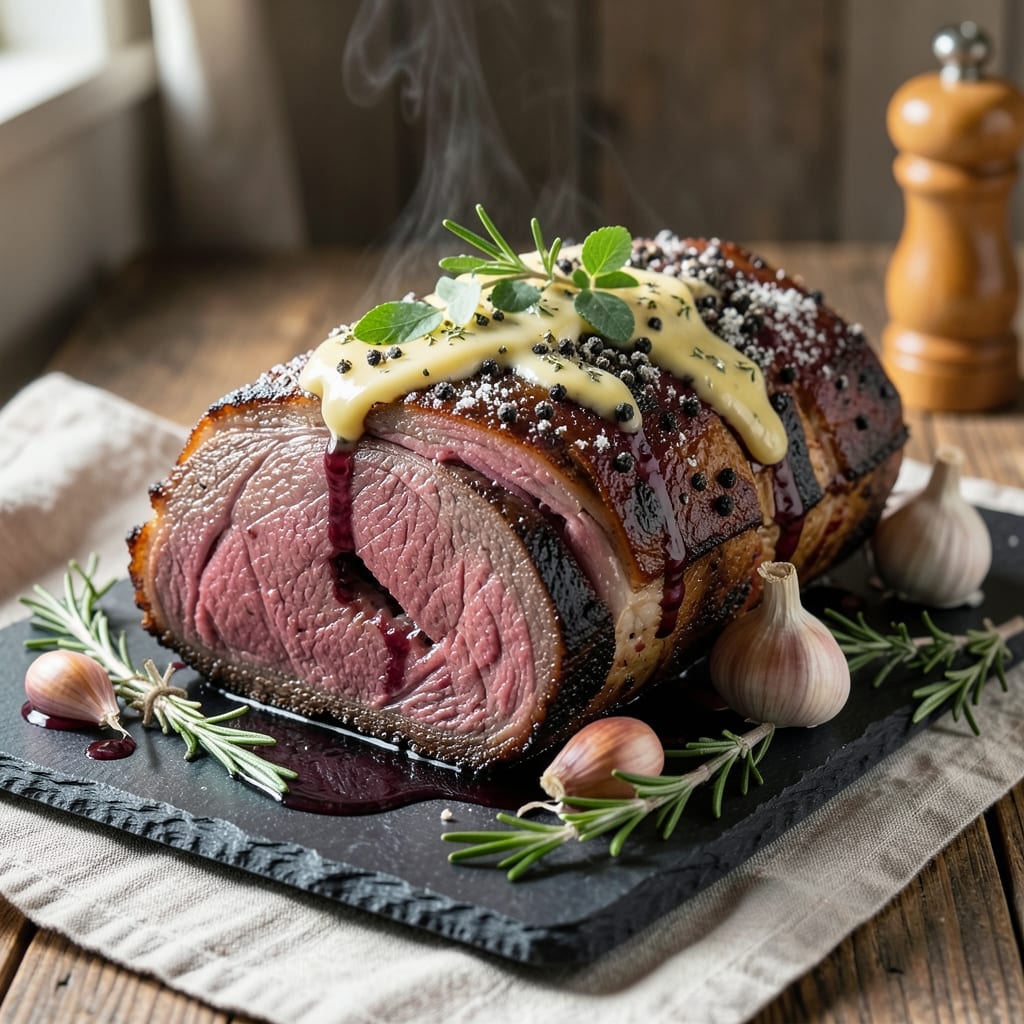
A 5.5 lb prime rib roast cooked to perfection delivers restaurant-quality results at home—juicy, tender meat with a crackling crust that makes every slice unforgettable. I developed this reverse sear method after years of trial and error, learning that patience (and precise temperatures) is the secret to success.
The key lies in slow cooking first to even doneness, then finishing with a high-heat sear for that coveted crust.
This recipe transforms a simple roast into a showstopping centerpiece with minimal effort—just a few hours of hands-off cooking and a 15-minute sear at the end. We’ll use a low-and-slow oven approach to reach medium-rare (125°F internal temp) before finishing in a screaming-hot pan.
The result? A prime rib so tender it nearly melts in your mouth, with a crust that’s crisp enough to stand up to a fork.
Pairing this roast with classic sides like garlic mashed potatoes, roasted rosemary potatoes, or a tangy horseradish cream sauce elevates the meal to special-occasion status. The reverse sear method ensures crust-to-core juiciness without drying out the meat, and proper resting (20-30 minutes) guarantees every slice stays moist.
This is the kind of recipe that turns a weeknight into a celebration.
Whether you’re cooking for a holiday feast or treating yourself to a luxurious dinner, this prime rib delivers professional-quality results with simple techniques. The reverse sear method might sound intimidating, but I’ll walk you through every step—from seasoning and resting to achieving that perfect crust.
Let’s get started on a roast that’ll impress even the most discerning guests.
Ingredients for 5.5 lb prime rib roast
Six simple ingredients transform a prime rib into a showstopping centerpiece.
| Ingredient | Amount | Notes |
|---|---|---|
| Prime Rib Roast (Bone-In) 🥩 | 5 ½ lb | Center-cut, USDA Prime grade |
| Kosher Salt 🧂 | 1 ½ tbsp | Diamond Crystal preferred |
| Freshly Ground Black Pepper 🌶️ | 1 ½ tbsp | Coarse grind for texture |
| Garlic Cloves 🧄 | 6 cloves | Smashed, skin-on for flavor |
| Fresh Rosemary 🌿 | ¼ cup | Chopped, stems removed |
| Fresh Thyme 🌿 | ¼ cup | Leaves only, stems removed |
| Extra-Virgin Olive Oil 🫒 | 2 tbsp | For crust development |
| Yellow Mustard 🍯 | 1 tbsp | As binder for seasoning |
| Unsalted Butter 🧈 | ½ cup | Cold, cubed for searing |
| Beef Tallow or Duck Fat 🥄 | ¼ cup | For high-heat crust |
| Red Wine 🍷 | ½ cup | Bold Cabernet Sauvignon |
| Beef Bone Broth 💧 | 1 cup | For basting during slow cook |
The roast is everything here. USDA Prime is non-negotiable—look for vibrant red meat with good marbling at Whole Foods or your local butcher. A center-cut bone-in roast stays juicier during slow cooking. If your grocery store doesn’t carry prime, Choice grade with extra marbling works in a pinch. The weight matters too: 5.5 lbs feeds 6 generously with leftovers. I always buy a day ahead and let it sit uncovered in the fridge—this helps the seasoning adhere better during the dry brine effect.
No prime rib? Choice grade with extra marbling is your next best bet, but expect slightly less tenderness. Fresh rosemary and thyme are ideal, but dried works at half the amount if you’re in a bind. The red wine can be swapped for beef broth with a splash of balsamic—just don’t skip the bold flavor. For the butter, European-style (like Plugrá) has higher fat content, which is perfect for that crackling crust. If you can’t find tallow, lard or duck fat works just as well. The garlic? Smash those cloves—it releases more flavor during cooking.
Let the roast sit at room temperature for 2 hours before cooking for even doneness. The seasoning mix keeps for 3 days in the fridge if you want to prep ahead. For the reverse sear, your oven needs to hit 250°F consistently—use an oven thermometer to confirm. The finished roast rests for 20-30 minutes before slicing, which is crucial for juiciness. Leftovers? Store in the fridge for 4 days or freeze for 3 months. I always portion mine into individual servings for easy reheating.
Why You’ll Love This Recipe
- I’ll be real: the first slice is the star, but the second? That’s where it gets good. Thinly sliced the next day in sandwiches or reheated with a splash of red wine—suddenly, you’ve got a whole week’s worth of “I didn’t even realize we were eating fancy again.”
- Five-Ingredient Magic: The bone-in prime rib practically seasons itself—just salt, pepper, and a handful of garlic and rosemary. That’s it. No fancy rubs, no stressing over layers of herbs. The bone renders down into rich, buttery drippings that baste the meat while you’re still slicing the garlic.
- Sunday Dinner Hero: Between us, this is the dish that turns a casual meal into a moment. The rosemary infuses deep while the garlic cloves caramelize into golden pockets—perfect for when you want to impress without slaving away. (Yes, even on a Tuesday night.)
- Leftovers That Win: I’ll be real: the first slice is the star, but the second? That’s where it gets good. Thinly sliced the next day in sandwiches or reheated with a splash of red wine—suddenly, you’ve got a whole week’s worth of “I didn’t even realize we were eating fancy again.”
Step-by-step instructions for 5.5 lb prime rib roast via reverse sear
Here’s how to transform your prime rib into a showstopping centerpiece with perfect crust and melt-in-your-mouth tenderness.
Prepare and Season the Prime Rib
Remove the prime rib from the refrigerator and let it sit at room temperature for 1 hour before cooking. This ensures even cooking throughout. Pat the roast dry with paper towels, including inside the cavity—moisture is the enemy of that beautiful crust we’re after.
In a small bowl, combine the 1.5 tablespoons kosher salt, 1.5 tablespoons freshly ground black pepper, 1 tablespoon yellow mustard, 2 tablespoons extra-virgin olive oil, and 1 cup beef bone broth. Mix well to create a paste. Rub this mixture all over the prime rib, including inside the cavity. The mustard acts as a binder to help the seasoning stick, while the olive oil promotes crust formation.
Next, create a herb crust by combining the 6 smashed garlic cloves, ¼ cup chopped fresh rosemary, and ¼ cup fresh thyme leaves in a mortar and pestle or food processor. Pulse until finely chopped but not pasty. Press this herb mixture onto the surface of the roast, covering it completely. The fresh herbs will infuse incredible flavor while helping create that coveted crust.
Slow Cook to Internal Temperature
Preheat your oven to 250°F for the slow cook. Place the seasoned prime rib fat-side up on a rack in a roasting pan. This elevated position allows heat to circulate evenly around the roast. Pour the ½ cup red wine into the bottom of the pan—this adds depth of flavor as it slowly cooks down.
Roast the prime rib for 2 to 2.5 hours, or until the internal temperature reaches 115-120°F at the thickest part of the meat. This low-and-slow approach builds incredible tenderness throughout the roast. The wine will reduce to a syrupy consistency, creating a flavorful pan sauce. Don’t be tempted to open the oven door during this process—every time you do, you lose heat and extend cooking time.
Here’s the thing—your oven might run hot or cold, so use a reliable meat thermometer to track progress rather than relying solely on time. The prime rib should feel very tender when you press it gently with your fingers, but it will still be quite cool to the touch.
Create the Perfect Crust with High Heat
While the prime rib is still cool from the oven, remove it from the pan and let it rest on a cutting board for 10 minutes. This resting period allows the surface to firm up slightly, making it ready for the high-heat sear. Preheat your broiler to high while the prime rib rests.
In a small bowl, mix together the ½ cup unsalted butter and ¼ cup beef tallow or duck fat. This high-fat mixture is crucial for creating that beautiful, caramelized crust. Using tongs, brush this fat mixture all over the surface of the prime rib, including the fat cap. The fat helps conduct heat and creates a protective crust that locks in juices.
Place the prime rib on a broiler-safe rack set over a baking sheet. Broil for 5 to 7 minutes, watching carefully as the surface develops a deep mahogany color and crispy texture. You’re looking for a crust that’s deep golden brown to almost black in spots—this indicates proper caramelization. Rotate the roast halfway through if needed for even browning. If you see smoke, reduce the broiler heat slightly to prevent burning.
Rest and Slice for Maximum Juiciness
Remove the prime rib from the broiler and transfer it to a warm cutting board. Tent loosely with aluminum foil and let it rest for 15 to 20 minutes. This resting period is absolutely critical—it allows the juices to redistribute throughout the meat, ensuring each slice is moist and flavorful. During this time, you can make a quick pan sauce by deglazing the roasting pan with the reduced wine and scraping up any browned bits.
To slice, locate the grain direction by looking at the cut surface—you’ll see lines running through the meat. Using a sharp carving knife, cut against the grain into ½-inch thick slices. The flat and point cuts will have different grain directions, so adjust your angle accordingly. Serve immediately with the pan sauce spooned over the top and any extra herbs from the surface of the roast sprinkled on top.
Each slice should be perfectly pink in the center with a beautiful mahogany crust on the outside. The meat should be fork-tender but still hold its shape, with juices running clear when you pierce it. This reverse sear method guarantees you’ll achieve that perfect balance of crust and juiciness that makes prime rib so special.
Pro Tips For Making 5.5 Lb Prime Rib Roast
- SEAR THE FAT SIDE FIRST: I learned this the hard way—skipping this step means you’ll end up with a bland crust. Flip the roast bone-side down first to render fat, then sear the fat cap side until it’s deep golden. That’s where the flavor happens.
- CRUSH GARLIC CLOSER TO THE HEAT: Whole garlic cloves on the outside of the roast? Forget it. Smash them flat with the side of your knife and scatter them directly on the meat—especially near the edges. They’ll crisp and infuse flavor instead of just sitting there like decorative garnish.
- DON’T CUT THE ROSEMARY TOO SMALL: Tiny rosemary sprigs disappear into the meat and lose their punch. Snip 3-inch stems into 1-inch pieces—long enough to hold their shape but short enough to release aroma. Tuck them under the fat cap where they’ll nestle against the meat.
- USE A MEAT THERMOMETER—NOT TIME: I used to pull prime rib at “medium-rare” based on feel, and it was always a gamble. For a 5.5 lb roast, aim for 120°F internal temp (medium-rare) and 130°F (medium). Bone-in roasts run hotter—pull it 5°F early and let it rest.
Flavor customization for this recipe
Classic Herb Crust
The classic combination of rosemary, thyme, and garlic creates an aromatic crust that’s hard to beat. I like to smash the garlic cloves first—their skins release more flavor during cooking.
For an extra boost, add 1 tsp of Penzeys’ smoked paprika to the herb mixture before pressing it onto the roast. This adds a subtle smokiness that pairs beautifully with the wine reduction in the pan. 🌿
Spicy Kick
If you love heat, mix 1 tbsp of cayenne pepper or 1 tsp of crushed red pepper flakes into the seasoning paste. For a more balanced spicy profile, add 1 tsp of brown sugar to the cayenne—this creates a sweet-spicy contrast that’s perfect with prime rib.
I’ve found that Cholula hot sauce (just 1 tsp) brushed on after the high-heat sear adds a tangy finish that guests always rave about.
Garlic Butter Glaze
Swap the butter-tallow mix for a garlic butter glaze by melting ½ cup butter with 4 minced garlic cloves and 1 tbsp of lemon juice. Brush this on during the final broiling step for a bright, garlicky crust.
The acidity in the lemon juice helps cut through the richness of the beef. I like to finish with a sprinkle of flaky sea salt right before serving—it adds a sophisticated touch. 🧈
Red Wine Reduction
Instead of using the wine just for basting, reduce ½ cup red wine with 1 tbsp of beef bone broth and 1 tsp of Dijon mustard until syrupy. Brush this reduction on the roast during the final 5 minutes of broiling.
The acidity in the wine helps tenderize the surface while adding depth of flavor. For a richer version, add 1 tbsp of balsamic vinegar to the reduction—it adds complexity that pairs perfectly with the beef.
Cheesy Herb Topping
For a decadent twist, mix ½ cup of grated Gruyère cheese with 2 tbsp of chopped parsley and spread it over the roast during the final 3 minutes of broiling. The cheese melts into a golden crust that adds richness.
I recommend using a mandoline for even cheese slices. This variation works especially well with a white wine reduction instead of red—try ½ cup Chardonnay reduced with 1 tbsp of honey for a sweet-savory balance.
Smoky Chipotle Twist
Infuse the red wine with 1-2 chipotle peppers in adobo sauce while it reduces. Brush this smoky-sweet wine mixture over the roast during the final sear. For extra depth, add 1 tsp of ground cumin to the seasoning paste.
This Mexican-inspired variation adds a bold, smoky heat that pairs surprisingly well with the classic herb crust. The chipotle peppers should be finely minced so they distribute evenly. 🌶️
Nutrition facts
Frequently asked questions
What’s the ideal doneness for prime rib?
For this recipe, we aim for medium-rare (125°F internal temp)—this gives you that perfect balance of pink center and tender texture. The reverse sear method ensures even doneness throughout the entire roast. If you prefer medium, cook until 135°F, but medium-rare is where prime rib truly shines.
Can I use a meat thermometer?
A meat thermometer is essential for perfect results. Insert it into the thickest part of the roast (avoiding bone) to check temperature. For medium-rare, pull it at 120°F—it’ll rise to 125°F while resting. Pro tip: Use a wireless thermometer so you don’t have to open the oven door during cooking.
How do I prevent drying out the prime rib?
The key is low-and-slow cooking followed by a quick sear. Never cook it at high heat initially—this causes moisture loss. The 250°F slow cook builds tenderness while keeping the meat moist, then the high-heat broil creates the crust without overcooking. Also, rest the roast for 20-30 minutes before slicing—this redistributes juices.
What sides pair best with prime rib?
Classic pairings include garlic mashed potatoes, roasted rosemary potatoes, and creamy horseradish sauce. For a lighter option, try asparagus with hollandaise or a fresh green salad with balsamic vinaigrette. The wine reduction from cooking makes an excellent sauce for drizzling over everything.
Can I make this ahead of time?
Yes! Season the roast and refrigerate it uncovered for 12-24 hours before cooking—this creates a dry brine effect. For leftovers, store in the fridge for 4 days or freeze for 3 months. Reheat slices in a 350°F oven for 10-15 minutes to maintain moisture. Never microwave—it makes the meat tough.

- 3 Layer Eggnog Cake Recipe: Spiced Rum-Infused Frosting and Boozy Swirls - October 6, 2026
- 1800 Ultimate Margarita Mix Recipe: Frozen or On-The-Rocks Versatility - October 6, 2026
- 3 Eggs and Cabbage Recipe: Savory Scramble With Crispy Edges - October 6, 2026