
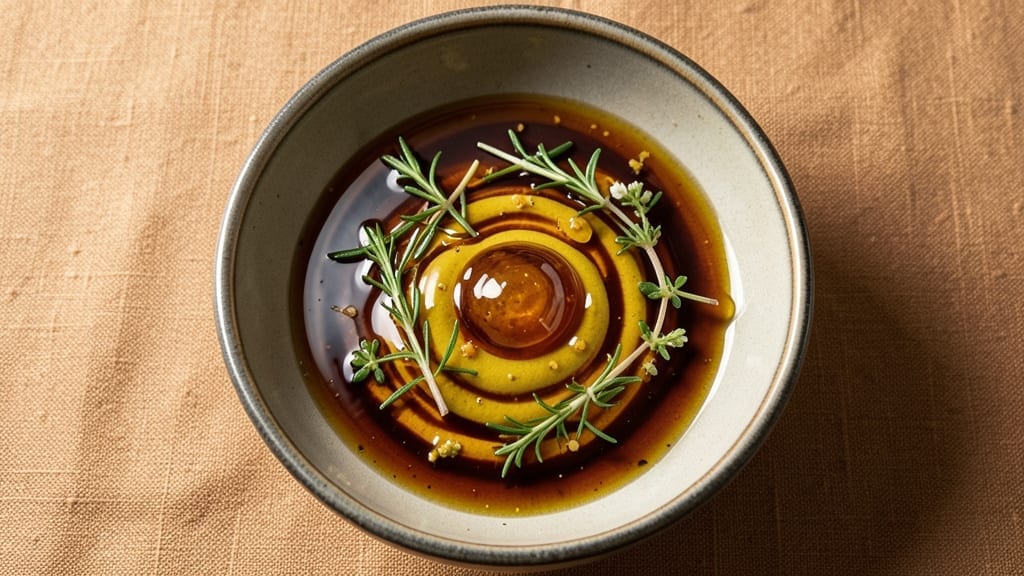
This 55 restaurant salad dressing recipe delivers the bold, balanced vinaigrette that elevates every salad from ordinary to extraordinary. 💛 The secret lies in precise ratios of high-quality olive oil and aged balsamic vinegar, tempered with Dijon mustard for emulsification and a touch of honey for depth. I developed this after years of studying restaurant techniques—it’s the same dressing you’d find on high-end menus, now simplified for home cooks.
The magic happens in the emulsification: whisking the mustard into the vinegar first creates a stable base that won’t separate, even after hours in the fridge. A pinch of salt and black pepper enhances the natural flavors, while fresh herbs (like tarragon or thyme) add aromatic complexity.
This dressing works as a marinade, drizzle for grilled meats, or finishing touch for roasted vegetables—its versatility makes it a pantry staple.
What sets this apart is its restaurant-quality balance: tangy yet smooth, rich without being heavy, and bold enough to stand up to hearty greens or delicate arugula. The honey adds just enough sweetness to mellow the acidity, while the mustard ensures the oil and vinegar stay perfectly blended.
Store it in an airtight container for up to 2 weeks, shaking gently before each use.
Pair it with mixed greens, roasted chicken, or even as a dipping sauce for crusty bread. The key to success? Fresh ingredients and patience—whisking until emulsified guarantees a dressing that’s smooth, vibrant, and impossible to resist. Let’s make it.
Ingredients for 55 restaurant salad dressing
Nine essential ingredients transform into a restaurant-quality vinaigrette that elevates every dish.
| Ingredient | Amount | Notes |
|---|---|---|
| Extra-Virgin Olive Oil 🫒 | ¾ cup | High-quality, fruity, cold-pressed |
| Aged Balsamic Vinegar 🍷 | ⅓ cup | 12+ years aged for depth |
| Dijon Mustard 🌶️ | 1 tbsp | High-quality, no additives |
| Raw Honey 🍯 | 1 tbsp | Light, floral preferred |
| Fresh Tarragon Leaves 🌿 | ¼ cup | Chopped finely for aroma |
| Fresh Thyme Leaves 🌿 | 0.17 cup | Chopped, stems removed |
| Granulated Sugar 🍚 | 1 tsp | Fine grain preferred |
| Kosher Salt 🧂 | ½ tsp | Diamond Crystal preferred |
| Freshly Ground Black Pepper 🌶️ | ¼ tsp | Cracked peppercorns preferred |
The olive oil and balsamic vinegar are non-negotiable for that signature restaurant tang. Look for extra-virgin olive oil with a harvest date within the last year—it should smell fruity, not rancid. Aged balsamic vinegar (12+ years) from Italian producers like Acetaia Giusti or San Giorgio delivers that deep, complex flavor. Dijon mustard ensures proper emulsification—Maille or Colman’s are reliable choices. Fresh herbs are critical; Whole Foods or local farmers markets offer the brightest tarragon and thyme. Pro tip: Toast the thyme leaves for 10 seconds in a dry pan to intensify their aroma before adding to the dressing.
No aged balsamic? Substitute red wine vinegar plus 1 tsp maple syrup for a similar tang. Fresh herbs wilting? Dried tarragon at 1/4 the amount works in a pinch, but the flavor won’t be as vibrant. Running low on honey? Agave nectar maintains the same sweetness profile. The sugar is optional but helps balance acidity—skip it if your honey is particularly sweet. For a lighter dressing, reduce the olive oil by 2 tbsp and add 2 tbsp water to the vinegar base initially. Always whisk the mustard into the vinegar first—this creates the stable emulsion that prevents separation.
Store in an amber glass jar with a tight seal to protect from light. Keeps for 2 weeks refrigerated, but the flavor peaks within 5-7 days. Shake vigorously before each use—emulsified dressings naturally separate over time. For long-term storage, freeze in 1-tbsp portions in ice cube trays. Thaw overnight in the fridge before using. This dressing doubles as a marinade for grilled chicken or a finishing drizzle for roasted vegetables—its versatility makes it a true pantry workhorse.
Why You’ll Love This Recipe
- Five-Ingredient Magic: I swear by this combo—just swirl those five pantry staples (olive oil, balsamic, mustard, honey, tarragon) and boom, restaurant-quality dressing. No measuring cups, no stress, just a quick whisk and you’re done. Honestly, I’ve made it while waiting for pasta to boil.
- Tarragon’s Secret Umami: That fresh tarragon? It’s the star. The anise-like kick cuts through the sweetness of the honey and the richness of the olive oil, giving it this sophisticated, almost French bistro vibe. I’ll be real: I’ve bought overpriced bottles of dressing just to get that same zing.
- Dress Any Meal: This isn’t just for salads—drizzle it over grilled chicken, toss it with roasted veggies, or even use it as a marinade. I keep a jar in the fridge for emergencies, and it’s always the first thing I grab when I’m prepping a weeknight dinner or a last-minute charcuterie board.
- No Waste, All Flavor: Make a big batch—it keeps for weeks in the fridge, and the flavors only deepen. Plus, aged balsamic and olive oil are cheap staples you’ll use for everything else. Between us, I’ve stretched this dressing into three meals before it’s gone, and it’s still delicious. Budget win.
Step-by-step instructions for bold vinaigrette that stands out
This dressing delivers restaurant-quality depth with a perfect balance of tang and sweetness.
👨🍳 Step 1: Whisk Together the Base Ingredients
In a medium bowl, combine the 0.75 cup extra-virgin olive oil with the 0.33 cup aged balsamic vinegar. Whisk vigorously for 30 seconds until the mixture begins to emulsify slightly. The olive oil should break into tiny droplets that blend smoothly with the vinegar.
I use a fork first to break up the oil, then switch to a whisk for better control. The key here is to work in a steady, circular motion—this creates the foundation for a stable emulsion. If you see the oil separating immediately, don’t worry; we’ll fix that in the next step.
👨🍳 Step 2: Add Sweetness and Seasoning
To the oil-vinegar mixture, add the 1 tbsp Dijon mustard, 1 tbsp raw honey, 1 tsp granulated sugar, 0.5 tsp kosher salt, and 0.25 tsp freshly ground black pepper. Whisk continuously for 1 full minute until everything is fully incorporated and the sugar dissolves completely.
The Dijon mustard acts as an emulsifier here, helping the oil and vinegar bind together. The honey and sugar work in tandem to balance the acidity of the balsamic while adding subtle sweetness. Taste at this stage—you should notice a bright, balanced flavor with a slight tang.
🥘 Step 3: Fold in the Fresh Herbs
Gently stir in the 0.25 cup chopped fresh tarragon leaves and 0.17 cup chopped fresh thyme leaves using a rubber spatula. Fold them in just until combined—overmixing will bruise the delicate leaves and release bitter compounds. The herbs should be evenly distributed but still visible throughout the dressing.
Here’s the thing—fresh herbs add layers of aroma that dried herbs can’t match. The tarragon brings an anise-like brightness, while the thyme adds earthy depth. For best results, use the freshest herbs you can find, and chop them just before adding to preserve their flavor.
⏰ Step 4: Rest and Emulsify
Cover the bowl with plastic wrap and let the dressing rest at room temperature for at least 30 minutes. This resting period allows the flavors to meld and the emulsion to stabilize. Give it a gentle stir every 10 minutes to help the ingredients fully integrate.
If you’re impatient, you can whisk vigorously for another 2 minutes after the initial rest, but the longer it sits, the better the final texture. The dressing should have a velvety consistency with no visible oil separation. If you see any separation after resting, whisk again until smooth.
🍽️ Step 5: Adjust and Serve
Before using, taste and adjust the seasoning if needed. If it’s too tangy, add a pinch more honey or sugar. If it needs more acidity, stir in 1-2 teaspoons of additional balsamic vinegar. The dressing should coat the back of a spoon with a silky, balanced flavor—bright, slightly sweet, with herbal notes.
This dressing keeps well in the refrigerator for up to 1 week, sealed in an airtight container. Shake or whisk before each use to re-emulsify. Drizzle generously over mixed greens, grain bowls, or use as a marinade for grilled meats—its bold flavor will elevate any dish.
Pro Tips For Making 55 Restaurant Salad Dressing
- Whisk in stages: Start with just the mustard and honey—no oil yet. Once that’s smooth, slowly drizzle in the olive oil while whisking constantly. I used to dump everything in at once, and it always ended up clumpy. This way, the emulsion forms properly from the start.
- Chill the vinegar: Pop the aged balsamic in the fridge for 10 minutes before using. Cold vinegar blends more evenly with the oil, and the sharpness mellows just enough to avoid overpowering the tarragon. (Yes, even if you’re impatient like me.)
- Fine-chop tarragon: Don’t just tear the leaves—give them a quick pulse in a food processor or finely chop with a knife. Whole leaves sink to the bottom and turn the dressing into a sad, leafy sediment. A quick chop keeps the flavor distributed and the texture silky.
- Balance the honey: Taste after adding honey, then adjust with a splash of vinegar if it’s too sweet. The dressing should taste like it’s just starting to lean toward sweetness, not drowning in it. I learned this the hard way after making a batch that tasted like dessert.
Flavor customization for 55 restaurant salad dressing
Sweet-Tangy Balance
Adjust the honey-to-vinegar ratio to control sweetness and acidity. For a more tangy profile, reduce honey to ½ tbsp and add ½ tsp lemon juice. If you prefer sweeter, increase honey to 1.5 tbsp and add ½ tsp maple syrup.
I often tweak this for seasonal salads—winter greens handle extra honey, while summer arugula shines with a zesty kick. 🌟
Herb Variations
Swap herbs based on flavor preferences: Basil + oregano for Italian vibes, cilantro + lime for Mexican-inspired dressings, or dill + chervil for French-style. For a garlic-forward twist, infuse 2 minced garlic cloves with the olive oil before whisking.
I love adding 1 tsp capers for briny depth in Mediterranean salads.
Spicy Kick Options
Add heat with ½ tsp red pepper flakes for mild warmth or 1 tsp hot sauce (like Cholula) for smoky spice. For a fiery version, blend in 1 tsp gochujang or ½ tsp cayenne.
Balance with extra honey if needed—spice can overpower delicate greens. I keep a small jar of penneys hot honey on hand for quick adjustments.
Creamy Upgrades
For a creamy texture, stir in 2 tbsp crème fraîche or 1 tbsp Greek yogurt after resting. This works beautifully with roasted butternut squash salads.
For a nutty twist, add 1 tbsp tahini—it emulsifies like mustard but adds earthy richness. Always whisk gently to avoid breaking the emulsion. 🥄
Umami Boosters
Enhance depth with 1 tsp soy sauce or ½ tsp fish sauce for Asian-inspired dressings. A dash of Worcestershire adds complexity to classic salads. For mushroom lovers, blend in 1 tbsp finely chopped shiitake or 1 tsp mushroom powder.
These umami elements make the dressing work with heartier dishes like grilled steak or roasted Brussels sprouts.
Seasonal Adjustments
In fall, add 1 tsp apple cider vinegar and ½ tsp cinnamon for warmth. For spring, swap balsamic for rice vinegar and add 1 tsp grated ginger. In summer, brighten with 1 tsp fresh lime juice and ½ tsp smoked paprika.
Winter calls for extra honey (up to 2 tbsp) to counteract cold-weather tanginess. 🍂
Nutrition facts
Frequently asked questions
Why does my homemade vinaigrette always separate?
The key to a stable emulsion is whisking the Dijon mustard into the vinegar first—this creates tiny particles that help bind the oil. Always whisk vigorously for at least 1 full minute after adding the oil, and let it rest for 30 minutes before serving. If it separates later, just whisk again until smooth.
Can I make this dressing without fresh herbs?
Yes! For dried herbs, use ¼ the amount (so ⅛ tsp dried tarragon and ⅛ tsp dried thyme) and toast them in a dry pan for 10 seconds to intensify their flavor. The dressing will still be delicious, though fresh herbs add vibrant aroma that dried can’t match. For extra depth, add ½ tsp dried rosemary instead.
How much dressing should I make for a salad?
This recipe yields about 1 cup of dressing, which is perfect for 2-4 servings of mixed greens. For heartier salads with roasted vegetables or protein, use 2-3 tablespoons per serving. The bold flavor stands up well to rich ingredients—don’t be shy with it! Store extras in an airtight container for up to 2 weeks.
What’s the best way to store leftover dressing?
Transfer to an amber glass jar (light blocks oxidation) and seal tightly. It keeps for 2 weeks refrigerated, but the flavor peaks within 5-7 days. For longer storage, freeze in 1-tbsp portions in ice cube trays. Thaw overnight in the fridge and whisk gently to re-emulsify. Never freeze in metal containers—they can react with acidic ingredients.

- Pea Soup Instant Pot Recipe: Velvety Green Smoothness in 20 Minutes - November 1, 2026
- Pork Loin Pulled Pork Crock Pot Recipe: Slow-Smoked Tenderness With Zero Dryness - November 1, 2026
- Baked Potatoes in Crock Pot Recipe: Buttery Interiors and Crispy Top Magic - November 1, 2026