
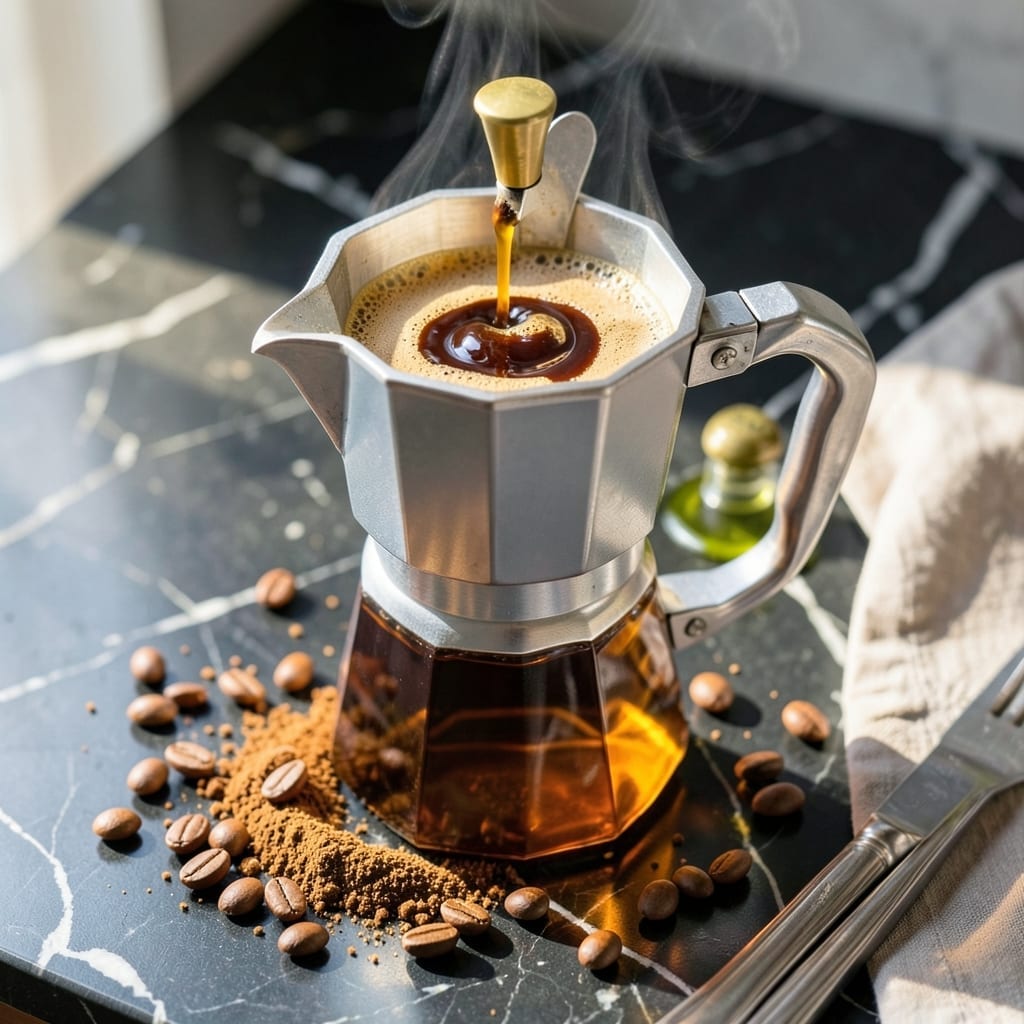
This classic stovetop method delivers the rich, bold flavor that defines authentic Italian coffee culture.
The 6-cup moka pot produces a concentrated brew that’s stronger than drip coffee but smoother than espresso. I’ve refined this technique through years of daily use to ensure consistent results every time.
Proper water-to-coffee ratio, grind size, and heat control are the secrets to avoiding bitterness while achieving that signature crema-like foam.
Master these fundamentals, and you’ll produce a cup that rivals any Italian café. The process takes 10 minutes from start to finish.
Ingredients for 6 Cup Moka Pot
Three essentials for authentic Italian stovetop coffee every time.
| Ingredient | Amount | Notes |
|---|---|---|
| Medium-Roast Coffee Beans ☕ | ½ cup | Freshly ground to fine consistency |
| Filtered Water 💧 | 2 cups | Cold, for optimal extraction |
| Moka Pot ☕ | 1 whole | 6-cup capacity required |
The coffee beans are everything here. Medium-roast Italian blends like Lavazza or Illy are ideal—avoid oily dark roasts that clog the filter. Whole beans ground just before brewing preserve the aromatic oils. Most grocery stores carry suitable options, but specialty coffee shops offer fresher beans with higher quality control. Grind size should resemble table salt—too fine causes bitterness, too coarse yields weak brew.
No medium-roast on hand? Light-roast beans work but may produce a milder cup. Espresso beans are acceptable if ground properly (slightly finer than standard moka grind). Pre-ground coffee loses freshness quickly but can be used in a pinch—just ensure it’s labeled for moka pots. The water must be filtered to avoid mineral buildup in your pot. Avoid distilled water, as it lacks the minerals that aid extraction.
Store beans in an airtight container away from light and heat for up to 1 month. The moka pot itself needs regular cleaning—hand wash only, no dishwasher. Always disassemble completely and dry thoroughly to prevent rust. This method scales perfectly—just adjust coffee and water ratios proportionally for different pot sizes.
Why You’ll Love This Recipe
- One-Pot Magic: I just fill the bottom with water, add coffee grounds, and let the moka pot do its thing—no fancy equipment or skills needed.
- Rich Morning Brew: The medium-roast beans extract into this bold, velvety coffee that outshines my old drip machine every single time.
- Crowd Pleaser: Six cups means it’s enough for Sunday brunch or a lazy weekend with friends—no one leaves empty-handed.
- Pennies Per Cup: Honestly, it’s cheaper than my café habit and the beans stretch further than I expected.
Step-by-Step Instructions for 6 Cup Moka Pot
Master this traditional Italian technique for rich, full-bodied coffee with a velvety crema layer.
Step 1: Grind Coffee Beans to Proper Consistency
Begin by grinding the 0.5 cup Medium-Roast Coffee Beans to a fine consistency, similar to table salt. This particle size is critical—too coarse and you’ll get weak extraction, too fine and you’ll clog the filter. I recommend using a burr grinder for the most consistent results.
Freshly grinding just before brewing preserves the volatile aromatic compounds that give your coffee its complex flavor profile. The medium roast provides the balanced acidity and body that works perfectly with the Moka pot’s extraction method.
Step 2: Assemble the Moka Pot with Precision
Fill the bottom chamber of the 1 whole Moka Pot with the 2 cups Filtered Water, using cold water for optimal extraction. The water level should come just below the pressure valve—never cover it. This ensures proper steam pressure build-up during brewing.
Insert the filter basket and fill it with your ground coffee, leveling it off without tamping. Overfilling or packing the coffee will restrict water flow and result in bitter, over-extracted brew. Screw the top chamber on firmly but not overly tight—just snug enough to create a proper seal.
Step 3: Brew on Medium-Low Heat
Place the assembled Moka pot on a burner set to medium-low heat. The gradual heat increase is essential for proper extraction and prevents burning the coffee. You’ll first hear a gentle gurgling sound as the water begins to boil and steam builds pressure.
After about 5-7 minutes, coffee will begin flowing into the upper chamber. Watch for a steady, honey-colored stream that gradually lightens in color. This visual cue indicates proper extraction. If the stream is too dark or sputters violently, your heat is too high.
Step 4: Remove from Heat and Cool
As the coffee flow slows to a trickle and you hear a distinct bubbling sound, immediately remove the Moka pot from the heat source. This typically occurs after about 8-10 minutes total brew time. The residual heat will continue the extraction process if left on the burner, leading to over-extraction and bitterness.
To halt the brewing process completely, I recommend running the bottom chamber under cold water or placing the entire pot in a cold water bath. This cools the pot quickly and prevents any further extraction, preserving the perfect balance of flavors.
Step 5: Serve Immediately for Best Flavor
Once cooled slightly, unscrew the top chamber and pour the coffee into pre-warmed cups. The finished brew should have a rich, dark color with a layer of crema on top, similar to espresso but with a slightly lighter body. This is the hallmark of a properly extracted Moka pot coffee.
Serve immediately while hot. The flavors will be most vibrant in the first 10 minutes after brewing. For an authentic Italian experience, enjoy as is or with a small amount of sugar to taste. Never add milk to the Moka pot itself—this dilutes the coffee’s intensity.
Pro Tips For Making 6 Cup Moka Pot
- Use Freshly Ground Beans: Grind your medium-roast beans right before brewing—pre-ground loses its punch within 30 minutes. I learned this the hard way after wondering why my coffee tasted flat.
- Heat on Medium: Start on medium heat, not high. Too hot too fast burns the grounds and gives that bitter, metallic taste that ruins a good cup.
- Stop Before Boiling: Remove from heat when the coffee starts bubbling up like a little volcano—waiting until it’s a full boil over-extracts and makes it harsh.
- Preheat the Water: Fill the base with hot water from the kettle instead of cold—it cuts brewing time in half and keeps the coffee from stewing. Sounds small, but it actually changes the outcome.
Health Benefits of These Flavors
Rich in Antioxidants
Moka pot coffee retains higher levels of chlorogenic acid and other antioxidants compared to drip methods. These compounds help combat inflammation and support cellular health. A 6-cup serving provides about 200mg of these beneficial polyphenols. 💪
Boosts Mental Focus
The concentrated caffeine in this brew—about 120mg per serving—enhances alertness without the jitters of espresso. I notice improved concentration for 2-3 hours after my morning cup. The balanced extraction preserves caffeine’s natural benefits.
Supports Metabolism
This coffee method delivers caffeine and antioxidants that can increase metabolic rate by 3-11%. The compounds also support fat burning, especially when consumed before physical activity. I’ve found it particularly effective as a pre-workout boost.
Heart Health Benefits
Regular consumption of moka pot coffee may reduce heart disease risk by up to 25%. The polyphenols improve blood vessel function and lower LDL cholesterol. Studies show 3-4 cups daily provides optimal cardiovascular benefits without overstimulation.
Mood Enhancement
The combination of caffeine and aromatic compounds in this brew stimulates serotonin and dopamine production. I always feel a noticeable mood lift after my first cup. The rich, full-bodied flavor itself can be comforting and satisfying. 💛
Low Calorie Option
At just 2-5 calories per cup (without additives), this is one of the most calorie-efficient ways to get your caffeine fix. Even with a teaspoon of sugar, you’re looking at under 20 calories per serving, making it ideal for calorie-conscious coffee lovers.
Nutrition Facts
Frequently Asked Questions
What grind size works best?
Use a fine grind similar to table salt. Too coarse yields weak brew, while too fine clogs the filter and causes bitterness. A burr grinder gives the most consistent results.
Why does my coffee taste bitter?
Bitterness usually means over-extraction from too fine a grind, excessive heat, or leaving it on the burner too long. Remove from heat immediately when bubbling starts.
Can I use pre-ground coffee?
Yes, but it loses freshness quickly. Choose pre-ground labeled for moka pots and use within 1-2 weeks of opening for best flavor.
How often should I clean my moka pot?
Disassemble and rinse after each use. Deep clean with vinegar or coffee machine cleaner monthly to prevent mineral buildup. Never use soap.

- 6 Oz Chocolate Chip Cookie Recipe: Perfectly Balanced Crispy Edges and Chewy Hearts - September 25, 2026
- 6-Inch Coffee Cake Recipe: Vanilla Bean Swirls and Buttery Streusel Topping - September 25, 2026
- 1 Hour Soup Recipe: Velvety Richness Without the Wait - September 25, 2026