
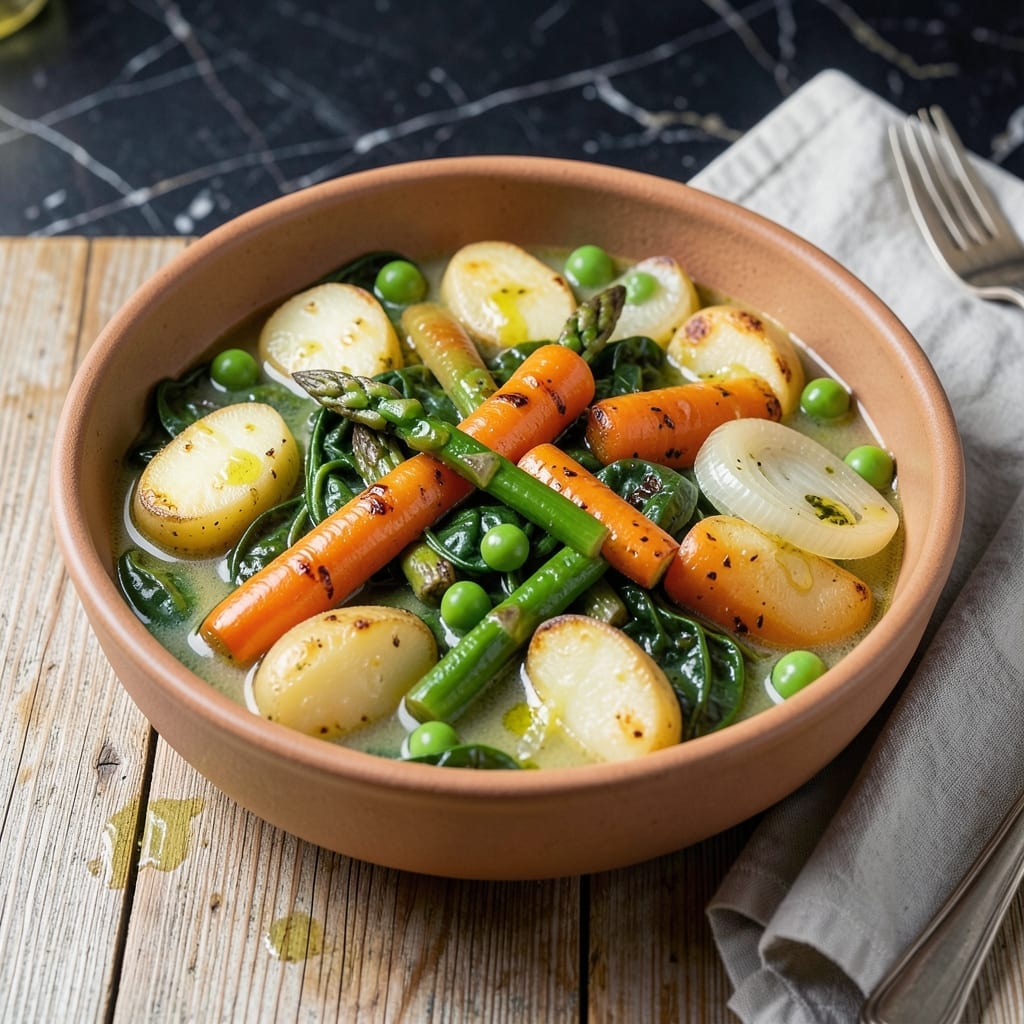
As spring arrives, I find myself drawn to light, vegetable-forward dishes that celebrate the season’s bounty. This simmer pot brings together garden-fresh ingredients in a simple yet deeply satisfying way.
The beauty lies in its versatility – use whatever spring vegetables you have on hand. A gentle simmer coaxes out natural sweetness while maintaining each ingredient’s distinct texture and flavor.
What emerges is a bowl of vibrant, tender-crisp vegetables bathed in a light broth that’s both nourishing and refreshing. The colors alone make it feel like spring on a spoon.
Perfect for lunch or a light dinner, this recipe lets the ingredients shine without heavy sauces or complicated techniques. The result is pure, garden-fresh satisfaction.
Ingredients for Spring Simmer Pot
Fresh spring vegetables and a light broth deliver vibrant, tender-crisp garden goodness in every bite.
| Ingredient | Amount | Notes |
|---|---|---|
| Spring Carrots 🥕 | 4 whole | Peeled, cut into rounds |
| Asparagus Spears 🌱 | 1 lb | Trimmed, cut into 2-inch pieces |
| Fresh English Peas 🌿 | 1 cup | Shelled, or use frozen |
| Baby New Potatoes 🥔 | 12 pieces | Halved, unpeeled |
| Fresh Spinach 🍃 | 4 cups | Loosely packed, torn |
| Yellow Onion 🧅 | 1 whole | Medium, thinly sliced |
| Garlic Cloves 🧄 | 4 cloves | Minced for depth of flavor |
| Vegetable Broth 💧 | 4 cups | Low-sodium preferred |
| Extra-Virgin Olive Oil 🫒 | 2 tbsp | Divided for sautéing and finishing |
| Fresh Thyme Sprigs 🌿 | 4 sprigs | Leaves stripped, stems discarded |
| Fresh Dill 🌿 | ¼ cup | Chopped for bright finish |
| Lemon 🍋 | 1 whole | Zested and juiced |
| Kosher Salt 🧂 | 1 tsp | Diamond Crystal preferred |
| Freshly Ground Black Pepper 🌶️ | ½ tsp | To taste |
For optimal quality, source farmers market vegetables—look for firm asparagus with closed tips, carrots with bright orange hue, and peas still in their pods if possible. Whole Foods or Trader Joe’s have excellent pre-trimmed options. Baby potatoes should be small and uniform for even cooking. The fresh herbs are non-negotiable here; dried simply won’t provide the same brightness.
No fresh peas? Frozen works perfectly (no need to thaw). Swap spinach for baby kale or Swiss chard—just add it at the end. Missing thyme? Rosemary at half the amount offers a different but complementary note. For the broth, Better Than Bouillon vegetable base mixed with water is a great shortcut. If you have white wine on hand, splash in 1/2 cup for added depth.
This keeps beautifully in the fridge for 3-4 days—the flavors actually deepen overnight. Reheat gently to maintain the vegetables’ texture. Freezes well for up to 2 months (though the potatoes may soften slightly). Best served with a sprinkle of fresh herbs and a squeeze of lemon.
Why You’ll Love This Recipe
- One Pot Wonder: I toss in the carrots, asparagus, peas, potatoes and spinach, then let the stove do the work.
- Spring in a Bowl: The sweet peas and earthy asparagus taste like a garden just came to life in my kitchen.
- My Weeknight MVP: Great for busy Tuesdays or lazy Sundays—honestly, it fits any day.
- Leftovers? Yes Please: Tastes even better the next day, and my wallet loves the budget-friendly ingredient list.
Step-by-Step Instructions for Spring Simmer Pot
This method ensures vibrant vegetables and a bright, layered broth in every bowl.
Step 1: Sauté Aromatics to Build Flavor Foundation
Heat 1 tbsp Extra-Virgin Olive Oil in a large pot over medium heat. Add the thinly sliced Yellow Onion and cook for 4-5 minutes until softened and translucent, stirring occasionally. This base layer creates depth for the entire dish.
Add the minced Garlic Cloves and cook for 30 seconds until fragrant, taking care not to let it brown. Stir in the stripped Fresh Thyme Sprigs leaves to infuse the oil with herbal notes. The aroma should be pronounced but not overpowering at this stage.
Step 2: Layer Vegetables for Even Cooking
Add the 12 pieces halved Baby New Potatoes and 4 whole Spring Carrots cut into rounds to the pot. Cook for 5 minutes, stirring occasionally, to allow the vegetables to absorb the aromatic base. This step ensures the denser vegetables begin cooking before the more delicate ones are added.
Pour in 4 cups Vegetable Broth and bring to a gentle boil. Reduce heat to medium-low and add the 1 lb Asparagus Spears cut into 2-inch pieces and 1 cup Fresh English Peas. The broth should just cover the vegetables—add a splash of water if needed.
Step 3: Simmer Until Vegetables Are Tender
Cover the pot and let the mixture simmer for 15-20 minutes until the Baby New Potatoes are fork-tender. You’ll know they’re done when a knife slides in easily. The Spring Carrots should be soft but still hold their shape.
The Asparagus Spears and Fresh English Peas will cook more quickly, so check them at the 12-minute mark. They should be vibrant in color and slightly crisp. This timing preserves their fresh, garden-like quality.
Step 4: Finish with Fresh Herbs and Citrus
Stir in the 4 cups Fresh Spinach, torn, and cook for 1-2 minutes until just wilted. The spinach should retain its bright green color and tender texture. Remove the pot from heat immediately to prevent overcooking.
Add the remaining 1 tbsp Extra-Virgin Olive Oil, 0.25 cup chopped Fresh Dill, zest and juice of 1 whole Lemon, 1 tsp Kosher Salt, and 0.5 tsp Freshly Ground Black Pepper. Stir to combine and let sit for 2 minutes to allow the flavors to meld before serving.
Pro Tips For Making Spring Simmer Pot
- Stage Your Veggies: Add potatoes first since they take longest—about 10 minutes head start—then carrots, asparagus, peas, and spinach last. I learned this the hard way after pulling out crunchy potatoes and mushy peas more times than I’d like to admit.
- Keep Peas Bright: Toss fresh English peas in ice water for 2 minutes after shelling to lock in their color and sweetness. Sounds like extra work, but it actually changes the outcome when they hit the simmer pot.
- Skip the Overcrowd: Resist the urge to dump everything in at once—your pot needs room for the broth to circulate, or the veggies steam instead of simmer. My grandmother swore by this, and she was right.
- Use Stock, Not Water: Swap water for a light vegetable or chicken stock—about 4 cups for a standard pot—to build flavor from the start. I was skeptical until I tried it, and now I’d never go back.
Wine and Beer Pairings for These Flavors
Crisp White Wines
A Sauvignon Blanc from New Zealand offers bright citrus notes that complement the lemon and fresh herbs beautifully. I love how its crisp acidity cuts through the richness of the potatoes. Try Kim Crawford for a reliable option. 🍷
Light Red Options
For red wine lovers, a Pinot Noir from Oregon provides earthy undertones that pair well with the carrots and thyme. Eyrie Vineyards makes a particularly food-friendly version that won’t overpower the dish.
Spring Beers
A Belgian-style witbier like Hoegaarden brings citrus and spice notes that echo the dish’s flavors. The effervescence cleanses your palate between bites. Serve at 45-50°F for optimal taste. 🍺
Rosé Pairings
Dry rosé from Provence offers strawberry and herb notes that harmonize with the spring vegetables. Whispering Angel is widely available and consistently excellent. Its pale color even matches the aesthetic of this light dish.
Non-Alcoholic Choices
A sparkling lemon water with a thyme sprig garnish mirrors the dish’s flavors. For something more substantial, try San Pellegrino Limonata – its effervescence and citrus notes work wonderfully. 💫
Nutrition Facts
Frequently Asked Questions
Can I use frozen vegetables instead of fresh?
Yes, frozen works well for peas and spinach. Add them directly without thawing at the same step as fresh. For best texture, avoid frozen asparagus as it can become mushy.
How do I prevent the potatoes from turning mushy?
Cut them into uniform 1-inch pieces and add them early in the cooking process. Check for doneness at 15 minutes and remove immediately when fork-tender to maintain their shape.
What can I substitute for fresh dill?
Try 1 tbsp fresh parsley or 1 tsp dried dill as alternatives. Fresh tarragon also works beautifully with the lemon notes. Add substitutes at the same step as the original herb.
Can this be made in a slow cooker?
Sauté aromatics first, then add all ingredients except spinach. Cook on low for 4-5 hours. Stir in spinach at the end just before serving.

- 6 Oz Chocolate Chip Cookie Recipe: Perfectly Balanced Crispy Edges and Chewy Hearts - September 25, 2026
- 6-Inch Coffee Cake Recipe: Vanilla Bean Swirls and Buttery Streusel Topping - September 25, 2026
- 1 Hour Soup Recipe: Velvety Richness Without the Wait - September 25, 2026