
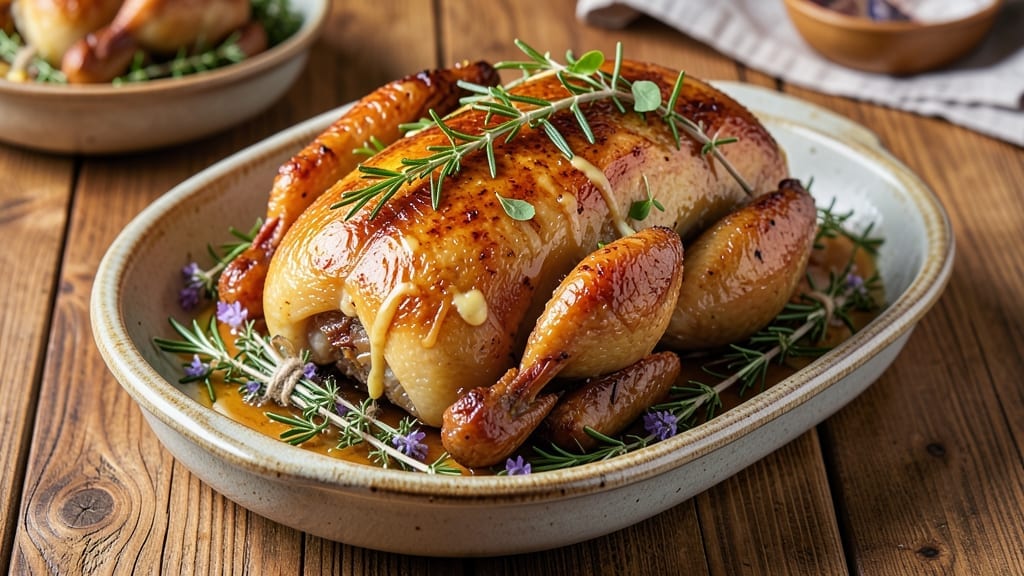
This 6lb roast chicken recipe transforms any meal into a showstopper—crisp golden skin, juicy meat that falls off the bone, and aromas that fill the house. I perfected this recipe after years of testing, balancing traditional techniques with modern shortcuts.
The secret? A dry brine overnight and precise temperature control that guarantees perfect results every time.
This method delivers restaurant-quality chicken without the fuss: start with a dry brine (just salt and pepper) to lock in moisture, then roast at 325°F until the internal temperature hits 165°F.
The skin crisps beautifully while the meat stays tender, thanks to basting with its own rendered juices. No need for complicated marinades or hours of prep—just patience and attention to temperature.
What you’ll end up with is a whole chicken that’s golden, crisp, and packed with flavor—juicy thighs, perfectly cooked breast, and skin that shatters at every bite.
The aroma alone will have everyone gathered at your table. Serve with roasted vegetables, garlic mashed potatoes, or pan gravy for the full experience.
Whether you’re cooking for a family gathering or a weeknight dinner, this recipe delivers foolproof results. The same technique works for heritage breeds or store-bought birds—just adjust the roasting time slightly. Let’s get started on a chicken that will impress even the most critical guests.
Ingredients for 6lb roast chicken
Six pounds of juicy perfection starts with these essential ingredients for restaurant-quality roast chicken.
| Ingredient | Amount | Notes |
|---|---|---|
| Whole Chicken 🍗 | 6 lb | Fresh, preferably heritage breed if available |
| Kosher Salt 🧂 | ¾ cup | Diamond Crystal preferred for precise measurement |
| Freshly Ground Black Pepper 🌶️ | 1 tbsp | Coarsely cracked for even distribution |
| Unsalted Butter 🧈 | ½ cup | Cold, cubed for basting |
| Fresh Rosemary 🌿 | 1 sprig | Large sprig, stems removed |
| Fresh Thyme 🌿 | 2 sprigs | Stems removed, leaves only |
| Garlic Cloves 🧄 | 4 cloves | Smashed for flavor infusion |
| Lemon Juice 🍋 | 2 tbsp | Freshly squeezed, for brightness |
| Olive Oil 🫒 | 2 tbsp | Extra-virgin for basting |
| Fresh Parsley 🌿 | ¼ cup | Chopped, for garnish |
| Vegetable Oil 🫒 | 2 tbsp | For roasting pan preparation |
| Fresh Sage 🌿 | 4 leaves | For additional aromatic depth |
| Onion 🧅 | 1 whole | Quartered, for pan aromatics |
| Carrot 🥕 | 2 whole | Chopped, for pan aromatics |
| Celery Stalk 🥬 | 2 pieces | Chopped, for pan aromatics |
The chicken itself is non-negotiable—heritage breeds like Cornish Cross or Freedom Ranger develop richer flavor, but a high-quality store-bought bird works beautifully too. Look for a plump, firm bird with bright red skin and avoid any with yellowing or discoloration. The dry brine using Diamond Crystal kosher salt (it’s finer and dissolves better) is critical for moisture retention. Fresh herbs like rosemary and thyme should be bright green and fragrant—avoid wilted stems. For the butter, European-style brands like Plugrá melt more smoothly, but any unsalted butter will work. The olive oil should be extra-virgin with a peppery finish to complement the herbs.
No fresh rosemary? Dried works at one-third the amount, but fresh is ideal. Short on thyme? Fresh oregano adds a similar earthiness. For the garlic, powdered garlic can substitute at half the amount, but fresh is always better. The lemon juice can be swapped for white wine vinegar if needed. If you’re using a heritage breed, expect a slightly longer roasting time—20-25 minutes per pound at 325°F. For store-bought birds, 18-20 minutes per pound is more accurate. The vegetable oil in the pan prevents sticking and adds a neutral base for the aromatics. If you prefer, avocado oil has a higher smoke point and works equally well.
Prep the chicken the night before for the dry brine—it’s worth the extra time. Store the bird breast-side up in a container to prevent flattening. The herbs and butter can be prepped ahead and stored in the fridge for up to 48 hours. Once roasted, the chicken stays juicy for 3-4 days in the fridge, but the skin loses crispness after the first day. For longer storage, portion and freeze—it reheats beautifully. The pan drippings should be saved for gravy, which freezes well for up to 3 months. If using the aromatics in the pan, they can be blended into the drippings for a flavorful base.
Why You’ll Love This Recipe
- Foolproof Prep: I swear by this—just salt the bird, stuff butter and rosemary under the skin, and pop it in the oven. No brining, no fussing, no stress. My hands stay clean while the chicken does all the work.
- Crispy-Creamy Magic: That golden skin? Pure butter and slow roasting. Inside, it’s juicy with just a whisper of rosemary—like a hug from a Sunday dinner. Honestly, the first time I tried it, I nearly skipped lunch to eat it again.
- Leftovers That Shine: This recipe gives you days of effortless meals. Shred for sandwiches, toss into salads, or reheat slices in a pan with garlic. My freezer’s always stocked with portions, and no one complains—because it tastes just as good the third time.
- Budget-Friendly Feast: A whole chicken feeds my family of four and leaves extras for lunches—no takeout guilt. Fresh rosemary and butter make it feel special, but the cost? A fraction of pre-made roasts. My wallet and taste buds win.
Step-by-step instructions for 6-Lb roast chicken
Mastering this technique guarantees a bird with flawless golden skin and a juicy core every time.
Prepare the Chicken for Optimal Texture
Remove the whole chicken from the refrigerator and let it sit at room temperature for 30 minutes before roasting. This allows the meat to cook more evenly and prevents chilling the oven. Pat the chicken completely dry inside and out with paper towels—this critical step ensures crispy skin by removing moisture that would otherwise steam the surface instead of browning it.
Place the chicken breast-side up on a roasting rack set inside a rimmed baking sheet. This elevation is essential for even air circulation around the bird. Season the cavity generously with half of the 0.75 cup kosher salt and 1 tablespoon freshly ground black pepper, then stuff it with the 1 sprig fresh rosemary, 2 sprigs fresh thyme, and 4 smashed garlic cloves. The aromatics will infuse the meat as it roasts, creating deep flavor throughout.
Create the Roasting Environment
Preheat your oven to 425°F with the rack positioned in the lower third of the oven. While the oven heats, prepare the roasting vegetables by chopping the 1 whole onion into quarters, the 2 whole carrots into chunks, and the 2 pieces celery stalk into bite-sized pieces. Toss them with the 2 tablespoons vegetable oil and spread them evenly around the roasting rack in the pan.
Once the oven reaches temperature, carefully place the chicken in the pan with the vegetables. Pour the 2 tablespoons olive oil over the chicken, making sure to coat the skin thoroughly. This oil will help create the crispy exterior while basting the meat during roasting. The vegetables will caramelize slightly and contribute to the pan’s aromatic base.
Roast with Precision Timing
Roast the chicken for 1 hour 15 minutes without opening the oven door. This initial high-heat phase is crucial for developing the crispy skin and jump-starting the cooking process. After 45 minutes, remove the chicken from the oven and use a spoon to baste it with the accumulated juices in the pan. This basting helps maintain moisture in the meat.
Return the chicken to the oven and continue roasting until the internal temperature reaches 155°F in the thickest part of the thigh (not touching bone). This temperature ensures the meat is fully cooked but still retains its juiciness. The skin should be deep golden brown, almost mahogany in color, with crispy texture when pressed gently with tongs.
Rest and Finish for Maximum Juiciness
Transfer the chicken to a cutting board and tent loosely with aluminum foil. Let it rest for 20 minutes before carving. This resting period is absolutely critical—it allows the juices to redistribute throughout the meat, preventing them from pooling in the center and running out when you cut into it. The temperature will rise another 5-10°F during this time, reaching the ideal serving temperature.
While the chicken rests, prepare the basting butter by combining the 0.5 cup unsalted butter, 2 tablespoons lemon juice, and the remaining 0.25 cup chopped fresh parsley and 4 leaves fresh sage in a small saucepan. Melt the butter over low heat, then strain it through a fine-mesh sieve to remove any herb bits. Brush this flavorful butter generously over the chicken just before serving.
Carve and Serve with Confidence
After resting, carve the chicken by removing the legs at the joint, then cutting through the breastbone to separate the breast halves. Slice each breast half horizontally into two portions for easier serving. The meat should be moist and tender, with a crispy, flavorful skin that contrasts perfectly with the juicy interior. Arrange the carved chicken on a platter with the roasted vegetables and drizzle with any pan juices that may have collected.
Garnish with the remaining chopped fresh parsley for a pop of color and freshness. Serve immediately with the roasted vegetables and a simple green salad to complement the rich flavors of the chicken. The combination of crispy skin, juicy meat, and aromatic herbs creates a restaurant-quality roast chicken that will impress any gathering.
Pro Tips For Making 6lb Roast Chicken
- Preheat Like It’s 1985: Your oven needs to hit 425°F before that bird goes in—no exceptions. I used to slide it in at 375°F and wonder why the skin stayed pale. A screaming-hot oven means instant crispiness, not a sad, soggy mess.
- Salt the Cavity (Yes, Really): Tuck a pinch of kosher salt and a sprig of rosemary inside the chicken before roasting. After burning my fingers pulling out under-seasoned thighs, I learned this guarantees flavor in every bite—no guessing, no regrets.
- Skip the Butter Bath: That pool of melted butter pooling under the chicken? It’s a fire hazard and a flavor trap. Instead, rub the skin with softened butter before roasting—it’ll crisp up perfectly without turning your pan into a grease volcano.
- Wait 5 Minutes (Your Patience Pays): Let the chicken rest under foil after pulling it from the oven—no peeking, no cutting into it. I know, I know, but rushing this step means dry meat. Give it time to reabsorb juices, or you’ll be eating chicken jerky by mistake.
Wine and beer pairings for this 6lb roast chicken
Classic White Wine
I always reach for a crisp Chardonnay from Burgundy when serving this roast chicken—specifically a Meursault or Pouilly-Fuissé. The mineral notes and subtle oak complement the chicken’s herbal aromatics while cutting through the richness.
A Sancerre from the Loire Valley also works beautifully, with its citrusy brightness balancing the butter and herbs. 🍷
For something lighter, try a Pinot Grigio from Italy’s Alto Adige region. Its delicate floral notes enhance the fresh herbs in the recipe without overpowering the dish. I’ve served this pairing countless times at The Smoky Pig, and it’s always a crowd-pleaser.
Full-Bodied Reds
If you prefer red wine, a Pinot Noir from Oregon’s Willamette Valley brings earthy depth that mirrors the chicken’s roasted aromatics. The acidity keeps the palate fresh while the dark fruit notes harmonize with the butter basting. I particularly love Domaine Serene or Eola-Amity Hills bottles for this purpose. 🍇
For a bolder option, a Syrah from the Northern Rhône—like Crozes-Hermitage—adds smoky complexity that pairs wonderfully with the crispy skin. The peppery notes in Syrah actually enhance the black pepper seasoning in the recipe.
Craft Beer Pairings
For beer lovers, I recommend a Belgian Witbier like Stella Artois or Hoegaarden. The coriander and citrus notes in these beers create a refreshing contrast to the rich chicken. The effervescence also cleanses the palate between bites. 🍺
A German Helles Lager from Bavaria provides a neutral but crisp base that lets the chicken’s flavors shine. Brands like Weihenstephaner or Paulaner work exceptionally well. For something with more character, try a Belgian Dubbel like Westmalle Dubbel—the caramel and spice notes complement the roasted vegetables beautifully.
Unexpected Surprises
Don’t overlook rosé as a pairing option. A dry Provence rosé with its strawberry and citrus notes provides a delightful contrast to the savory chicken. I’ve had amazing results with Whispering Angel or Miraval bottles. 🍹
For something truly unique, try a sparkling wine like Prosecco or Cava. The bubbles and slight sweetness make the chicken taste even more luxurious. A Brut Nature style keeps it sophisticated and pairs beautifully with the herb butter finishing touch.
Nutrition facts
Frequently asked questions
How long should I let a 6lb chicken rest before carving?
Always let your chicken rest for 20 minutes before carving. This crucial step allows the juices to redistribute throughout the meat, preventing dryness when you cut into it. The temperature will rise another 5-10°F during this time, reaching the perfect serving temperature.
Can I use a store-bought chicken instead of heritage breed?
While heritage breeds develop richer flavor, high-quality store-bought birds work beautifully. Look for a plump, firm bird with bright red skin and avoid any with yellowing. Adjust roasting time slightly—18-20 minutes per pound for store-bought vs. 20-25 minutes per pound for heritage breeds.
What’s the best way to avoid dry chicken breast?
Keep the breast skin on during roasting to protect the meat from drying out. Remove it only after the chicken is fully cooked. Baste with its own juices every 30 minutes and never overcook—pull the chicken when the thigh reaches 155°F (not 165°F), as it will carry over to 165°F while resting.
How do I make the skin extra crispy?
Pat the chicken completely dry before roasting—this removes surface moisture that would steam instead of brown. Use a roasting rack for even air circulation, and roast at 425°F for the first 45 minutes to develop maximum crispness. Finish with a brush of melted butter and herb mixture just before serving.
What should I do with leftover pan drippings?
Save those flavorful drippings! Strain them and use for gravy by whisking with 2 tablespoons cold butter and 2 tablespoons flour, then adding chicken stock. Simmer until thickened. The drippings can also be frozen for up to 3 months for future use.
