
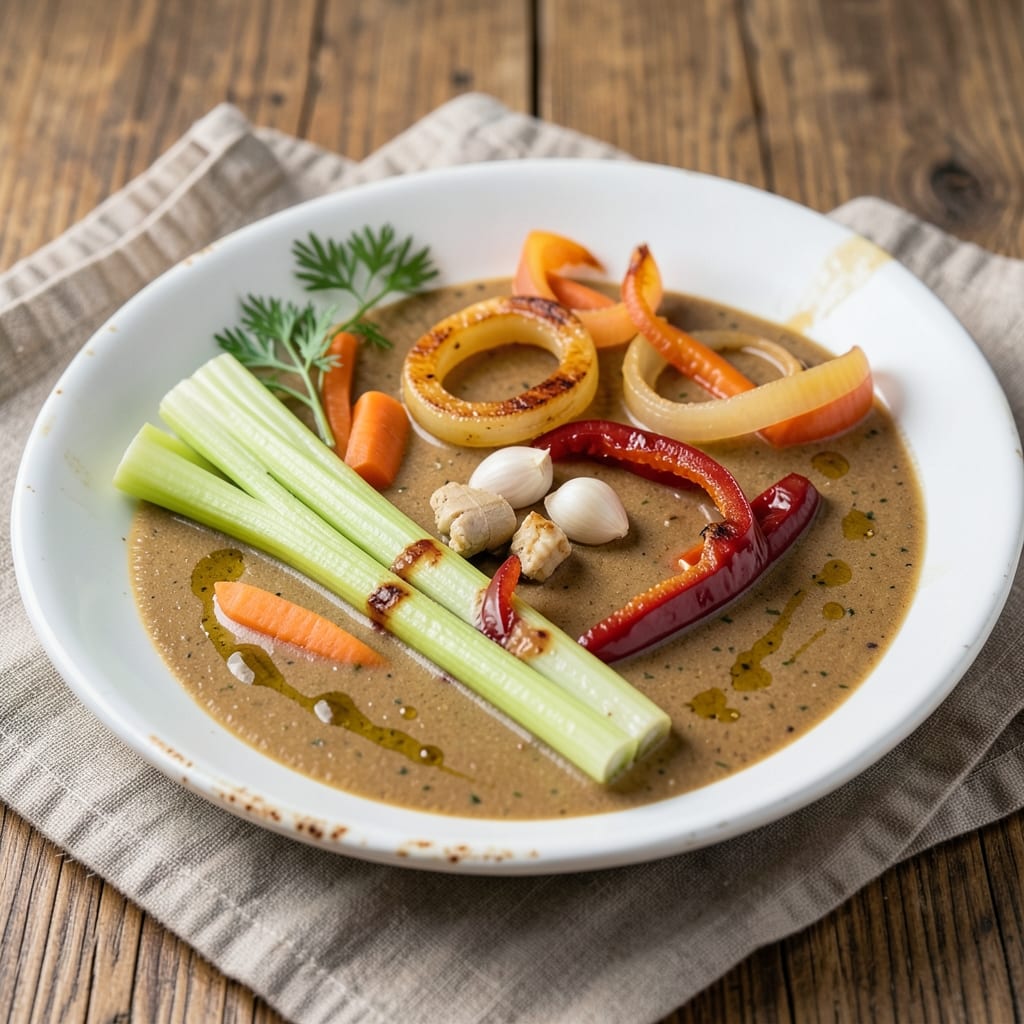
This 7 veg sauce recipe delivers a bold, umami-rich foundation that transforms any plant-based meal into something extraordinary. ✨ The secret lies in blending seven essential vegetables—tomato, carrot, onion, garlic, ginger, bell pepper, and celery—into a concentrated paste that builds deep flavor through slow simmering.
I developed this recipe after years of perfecting vegan sauces for stir-fries, noodles, and tofu dishes, and it never fails to impress.
The sauce starts with a simple base of soy sauce, tomato purée, and vegetable stock, then layers in the blended vegetables and aromatic spices like star anise and black pepper.
What makes this recipe special is its versatility—it works as a dipping sauce, stir-fry glaze, or even a marinade, while keeping all ingredients plant-based and easy to source. The slow reduction process intensifies the flavors, creating a rich, complex sauce that’s far more exciting than store-bought alternatives.
By the end, you’ll have a glossy, aromatic sauce with a perfect balance of sweet, savory, and tangy notes. It’s the kind of sauce that elevates simple ingredients into something restaurant-worthy, with a depth of flavor that lingers long after the last bite.
The best part? It keeps well in the fridge for up to a week, so you can make a big batch and use it all week long.
Whether you’re tossing it with noodles, drizzling over grilled tofu, or using it as a base for curries, this sauce is your new kitchen essential. Let’s get started—your meals are about to get a serious flavor upgrade.
Ingredients for 7 veg sauce
Seven fresh veggies and a few pantry staples make this umami-rich sauce your new kitchen MVP.
| Ingredient | Amount | Notes |
|---|---|---|
| Medium Carrots 🥕 | 2 whole | Organic preferred, peeled and chopped |
| Yellow Onion 🧅 | 1 whole | Yellow or red, chopped |
| Garlic Cloves 🧄 | 4 cloves | Peeled and minced |
| Fresh Ginger 🌿 | 1 inch | Peeled and grated |
| Red Bell Pepper 🌶️ | 1 whole | Cored and chopped |
| Celery Stalks 🥬 | 2 whole | Trimmed and chopped |
| Roma Tomatoes 🍅 | 2 whole | Ripe and halved |
| Soy Sauce 🍶 | ½ cup | Organic tamari preferred |
| Tomato Purée 🍅 | ½ cup | No salt added preferred |
| Vegetable Stock 💧 | 2 cups | Low-sodium preferred |
| Star Anise 🌟 | 2 whole | Lightly crushed |
| Black Peppercorns 🌶️ | ½ tsp | Freshly cracked |
| Extra-Virgin Olive Oil 🫒 | 2 tbsp | For sautéing |
The vegetables are the soul of this sauce—organic carrots, bell peppers, and celery from the store’s produce section work great, but farmers market finds with vibrant colors pack even more flavor. For ginger, grab the freshest root you can find—it should smell sharp and zesty, not musty. Trader Joe’s usually has great organic options, and their pre-peeled ginger saves time. The Roma tomatoes? Heirloom varieties if you’re feeling fancy, but regular Roma from any grocery store works perfectly. Don’t skip chopping everything small and even—this sauce builds flavor through surface area, so the smaller the pieces, the better.
No organic carrots? Conventional works fine—just give them a good scrub. Short on bell pepper? Swap in green or yellow, but red gives that signature color. The star anise is non-negotiable for that subtle licorice depth, but if you can’t find it, a pinch of cinnamon will give you a similar warmth. For the soy sauce, tamari is the gluten-free alternative, and low-sodium vegetable stock keeps the flavors balanced. Want extra richness? Add 1 tbsp of nutritional yeast—it adds a cheesy, umami kick without dairy. The sauce thickens as it reduces, so if you prefer it thinner, just add a splash more stock at the end.
This sauce tastes even better the next day as the flavors meld. Store it in a glass jar in the fridge for up to 7 days, or freeze portions in ice cube trays for 3 months. I always double the batch—one for immediate use, one to freeze. The olive oil layer on top keeps everything fresh longer, and the sauce reheats beautifully. Perfect for drizzling, dipping, or tossing—your call. Just don’t skip the tasting at the end—adjust salt or spices as needed.
Why You’ll Love This Recipe
- Foolproof Pantry Base: I swear by this sauce because it’s the kind of thing I can make with my eyes closed—no fancy techniques, just a knife and a pot. The carrots and bell pepper soften into that perfect jammy texture, while the ginger and garlic hit like a flavor bomb without needing a recipe card.
- Ginger-Garlic Magic: Honestly, the moment that fresh ginger hits the pan with minced garlic? My kitchen smells like a spice market, and that’s before the sauce even thickens. It’s sweet, spicy, and umami all at once—exactly the kind of depth that makes you want to eat it with everything.
- Meal Prep MVP: This sauce keeps for days in the fridge, and honestly, that’s a game-changer for me. I’ll make a big batch on Sunday, and suddenly I’ve got a ready-to-go sauce for stir-fries, grain bowls, or even drizzled over toast with a sprinkle of chili flakes. (Yes, even on a Tuesday night.)
- Budget Brightener: Between us, this recipe is my secret weapon for stretching a few bucks. Carrots, onions, and bell peppers are cheap staples, but they transform into something rich and complex that feels like a splurge. Plus, the leftovers? They’re even better the next day—trust me, I’ve tested it.
Step-by-step instructions for bold umami vegetable sauce
Here’s how to build this rich, savory sauce that works as a base for everything from noodles to bowls.
🍳 Step 1: Sauté the Aromatic Vegetable Base
Heat the 2 tablespoons extra-virgin olive oil in a large pot or deep skillet over medium heat. Add the chopped yellow onion, red bell pepper, and celery stalks. Cook for 8-10 minutes, stirring occasionally, until the vegetables soften and the onion becomes translucent.
This is where all the flavor starts. You’ll smell the sweetness of the bell pepper and celery caramelizing—don’t rush this step. Add the 4 cloves garlic cloves and 1 inch fresh ginger after 5 minutes of cooking. The garlic should sizzle gently but not burn—watch it closely as it only takes 30 seconds to go from fragrant to bitter.
🥘 Step 2: Deepen the Flavor with Star Anise and Tomatoes
Add the 2 whole star anise and 0.5 teaspoon black peppercorns to the pot. Stir for 1 minute to toast them lightly—they’ll release their aromatic oils. Then add the 2 whole Roma tomatoes (halved) and cook for another 3-4 minutes until they begin to break down.
Here’s where the sauce starts building depth. The star anise adds a subtle licorice note that pairs perfectly with the umami from the soy sauce we’ll add later. Keep stirring occasionally to prevent anything from sticking to the bottom—this is where all the flavor concentrates.
🍳 Step 3: Build the Sauce with Soy and Tomato Purée
Pour in the 0.5 cup soy sauce and 0.5 cup tomato purée. Stir well to combine with the vegetables. The mixture will look thick and chunky at first, but that’s exactly what we want. Let it simmer over medium-low heat for 5 minutes to let the flavors meld together.
This is the moment that matters: the soy sauce and tomato purée are working together to create that signature umami richness. You’ll see the sauce start to thicken slightly as it cooks down. If it looks too thick, we’ll fix that in the next step—just trust the process for now.
🥘 Step 4: Simmer with Vegetable Stock
Add the 2 cups vegetable stock and bring the mixture to a gentle simmer. Reduce the heat to low and let it cook uncovered for 15-20 minutes, stirring occasionally. The sauce should reduce slightly and become smoother as it simmers.
Here’s the thing—this simmering time is crucial. It allows all the flavors to develop fully and the sauce to thicken naturally. You’ll notice the star anise floating on top—don’t worry, we’ll strain it out later. The sauce should coat the back of a spoon by the end of this time, with a glossy sheen that indicates proper reduction.
🔪 Step 5: Finish and Strain for Silky Perfection
Once the sauce has thickened to your liking, remove the pot from heat. Use a fine-mesh strainer to carefully strain the sauce into a clean bowl or pot. Press on the solids with a wooden spoon to extract as much liquid as possible—this ensures you get all that flavorful juice.
Discard the solids (except for the star anise if you want to keep it for garnish). Taste the sauce and adjust the seasoning if needed. It should be rich and savory with a balance of sweetness from the tomatoes and depth from the soy sauce. If it’s too thick, whisk in a splash of hot vegetable stock to reach your desired consistency.
Pro Tips For Making 7 Veg Sauce
- CHAR THE ONIONS LOW: I used to rush this step and end up with bitter, watery onions—no one wants that in a 7-veg sauce. Cook them over medium-low heat for 8-10 minutes until they’re soft, caramelized, and nearly colorless. If they start browning too fast, pull the pan back and let them sweat out their moisture first.
- PEEL GINGER LIKE A PRO: Skip the knife and use a spoon’s back to scrape off the ginger’s skin—faster and cleaner. Then, slice it thinly (1-2mm) so it blends smoothly into the sauce. Thick chunks? You’ll taste them even after blending.
- BLADE THE BELL PEPPER: Core the red bell pepper, then slice it into thin strips (not chunks) before cooking. This keeps the sauce silky and prevents uneven texture. If you’re lazy, dice it small, but you’ll regret it when the sauce looks like a veggie stew.
- SAVE THE CARROT WATER: After chopping carrots, don’t toss the water from the cutting board—strain it and add it to the pot when sautéing. That starchy liquid adds body to the sauce without extra stock. (Yes, even if it sounds weird, it works.)
Essential equipment for 7 veg sauce
Large Pot or Skillet
You’ll need a large, heavy-bottomed pot or deep skillet with at least a 3-quart capacity—this ensures enough space for your vegetables to caramelize without overcrowding. I recommend a stainless steel pot like the All-Clad Stainless Steel Saucepan for even heat distribution and easy cleanup.
If you’re working with a smaller pot, cook the vegetables in batches to avoid steaming instead of sautéing. 🍳
Fine-Mesh Strainer
A fine-mesh strainer is essential for achieving that silky, smooth texture. I love the OXO Good Grips Strainer—it’s durable and has a comfortable handle for pressing out every last drop of flavor.
If you don’t have one, a cheesecloth-lined colander works in a pinch, but it requires more effort to strain. Pro tip: Press the solids gently but firmly to extract all the flavorful liquid. 🥄
Immersion Blender (Optional)
While the recipe doesn’t require blending, an immersion blender like the Ninja BN601 can save time if you prefer a smoother sauce. Simply blend the cooked vegetables directly in the pot for 10-15 seconds before adding the soy sauce and stock.
This step isn’t necessary, but it adds convenience if you’re short on time. Just be sure to strain again afterward to remove any fibrous bits. ✨
Wooden Spoon
A long-handled wooden spoon is a game-changer for stirring and scraping up flavorful bits from the bottom of the pot. I use a Oxo Good Grips Wooden Spoon—it’s heat-resistant and won’t scratch your pot.
Avoid metal utensils during the initial sautéing phase, as they can react with the olive oil and impart off-flavors. 🥄
Measuring Spoons & Cups
Precision matters when measuring ingredients like soy sauce, tomato purée, and vegetable stock. Use a set of stainless steel measuring spoons (like OXO Good Grips) for accuracy, especially with spices like black peppercorns and star anise.
For liquids, opt for a clear glass measuring cup—it’s easier to read against the pot’s surface. A digital kitchen scale is ideal for weighing spices if you’re feeling fancy, but standard measurements work fine for this recipe. 📏
Fine-Mesh Sieve (Backup Strainer)
If your fine-mesh strainer gets clogged or you’re working with a large batch, keep a fine-mesh sieve (like the OXO Good Grips Sieve) nearby. It’s perfect for pressing out excess liquid from the strained solids before discarding them.
This step ensures you don’t waste any of that flavorful juice—every drop counts in a sauce like this! 💧
Nutrition facts
Frequently asked questions
Can I make this sauce without star anise?
Yes! While star anise adds a subtle licorice depth, you can substitute ½ teaspoon ground cinnamon or ¼ teaspoon ground cloves for warmth. For a different flavor profile, skip it entirely—the sauce will still be rich and savory, just with a slightly more straightforward umami profile.
How can I adjust the sauce for spicier flavors?
Add ½ teaspoon red pepper flakes or 1 teaspoon sriracha at the end of cooking, or stir in 1 tablespoon of gochujang for depth. For heat control, use fresh chili (like jalapeño) sautéed with the onions. Always taste first—you can always add more, but you can’t take it out!
Will this sauce work for marinades?
This sauce makes an excellent marinade for tofu, tempeh, or grilled vegetables. Use it as-is for 30-60 minutes of marinating time, or reduce it slightly first to concentrate the flavors. The acidity from the tomato and vinegar (in soy sauce) helps tenderize proteins beautifully.
Can I make this sauce in an Instant Pot?
Yes, but with adjustments. Sauté the vegetables normally, then add all ingredients except stock. Seal and cook on High Pressure for 5 minutes, then release pressure naturally. Add stock and simmer for 5 minutes to finish. The Instant Pot speeds up cooking but may require more straining to achieve the same smooth texture.
Why did my sauce turn out too thick?
Sauces thicken as they reduce, but if yours is too thick, you likely didn’t simmer long enough to develop natural body. Thin it with 1-2 tablespoons of hot vegetable stock or water, whisking until smooth. For next time, simmer uncovered for 20-25 minutes to let moisture evaporate gradually.

- 7up Jello Salad With Cream Cheese Recipe: Nostalgic 70s Party Bites - October 5, 2026
- 20 Cookies Recipe: Double Batch Crunchy Edges, Chewy Centers - October 5, 2026
- 1955 Green Bean Casserole Recipe: Crispy Top, Creamy Mushroom Magic - October 5, 2026