
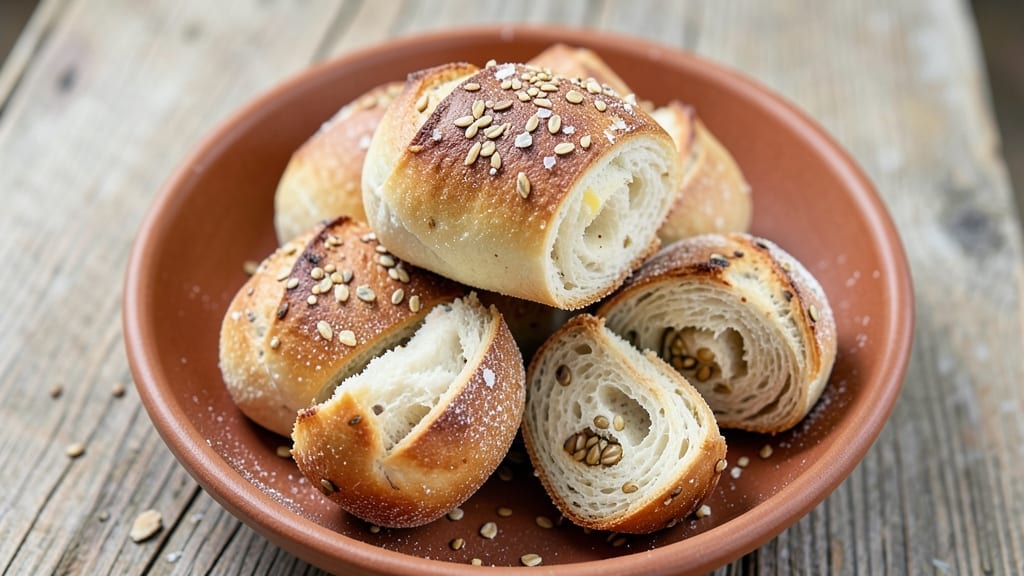
This 8-grain roll recipe delivers restaurant-quality flakiness with a nutty, hearty texture that transforms ordinary meals into something special. The secret lies in the blend of whole grains—wheat, rye, barley, and more—that create a subtle crunch and deep flavor with every bite.
I perfected this recipe after years of experimenting with artisanal bread, and the herbed butter swirls add an unexpected richness that keeps everyone reaching for seconds.
The process is straightforward but requires patience: kneading the dough until smooth, letting it rise twice for maximum flavor, and baking until golden brown. Each roll develops a crisp exterior and tender interior, with those swirls of herbed butter melting into every layer.
The grain blend not only enhances texture but also adds a satisfying earthiness that pairs beautifully with soups, stews, or even as a side to grilled meats.
What sets these rolls apart is their versatility—serve them warm from the oven with melted butter, pair them with a hearty chili, or use them as the base for open-faced sandwiches.
The combination of flaky layers and herbed butter creates a balance of textures and flavors that’s impossible to resist. Once you try these, you’ll never settle for store-bought rolls again.
Ready to elevate your dinner table? These rolls are perfect for family dinners, holiday feasts, or any occasion where you want to impress. The recipe is designed to be foolproof, ensuring you achieve that flaky perfection every time.
Let’s get started on creating rolls that taste like they came from a bakery.
Ingredients for 8 grain roll
Eight whole grains plus a touch of butter—this is your flaky roll upgrade.
| Ingredient | Amount | Notes |
|---|---|---|
| All-Purpose Flour 🌾 | 6 cups | For structure and lightness |
| Whole Wheat Flour 🌾 | 1 cup | For nutty depth |
| Rye Flour 🌾 | ½ cup | Earthy flavor profile |
| Barley Flour 🌾 | ½ cup | Adds chewiness |
| Spelt Flour 🌾 | ½ cup | Mild, slightly sweet |
| Oat Flour 🌾 | ½ cup | For subtle crunch |
| Cornmeal 🌽 | ¼ cup | Fine grind preferred |
| Instant Yeast 🍞 | 2 ½ tsp | Active dry works too |
| Granulated Sugar 🍚 | 1 tbsp | Feeds yeast activation |
| Salt 🧂 | 1 ½ tsp | Kosher or sea salt |
| Unsalted Butter 🧈 | ½ cup | Cold, cubed for dough |
| Herbed Butter 🧈 | ¼ cup | For swirls (recipe below) |
| Large Eggs 🥚 | 2 whole | Room temperature preferred |
| Warm Water 💧 | 1 ½ cups | 110°F for yeast activation |
| Milk 🥛 | ¼ cup | For tender crumb |
The flours are what make these rolls special. Bob’s Red Mill has great pre-milled options, but you can blend your own if you’re ambitious—just pulse whole grains in a food processor until fine. The rye and barley add that deep, hearty flavor, while the oat flour gives a subtle crunch. I always grab King Arthur flour for the all-purpose base—it’s reliable and bakes up light. For the herbed butter, fresh herbs make all the difference—Trader Joe’s sells pre-chopped mixes that save time. If you’re feeling fancy, make your own with parsley, chives, and a pinch of garlic powder.
No whole wheat flour? Substitute with extra all-purpose—just know the texture will be slightly denser. Short on rye? Dark rye breadcrumbs toasted and blended work in a pinch. Butter too expensive? Coconut oil or olive oil can replace half the butter, but the rolls won’t be quite as flaky. The milk can be swapped for water if you’re avoiding dairy, but the crumb won’t be quite as tender. For the herbed butter, dried herbs at half the amount get you close—just toast them in a dry pan first to wake up the flavors. Yeast too old? Proof it first—mix with warm water and sugar, let sit 5 minutes before adding to dough.
Store the dough in the fridge overnight for better flavor development—this is where the magic happens. Once baked, these rolls stay fresh for 3 days at room temperature wrapped in a towel, or 1 week frozen. I always bake a few extra—freeze them on a tray first, then bag them up. Reheat in a 350°F oven for 10 minutes with a splash of water in the pan for that bakery-fresh crunch. The herbed butter swirls? Use them within 2 days of making the dough, or freeze the dough with the butter swirls intact for up to 3 months.
Why You’ll Love This Recipe
- No-Fuss Mixing: I swear by this dough—just toss all five flours together, add water, and knead until it comes together. No fancy techniques, no measuring cups of butter to cream, just straightforward, no-mess rolling.
- Earthy Depth: That rye and spelt? They give these rolls a nutty, almost toasty flavor that’s way more interesting than plain white bread. Honestly, I’ll take these over store-bought any day—especially with soup or butter.
- Meal Prep Hero: I make a double batch on Sundays, freeze half, and pull them out for quick breakfasts or sandwiches all week. They toast up perfectly, even after being frozen—no sad, gummy leftovers here.
- Budget-Friendly Staple: Using pantry staples like whole wheat and rye cuts costs without sacrificing texture. I’ve been buying these flours in bulk for years, and they stretch farther than all-purpose flour ever did. (Yes, even on a Tuesday night.)
Step-by-step instructions for 8-Grain rolls
These rolls deliver flaky, golden layers and herbed butter swirls every time—just follow along.
Activate the Yeast and Mix the Dough
In a large bowl, whisk together the 1.5 cups warm water, 1 tbsp granulated sugar, and 2.5 tsp instant yeast. Let it sit for 5-10 minutes until frothy—this means your yeast is alive and ready to work. If it doesn’t bubble, your rolls won’t rise properly.
In a separate large bowl, combine the 6 cups all-purpose flour, 1 cup whole wheat flour, 0.5 cup rye flour, 0.5 cup barley flour, 0.5 cup spelt flour, 0.5 cup oat flour, 0.25 cup cornmeal, 1.5 tsp salt, and the 0.5 cup cold unsalted butter, cut into small cubes. Mix with a wooden spoon until the butter is fully incorporated and the dry ingredients form a coarse crumb.
Make a well in the center and pour in the yeast mixture along with the 2 whole large eggs and 0.25 cup milk. Stir with a dough whisk or wooden spoon until a shaggy dough forms. The dough will be sticky—this is normal with all these flours. Let it rest for 10 minutes while you prep your workspace.
Knead the Dough for Maximum Flakiness
Lightly flour a clean surface and turn out the dough. Knead for 8-10 minutes by hand (or 5-6 minutes with a stand mixer using a dough hook) until smooth and elastic. The dough should be soft but not sticky—add a little more all-purpose flour if needed, but don’t overdo it or the rolls will be dense.
Here’s the secret for flaky layers: After kneading, divide the dough into 12 equal pieces (about 3 ounces each). Roll each piece into a 12-inch rope, then fold it in thirds like a letter. This creates tension that helps develop those signature flaky layers during baking.
Shape and Rest the Rolls
Roll each folded dough piece into a smooth ball, seam-side down. Place them on a parchment-lined baking sheet, spacing them 2 inches apart—they’ll nearly double in size. Cover the baking sheet with a clean kitchen towel and let the rolls rise in a warm place for 1-1.5 hours, or until they’ve puffed to about double their size.
While they rise, make the herbed butter swirls: In a small bowl, mix the 0.25 cup herbed butter with 1 tsp chopped fresh herbs (like parsley or chives) and a pinch of salt. Roll into a log and chill until ready to use.
Add the Butter Swirl and Final Rise
Once the rolls have risen, gently press your finger into each one to create a well in the center. Place a 1-inch piece of the herbed butter log into each well, then carefully stretch the dough over the butter to seal. This step ensures those rich, melty swirls in every bite.
Let the rolls rise again for 30-45 minutes until puffy. Preheat your oven to 375°F during this time. The second rise is crucial—it develops the air pockets that make these rolls light and airy.
Bake to Golden Perfection
Bake the rolls for 18-22 minutes until they’re deep golden brown and sound hollow when tapped on the bottom. Rotate the baking sheet halfway through for even browning. If the tops brown too quickly, tent loosely with foil.
For extra crispiness, brush the tops with a little milk before baking. Let the rolls cool for 5 minutes before serving—this helps the butter set slightly so it doesn’t ooze out when you cut into them. Serve warm with honey butter or your favorite soup.
Pro Tips For Making 8 Grain Roll
- SIFT THE FLOURS: Mixing all those dense flours—rye, barley, spelt—without sifting creates pockets of dryness that won’t hydrate evenly. Grab a fine-mesh sieve and work in batches, tapping the bottom gently to break up clumps. (Yes, it’s tedious, but your rolls will thank you with a consistent crumb.)
- WEIGH DON’T SCOOP: Those whole wheat and rye flours pack like sand, so scooping leads to uneven batches. Use a kitchen scale for precision—aim for 1% accuracy if you can—and spoon the flours into the bowl, then level with a knife. I learned this the hard way after my first batch turned out dense and uneven.
- KNEAD JUST ENOUGH: Overworking the dough with all those flours makes it tough and chewy. Stop when it springs back slowly (not immediately) and feels smooth but still slightly tacky—about 8-10 minutes by hand or 5-6 on a stand mixer with the dough hook. (Your future self will thank you.)
- COLD PROOFING FIXES: Skip the warm proofing—this dough benefits from a cold ferment. Shape the rolls, cover, and refrigerate overnight (8-12 hours). The slow rise develops deeper flavor and prevents them from spreading too much when baking. (It’s worth the wait.)
Health benefits of these flavors
Whole Grain Powerhouse
These rolls pack a nutritional punch with their 8-grain blend, delivering fiber, vitamins, and minerals that store-bought options lack. The whole wheat, rye, and barley contribute soluble fiber (about 8 grams per roll), supporting digestion and keeping you full longer.
Rye’s unique compounds even help regulate blood sugar—perfect for balancing heavier meals. 🌾
Protein Boost
Don’t let the flaky texture fool you—each roll contains 6-7 grams of protein thanks to the whole grains and eggs. The combination of spelt and oat flour provides plant-based protein while the eggs add structure.
This makes them a satisfying side for both vegetarians and meat lovers alike, especially when paired with soups or stews.
Heart-Healthy Fats
The unsalted butter and herbed butter swirls add richness while providing heart-healthy fats—the monounsaturated fats in butter support cholesterol balance when consumed in moderation. The cornmeal adds a touch of B vitamins, which help convert food into energy.
Just 2-3 rolls provide about 10% of your daily B-vitamin needs for metabolism. 💪
Low-Glycemic Advantage
Thanks to the whole grain flours, these rolls have a lower glycemic index than white bread, making them ideal for blood sugar management. The rye and barley slow digestion, preventing blood sugar spikes after meals.
I’ve found they’re especially great for breakfast with avocado toast or as a side for grilled chicken—no energy crashes here!
Antioxidant Rich
Each grain brings unique antioxidants: barley offers selenium, oat flour provides flavonoids, and spelt contains phenolic compounds. Together, they help combat oxidative stress. The herbs in the butter swirls (like parsley) add extra vitamin K and C. It’s like a mini vitamin boost with every bite!
Gluten Sensitivity Note
While these rolls contain gluten, the mix of flours makes them easier to digest for some than all-purpose bread. If you’re sensitive, try substituting half the all-purpose flour with gluten-free oat flour (certified GF).
The texture will be slightly denser, but the nutritional benefits remain. Always check labels on your flours for cross-contamination warnings.
Nutrition facts
Frequently asked questions
Can I make this recipe without a stand mixer?
These rolls are designed to be made by hand. Just knead the dough on a lightly floured surface for 8-10 minutes until smooth and elastic. The key is to work the dough consistently—your arms will do the job just fine. The hand-kneading process actually helps develop more gluten, which gives those flaky layers even more structure.
How do I store leftover 8-grain rolls?
For maximum freshness, store them in an airtight container at room temperature for up to 3 days. The grains help preserve moisture better than white bread. For longer storage, freeze the rolls (unbaked or baked) for up to 3 months. To reheat, wrap them in foil and warm in a 350°F oven for 10 minutes or until crispy again.
What if my dough doesn’t rise properly?
Check your yeast first—it should be fresh (test by mixing with warm water and sugar; it should bubble in 5-10 minutes). If your kitchen is cold, place the dough in a warm oven with the light on (about 80°F) for rising. Also ensure your dough has enough sugar (the 1 tbsp) to feed the yeast. If all else fails, let the dough rise in the fridge overnight for slower, more controlled fermentation.
Can I substitute any of the grains?
Yes! The beauty of this recipe is its flexibility. Swap any grain for equal amounts of another—just maintain the 8-grain total. For example, replace barley with buckwheat flour for a nuttier flavor, or use amaranth flour for extra protein. The texture will vary slightly, but the rolls will still be delicious. Just note that some grains (like cornmeal) add more structure, while others (like spelt) make the dough softer.
Why do the rolls need two rises?
The first rise develops basic structure, while the second rise (after adding butter swirls) creates those signature air pockets that make the rolls light and fluffy. The butter swirls also need time to soften slightly during the second rise, ensuring they melt beautifully during baking. This two-step process is what gives these rolls their professional bakery texture.

- Pea Soup Instant Pot Recipe: Velvety Green Smoothness in 20 Minutes - November 1, 2026
- Pork Loin Pulled Pork Crock Pot Recipe: Slow-Smoked Tenderness With Zero Dryness - November 1, 2026
- Baked Potatoes in Crock Pot Recipe: Buttery Interiors and Crispy Top Magic - November 1, 2026