
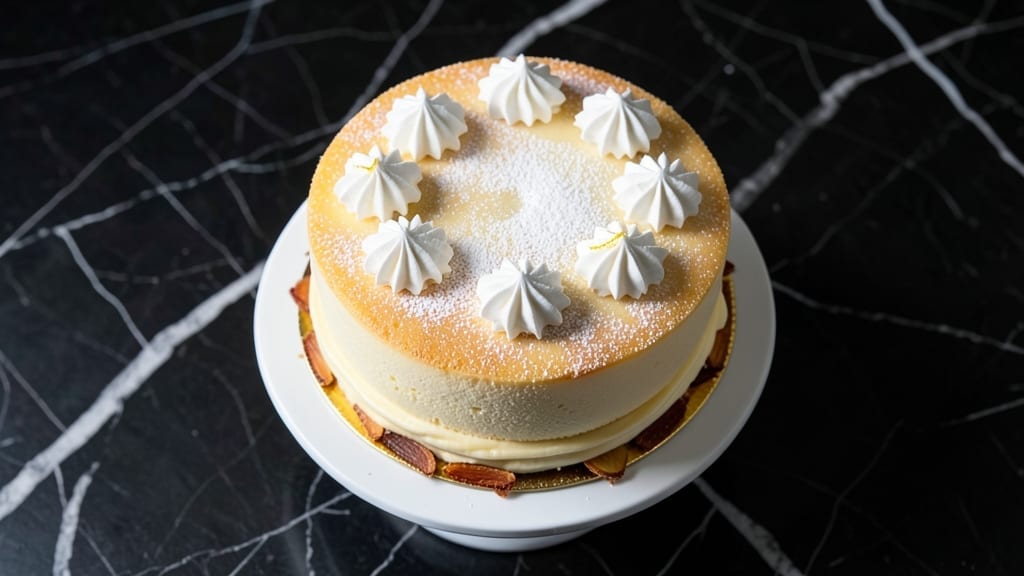
This 8-inch genoise cake recipe delivers the lightest, most tender sponge cake with a flawless rise—no dense crumbs or dry edges in sight. The secret lies in precise egg separation, gentle folding, and a 350°F oven that ensures even baking.
I’ve perfected this technique after years of trial and error, and it’s the foundation for everything from classic trifles to elegant layer cakes.
What sets this genoise apart is its silky texture, achieved through careful egg incorporation and minimal flour. The cake rises dramatically yet stays tender, with a delicate crumb that melts in your mouth.
Unlike traditional pound cakes, this version relies on air for structure, making it lighter and more refined. It’s the ideal base for fillings, frostings, or even a simple dusting of powdered sugar.
By the time you pull it from the oven, you’ll have a perfectly domed cake with a golden, crackly top and a moist interior. The key steps—whipping eggs to ribbon stage, folding in flour gently, and baking just until set—ensure consistent results every time.
This isn’t just a cake; it’s a blank canvas for your favorite flavors.
For extra versatility, consider infusing the batter with vanilla, citrus zest, or even a splash of liqueur. Layer it with pastry cream, fresh berries, or chocolate ganache for a restaurant-worthy dessert. Let’s get started on creating your perfect genoise.
Ingredients for 8 inch genoise cake
Nine simple ingredients transform into the lightest, most perfect genoise cake you’ll ever bake.
| Ingredient | Amount | Notes |
|---|---|---|
| Large Eggs 🥚 | 6 whole | Room temperature for best whipping |
| Granulated Sugar 🍚 | 1 cup | Superfine preferred for silky texture |
| All-Purpose Flour 🌾 | ¾ cup | Sifted for lightest batter |
| Unsalted Butter 🧈 | ½ cup | Cold, cubed for precise measurement |
| Vanilla Extract 🌿 | 1 tbsp | Pure vanilla for authentic flavor |
| Salt 🧂 | ¼ tsp | Fine sea salt for balance |
| Lemon Zest 🍋 | 1 tbsp | Freshly grated organic lemon |
| Cake Flour 🌾 | ¼ cup | Optional for extra tenderness |
| Powdered Sugar 🍚 | 2 tbsp | For dusting finished cake |
Eggs are the heart of this recipe—room temperature is non-negotiable. Grab the largest eggs you can find at Whole Foods or your local farmers market for maximum volume. The sugar matters too: superfine sugar dissolves faster, giving you that silky texture. I always use Domino brand for baking—it’s finely ground and reliable. For the flour, Bob’s Red Mill all-purpose is my go-to, but any good brand works. Pro tip: measure your flour by weight if you can—4 oz equals 1 cup—for perfect consistency every time.
No vanilla extract? Vanilla bean paste works too—just use half the amount. Short on lemon zest? Orange zest is a great swap, but lemon’s brightness is classic. Cake flour optional but worth it—mix 0.5 cup all-purpose with 0.25 cup cornstarch if you don’t have it. For the butter, Plugrá is my favorite for baking—it’s European-style with higher fat content. If you must use salted butter, reduce the added salt by half. And that powdered sugar? Confectioners’ sugar from the clear canister dissolves better than the boxed kind.
Egg whites hold up best at room temperature for 1 hour—don’t skip this. Store leftover cake in an airtight container with parchment between layers for up to 3 days. For longer storage, wrap tightly in plastic and freeze for 1 month. The cake reheats beautifully—just 10 seconds in the microwave with a damp paper towel. Perfect for making ahead for parties or special occasions.
Why You’ll Love This Recipe
- Five-Ingredient Magic: This cake is that simple—just eggs, sugar, flour, butter, and vanilla. No fancy mixers, no measuring cups for every little thing. I swear, even if you’re not a baker, the whisk-and-fold method feels like cheating.
- Vanilla Butter Bliss: That first bite? Pure, buttery vanilla heaven. The eggs and sugar create this tender crumb, while the butter keeps it moist without being heavy. Honestly, it’s the kind of cake that makes you forget about store-bought boxes.
- Perfect for Any Occasion: Need a cake for a birthday? A last-minute dessert? This 8-inch size is just right—elegant enough for a gathering but small enough to enjoy in a single sitting. I’ve used it for everything from potlucks to my own lazy Sundays.
- Leftover Heaven: Between us, this cake stays fresh for days, and slices reheated with a little butter? Even better. It’s my go-to when I bake once and eat twice (or three times). Plus, the ingredients are budget-friendly—no wasted money on specialty items.
Step-by-step instructions for silky sponge with perfect rise
Here’s how to create a light, airy genoise with a perfect dome and tender crumb every time.
Separate Eggs and Whip Yolks with Sugar
Begin by separating the 6 whole large eggs, placing yolks in a heatproof bowl and whites in a clean, grease-free bowl. I like to use a wire whisk for this—it’s sturdy enough for vigorous whipping but gives precise control. Add the 1 cup granulated sugar to the yolks and place the bowl over a pot of simmering water (double boiler), making sure the bowl doesn’t touch the water.
Whisk the yolk mixture constantly for 5-7 minutes until it’s pale, thick, and triples in volume. You’ll notice the sugar dissolves completely and the mixture becomes ribbony when the whisk is lifted. This step is crucial—it creates the foundation for that signature genoise lightness. The mixture should feel like thick ribbon candy when you draw the whisk through it.
Whip Egg Whites to Stiff Peaks
While the yolks warm, add the ¼ teaspoon salt and 1 tablespoon lemon zest to the egg whites. Using a clean whisk or electric mixer, beat on high speed until soft peaks form. Increase speed to high and continue whipping until stiff, glossy peaks form when you lift the whisk—this usually takes about 3-4 minutes.
The whites should hold their shape when the whisk is tilted. I always do a quick taste test here—the lemon zest should add a bright citrus note that brightens the whole cake. Be careful not to overbeat, or the whites will become dry and grainy. If they start looking dull, stop immediately—they’ve gone too far.
Combine Yolks and Whites Gently
Remove the yolk mixture from the heat and let it cool for 2-3 minutes until just warm to the touch. Using a rubber spatula, gently fold about ⅓ of the egg whites into the yolk mixture to lighten it. Then, carefully fold in the remaining whites in two additions, being very gentle to maintain air incorporation.
This is where patience pays off—don’t overmix or you’ll deflate all that precious air. The batter should be smooth and glossy with no streaks of white. If you see any large pockets of white, gently fold them in with a spatula. The final batter should be thick but pourable, like heavy cream. At this point, fold in the ½ cup cold cubed butter using a spatula, cutting through the center and folding until just combined.
Add Flours and Prepare for Baking
In a separate bowl, whisk together the ¾ cup all-purpose flour and ¼ cup cake flour (if using) to prevent lumps. Gently fold this into the batter in two additions, again being careful not to deflate the air. Add the 1 tablespoon vanilla extract and mix until just combined—you should still see some streaks of flour. Overmixing develops gluten, which makes the cake dense.
Pour the batter into an 8-inch round cake pan lined with parchment paper (the paper should extend up the sides to prevent sticking). Tap the pan gently on the counter to release any air bubbles. Bake in a preheated 350°F oven for 30-35 minutes, until the top is golden and a toothpick inserted in the center comes out clean. The edges should pull away slightly from the pan, and the cake should spring back slowly when pressed gently in the center.
Cool and Dust with Powdered Sugar
Remove the cake from the oven and let it cool in the pan for 10 minutes. Then, invert it onto a wire rack to cool completely. This gradual cooling prevents cracking. Once fully cooled, dust the top generously with 2 tablespoons powdered sugar using a fine-mesh sieve for that classic genoise finish.
The cake should be light as a cloud with a delicate crumb that practically melts in your mouth. If you’re making layers, repeat the process immediately with the remaining batter. For best results, store the cake in an airtight container at room temperature for up to 3 days or refrigerate for up to 5 days. The genoise keeps beautifully and makes a fantastic base for fillings or frostings.
Pro Tips For Making 8 Inch Genoise Cake
- Whisk Eggs to Room Temp: Cold eggs won’t incorporate sugar properly, and you’ll end up with a dense, gummy cake. Pop them out of the fridge 30 minutes before starting—trust me, the extra wait beats the frustration of overmixing later.
- Sift Flour Twice: I learned this after my first genoise collapsed like a sad soufflé. Sift the flour before folding it in, then sift again right before mixing—this keeps it light and prevents lumps that weigh down the batter.
- Butter the Pan and Parchment: Butter the pan first, then line it with parchment greased on both sides. The extra step ensures the cake doesn’t stick to the parchment or the pan—no peeling disasters here.
- Bake Until Springy: Your oven’s hot spots will lie to you. The cake’s done when it pulls away from the edges and springs back when gently pressed—like a trampoline, not a sponge. Overbaking dries it out faster than you can say “vanilla extract.”
Regional styles of these flavors
French Classic
The French version of genoise is the gold standard, often baked in a 350°F oven for 30-35 minutes in an 8-inch round pan. This method creates a delicate, airy crumb with a subtle vanilla-lemon flavor.
The French traditionally dust with powdered sugar immediately after baking, which gives that signature “finished” look. I love adding a thin layer of pastry cream between layers for a classic French trifle. 🍰
Italian Lemon Twist
In Italy, genoise often gets a brighter citrus kick with more lemon zest—sometimes up to 2 tablespoons—and a splash of limoncello instead of vanilla. The Italians also prefer a slightly denser texture, so they might reduce the egg whites to 10-12 minutes of whipping (soft peaks only).
This version pairs beautifully with ricotta and berry fillings or a dusting of zucchini blossoms for a floral touch.
American Vanilla Bean
American bakers often go all out with flavor by using vanilla bean paste (about 1½ teaspoons) and adding a pinch of cardamom for warmth. The baking time stays the same, but the batter is sometimes enriched with an extra 2 tablespoons of melted butter for extra moisture.
This version works perfectly with maple glaze or a layer of chocolate ganache—think of it as the ultimate vanilla cake upgrade.
Japanese Matcha Version
For a modern twist, Japanese bakers infuse the batter with 1-2 teaspoons of high-quality matcha powder (sifted to avoid lumps) and reduce the vanilla to ½ teaspoon. The baking time remains 30-35 minutes, but the cake is often brushed with sweetened condensed milk while warm for extra richness.
This version pairs wonderfully with red bean paste or a dusting of kinako (roasted soybean flour) for a delicate nutty finish. 💛
Scandinavian Cardamom
In Scandinavian kitchens, genoise often gets a cozy spice blend of ½ teaspoon ground cardamom and ¼ teaspoon cinnamon, along with a splash of aquavit or vodka (about 1 teaspoon) to keep the crumb tender.
The cake is traditionally baked in a 340°F oven for 32-35 minutes to ensure even baking. Serve it with lingonberry jam or a dusting of powdered sugar mixed with cardamom for a warm, comforting dessert.
Nutrition facts
Frequently asked questions
Why does my genoise cake turn out dense instead of light?
Overmixing is the #1 culprit! The moment you combine yolks and whites, use a spatula and fold gently—don’t stir vigorously. Also, ensure your egg whites reach stiff peaks (not soft) and room-temperature eggs are essential. Another tip: don’t overbake—pull it when the center springs back slowly (30-35 minutes at 350°F).
Can I make this cake in a different pan size?
Yes, but adjust baking time! For a 9-inch pan, reduce oven temp to 340°F and bake 25-30 minutes—the batter spreads more. For 6-inch pans, increase temp to 360°F and bake 20-25 minutes. Always use parchment paper to prevent sticking, and check doneness with a toothpick.
What’s the best way to store leftover genoise?
Wrap layers tightly in plastic wrap, then place in an airtight container with parchment between them. Store at room temp for 3 days or refrigerate for 5 days. For longer storage, freeze for up to 1 month. To reheat, microwave for 10 seconds with a damp paper towel—it revives beautifully!
How do I prevent cracks in my genoise?
Cracks usually happen from rapid cooling or overbaking. Let the cake cool in the pan for 10 minutes before inverting, then finish cooling on a wire rack. Also, avoid opening the oven door early—the sudden temperature drop causes cracks. For extra insurance, brush the warm cake with simple syrup (equal parts sugar and water) before dusting with powdered sugar.
Can I substitute cake flour if I don’t have it?
Mix 0.5 cup all-purpose flour with 0.25 cup cornstarch for every 1 cup of cake flour needed. Sift the blend before folding into the batter. This keeps the texture light and tender—just don’t skip the sifting step or you’ll get lumps. The cornstarch helps create that signature genoise delicacy.

- Pea Soup Instant Pot Recipe: Velvety Green Smoothness in 20 Minutes - November 1, 2026
- Pork Loin Pulled Pork Crock Pot Recipe: Slow-Smoked Tenderness With Zero Dryness - November 1, 2026
- Baked Potatoes in Crock Pot Recipe: Buttery Interiors and Crispy Top Magic - November 1, 2026