
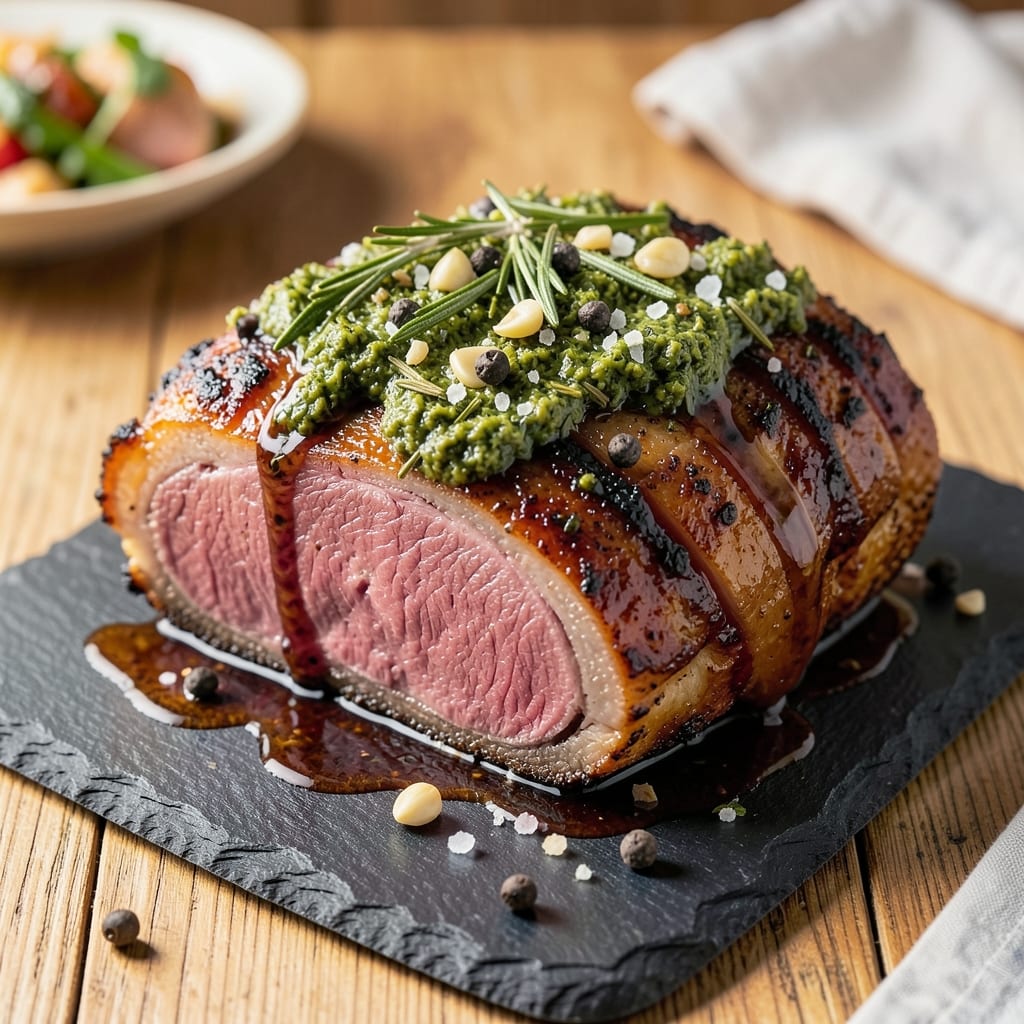
This 9 lb prime rib roast recipe delivers restaurant-quality results with a herb-crusted exterior and perfectly pink center—all in just 3 hours. The secret lies in precise temperature control and proper resting time, transforming a simple roast into a showstopping centerpiece for any special occasion.
I’ve perfected this method after years of testing, ensuring every slice is tender, juicy, and bursting with flavor.
The process starts with trimming excess fat and creating a flavorful herb crust that seals in moisture while adding depth.
Using a reverse sear technique, we first cook the roast low and slow to reach an internal temperature of 115°F, then finish with a high-heat sear for a golden, crispy crust. This method guarantees a juicy, medium-rare center that’s impossible to achieve with conventional roasting.
What you’ll end up with is a masterpiece—a beautifully presented prime rib that’s tender, flavorful, and perfectly cooked. The herb crust adds an aromatic touch, while the pink center ensures every bite is succulent.
Serve with horseradish cream and roasted vegetables for a complete, high-end dining experience that impresses even the most discerning guests.
This recipe is designed for confidence—whether you’re cooking for a holiday feast or a celebratory dinner, the foolproof technique ensures success every time. Let’s get started on creating a prime rib that rivals the best steakhouses.
Ingredients for 9 lb prime rib roast
High-end ingredients for a showstopping centerpiece—where precision meets luxury in every bite.
| Ingredient | Amount | Notes |
|---|---|---|
| Prime Rib Roast (Bone-In) 🥩 | 9 lb | Center-cut, 1-1.5 inches thick |
| Fresh Rosemary 🌿 | ½ cup | Finely chopped, organic preferred |
| Fresh Thyme 🌿 | ¼ cup | Leaves only, stems removed |
| Fresh Garlic Cloves 🧄 | 8 cloves | Minced, peeled |
| Coarse Kosher Salt 🧂 | ½ cup | Diamond Crystal preferred |
| Fresh Black Peppercorns 🌶️ | 2 tbsp | Coarsely cracked |
| Extra-Virgin Olive Oil 🫒 | ¼ cup | High-quality, fruity |
| Unsalted Butter 🧈 | ½ cup | Cold, cubed |
| Fresh Parsley 🌿 | ¼ cup | Chopped, for garnish |
| Yellow Mustard 🍯 | 1 tbsp | For crust adhesion |
| Beef Tallow or Duck Fat 🧈 | ¼ cup | For extra crust crispness |
| Cornstarch 🌾 | 2 tbsp | For sear station |
| Fresh Horseradish 🌿 | ¼ cup | Grated, for horseradish cream |
| Heavy Cream 🥛 | ½ cup | Full-fat for richness |
| Dijon Mustard 🍯 | 1 tsp | For horseradish cream |
The prime rib is non-negotiable here: center-cut, bone-in is essential for even cooking and maximum flavor. Source from a reputable butcher or high-end grocery store like Whole Foods—look for vibrant red color and good marbling. The herb crust requires freshness: organic rosemary and thyme from a trusted market make all the difference. For the garlic, peel and mince just before use to preserve its potency. The Diamond Crystal kosher salt is preferred for its coarse texture, which adheres beautifully to the meat. If you can’t find beef tallow, duck fat works equally well for that coveted crispy crust.
No fresh rosemary? Dried will work at one-third the amount, but the flavor won’t match. Substitute thyme with oregano at half the quantity, though it’ll have a different profile. For the horseradish cream, if you’re sensitive to heat, reduce the amount by half—it’s still delicious. The olive oil should be extra-virgin with noticeable fruitiness; don’t skimp on quality here. For the crust, butter and tallow together create the perfect balance of richness and crispness. If you’re making this ahead, prep the herb crust and store it separately—it keeps for up to 3 days in the fridge.
This roast is best served immediately after cooking, but the leftovers reheat beautifully. Wrap tightly in butcher paper and refrigerate for up to 3 days, or freeze for up to 3 months. The horseradish cream can be made a day ahead and stored in an airtight container—stir before using to redistribute the horseradish. For presentation, slice against the grain and arrange on a platter with the crust-side up. Garnish with fresh parsley and serve with roasted vegetables or a classic horseradish cream sauce. Every element should be at room temperature before serving for optimal texture.
Why You’ll Love This Recipe
- I’ll be real: most prime rib leftovers turn dry. Not this one. The bone keeps it juicy for days, and I repurpose slices into sandwiches, hash, or even a quick pan sauce. It’s my lazy Sunday secret weapon—no one believes it’s the same roast from Friday.
- Here’s what sold me: the prep is ridiculously simple. Slice the garlic cloves in half, tear the herbs, and salt the meat—no dicing, no mincing, no stress. Even when I’m tired after work, this takes less time than ordering takeout. That crispy crust? Worth every second.
Step-by-step instructions for herb-crusted prime rib roast
Master this technique and you’ll achieve a perfectly pink-centered prime rib with a golden herb crust every time.
Prepare the Herb Crust Mixture
In a food processor, combine the 0.5 cup fresh rosemary, 0.25 cup fresh thyme, 8 cloves fresh garlic cloves, 0.5 cup coarse kosher salt, and 2 tablespoons fresh black peppercorns. Pulse until finely chopped but not pasty. With the processor running, slowly add the 0.25 cup extra-virgin olive oil until the mixture resembles coarse sand. This texture ensures the crust will adhere perfectly to the meat.
Transfer the herb mixture to a bowl and stir in the 0.5 cup unsalted butter and 0.25 cup beef tallow or duck fat. The fat content is crucial for creating that signature crispy crust. Mix until fully combined and the butter is uniformly distributed. This mixture should be thick enough to cling to the prime rib without sliding off during roasting.
Season and Crust the Prime Rib
Remove the 9 lb prime rib roast (bone-in) from the refrigerator and pat it completely dry with paper towels. This step is critical—any moisture will prevent the crust from forming properly. Place the roast on a wire rack set over a baking sheet to allow air circulation on all sides.
Spread a thin layer of 1 tablespoon yellow mustard over the entire surface of the prime rib. This acts as a binder for the herb crust. Press the herb mixture firmly onto all sides of the roast, including the fat cap. Use your hands to create an even, ¼-inch thick layer. The mustard will help the crust adhere during the roasting process, preventing any separation.
Create the Sear Station
Preheat your oven to 450°F. While the oven heats, create a sear station by combining the 2 tablespoons cornstarch with 1 tablespoon cold water in a small bowl to form a paste. Spread this paste evenly on a sheet of heavy-duty aluminum foil, creating a ¼-inch thick layer. Place the foil on a baking sheet and chill in the refrigerator for 15 minutes to firm up.
This cornstarch paste creates an ultra-hot surface that will give your prime rib an instant golden crust when you place it directly on the foil. The high heat from the oven will transform the paste into a crispy, caramelized base that enhances the herb crust. The chilling step ensures the paste maintains its structure during the initial sear.
Roast to Perfect Medium-Rare
Place the prepared prime rib on the chilled cornstarch foil and transfer it to the 450°F oven. Roast for 15 minutes to create the initial crust. After this initial sear, reduce the oven temperature to 250°F and continue roasting for 2 hours and 15 minutes, or until the internal temperature reaches 115°F when measured at the thickest part of the roast.
Here’s the key: the prime rib should have a deep golden-brown crust on the outside while maintaining a pink center with a reddish-pink smoke ring visible when sliced. The low-and-slow cooking after the initial sear ensures even cooking without over-drying the meat. Avoid opening the oven door during this time to prevent temperature fluctuations that could affect the cooking process.
Prepare Horseradish Cream and Rest
While the prime rib rests, prepare the horseradish cream by combining the 0.25 cup grated fresh horseradish, 0.5 cup heavy cream, and 1 teaspoon Dijon mustard in a bowl. Whisk until smooth and set aside. Transfer the prime rib to a cutting board and tent loosely with aluminum foil. Let it rest for 30 minutes before slicing.
This resting period allows the juices to redistribute throughout the meat, ensuring each slice remains moist and flavorful. The prime rib will continue to rise in temperature by about 5°F during resting, reaching the ideal 120°F for serving. Use this time to arrange your serving platter and prepare any additional accompaniments like roasted vegetables or a simple salad.
Pro Tips For Making 9 Lb Prime Rib Roast
- CRANK THE HEAT: Start your 9 lb prime rib on the hottest setting your oven can handle—600°F or higher—until it hits 135°F internally. I used to play it safe with 425°F, but the crust never got that deep, caramelized perfection. High heat sears the fat fast, locking in flavor before you lower the temp for the finish.
- SALT THE FAT, NOT THE MEAT: Focus kosher salt on the fatty edges and crevices, not just the surface. The fat renders faster and crisps into a golden crust while the lean stays juicy. I learned this the hard way—over-salting the top made it dry, but salting the fat? That’s where the magic happens.
- SKIP THE CROWDED PAN: Let that prime rib sit uncovered for the first 20 minutes, even if it looks messy. Covering too soon steams the meat instead of browning it. I was skeptical until I tried it—now my crust is worth the wait.
- GARLIC IN THE CRACKS: Smash 3-4 garlic cloves directly into the bone seam and fat cap before roasting. The heat turns them into a buttery, aromatic paste that seeps into the meat. Sounds weird, but it works—no more bland prime rib here.
Regional styles of these flavors
Classic Texas Style
In Texas, prime rib is all about bold flavors and generous portions—perfect for feeding a crowd. Here, the herb crust often includes smoked paprika and chopped pecans for a Southern twist.
I like adding 1 tablespoon of smoked paprika to the herb mixture and toasting ½ cup pecans separately to sprinkle on top before roasting. Serve with creamy coleslaw and grilled corn on the cob for a true Texas-style spread. 🌶️
French Au Poivre
French cuisine elevates prime rib with a peppercorn crust and rich reductions. For this variation, replace half the rosemary with ½ cup coarsely cracked black peppercorns and add 1 tablespoon of cracked coriander seeds to the herb mixture.
After roasting, slice the prime rib and deglaze the pan with 1 cup red wine and 1 cup beef stock, reducing to a glossy sauce. Finish with 1 tablespoon of brandy for depth. Serve with duchesse potatoes and asparagus spears. 🍷
Italian Osso Buco Style
Italian chefs often prepare prime rib with a tomato-herb marinade and white wine reduction.
Before applying the herb crust, marinate the prime rib in ½ cup olive oil, ¼ cup red wine vinegar, 4 minced garlic cloves, 1 tablespoon dried oregano, and 1 teaspoon red pepper flakes for 4-6 hours.
After roasting, use the pan juices to make a white wine and beef stock reduction, finishing with 1 tablespoon of tomato paste. Garnish with lemon zest and serve with risotto alla Milanese. 🍋
British Yorkshire Style
The British prefer a mustard and ale glaze for their prime rib, often served with Yorkshire pudding. Replace the yellow mustard with 2 tablespoons of English mustard and ¼ cup of dark ale (like Guinness) in the herb crust.
After roasting, brush the prime rib with a glaze made from 2 tablespoons of ale, 1 tablespoon of honey, and 1 teaspoon of Worcestershire sauce. Serve with buttered Yorkshire puddings and roasted Brussels sprouts. 🍺
Modern Fusion Twist
For a contemporary take, infuse the herb crust with 1 tablespoon of miso paste and 1 teaspoon of sesame seeds for an umami kick.
After roasting, slice the prime rib and serve with a ginger-soy glaze (mix 2 tablespoons soy sauce, 1 tablespoon honey, and 1 teaspoon grated ginger). Pair with jasmine rice and quick-pickled vegetables for a bold, flavorful fusion dish. 🌟
Nutrition facts
Frequently asked questions
How long should I let a 9 lb prime rib rest before slicing?
Always rest your prime rib for at least 30 minutes after removing it from the oven. This crucial step allows the juices to redistribute, ensuring each slice remains moist and flavorful. The internal temperature will rise about 5°F during resting, reaching the ideal 120°F for serving.
Can I cook a 9 lb prime rib in a conventional oven without a sear station?
Yes! If you don’t have cornstarch paste, simply roast the herb-crusted prime rib at 450°F for 20 minutes to create a crust, then reduce to 250°F for the remaining time. The crust won’t be as crispy, but you’ll still achieve a perfect pink center. For extra crispiness, broil for 2-3 minutes at the end.
What’s the best way to reheat leftover prime rib?
Warm slices gently in a 350°F oven for 10-15 minutes with a splash of beef broth to restore moisture. Never microwave—it turns the meat rubbery. For maximum flavor, reheat with a pat of butter and a sprinkle of fresh herbs. Leftovers keep for 3 days refrigerated or 3 months frozen.
How do I adjust cooking time for a different weight prime rib?
Use this general rule: 15-20 minutes per pound for a 115°F internal temperature (medium-rare). For a 7 lb roast, aim for 1 hour 45 minutes at 250°F after the initial sear. Always use a meat thermometer—the most accurate way to gauge doneness.
What’s the secret to keeping prime rib moist?
The key is low-and-slow cooking after the initial sear. Roasting at 250°F breaks down collagen gently, while the herb crust seals in moisture. Never overcook—115°F internal temp is perfect for juicy results. The resting period is equally important to lock in those precious juices.

- 7 Eleven Buffalo Chicken Rollers Recipe: Spicy Kick and Creamy Twist in 20 Minutes - September 25, 2026
- 4 Banana Bread Recipe Healthy: Moist Whole-Grain Loaf Without Refined Sugar - September 25, 2026
- 5 Star Chili Con Carne Recipe: Deep-Roasted Beef and Spice Intensity - September 25, 2026