
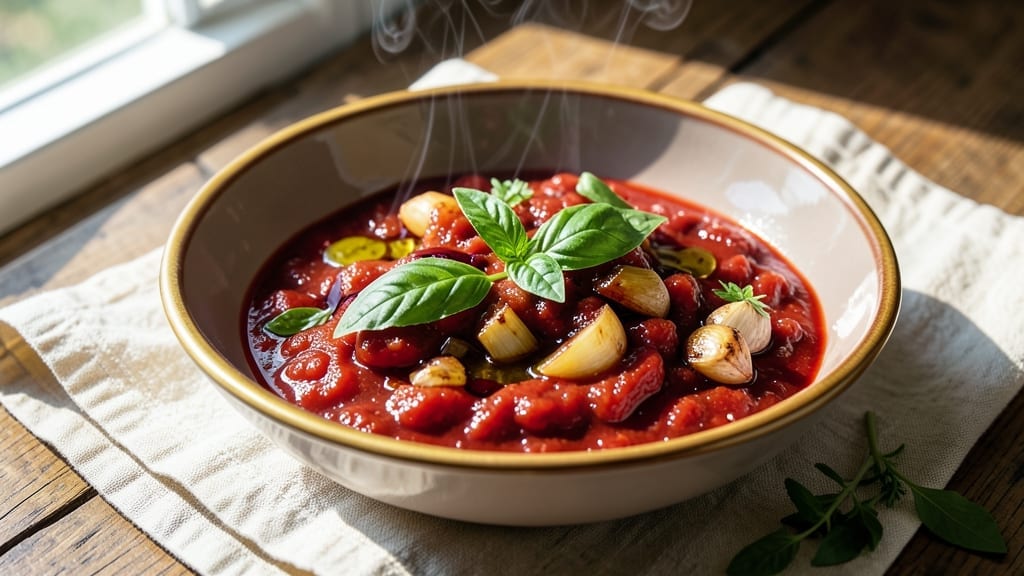
This 5-star tomato sauce recipe delivers restaurant-quality depth with every spoonful—no canned shortcuts, just layers of umami that transform simple pasta into an Italian masterpiece.
The secret lies in slow simmering crushed tomatoes with aromatics until their natural sweetness concentrates, while a splash of red wine and fresh basil elevate it from ordinary to extraordinary.
What sets this apart is the balance: acidity from vinegar brightens the richness, while a pinch of sugar mellows the tomatoes’ natural tartness.
Professional chefs swear by this technique because it builds flavor through time—not just heat. You’ll start with basic ingredients: ripe tomatoes, garlic, onions, and olive oil—but the magic happens in the 20-minute simmer where the sauce reduces into a velvety consistency.
The result? A sauce so rich it coats every noodle perfectly, with just enough body to cling without being gloppy. No blender required unless you prefer smooth perfection.
What you’ll end up with is a 5-star tomato sauce that’s versatile enough for pasta, pizza, or braised meats while keeping well in the fridge for up to 5 days. The aroma alone will have your kitchen smelling like a Tuscan trattoria, and the taste?
That’s where the real magic happens—each bite delivers complex, balanced flavors that canned sauces simply can’t match. Ready to transform your weeknight meals?
For those who love customization, this sauce adapts beautifully: add a splash of balsamic for depth, a handful of mushrooms for earthiness, or a pinch of smoked paprika for a BBQ twist.
The base recipe stays true to its roots while letting you experiment with toppings and textures. Let’s get cooking—your taste buds will thank you.
Ingredients for 5 star tomato sauce
Nine ingredients transform into velvety tomato sauce with restaurant-quality depth.
| Ingredient | Amount | Notes |
|---|---|---|
| San Marzano Crushed Tomatoes 🍅 | 28 oz | High-quality, whole peeled preferred |
| Extra-Virgin Olive Oil 🫒 | ½ cup | Fruity, peppery variety for richness |
| Yellow Onion 🧅 | 1 whole | Medium size, finely diced |
| Garlic Cloves 🧄 | 4 cloves | Fresh, minced for aromatic base |
| Dry Red Wine 🍷 | ½ cup | Bold variety like Cabernet Sauvignon |
| Fresh Basil Leaves 🌿 | ½ cup | Packed, stems removed for freshness |
| White Wine Vinegar 🍋 | 1 tbsp | For acidity balance |
| Granulated Sugar 🍚 | 1 tsp | Mellows tomato tartness |
| Sea Salt 🧂 | 1 ½ tsp | Diamond Crystal preferred |
| Freshly Ground Black Pepper 🌶️ | ½ tsp | Freshly cracked for depth |
San Marzano tomatoes are the unsung heroes here—their sweetness and low acidity make all the difference. Grab a 28-oz can from the Italian aisle at Whole Foods or Trader Joe’s; those tiny cans of whole peeled tomatoes are worth the splurge. The olive oil? Don’t skimp—look for a fruity, peppery variety like California Early Harvest or Colavita. Fresh basil is non-negotiable for that bright, aromatic finish, so grab a big bunch and use half now, half later. The red wine adds depth, but any bold, dry variety works—whatever’s open in your fridge.
No San Marzano tomatoes? High-quality crushed tomatoes in a jar work in a pinch, but add an extra pinch of sugar to balance the acidity. Swap the red wine for dry white wine or extra tomato paste if needed—just reduce the sauce longer to concentrate flavors. Fresh basil wilt fast, so if you’re prepping ahead, store it in a jar of water like flowers. The vinegar and sugar are your flavor balancers—adjust to taste, but start with the amounts listed. For a smoother sauce, blend briefly after simmering, but the intro’s rustic texture is where the magic happens.
This sauce tastes even better the next day as flavors meld. Store in an airtight container in the fridge for up to 5 days, or freeze for 3 months in portion-sized containers. I like to freeze it in 1-cup portions for quick pasta nights. The aroma alone will have your kitchen smelling like a Tuscan trattoria—trust me, it’s worth the simmer time. Double the batch if you can; you’ll want leftovers for pizza or braised meats.
Why You’ll Love This Recipe
- Wine Kisses First: I swear by the splash of dry red—it’s the secret that turns simple tomatoes into something sophisticated. That first sip of wine simmering into the sauce? Chef’s kiss. Even my wine-averse partner nods when he tastes it.
- Pantry Stash Magic: No last-minute grocery runs. Just olive oil, onions, and a can of San Marzano—ingredients you’re already keeping on hand. Honestly, I make this when I’ve forgotten to meal prep and when I’ve got everything planned.
- Pasta Party Ready: Dress up lasagna, toss with al dente spaghetti, or serve over crusty bread—this sauce doesn’t play favorites. I’ve used it for potlucks, date nights, and even as a dip for garlic bread when I’m lazy. (Yes, even on a Tuesday night.)
- Fridge Goldmine: Make a double batch and freeze half. Thaw it later for zero effort—just reheat and serve. Between us, this is how I survive weeks where cooking feels like a chore. The wine-infused richness only gets better after a few days, too.
Step-by-step instructions for umami-packed tomato sauce
Here’s how to build a restaurant-quality sauce that delivers rich flavor and velvety texture every time.
Sauté the Aromatic Base
Heat the 0.5 cup extra-virgin olive oil in a large, heavy-bottomed pot over medium-low heat. Add the 1 whole yellow onion that’s been finely diced and cook for 8-10 minutes until completely translucent and just beginning to turn golden. This slow cooking develops sweetness in the onion without burning it.
Next, add the 4 cloves minced garlic and cook for another 30 seconds until fragrant but not browned. Garlic burns quickly, so keep an eye on it—you want aroma, not bitterness. Remove the pot from heat temporarily while you prepare the tomatoes to avoid overcooking.
Build Flavor with Wine and Vinegar
Return the pot to medium heat and carefully pour in the 0.5 cup dry red wine. Stir constantly as it simmers for 3-4 minutes until reduced by about half. This deglazing step captures all the browned bits from the onion and garlic, creating a flavorful base.
Add the 1 tablespoon white wine vinegar and 1 teaspoon granulated sugar, stirring to combine. The acidity brightens the sauce while the sugar mellows any tartness from the tomatoes. Let this mixture simmer for 1 minute until the vinegar aroma dissipates completely.
Simmer the Tomatoes to Perfection
Pour in the 28 oz San Marzano crushed tomatoes and stir well to incorporate. Add the 1.5 teaspoons sea salt and 0.5 teaspoon freshly ground black pepper, then bring to a gentle simmer over medium-low heat. Partially cover the pot and let it cook for 45-50 minutes.
You’re looking for a sauce that reduces slightly but maintains a thick, velvety consistency—not too thin, not too thick. Stir occasionally and taste after 30 minutes to adjust seasoning. The sauce should be deeply flavorful with balanced acidity and sweetness. If it’s too acidic, add a pinch more sugar; if too bland, add more salt.
Finish with Fresh Basil
Remove the pot from heat and stir in the 0.5 cup fresh basil leaves (stems removed). Let the sauce sit for 5 minutes to allow the basil to infuse its bright, fresh flavor. Taste one more time and adjust seasoning if needed—this is your final chance to perfect the balance.
For the best texture, press the basil leaves against the side of the pot with a spoon to extract maximum flavor, then remove them. The sauce should now have a glossy sheen and coat the back of a spoon. Serve immediately over pasta, or let it cool slightly before storing in the refrigerator for up to 5 days. The flavors will continue to develop as it rests!
Pro Tips For Making 5 Star Tomato Sauce
- Sweat the Onion Slowly: I used to rush this step, but the onion needs 8-10 minutes of gentle cooking until it’s translucent and just starting to caramelize—no browning yet. If you push it, the wine will taste harsh instead of brightening the sauce.
- Deglaze with Wine Heat: After toasting garlic, pour in the red wine and let it bubble for 30 seconds before adding tomatoes. The alcohol burns off faster when the pan is hot, leaving just the rich flavor behind.
- Crush Garlic Cloves Roughly: Smash the garlic cloves flat with the side of your knife before adding them to the pan. This releases more flavor into the oil without burning—no need for fancy mincers.
- Simmer, Don’t Boil: Once the tomatoes are in, keep the heat at a bare simmer (tiny bubbles, occasional stir). Boiling turns the sauce watery and dulls the San Marzano sweetness—this isn’t soup, it’s sauce.
Perfect pairings for 5 star tomato sauce
Pasta Perfection
This sauce transforms any pasta into a showstopper. I love pairing it with al dente spaghetti or fettuccine, but it also elevates penne or rigatoni beautifully. For extra indulgence, toss in 1 cup cooked pancetta or crispy guanciale during the final 5 minutes of simmering.
The fat renders and infuses the sauce with deep, savory notes. 🍝
For a lighter option, try whole wheat or chickpea pasta—the nutty flavors complement the sauce’s richness. Always cook pasta until 1 minute less than package instructions, then toss it directly in the sauce to absorb those velvety flavors.
Pro tip: Reserve ½ cup pasta water before draining to adjust sauce consistency if needed.
Pizza Base
Use this sauce as your pizza foundation for a restaurant-quality crust. Spread ½ cup sauce evenly over a 12-inch pizza dough (homemade or store-bought), then top with 1 cup shredded mozzarella, ¼ cup grated Parmesan, and your favorite toppings.
For a Neapolitan-style pizza, add 1 tbsp tomato paste to the sauce before spreading to enhance sweetness. 🍕
Bake at 475°F for 12-15 minutes until the crust is golden and cheese is bubbly. Finish with fresh basil and a drizzle of extra-virgin olive oil for that authentic trattoria touch.
This sauce also works wonders for deep-dish pizza—just layer it between cheese and toppings for maximum flavor in every bite.
Meat Braising
Transform tough cuts into tender masterpieces by using this sauce as a braising liquid. Brown 2 lbs beef chuck roast in a Dutch oven, then deglaze with ½ cup red wine and add 2 cups of this tomato sauce.
Simmer covered for 3 hours at 300°F until fork-tender. The sauce’s acidity and sweetness break down fibers beautifully. 🥩
For pork shoulder, reduce the braising time to 2 hours and add 1 tsp smoked paprika to the sauce. The result is fall-off-the-bone meat with a glossy, flavorful coating.
Always slice against the grain for maximum tenderness. This technique works equally well for chicken thighs—braise for 45 minutes for juicy, saucy perfection.
Bread Dipping
Warm the sauce slightly and serve it as a dipping sauce for garlic bread, focaccia, or crusty baguette slices. Toast the bread until golden, then dip it into the sauce for an instant flavor boost.
For extra fun, arrange cherry tomatoes and mozzarella balls on a platter with the sauce for a caprese-inspired appetizer. 🥖
For a bruschetta twist, spread the sauce on toasted bread, top with diced tomatoes, fresh basil, and a sprinkle of flaky sea salt. The contrast of warm bread, cool tomatoes, and rich sauce is pure comfort food magic.
This sauce also makes an excellent soup base—simmer it with chicken broth and small pasta shapes for a quick weeknight meal.
Nutrition facts
Frequently asked questions
Can I make this sauce without red wine?
Swap the 0.5 cup dry red wine for 0.5 cup dry white wine or even 0.5 cup extra tomato paste mixed with 2 tbsp water. The sauce will still develop depth, though the wine adds a subtle complexity that’s hard to replicate. If using tomato paste, reduce the simmering time by 10 minutes to avoid over-thickening.
How do I prevent the sauce from getting too acidic?
Start with the 1 tsp sugar and 1 tbsp vinegar as written, then taste as you simmer. If it’s too sharp, add ½ tsp more sugar or a pinch of salt to balance. For extra insurance, use San Marzano tomatoes—they’re naturally sweeter and lower in acid than regular canned tomatoes. Stir in a small pat of butter at the end if needed.
Can I make this sauce in a slow cooker?
Yes! Follow the same steps until adding the tomatoes, then transfer everything to a 3-4 quart slow cooker on low heat. Cook for 4-5 hours instead of simmering, stirring occasionally. The low-and-slow method enhances the flavors beautifully. Add fresh basil at the end and let it steep for 5 minutes before removing.
What’s the best way to store leftovers?
Let the sauce cool completely, then transfer to an airtight container. It keeps in the fridge for 5 days or freezes for 3 months in portion-sized containers. For reheating, warm gently on the stove with a splash of water or pasta water to restore its silky texture. The flavors actually improve overnight!
How can I make this sauce smoother?
For a velvety texture, blend the sauce briefly after simmering but before adding basil. Use an immersion blender for convenience or transfer to a regular blender in batches. Pulse until smooth, then return to the pot. If you prefer some texture, blend only half the sauce and mix it back in.

- 6 Oz Chocolate Chip Cookie Recipe: Perfectly Balanced Crispy Edges and Chewy Hearts - September 25, 2026
- 6-Inch Coffee Cake Recipe: Vanilla Bean Swirls and Buttery Streusel Topping - September 25, 2026
- 1 Hour Soup Recipe: Velvety Richness Without the Wait - September 25, 2026