
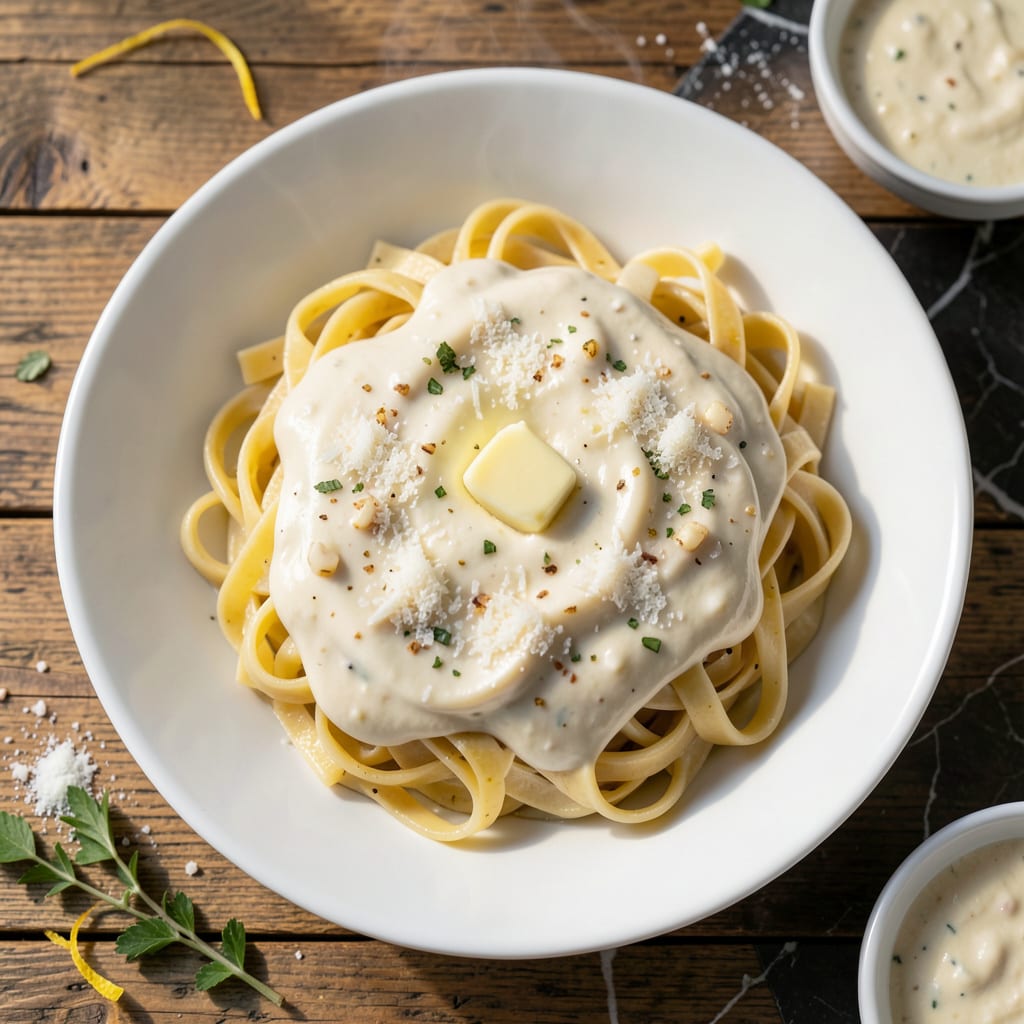
This alfredo sauce proves you can enjoy creamy richness without the heavy cream. I’ve perfected a lighter version that keeps all the velvety texture and savory depth of the classic.
Using low-fat milk and a touch of cornstarch, this sauce comes together in 15 minutes and coats pasta beautifully. It’s the ideal way to indulge without the guilt.
Ingredients for Alfredo Sauce Low Fat
Nine simple ingredients transform into a light, velvety sauce. No heavy cream needed.
| Ingredient | Amount | Notes |
|---|---|---|
| Low-Fat Milk 🥛 | 2 cups | Whole or 2% works too |
| Cornstarch 🌾 | 2 tbsp | Thickening agent for creaminess |
| Unsalted Butter 🧈 | 2 tbsp | For richness and flavor |
| Garlic Cloves 🧄 | 3 cloves | Minced for aromatic base |
| All-Purpose Flour 🌾 | 2 tbsp | Helps stabilize the sauce |
| Parmesan Cheese 🧀 | ¾ cup | Freshly grated for best flavor |
| Salt 🧂 | ½ tsp | Adjust to taste preference |
| Black Pepper 🌶️ | ¼ tsp | Freshly ground preferred |
| Nutmeg 🌰 | 0.125 tsp | Optional, for depth of flavor |
The milk is your base here, so go for whole or 2%—it’s still lighter than cream but gives you that rich mouthfeel. Organic Valley or Horizon are solid grocery store picks. Cornstarch is your secret weapon for thickness without the fat. Argo or Clabber Girl both work great. Always check the expiration date on your cornstarch (old stuff loses its power).
No low-fat milk? Whole milk works in a pinch, but skip the skim—it won’t give you the right texture. Swap butter for olive oil if you want it dairy-free, though the flavor will change. Fresh Parm is non-negotiable here—pre-grated has anti-caking agents that make the sauce clumpy. Nutmeg is subtle but adds that classic alfredo depth (leave it out if you’re not a fan).
Sauce keeps 3-4 days in the fridge—reheat gently with a splash of milk to loosen. Doesn’t freeze well (separates). Make it fresh for best results, but leftovers still taste great on pasta or veggies.
Why You’ll Love This Recipe
- One-Pot Wonder: I love that this comes together in a single saucepan—melt butter, whisk in flour, then slowly add the low-fat milk and cornstarch. No fancy tools, just a wooden spoon and 15 minutes.
- Garlic Kisses: The fresh garlic cloves sautéed in butter give it that rich, aromatic depth you expect from alfredo, without the heavy cream weighing it down.
- Weeknight Hero: Honestly, it’s my go-to for quick pasta nights or as a veggie dip. Pairs just as well with fettuccine as it does with steamed broccoli.
- Budget Stretcher: Between us, a gallon of low-fat milk and a few pantry staples make this sauce for pennies per serving. Leftovers? They reheat beautifully for lunches all week.
Step-by-Step Instructions for Alfredo Sauce Low Fat
This lightened-up version comes together in minutes with simple, foolproof steps.
Step 1: Create a Smooth Slurry with Milk and Cornstarch
In a small bowl, whisk together the 2 cups Low-Fat Milk and 2 tbsp Cornstarch until completely smooth. I like to do this first so the cornstarch has time to fully dissolve—this prevents any lumps in your finished sauce.
Set this mixture aside while you prepare the rest. The cornstarch will thicken the milk as it heats, giving you that classic alfredo consistency without heavy cream. Make sure there are no visible grains of cornstarch left in the milk.
Step 2: Build a Flavorful Roux with Butter and Garlic
In a medium saucepan, melt the 2 tbsp Unsalted Butter over medium heat. Add the 3 cloves Garlic Cloves (minced) and sauté for 1-2 minutes until fragrant but not browned. You want the garlic to infuse the butter with its aroma without burning.
Next, whisk in the 2 tbsp All-Purpose Flour and cook for 1-2 minutes, stirring constantly. This creates a light roux that will help thicken and stabilize your sauce. The mixture should look bubbly and slightly golden, but don’t let it darken.
Step 3: Gradually Incorporate the Milk Mixture
Slowly pour the milk-cornstarch slurry into the saucepan while whisking continuously. This gradual addition prevents lumps from forming. Bring the mixture to a gentle simmer over medium heat, stirring frequently.
Cook for 3-5 minutes until the sauce thickens enough to coat the back of a spoon. You’ll notice it transform from a thin liquid to a velvety, creamy consistency. Be patient—this step ensures your sauce has the right body without being too thin or too thick.
Step 4: Finish with Cheese and Seasonings
Reduce the heat to low and stir in the 0.75 cup Parmesan Cheese, 0.5 tsp Salt, 0.25 tsp Black Pepper, and 0.125 tsp Nutmeg. I always use freshly grated parmesan because it melts smoothly and has a more vibrant flavor than pre-grated.
Stir constantly until the cheese is fully melted and the sauce is smooth. This usually takes about 2 minutes. Taste and adjust the seasoning if needed—you might want a bit more salt depending on your parmesan’s saltiness. The nutmeg adds a subtle warmth that balances the richness.
Step 5: Serve Immediately for Best Texture
Remove the sauce from heat as soon as it reaches your desired consistency. Alfredo sauce thickens as it cools, so it should be slightly thinner than you want it to be when served. If it becomes too thick while standing, whisk in a splash of warm milk to loosen it.
Use it right away over pasta, or store it in an airtight container in the refrigerator for up to 3 days. Reheat gently over low heat, stirring frequently to maintain that silky texture. This lightened version has all the creamy satisfaction of traditional alfredo without the heavy feeling.
Pro Tips For Making Alfredo Sauce Low Fat
- Whisk Cornstarch First: Mix the cornstarch with a little cold low-fat milk before adding it to the warm mixture—I learned this the hard way after dealing with lumpy sauce more times than I care to admit.
- Cook Garlic Low: Sauté the garlic cloves on low heat until just fragrant, about 1-2 minutes; any hotter and it’ll turn bitter, ruining your light alfredo.
- Skip the Boil: Keep the heat at a gentle simmer when thickening the sauce—boiling makes low-fat milk separate, and once it does, there’s no fixing it.
- Use Room-Temp Milk: Let the low-fat milk sit out for 10-15 minutes before starting. Cold milk slows down the thickening process, and I was skeptical until I tried it and saw the difference.
Storing and Reheating Leftovers
Refrigerator Storage
Transfer the sauce to an airtight container once it cools to room temperature—never leave it out for more than 2 hours. I use glass jars for easy pouring later. It’ll stay fresh in the fridge for 3-4 days. ❄️
Freezing Not Recommended
This sauce doesn’t freeze well because the cornstarch can separate, leaving a grainy texture. If you must freeze, portion into ice cube trays for quick use in small batches, but expect some texture changes after thawing.
Stovetop Reheating
Gently warm the sauce over low heat in a small saucepan, stirring constantly. Add 1-2 tbsp milk to loosen it if needed. Avoid high heat, which can cause the sauce to break or scorch.
Microwave Method
For quick reheating, use 30-second intervals at 50% power, stirring between each. Cover with a damp paper towel to prevent drying. This method works best for single servings.
Reviving Separated Sauce
If the sauce separates slightly after storage, whisk vigorously over low heat while adding a splash of warm milk. The emulsifiers in the milk will help bring it back to its creamy consistency. 💡
Nutrition Facts
Frequently Asked Questions
Can I use skim milk instead of low-fat?
Skim milk will work but may produce a thinner sauce. For best results, stick with 2% or whole milk to achieve that classic creamy texture.
Why does my sauce turn out lumpy?
Lumps usually mean the cornstarch wasn’t fully dissolved. Whisk the milk and cornstarch vigorously before adding to the pan. If lumps appear, strain the sauce through a fine-mesh sieve.
How can I make this dairy-free?
Replace butter with olive oil and use a plant-based milk like oat or almond. For cheese, try nutritional yeast or a vegan parmesan alternative.
Can I add other cheeses for more flavor?
Yes! Try mixing in 1/4 cup of grated Romano or Asiago for extra depth. Avoid pre-shredded blends as they may not melt smoothly.

- 8 Bean Soup Recipe Crock Pot: Hearty Vegetable Medley in One Pot - September 25, 2026
- 4C Bread Crumbs Meatballs Recipe: Crispy Crust and Juicy Centers - September 25, 2026
- 6 Oz Chocolate Chip Cookie Recipe: Perfectly Balanced Crispy Edges and Chewy Hearts - September 25, 2026