
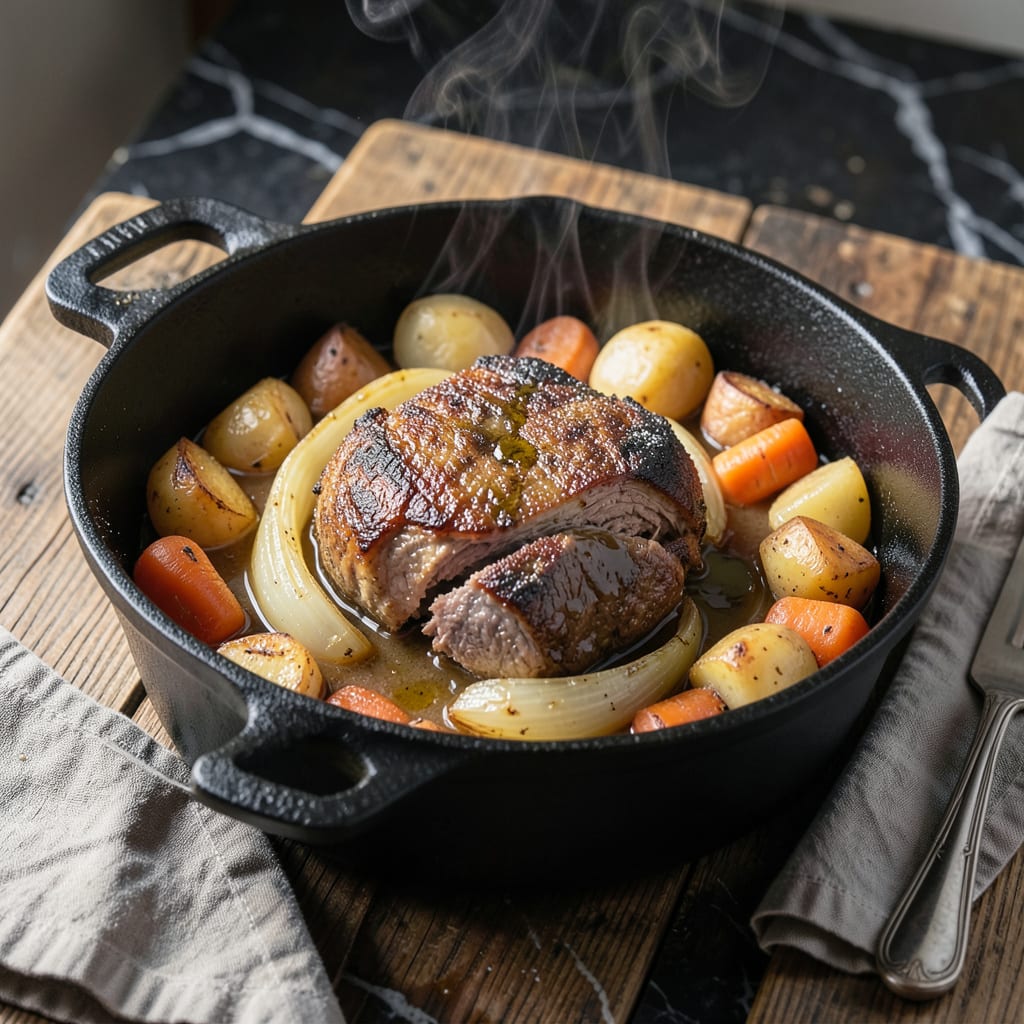
This Dutch oven method transforms tough cuts into fall-apart tender pot roast with minimal effort. The slow braise allows flavors to meld deeply while herbs infuse every bite.
You’ll achieve restaurant-quality results with simple ingredients and one pot. The meat emerges juicy and flavorful, surrounded by a rich, savory sauce that’s perfect for serving over mashed potatoes.
Ingredients for All Recipe Pot Roast
Transform tough cuts into fall-apart tenderness with these carefully selected ingredients for Dutch oven braising.
| Ingredient | Amount | Notes |
|---|---|---|
| Chuck Roast 🥩 | 3 lb | Well-marbled, trimmed of excess fat |
| Kosher Salt 🧂 | 2 tsp | Diamond Crystal preferred for even seasoning |
| Freshly Ground Black Pepper 🌶️ | 1 tsp | Coarse grind for texture |
| All-Purpose Flour 🌾 | ¼ cup | For dredging the roast |
| Olive Oil 🫒 | 2 tbsp | Divided for searing and sautéing |
| Yellow Onion 🧅 | 1 whole | Large, diced into chunks |
| Carrots 🥕 | 3 whole | Peeled, cut into thick pieces |
| Celery Stalks 🥬 | 3 whole | Cut into large chunks |
| Garlic Cloves 🧄 | 5 cloves | Smashed for robust flavor |
| Dry Red Wine 🍷 | 1 cup | Bold variety like Cabernet Sauvignon |
| Beef Broth 🥣 | 2 cups | Low-sodium preferred for control |
| Tomato Paste 🍅 | 2 tbsp | For depth and umami |
| Fresh Thyme Sprigs 🌿 | 4 whole | Plus extra for garnish |
| Fresh Rosemary Sprigs 🌿 | 2 whole | Woodsy stems removed |
| Bay Leaves 🍃 | 2 whole | Dried, for aromatic depth |
The chuck roast is non-negotiable for this preparation. Look for well-marbled pieces at your butcher or Whole Foods meat counter—the fat renders down beautifully during the long braise. Avoid leaner cuts like sirloin, which will dry out. For the wine, any bold dry red works; I keep a bottle of Cabernet on hand specifically for cooking. The beef broth should be low-sodium so you can control the seasoning.
No red wine? Substitute an extra cup of beef broth plus 1 tbsp balsamic vinegar. Fresh herbs are ideal, but dried at one-third the amount works in a pinch. If you’re out of tomato paste, 1 tbsp ketchup can stand in, though the flavor profile will shift slightly. For the vegetables, parsnips or turnips make excellent substitutes for carrots. The flour dredge can be skipped for gluten-free, but the sauce won’t thicken as much.
The roast can be prepped a day ahead—just don’t add the salt until ready to cook. Leftovers keep in the fridge for up to 4 days and freeze beautifully for 3 months. The flavor actually improves overnight as everything melds together. Always store in the cooking liquid to prevent drying.
Why You’ll Love This Recipe
- Set It and Forget: I toss the chuck roast in flour, sear it, and let the oven do the rest—hardly any hands-on time.
- Crispy, Tender Bite: That flour crust locks in juices, giving me a caramelized outside and fall-apart inside every time.
- Sunday Supper Hero: It feeds my whole family with one pan, and honestly, leftovers taste even better the next day.
- Budget Winner: A humble chuck roast turns into a showstopper with just salt, pepper, and a little olive oil.
Step-by-Step Instructions for Dutch Oven Braised Pot Roast
Master the technique for fall-apart tender meat with rich, herb-infused braising liquid.
Step 1: Sear and Season the Chuck Roast
Pat the 3 lb chuck roast dry with paper towels—this ensures a proper sear. Season generously with the 2 tsp kosher salt and 1 tsp freshly ground black pepper, pressing the seasoning into all surfaces for maximum adhesion.
Dredge the roast in the 0.25 cup all-purpose flour, shaking off excess. Heat 1 tbsp olive oil in a Dutch oven over medium-high heat until shimmering. Add the roast and sear for 4-5 minutes per side until a deep, mahogany crust forms. Transfer to a plate and set aside.
This searing step builds the flavor foundation for your braise. Don’t rush it—you want a robust fond on the bottom of the pot.
Step 2: Sauté the Aromatic Vegetables
In the same Dutch oven, add the remaining 1 tbsp olive oil. Add the yellow onion, 3 whole carrots, and 3 whole celery stalks. Cook over medium heat for 6-8 minutes, stirring occasionally, until the vegetables begin to soften and develop color.
Add the 5 cloves garlic cloves, 2 tbsp tomato paste, 4 whole fresh thyme sprigs, 2 whole fresh rosemary sprigs, and 2 whole bay leaves. Stir constantly for 1-2 minutes until the tomato paste deepens in color and the garlic becomes fragrant.
This vegetable base will infuse the braising liquid with complex, layered flavors as it cooks down.
Step 3: Deglaze and Build the Braising Liquid
Pour in the 1 cup dry red wine, scraping the bottom of the pot with a wooden spoon to release all the browned bits. Increase heat to medium-high and simmer for 3-4 minutes until the wine reduces by half.
Add the 2 cups beef broth and return the seared chuck roast to the pot, along with any accumulated juices. The liquid should come about halfway up the sides of the meat—this ensures even cooking and prevents drying out.
Step 4: Braise to Tender Perfection
Bring the liquid to a gentle simmer, then reduce heat to low. Cover the Dutch oven and transfer to a 325°F oven. Braise undisturbed for 2.5 to 3 hours, or until the meat yields easily to a fork.
Resist the urge to check or stir during cooking—each time you open the oven, you lose valuable heat and extend the cooking time. The roast is done when it shreds easily with a fork and the internal temperature reaches 195-200°F.
Step 5: Rest and Serve
Carefully remove the chuck roast from the Dutch oven and transfer to a cutting board. Skim excess fat from the surface of the braising liquid if desired, then adjust seasoning with additional salt and pepper to taste.
Let the roast rest for 15 minutes before slicing or shredding against the grain. Serve with the vegetables and a generous spoonful of the rich, herb-infused braising liquid ladled over the top.
Pro Tips For Making All Recipe Pot Roast
- Sear the Chuck Hard: Get your olive oil screaming hot before adding the floured chuck roast—this builds a deep brown crust that adds serious flavor to the final dish. I learned this the hard way after too many pale, sad pot roasts.
- Season Twice: Hit the chuck with kosher salt and black pepper before dusting it in flour, then again after searing. The flour can mute the seasoning, and you’ll regret it if you skip that second pass.
- Don’t Crowd the Pan: If your roast is too big for the pot, sear it in batches or use a larger pan. Steaming from overcrowding kills the crust, and nobody wants a boiled pot roast.
- Rest Before Serving: Give the pot roast a solid 15 minutes under foil after cooking—it stays juicier and slices cleaner. I was skeptical until I tried it, but now I never skip this step.
Regional Styles of This Dish
Texas Style
In Texas, pot roast often gets a spicy kick with chipotle peppers in adobo added to the braising liquid. I use 2-3 chopped chipotles plus 1 tbsp adobo sauce for smoky heat. The result is tender meat with deep, complex flavors that pair perfectly with corn tortillas. 🔥
New England Tradition
New England cooks often add 1 cup apple cider to the braising liquid for subtle sweetness. I include 2 sliced apples that break down during cooking, creating a naturally thickened sauce. The dish feels especially comforting during those cold winter months.
Mississippi Pot Roast
This viral variation uses 1 packet ranch seasoning, 1 packet au jus mix, and 8 pepperoncini peppers. The combination creates an intensely flavorful, slightly tangy sauce. I was skeptical until I tried it—now it’s a family favorite for Sunday dinners.
French Influence
Inspired by boeuf bourguignon, I deglaze with 1.5 cups dry red wine and add 8 oz pearl onions plus 8 oz mushrooms. The wine reduces into a rich, deeply flavored sauce that’s perfect for serving with crusty bread. 💫
Italian American
Italian cooks often add 1 can crushed tomatoes and 1 tsp Italian seasoning to the braising liquid. I finish with ¼ cup grated Parmesan stirred into the sauce. Serve over polenta for an authentic Italian-American experience.
Slow Cooker Adaptation
For busy days, I adapt the recipe for my 6-quart slow cooker. Sear the meat first, then add all ingredients and cook on low for 8-10 hours. The results are just as tender, with the added convenience of hands-off cooking.
Nutrition Facts
Frequently Asked Questions
What’s the best cut for braising?
Chuck roast is ideal due to its marbling and connective tissue that breaks down during slow cooking. Avoid lean cuts like sirloin as they’ll dry out.
Can I make this without wine?
Yes! Substitute with 1 cup extra beef broth plus 1 tbsp balsamic vinegar for similar depth. The vinegar adds acidity that tenderizes the meat.
How do I know when it’s done?
It’s ready when the meat shreds easily with a fork, typically after 2.5-3 hours. The internal temp should reach 195-200°F.
Can I cook this on the stovetop instead of the oven?
After searing and adding liquid, simmer covered on low heat for 3-4 hours. Check occasionally to ensure liquid doesn’t evaporate.

- 4C Bread Crumbs Meatballs Recipe: Crispy Crust and Juicy Centers - September 25, 2026
- 6 Oz Chocolate Chip Cookie Recipe: Perfectly Balanced Crispy Edges and Chewy Hearts - September 25, 2026
- 6-Inch Coffee Cake Recipe: Vanilla Bean Swirls and Buttery Streusel Topping - September 25, 2026