
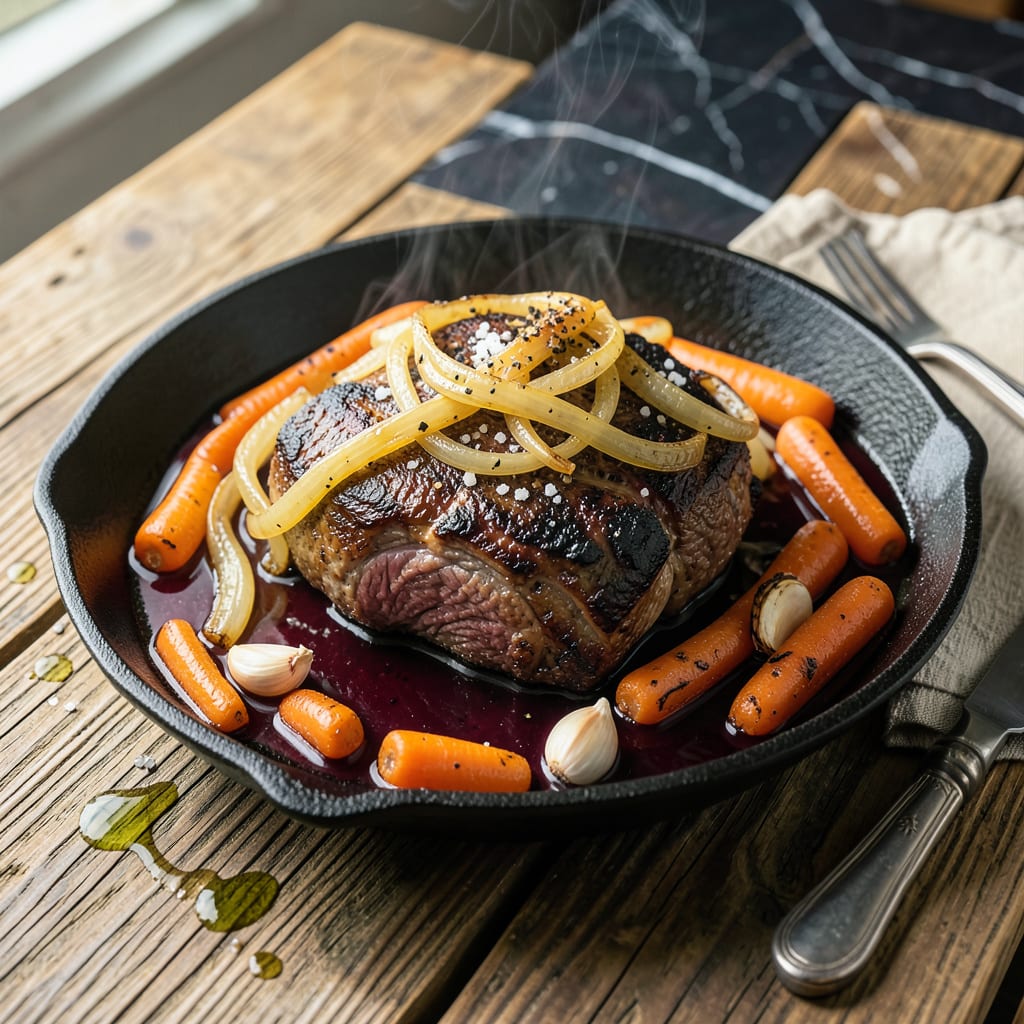
This grilling method transforms tough cuts of beef into tender, fall-apart pot roast with deep smoky flavor. The slow, indirect heat works magic on the meat.
You’ll achieve a perfect crust on the outside while keeping the inside moist and flavorful. This technique delivers results that rival any oven-braised version.
Ingredients for Pot Roast on Grill
These robust ingredients transform tough beef into smoky, tender perfection on the grill.
| Ingredient | Amount | Notes |
|---|---|---|
| Chuck Roast 🥩 | 3 lb | Well-marbled, boneless preferred |
| Kosher Salt 🧂 | 2 tsp | Diamond Crystal brand recommended |
| Black Pepper 🌶️ | 1 tsp | Freshly ground preferred |
| Garlic Cloves 🧄 | 6 cloves | Smashed, peeled |
| Yellow Onions 🧅 | 2 whole | Large, quartered |
| Carrots 🥕 | 4 whole | Peeled, cut into chunks |
| Celery Stalks 🌿 | 3 whole | Cut into large pieces |
| Beef Broth 💧 | 2 cups | Low-sodium preferred |
| Red Wine 🍷 | 1 cup | Dry variety like Cabernet |
| Tomato Paste 🍅 | 2 tbsp | For depth of flavor |
| Worcestershire Sauce 🫒 | 1 tbsp | Adds umami complexity |
| Fresh Thyme Sprigs 🌿 | 4 whole | Or 1 tsp dried thyme |
| Olive Oil 🫒 | 2 tbsp | For searing meat |
| Bay Leaves 🍃 | 2 whole | For aromatic infusion |
The chuck roast is non-negotiable for this method. Look for heavy marbling—this fat renders down during the slow cook, basting the meat from within. Costco or Whole Foods typically carry well-marbled cuts, but any reputable butcher will have what you need. Avoid leaner cuts like sirloin; they’ll dry out. For the broth, low-sodium lets you control the seasoning better.
No red wine? Substitute with additional beef broth plus 1 tbsp balsamic vinegar for acidity. Fresh thyme is ideal, but dried at one-third the amount works in a pinch. If tomato paste seems wasteful for 2 tbsp, those Trader Joe’s squeeze tubes are perfect. The Worcestershire can be omitted, though it adds a depth that’s hard to replicate.
This reheats wonderfully—actually improves overnight. Store leftovers in an airtight container in the fridge for up to 5 days, or freeze for 3 months. The vegetables will soften considerably, but the beef stays tender. Always slice against the grain when serving.
Why You’ll Love This Recipe
- Set It and Forget: I just season the chuck roast with salt, pepper, and crushed garlic, then let the grill do all the work.
- Smoky Depth: The onions caramelize right on the grates, and the garlic turns sweet—honestly, it’s the best part.
- Feeds a Crowd: One big roast means leftovers for sandwiches or tacos the next day. Between us, it tastes even better reheated.
- Budget Hero: Chuck roast is cheap, and with just salt, pepper, and a few cloves of garlic, I get a meal that feels fancy.
Step-by-Step Instructions for Pot Roast on Grill
This method delivers tender, smoky beef with deep flavor using your grill as an outdoor oven.
Step 1: Season and Sear the Chuck Roast
Pat the 3 lb Chuck Roast dry with paper towels, then rub it evenly with the 2 tsp Kosher Salt and 1 tsp Black Pepper. I press the seasoning into the meat firmly to ensure it adheres during cooking.
Heat the 2 tbsp Olive Oil in a large cast-iron skillet on your grill over medium-high heat. When the oil shimmers, add the chuck roast and sear for 4-5 minutes per side until deeply browned. You’re building a flavorful crust that will carry through the entire cooking process.
Remove the roast and set it aside. In the same skillet, add the 6 cloves Garlic Cloves, 2 whole Yellow Onions, 4 whole Carrots, and 3 whole Celery Stalks. Sauté for 5 minutes until the onions begin to soften and develop color.
Step 2: Deglaze and Build the Braising Liquid
Pour in the 1 cup Red Wine and use a wooden spoon to scrape up the browned bits from the bottom of the skillet. This step is critical—those fond bits are packed with flavor. Let the wine reduce by half, about 3-4 minutes.
Stir in the 2 cups Beef Broth, 2 tbsp Tomato Paste, 1 tbsp Worcestershire Sauce, 4 whole Fresh Thyme Sprigs, and 2 whole Bay Leaves. The tomato paste and Worcestershire sauce add depth and umami, while the herbs infuse the liquid with aromatic complexity.
Return the seared chuck roast to the skillet, spooning some of the liquid and vegetables over the top. The meat should be mostly submerged to ensure even cooking and maximum tenderness.
Step 3: Grill and Braise to Perfection
Cover the skillet tightly with a lid or heavy-duty foil. Place it on the grill over indirect heat (turn off one set of burners if using a gas grill) and maintain a temperature of 325°F. Cook for 2.5 to 3 hours, turning the roast once halfway through.
Check occasionally to ensure the liquid is simmering gently, not boiling vigorously. If the liquid reduces too much, add a splash of water or additional beef broth. You’ll know it’s ready when the roast is fork-tender and falls apart easily with a gentle prod.
Step 4: Rest and Serve
Transfer the chuck roast to a cutting board and tent it loosely with foil. Let it rest for 15-20 minutes—this allows the juices to redistribute, ensuring every bite is moist and flavorful.
Meanwhile, skim any excess fat from the braising liquid and discard the bay leaves and thyme sprigs. The vegetables should be tender and infused with the rich, smoky flavor of the grill. Serve the roast sliced or shredded, with the vegetables and braising liquid spooned over the top.
Pro Tips For Making Pot Roast On Grill
- Preheat the Grill: I learned this the hard way—crank your grill to at least 400°F for 10 minutes before adding the chuck roast. A screaming-hot grate is non-negotiable for that deep sear on the meat.
- Score the Fat Cap: Cut 1/4-inch slits into the fat cap of the chuck roast before seasoning. It lets the salt, pepper, and garlic penetrate deeper while rendering the fat down evenly.
- Skip the Overcrowding: Resist the urge to pile onions and garlic directly under the roast. Spread them around the edges so they caramelize, not steam.
- Use a Drip Pan: Place a disposable aluminum pan under the grate to catch drippings—it prevents flare-ups and gives you the makings for a quick pan sauce.
Serving Suggestions for This Dish
Plating Presentation
I love serving this on a large wooden board for that rustic, communal feel. Slice the beef against the grain into 1-inch thick pieces and arrange them over a bed of the braised vegetables. Spoon the rich braising liquid generously over the top.
Garnish Ideas
Fresh parsley adds a pop of color and freshness that cuts through the richness. I also like a sprinkle of flaky sea salt like Maldon just before serving. For a restaurant touch, add a few thyme sprigs as garnish. 🌟
Side Dish Pairings
Creamy mashed potatoes are my go-to for soaking up that incredible sauce. For a lighter option, try buttered egg noodles or crusty sourdough bread. The meal feels complete with something to mop up every last drop of the braising liquid.
Vegetable Accompaniments
A simple green salad with a tangy vinaigrette balances the richness. I toss baby arugula with lemon juice and olive oil. Roasted Brussels sprouts or asparagus also complement the smoky flavors beautifully.
Beverage Pairings
The same dry red wine you cooked with—like a Cabernet Sauvignon—pairs perfectly. For beer lovers, a malty amber ale stands up to the rich flavors. Iced tea with lemon works wonderfully for a non-alcoholic option.
Serving Temperature
This dish is best served hot, straight from the grill. If you’re making it ahead, reheat gently on the stovetop with a splash of broth. The flavors actually deepen overnight, making leftovers taste even better the next day. 🔥
Nutrition Facts
Frequently Asked Questions
Can I use a different cut of beef?
Stick with well-marbled cuts like brisket or short ribs. Chuck roast is ideal because its fat content keeps the meat moist during the long cook at 325°F. Lean cuts like sirloin will dry out.
What if my grill doesn’t have indirect heat?
Push all coals to one side for charcoal, or turn off half the burners for gas. Place the skillet on the cooler side and maintain 325°F throughout the 2.5-3 hours.
How can I tell when it’s done?
It’s ready when it falls apart easily with a fork. For extra certainty, use a meat thermometer—it should read 195-205°F internally. Let it rest for 15-20 minutes before serving.
Can I skip the red wine?
Yes, substitute with extra 1 cup beef broth plus 1 tbsp balsamic vinegar for acidity. The flavor will be slightly different but still delicious.

- 4C Bread Crumbs Meatballs Recipe: Crispy Crust and Juicy Centers - September 25, 2026
- 6 Oz Chocolate Chip Cookie Recipe: Perfectly Balanced Crispy Edges and Chewy Hearts - September 25, 2026
- 6-Inch Coffee Cake Recipe: Vanilla Bean Swirls and Buttery Streusel Topping - September 25, 2026