
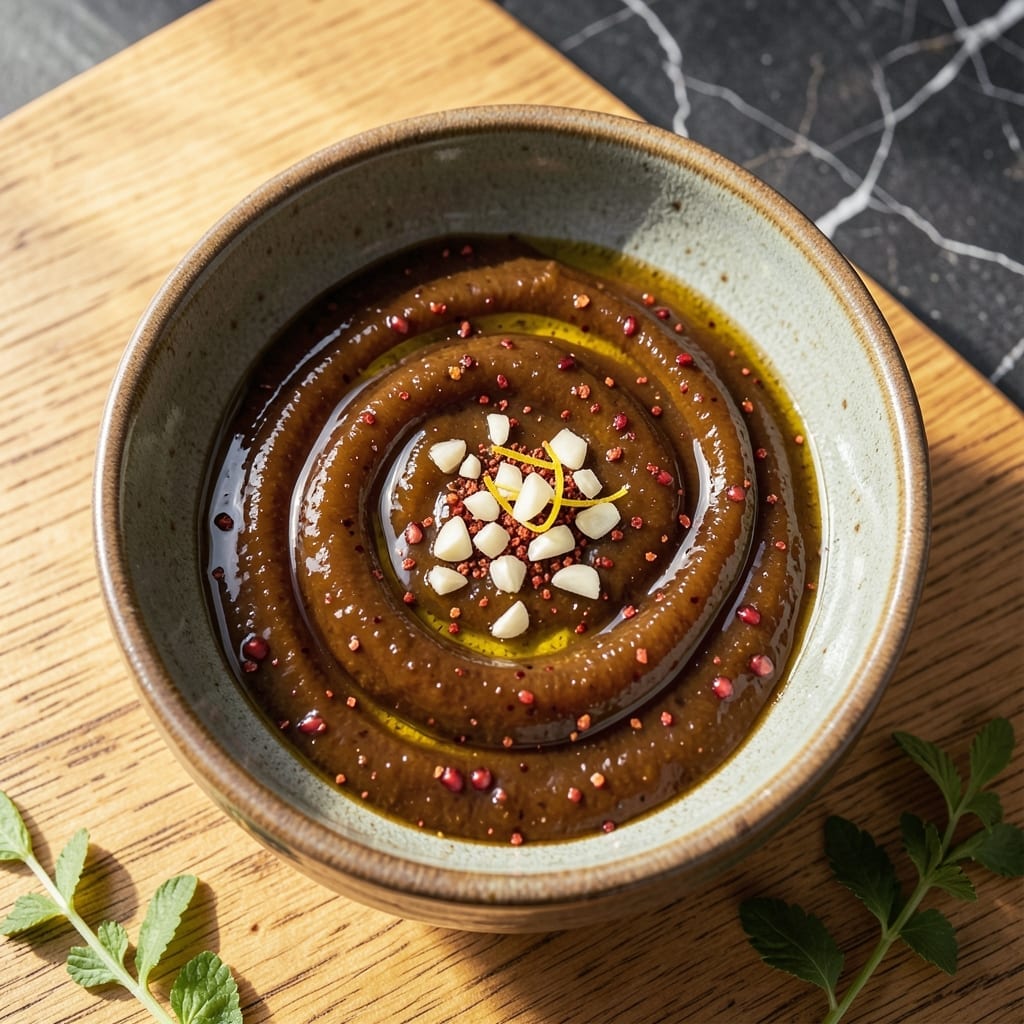
This traditional Middle Eastern dressing brings authentic flavor to any salad with its bright, tangy profile.
Sumac and pomegranate molasses create the signature zesty kick that defines fattoush, while olive oil balances the acidity. Store in the fridge for up to a week.
Ingredients for Authentic Fattoush Salad Dressing
Eight carefully selected components create this vibrant, traditional Middle Eastern dressing with signature zesty character.
| Ingredient | Amount | Notes |
|---|---|---|
| Extra-Virgin Olive Oil 🫒 | ¾ cup | High quality, fruity aroma |
| Pomegranate Molasses 🍇 | 3 tbsp | Thick, tangy, reduced syrup |
| Ground Sumac 🌶️ | 2 tbsp | Deep red, citrusy spice |
| Fresh Lemon Juice 🍋 | 3 tbsp | Newly squeezed for brightness |
| Garlic Cloves 🧄 | 2 cloves | Crushed to paste consistency |
| Sea Salt 🧂 | 1 tsp | Fine grain for even distribution |
| Dried Mint 🌿 | 1 tbsp | Crushed for enhanced flavor release |
| Ground Cumin 🌿 | ½ tsp | Toasted for depth of flavor |
The pomegranate molasses is non-negotiable—Al Wadi or Cortas brands offer the authentic Syrian depth you need. Middle Eastern markets carry sumac with superior color and potency compared to generic spice aisle versions. Olive oil should be extra-virgin with a peppery finish; California Olive Ranch delivers consistent quality. Fresh lemon juice is mandatory (bottled lacks the necessary acidity).
No pomegranate molasses? Simmer one cup pomegranate juice with one tablespoon sugar until syrupy. Sumac substitutes don’t exist—its unique citrus-tart profile is irreplaceable. Fresh mint can replace dried at a 3:1 ratio, finely chopped. Out of cumin? A pinch of coriander adds earthiness, though the flavor shifts slightly.
This dressing keeps 7 days refrigerated in a sealed jar. The flavors meld and intensify after 24 hours, so make it ahead. Shake vigorously before each use as the sumac settles. Freezing isn’t recommended—it alters the olive oil’s texture.
Why You’ll Love This Recipe
- Five-Minute Magic: I just whisk olive oil, pomegranate molasses, and lemon juice—no cooking, no fuss.
- Tangy Zing: The sumac and fresh garlic hit that bright, punchy note I crave in every bite.
- Dressing Doubles: I drizzle it on grains, roasted veggies, even grilled chicken—way beyond just salad.
- Fridge Staple: Honestly, it keeps for a week, so I make a big batch and reach for it all week long.
Step-by-Step Instructions for Fattoush Salad Dressing
Achieve the perfect balance of tangy and herbal notes with this traditional Middle Eastern technique.
Step 1: Crush and Infuse the Garlic
Begin by crushing the 2 cloves garlic cloves into a fine paste using a mortar and pestle or the flat side of a chef’s knife. This releases the maximum flavor and ensures even distribution throughout the dressing. I prefer the mortar method as it creates a smoother consistency.
Transfer the garlic paste to a medium mixing bowl. The residual oils from crushing will help the sea salt dissolve more easily in the next step. This foundation layer is crucial for authentic flavor development.
Step 2: Bloom the Spices with Acid
Add the 3 tbsp fresh lemon juice, 2 tbsp ground sumac, 1 tsp sea salt, 1 tbsp dried mint, and 0.5 tsp ground cumin to the bowl with the garlic. The acid from the lemon juice will immediately begin to bloom the spices, releasing their essential oils and creating a vibrant base.
Whisk vigorously for 30 seconds until the spices are fully hydrated and the mixture takes on a deep reddish hue from the sumac. This color transformation indicates the spices are properly activated. Let this mixture sit for 5 minutes to allow the flavors to meld.
Step 3: Emulsify with Pomegranate Molasses
Pour in the 3 tbsp pomegranate molasses and whisk for another 20 seconds until fully incorporated. The molasses will add a glossy sheen and a perfect sweet-tart balance to counteract the acidity. At this stage, the mixture will appear thick and syrupy.
This is where the dressing develops its signature depth. The pomegranate molasses not only adds complexity but also helps stabilize the emulsion you’ll create in the next step. I always use a high-quality molasses for the most authentic flavor profile.
Step 4: Create the Emulsion with Olive Oil
While whisking constantly, slowly drizzle in the 0.75 cup extra-virgin olive oil in a thin, steady stream. This gradual incorporation is key to creating a stable emulsion that won’t separate. The dressing should thicken noticeably and take on a creamy, opaque appearance.
Continue whisking for an additional 30 seconds after all the oil is incorporated to ensure complete emulsification. The final dressing should coat the back of a spoon and have a vibrant, slightly thick consistency. If it appears too thick, you can add a teaspoon of water, but this is rarely necessary with proper technique.
Step 5: Rest and Adjust Seasoning
Let the dressing rest for 10 minutes at room temperature. This allows the flavors to fully marry and the spices to reach their peak potency. During this time, the dried mint will rehydrate slightly, releasing its aromatic oils.
Taste and adjust the seasoning if needed, though with the precise measurements given, this is typically unnecessary. The dressing should have a perfect balance of tangy, herbal, and slightly sweet notes with a velvety texture that clings beautifully to salad greens and pita bread.
Pro Tips For Making Authentic Fattoush Salad Dressing
- Whisk Vigorously: I learned this the hard way—pomegranate molasses and olive oil separate fast. Whisk for a full 30 seconds until the dressing looks creamy and holds together.
- Bloom the Garlic: Mince the garlic fine and let it sit in the lemon juice for 5 minutes before adding other ingredients. This mellows the bite and infuses the acid with flavor.
- Skip Bottled Lemon: After a few bland batches, I switched to fresh lemon juice only. The bottled stuff lacks the brightness that balances the sumac’s tang.
- Taste Before Salting: Sumac and pomegranate molasses are already salty. Taste the dressing first—you’ll likely need less salt than you expect, or none at all.
Troubleshooting Great authentic fattoush salad dressing
Separation Problems
If your dressing separates after sitting, don’t panic—this is normal with emulsified dressings. Simply whisk vigorously for 30 seconds or shake in a sealed jar until it recombines. I find a small whisk works better than a fork for re-emulsifying quickly.
Too Thick or Thin
If the dressing is too thick, whisk in 1 tsp water at a time until it reaches your desired consistency. If it’s too thin, add 1 tsp pomegranate molasses and whisk again. The emulsion should coat the back of a spoon but still pour easily.
Overpowering Sumac
Sumac can sometimes taste too sharp if not balanced properly. Add ½ tsp honey or 1 tsp more olive oil to mellow the acidity. I’ve found that letting it rest for 10 minutes often resolves this as the flavors harmonize. 💡
Garlic Overload
If the garlic flavor is too strong, dilute with 1 tbsp more olive oil and ½ tbsp lemon juice. For future batches, crush the garlic less aggressively to reduce its potency. Fresh garlic can vary in strength, so taste as you go.
Mint Too Strong
Dried mint can sometimes dominate the flavor profile. If this happens, balance it with ½ tsp ground cumin or 1 tsp more pomegranate molasses. The earthy or sweet notes will help round out the herbal sharpness.
Storage Issues
If your dressing develops an off smell or cloudy appearance after storage, it may have spoiled. Always use clean, dry utensils when scooping to prevent contamination. This dressing stays fresh for 7 days refrigerated in an airtight container. ❄️
Nutrition Facts
Frequently Asked Questions
Can I substitute pomegranate molasses?
Simmer 1 cup pomegranate juice with 1 tbsp sugar until syrupy. While not identical, this works in a pinch. The depth of flavor won’t match authentic molasses.
Why does my dressing separate?
Emulsions naturally separate over time. Simply whisk for 30 seconds or shake in a sealed jar to recombine. A slow drizzle of oil during mixing prevents this.
How long does it keep?
Store in an airtight container in the fridge for up to 7 days. Shake before each use as spices settle. Freezing isn’t recommended.
Can I use fresh mint instead?
Yes! Use a 3:1 ratio of fresh to dried, finely chopped. Add it at the end to preserve its bright flavor. Dried mint offers a more concentrated herbal note.

- 4C Bread Crumbs Meatballs Recipe: Crispy Crust and Juicy Centers - September 25, 2026
- 6 Oz Chocolate Chip Cookie Recipe: Perfectly Balanced Crispy Edges and Chewy Hearts - September 25, 2026
- 6-Inch Coffee Cake Recipe: Vanilla Bean Swirls and Buttery Streusel Topping - September 25, 2026