
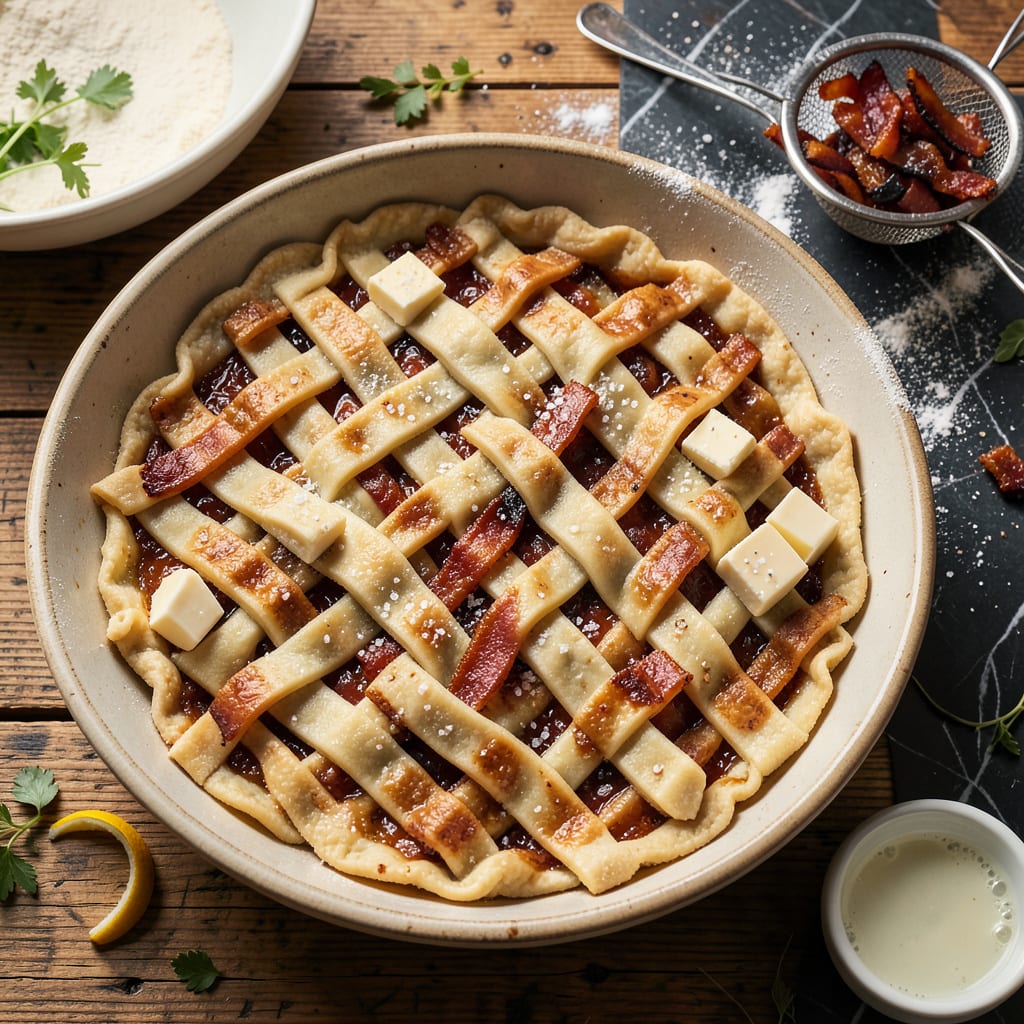
I’ve discovered the secret to an extraordinary pie crust that delivers both flaky texture and rich, savory depth. This technique transforms ordinary pie dough into something truly special.
By incorporating rendered bacon fat into the flour, you create layers that stay tender while adding a subtle smoky note. The result is a crust that elevates both sweet and savory pies to new heights.
Ingredients for Bacon Fat Pie Crust
Short list of basics plus one secret ingredient for that next-level flaky crust.
| Ingredient | Amount | Notes |
|---|---|---|
| All-Purpose Flour 🌾 | 2 ½ cups | Spoon and level, plus extra for dusting |
| Rendered Bacon Fat 🥓 | ½ cup | Cooled to solid but still soft |
| Unsalted Butter 🧈 | ½ cup | Cold, cubed into 1/2-inch pieces |
| Ice Water 💧 | ⅓ cup | Plus 1 tbsp as needed |
| Fine Sea Salt 🧂 | 1 tsp | Diamond Crystal preferred |
| Granulated Sugar 🍚 | 1 tsp | Optional, balances savory note |
| Thick-Cut Bacon 🥓 | 8 slices | For rendering fat, about 1/2 lb |
| Apple Cider Vinegar 🍏 | 1 tsp | Helps tenderize the crust |
The bacon fat is non-negotiable here—it’s what gives that savory depth. Thick-cut bacon renders more fat and better flavor than thin. I grab mine from Whole Foods or a local butcher (their stuff has less water, more pork). Render it low and slow so it’s fully cooked but not crispy—you want every drop of fat. If you’re making this often, render a big batch and freeze the fat in ice cube trays (each cube is about 1 tbsp).
No bacon fat on hand? Duck fat is the closest swap—same rich, smoky vibe. Short on butter? Shortening works at a 1:1 ratio, but you’ll lose some flakiness. For the vinegar, white or red wine vinegar is fine, but cider’s mildness plays best with the bacon. The sugar is optional, but I always add it—cuts the saltiness just enough.
The dough keeps in the fridge for 2 days or freezes for 3 months (wrap tight in two layers). Rendered bacon fat? Strain and store in the fridge for 1 week, or freeze indefinitely. Always work with cold dough—warm = tough crust.
Why You’ll Love This Recipe
- Five Ingredients: I love that this crust comes together with just flour, bacon fat, butter, water, and salt—nothing extra to buy.
- Smoky Depth: The rendered bacon fat adds this rich, savory layer that makes every bite taste like it’s been slow-cooked for hours.
- Freezer Friendly: I’ll often make a double batch and freeze one—perfect for last-minute pot pies or quiches.
- Budget Stretch: Honestly, using leftover bacon fat means I’m not wasting a thing, and it cuts down on grocery costs.
Step-by-Step Instructions for Bacon Fat Pie Crust
Here’s the method I use to create a flaky, savory crust that’ll impress everyone at the table.
Step 1: Render the Bacon Fat and Prep Ingredients
Start by cooking the 8 slices thick-cut bacon in a skillet over medium heat until crispy, about 10-12 minutes. Drain through a fine-mesh strainer into a heatproof bowl, reserving 0.5 cup rendered bacon fat. Let it cool to solid but still soft—this is your secret to flaky depth.
While the bacon fat cools, measure out the 2.5 cups all-purpose flour, 1 tsp fine sea salt, and 1 tsp granulated sugar. Cold ingredients are key here, so keep the 0.5 cup unsalted butter cubed and chilled until ready to use.
Step 2: Cut in the Fats for Flaky Layers
In a large bowl, whisk together the 2.5 cups all-purpose flour, 1 tsp fine sea salt, and 1 tsp granulated sugar. Add the cooled 0.5 cup rendered bacon fat and cold 0.5 cup unsalted butter cubes. Use a pastry cutter or your fingers to work the fats into the flour until the mixture resembles coarse crumbs with pea-sized pieces of fat visible.
This step creates the flaky layers—don’t overwork it. You want those fat pieces to stay intact so they create pockets of air as the crust bakes. The bacon fat adds a subtle smokiness that makes this crust truly special.
Step 3: Bind the Dough with Ice Water and Vinegar
Add the 1 tsp apple cider vinegar to the 0.33 cup ice water and drizzle this mixture over the flour-fat mixture, one tablespoon at a time. Use a fork to gently toss the ingredients until the dough just starts to come together. It’ll look shaggy, but that’s perfect.
Turn the dough out onto a lightly floured surface and gently knead it into a smooth ball, adding up to 1 tablespoon more ice water if needed. The vinegar helps tenderize the crust, while the cold water keeps the fats from melting prematurely.
Step 4: Chill and Rest the Dough
Divide the dough into two equal portions and shape each into a disk. Wrap them tightly in plastic wrap and refrigerate for at least 1 hour (or up to 2 days). Chilling relaxes the gluten and solidifies the fats, ensuring a flaky, tender result.
Don’t skip this step—if the dough is too warm, the fats will melt during rolling, and you’ll lose those prized flaky layers. When ready to use, let the dough sit at room temperature for 10 minutes to soften slightly before rolling.
Pro Tips For Making Bacon Fat Pie Crust
- Chill Your Fat: Keep your rendered bacon fat and butter ice cold until mixing—warm fat means a tough crust. I learned this the hard way after my first three attempts came out dense.
- Use Less Water: Start with 1 tablespoon less ice water than you think you need. Bacon fat is oilier than lard, so the dough comes together faster.
- Skip the Overmix: Stop mixing as soon as the dough clumps—overworking it develops gluten, and your crust will be chewy instead of flaky.
- Rest Before Rolling: Let the dough rest in the fridge for at least 30 minutes (an hour is better). This relaxes the gluten and makes rolling out a breeze.
Regional Styles of This Dish
Southern Comfort Style
In the American South, this crust shines in derby pies and savory meat pies. The bacon fat adds a richness that pairs perfectly with bourbon or pecans in traditional recipes. I love using it for a chocolate bourbon pecan pie—the smoky notes complement the sweetness beautifully. 💛
French Tart Adaptation
French pastry chefs often use lard for their tart crusts, and bacon fat works wonderfully here too. Try it for a quiche Lorraine—the savory depth enhances the classic egg and cheese filling. The key is to keep the fat cold, just like with traditional pâte brisée.
British Meat Pies
For a British twist, use this crust for steak and ale pies or game pies. The bacon fat adds a hearty, rustic flavor that stands up to rich fillings. I recommend rolling the dough slightly thicker to handle the moist, savory ingredients.
Midwestern Influence
In the Midwest, where bacon is king, this crust is perfect for apple pies and cheesecake bases. The subtle smokiness adds complexity to sweet fillings. Try it with a caramel apple pie—the contrast is incredible. 🔥
Texas Boldness
For a Texas-style pie, use this crust for barbecue hand pies or chicken pot pies. The bacon fat amplifies the smoky, spicy flavors typical of Texas cuisine. I like to add a pinch of chipotle powder to the dough for extra heat.
Nutrition Facts
Frequently Asked Questions
Can I use store-bought bacon grease?
Yes, but fresh rendered fat works better. Store-bought can have additives that affect flavor.
Why add vinegar to the dough?
The apple cider vinegar tenderizes the gluten, creating a more delicate crust. It also balances the rich bacon flavor.
How do I prevent a soggy bottom crust?
Blind-bake at 375°F for 15 minutes before adding fillings. This creates a barrier against moisture.
Can this crust be made gluten-free?
Substitute all-purpose flour with a 1:1 gluten-free blend. Add 1 tsp xanthan gum for better texture.

- 8 Bean Soup Recipe Crock Pot: Hearty Vegetable Medley in One Pot - September 25, 2026
- 4C Bread Crumbs Meatballs Recipe: Crispy Crust and Juicy Centers - September 25, 2026
- 6 Oz Chocolate Chip Cookie Recipe: Perfectly Balanced Crispy Edges and Chewy Hearts - September 25, 2026