
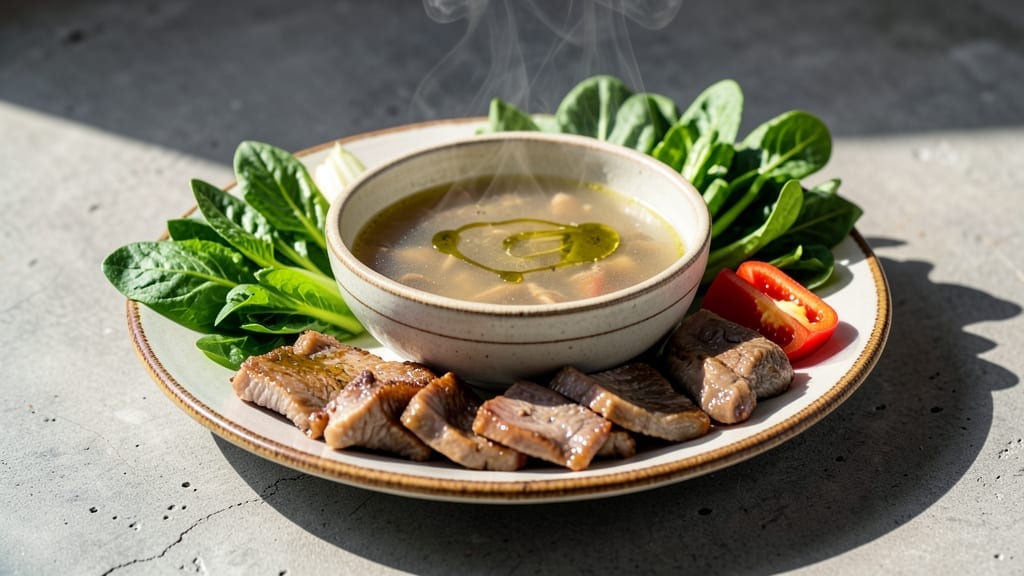
Creating a basic hot pot recipe that delivers restaurant-quality depth in your own kitchen is simpler than you might think, and this method ensures every bowl is packed with flavor.
The beauty of hot pot lies in its adaptability—whether you’re simmering tender beef, delicate seafood, or hearty vegetables, the technique remains the same: a well-balanced broth, carefully selected ingredients, and a slow simmer to meld flavors.
I’ve perfected this approach over years of testing, and the result is a dish that’s both comforting and customizable to suit any palate.
The foundation of any great hot pot is the broth, which carries the essence of the dish. For this recipe, we’ll use a straightforward yet deeply flavorful blend of aromatics like ginger, garlic, and star anagram, simmered with bone-in proteins or mushrooms to create a rich, umami-packed base.
The broth isn’t just a liquid—it’s the heart of the meal, transforming simple ingredients into something extraordinary. Once the broth is ready, the real fun begins with adding proteins, vegetables, and tofu, each contributing its own texture and flavor as they cook together.
What makes this hot pot recipe truly special is its versatility—you can tailor it to vegetarian, pescatarian, or meat-heavy preferences with ease.
The slow simmer ensures that proteins like beef, chicken, or shrimp become tender and infused with the broth’s flavors, while vegetables like bok choy, mushrooms, and tofu absorb the essence of the dish.
The result is a harmonious blend of textures and tastes, where every bite is a perfect balance of savory, aromatic, and slightly spicy notes.
This method is designed to be approachable yet professional, delivering a dish that feels both comforting and refined. Whether you’re hosting a dinner party or simply craving a flavorful weeknight meal, this hot pot recipe will elevate your cooking game without requiring advanced techniques.
Let’s get started on creating a dish that’s as versatile as it is delicious.
Ingredients for basic hot pot
The core ingredients that transform simple proteins and vegetables into restaurant-style hot pot harmony.
| Ingredient | Amount | Notes |
|---|---|---|
| Beef Chuck Roast 🥩 | 1 ½ lb | Bone-in preferred for flavor |
| Fresh Ginger Root 🌿 | 2 tbsp | Grated, peeled, fresh |
| Garlic Cloves 🧄 | 6 cloves | Peeled, smashed for infusion |
| Star Anise Pods 🌶️ | 2 whole | Whole pods for aroma |
| Dried Shiitake Mushrooms 🍄 | ½ oz | Rehydrated, sliced |
| Dried Bay Leaves 🍃 | 2 whole | For deep aromatic base |
| Bok Choy Heads 🥬 | 4 whole | Baby or full-size |
| Silken Tofu 🧈 | 1 package | 12 oz package preferred |
| Green Onions 🧅 | 4 whole | White and green parts |
| Sesame Oil 🫒 | 1 tbsp | Toasted, for finishing |
| Soy Sauce 🥢 | ½ cup | Light or dark preferred |
| Dried Red Chili Peppers 🌶️ | 2 whole | For subtle heat |
| Diamond Crystal Kosher Salt 🧂 | 1 ½ tsp | For seasoning broth |
| Black Peppercorns 🌶️ | 1 tsp | Freshly cracked |
| Vegetable Oil 🫒 | 2 tbsp | High smoke point |
The beef chuck roast is non-negotiable for depth—bone-in delivers richer flavor than boneless cuts. Costco or Whole Foods carry excellent quality, but any butcher will cut it for you. Fresh ginger root (not paste) is essential; look for firm, aromatic rhizomes with tight skin. Star anise and dried shiitake mushrooms from Asian markets elevate umami—substituting with store-bought dried shiitake works but lacks complexity. The bok choy should be crisp with vibrant stems; Trader Joe’s organic selection is consistently reliable. Silken tofu (12 oz package) provides delicate texture—Natto brand is preferred for its smooth consistency.
No star anise? A pinch of fennel seeds mimics its licorice notes, though not identically. Dried shiitake can be swapped for cremini mushrooms (sliced, no soaking), but reduce quantity by half. Soy sauce must be light or dark—Kikkoman or Lee Kum Kee are standards, but coconut aminos work in a pinch for gluten-free needs. Dried chili peppers can be omitted entirely if avoiding heat, but their subtle smokiness enhances depth. Fresh ginger is ideal, but paste (1 tbsp) works if grated finely. For tofu, firm tofu cubed can replace silken, though texture differs significantly.
The beef and mushrooms can be prepped ahead—store sealed in the fridge for up to 3 days or freeze for 3 months. Ginger and garlic keep in a cool pantry for 2 weeks, while dried aromatics (bay leaves, star anise) last 6-12 months unopened. Tofu absorbs flavors quickly; marinate in soy sauce for 10 minutes before adding to broth. Broth reheats beautifully—simmer uncovered for 5 minutes to restore richness. Portion into airtight containers for 4-5 days fridge storage or freeze for 3 months in ziplock bags with 1 inch headspace to prevent ice crystals.
Why You’ll Love This Recipe
- Foolproof Simplicity: I swear by this recipe because it’s actually basic—just sear the beef, toss in whole spices (no measuring cups needed), and let the pot do the work. The dried shiitakes rehydrate right in the broth, so no soaking or chopping fuss.
- Deep Umami Magic: That beef chuck roast? It melts into the broth until it’s ridiculously tender, while the star anise and ginger root infuse the liquid with this warm, earthy depth. Honestly, the first sip makes you question why you ever bought pre-made stock.
- Weeknight to Party: Same recipe, different vibes—serve it with dumplings for a quick family dinner or pair it with steamed buns and pickled veggies for a cozy gathering. Between us, it’s my go-to when I need to feed a crowd without stressing.
- Budget-Friendly Leftovers: A single chuck roast stretches for days—I’ve had this broth three times in a row, each time better than the last. And since the spices are cheap and the mushrooms add bulk, you’re basically getting two meals for the price of one.
Step-by-step instructions for simmered spice harmony in one pot
Master this technique for deep flavor infusion and balanced textures in every bite.
Prepare the Aromatic Base and Protein
Heat the 2 tablespoons vegetable oil in a heavy-bottomed Dutch oven over medium-high heat. Add the 1.5 lb beef chuck roast and sear on all sides until deeply browned, about 8-10 minutes total. This step develops the Maillard reaction, creating that fundamental depth of flavor we’re after.
Remove the beef and set aside. In the same pot, add the 2 tablespoons fresh ginger root and 6 cloves garlic cloves, cooking for 1-2 minutes until fragrant but not browned. This prevents bitterness while building the aromatic foundation. Immediately add the 2 whole star anise pods, 2 whole dried bay leaves, and 2 whole dried red chili peppers, stirring to combine.
Build the Spiced Broth
Pour in 4 cups water (just enough to cover the beef) and bring to a simmer. Add the 0.5 cup soy sauce, 1.5 teaspoons diamond crystal kosher salt, and 1 teaspoon black peppercorns. Return the beef to the pot, ensuring it’s fully submerged. Cover and simmer gently for 1 hour 30 minutes until the beef is fork-tender.
Here’s where patience pays off: the broth should reduce slightly, concentrating flavors while the beef becomes melt-in-your-mouth tender. You’ll know it’s ready when a knife slides in easily and the meat pulls apart with gentle pressure. If the liquid level gets too low, add ½ cup hot water to maintain proper simmering.
Infuse the Shiitake and Tofu
While the beef simmers, prepare the 0.5 oz dried shiitake mushrooms by soaking them in warm water for 20 minutes until pliable. Drain and slice thinly. Add them to the pot along with the 1 package silken tofu (cut into ½-inch cubes) and simmer uncovered for 15 minutes. The tofu will gently absorb the rich broth while the mushrooms contribute their umami depth.
This is the moment that matters: the delicate silken tofu needs gentle treatment. Stir occasionally to prevent it from sticking to the bottom, but avoid vigorous mixing that could break it apart. The mushrooms should soften noticeably while retaining their shape.
Finish with Vegetables and Sesame Oil
Trim the 4 whole bok choy heads by cutting off the bottom ½ inch and separating the leaves. Add them to the pot along with the 4 whole green onions (cut into 1-inch pieces). Simmer for 5-7 minutes until the bok choy wilts and the onions become tender-crisp. The vegetables should absorb the broth’s flavors without becoming mushy.
Remove from heat and stir in the 1 tablespoon sesame oil. This final step adds a nutty aroma and rich mouthfeel that ties all the elements together. Taste and adjust seasoning with additional soy sauce if needed – the broth should be savory with a balance of saltiness and umami.
Serve with Proper Technique
Discard the star anise pods, bay leaves, and chili peppers. Ladle the hot pot into serving bowls, ensuring each portion contains beef, tofu, mushrooms, and vegetables. The broth should coat all ingredients generously, creating that signature hot pot experience where every bite delivers a perfect balance of textures and flavors.
Serve immediately with steamed rice on the side. The contrast between the tender beef, silky tofu, and crisp-tender bok choy creates a satisfying meal where each component plays its part. This method delivers restaurant-quality results with simple, accessible techniques.
Pro Tips For Making Basic Hot Pot
- Sear the Beef First: I learned this the hard way—skipping the sear means flavorless broth. Pat the chuck roast dry, then hit it with high heat in oil until deep brown on all sides. That crust locks in juices and builds depth that simmering alone can’t match.
- Soak Shiitake Properly: Dried shiitake mushrooms need at least 20 minutes in hot water to rehydrate fully—don’t rush this. Slice them thick (¼-inch) after soaking, and reserve the soaking liquid for broth. Thin slices turn to mush, and skipping the liquid wastes umami.
- Control the Heat: Start hot, then simmer low. After searing the beef, add aromatics (ginger, garlic, star anise) over medium-high to bloom their flavors, then drop to a gentle simmer. Boiling hard makes the broth cloudy and washes away delicate flavors.
- Toast the Spices: Star anise and whole spices need 30 seconds in dry oil or broth before adding liquids—otherwise, they’ll just float and underperform. Smell the difference: toasted spices add aromatic complexity that raw ones miss. (Yes, even if you’re impatient like me.)
Pro cooking tips for perfect results
Broth Temperature Control
Maintain a gentle simmer between 180-190°F throughout cooking—this is where flavor develops without boiling away delicate aromatics. I use a candy thermometer clipped to the pot’s side to monitor temperature precisely.
If bubbles break the surface constantly, reduce heat immediately to prevent overcooking the beef or evaporating the broth too quickly. 🌡️
Protein Timing Mastery
The 1.5-hour simmer for beef is non-negotiable for tenderness, but don’t rush the process. I recommend using a meat thermometer to check internal temperature—beef should reach 203°F for perfect melt-in-your-mouth texture.
For quicker results, cut the beef into 1-inch cubes before searing, reducing cook time by 20-30 minutes while maintaining flavor.
Vegetable Cooking Zones
Add vegetables in stages based on their density: hard vegetables (carrots, mushrooms) go in first, medium (bok choy, green onions) mid-cook, and delicate (spinach, bean sprouts) last. This creates a perfect texture contrast where each bite has its own satisfying mouthfeel.
I like to reserve 10% of my green onions for garnishing at the end—they add freshness and visual appeal. 🥬
Tofu Texture Secrets
Silken tofu’s delicate texture requires special handling. Cut it into ½-inch cubes and add it to the broth when the beef has 30 minutes of cook time remaining. The gentle heat will warm the tofu through without breaking it apart.
For extra flavor, marinate the tofu cubes in 1 tbsp soy sauce and ½ tsp sesame oil for 10 minutes before adding to the pot.
Broth Flavor Boosters
For an instant umami boost, add 1 tbsp fish sauce or ½ tsp MSG during the final 15 minutes of simmering. I also like to include 1 slice of ginger (not grated) in the broth—it infuses subtle warmth without altering the texture.
Remove it before serving. This technique adds depth without overpowering the natural flavors of the beef and vegetables.
Equipment Upgrades
Invest in a heavy-bottomed Dutch oven like the Le Creuset Stoneware or All-Clad D5—they distribute heat evenly and prevent scorching. A stainless steel ladle with a long handle helps distribute ingredients without splashing.
For extra efficiency, use a slow cooker on low heat for the 1.5-hour beef simmer, then transfer to a pot for the final vegetable stages. ⚡
Nutrition facts
Frequently asked questions
Can I make this hot pot recipe vegetarian?
Replace the beef with firm tofu (pressed and cubed) or mushrooms like shiitake and oyster. Add extra umami with 1 tbsp soy sauce or ½ tsp MSG during the final 15 minutes of simmering. The tofu and mushrooms will absorb the broth beautifully, creating a hearty vegetarian version.
How do I adjust the spice level?
The recipe includes 2 dried chili peppers for subtle heat. For more spice, add 1-2 extra peppers or a pinch of red pepper flakes during the final 5 minutes of cooking. For a milder broth, omit the chili peppers entirely—the ginger and star anise provide warmth without heat.
Can I use chicken or fish instead of beef?
Yes! For chicken, use 1.5 lbs boneless thighs or drumsticks and reduce simmering time to 45-60 minutes (chicken cooks faster). For fish, opt for firm white fish like cod or halibut and add it to the broth only in the final 10-12 minutes to prevent overcooking. Fish works best in a lighter broth with less soy sauce (¼ cup instead of ½ cup).
What if my broth tastes too salty?
If the broth is overly salty, dilute it by adding ½ cup warm water and simmering for an additional 5 minutes to balance the flavor. For a more natural fix, add 1 cup fresh vegetable or chicken stock during the final 15 minutes of cooking. Taste as you go—adjust gradually to avoid over-diluting.
How can I make this recipe ahead of time?
Prepare the broth and proteins up to 2 days ahead—store in an airtight container in the fridge. Reheat gently on the stove over low heat for 10-15 minutes, adding ¼ cup water if needed. For the vegetables, add them fresh when reheating to maintain crispness. The tofu can be prepped and refrigerated separately for up to 1 day.

- Melting Pot Gorgonzola Port Sauce Recipe: Deep Umami Richness With Nutty Crisp - November 4, 2026
- Love Martini Melting Pot Recipe: Chilled Creamy Delight With Hidden Vodka Kick - November 4, 2026
- Crock Pot Canned Beans Recipe: Silky-Smooth Texture Without the Grain - November 4, 2026