
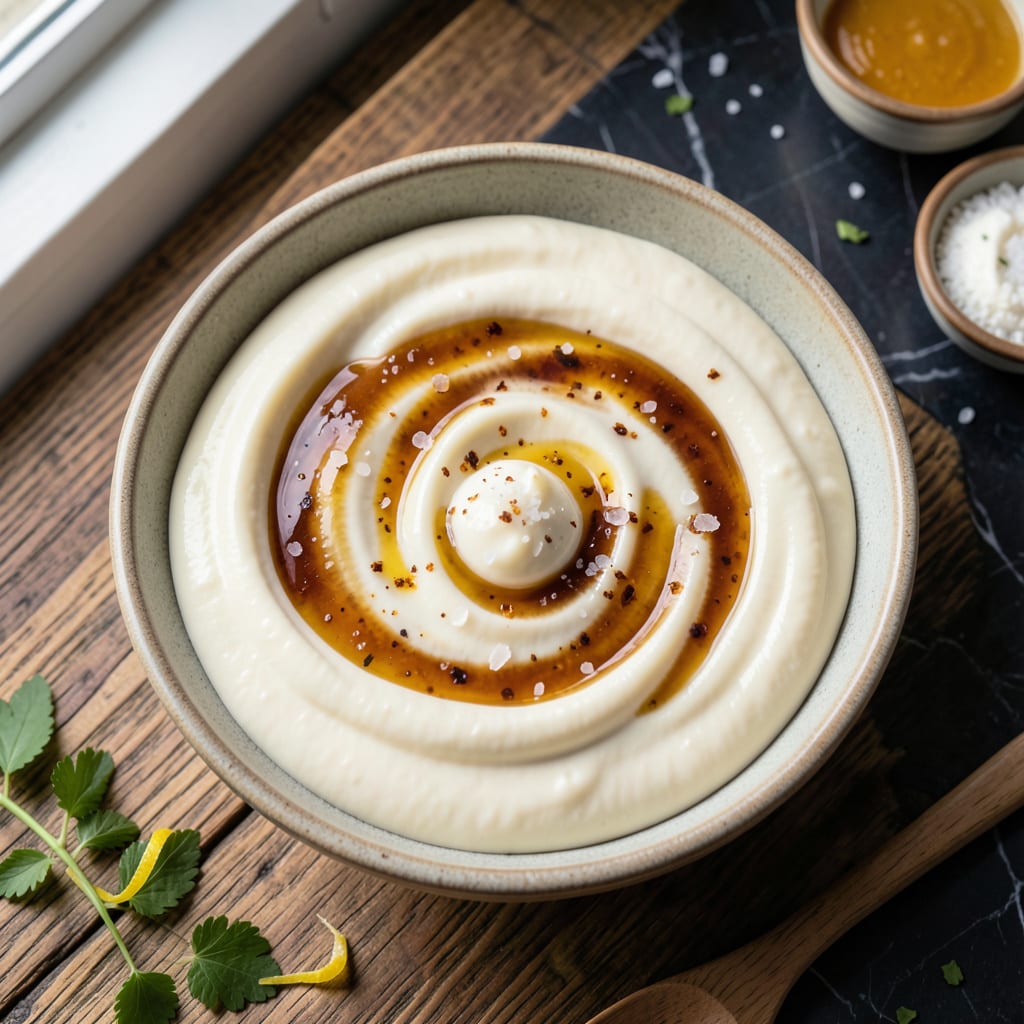
This homemade spread transforms ordinary dishes into something extraordinary. The rich, velvety texture comes from carefully emulsifying beef fat with egg yolks for a decadent twist on classic mayo.
Perfect for sandwiches, fries, or as a base for sauces, this recipe proves that homemade condiments are worth the effort. The process is straightforward, with a foolproof method for stable emulsification.
Ingredients for Beef Fat Mayonnaise
Nine ingredients transform into this luxurious, velvety homemade spread with deep, savory richness.
| Ingredient | Amount | Notes |
|---|---|---|
| Beef Fat 🥩 | 1 cup | Rendered and cooled to liquid |
| Large Egg Yolks 🥚 | 2 whole | Room temperature for best emulsion |
| Dijon Mustard 🟡 | 1 tbsp | Acts as emulsifier and flavor base |
| White Wine Vinegar 💧 | 1 tbsp | Or apple cider vinegar alternative |
| Lemon Juice 🍋 | 1 tbsp | Freshly squeezed preferred |
| Fine Sea Salt 🧂 | ½ tsp | Adjust to taste after emulsifying |
| Granulated Sugar 🍚 | ¼ tsp | Balances acidity optional addition |
| Freshly Ground Black Pepper 🌶️ | ¼ tsp | Adds subtle warmth |
| Neutral Oil 🫒 | ½ cup | Avocado or light olive oil |
The beef fat is non-negotiable here. Render down trimmings from ribeye or brisket—the fat cap from a prime rib works beautifully. Strain through cheesecloth to remove any solids, then cool to just above room temperature (it should still be liquid but not hot). ButcherBox or local butcher shops are great sources for quality beef fat if you don’t have trimmings on hand.
No beef fat? Duck fat makes an excellent substitute with a similarly rich flavor profile. For a lighter version, use half the amount of rendered pork fat—though the flavor will differ. The egg yolks must be fresh; pasture-raised eggs from brands like Vital Farms provide the best color and emulsifying properties. Vinegar swaps: champagne vinegar adds elegance, while rice vinegar offers a milder tangent.
Store in a glass jar with a tight lid in the fridge for up to 2 weeks. The emulsion may separate slightly over time—just whisk before using. For longer storage, freeze in ice cube trays for up to 3 months (thaw overnight in the fridge).
Why You’ll Love This Recipe
- 5-Minute Whisk: I can make a batch faster than the toaster pops up. Just egg yolks, beef fat, and a quick whisk—no fuss.
- Rich, Beefy Depth: The rendered beef fat gives it this deep, savory richness that store-bought mayo can’t touch.
- Dips, Spreads, Sauces: Honestly, it’s my secret for burgers, fries, even sandwiches. So much more versatile than regular mayo.
- Budget-Friendly Luxury: I use leftover beef fat from roasts, so it’s practically free. Tastes like a gourmet upgrade without the price.
Step-by-Step Instructions for Beef Fat Mayonnaise
Master the emulsion process with precision timing and temperature control for a luxurious result.
Step 1: Prepare the Base Emulsion
In a medium bowl, whisk together the 2 whole Large Egg Yolks, 1 tbsp Dijon Mustard, 1 tbsp White Wine Vinegar, and 1 tbsp Lemon Juice until fully combined. The mixture should appear slightly thickened and pale yellow—this is your emulsifying base.
Add the 0.5 tsp Fine Sea Salt, 0.25 tsp Granulated Sugar, and 0.25 tsp Freshly Ground Black Pepper, whisking again to incorporate. The mustard acts as a stabilizer, while the vinegar and lemon juice provide the necessary acidity for both flavor and emulsion.
Step 2: Incorporate the Beef Fat
Ensure the 1 cup Beef Fat is rendered, strained, and cooled to liquid form but not solidified. With the whisk in one hand and the bowl steady in the other, begin adding the beef fat in a very slow, thin stream while whisking constantly.
The mixture will start to thicken as the fat emulsifies with the yolk base. This step requires patience—adding the fat too quickly will cause the mayonnaise to break. You’ll notice the mixture lighten in color and become visibly thicker as it comes together.
Step 3: Add Neutral Oil for Balance
Once all the beef fat is incorporated and the mixture has a creamy, mayonnaise-like consistency, begin adding the 0.5 cup Neutral Oil in the same slow, steady stream while continuing to whisk constantly.
The neutral oil tempers the rich beef flavor while maintaining the emulsion. The final texture should be smooth, thick, and glossy, with no visible separation. If the mixture appears too thick, you can whisk in a teaspoon of warm water to loosen it slightly.
Step 4: Verify and Adjust the Emulsion
Stop adding oil and examine the texture. Properly emulsified mayonnaise will hold its shape when a spoon is drawn through it and should have a pale, creamy appearance. If you notice any separation or oil pooling, whisk vigorously for 30 seconds to reincorporate.
Taste and adjust seasoning if needed, though be cautious with additional salt as the beef fat has its own natural salinity. The flavor should be rich and balanced, with the beef fat providing depth without overpowering the classic mayonnaise profile.
Transfer to an airtight container and refrigerate for at least 1 hour before use to allow the flavors to meld fully. This resting time also helps stabilize the emulsion further.
Pro Tips For Making Beef Fat Mayonnaise
- Warm the Fat: Render the beef fat gently over low heat until just liquid—about 5 minutes—then let it cool slightly before mixing. I learned this the hard way after my first batch seized up from hot fat hitting cold yolks.
- Use Room-Temp Yolks: Pull your egg yolks out 30 minutes before starting. Cold yolks resist emulsifying, and after two failed batches, I finally realized temperature matters more than vigorous whisking.
- Drip, Don’t Pour: Add the cooled beef fat drop by drop at first, like you’re staging a hostage negotiation. Sounds tedious, but it’s the only way to guarantee a stable emulsion with such a rich fat.
- Acid Last: Hold off on the vinegar and lemon juice until the mayo thickens. Adding them too early can break the emulsion—I was skeptical until I tried it, but the texture improves every time.
Storing and Reheating This beef fat mayonnaise
Refrigerator Storage
Transfer your mayonnaise to a clean glass jar with a tight-fitting lid. It will keep in the fridge at 40°F or below for up to 2 weeks. The beef fat will solidify slightly in the cold, but this doesn’t affect flavor or usability. 💡
Freezer Storage
For longer storage, freeze in ice cube trays for up to 3 months. Once frozen, transfer cubes to a freezer bag. Thaw overnight in the fridge before using.
Thawing Properly
Never microwave to thaw, as this can break the emulsion. Instead, move from freezer to fridge and let it thaw slowly overnight. This preserves the creamy texture you worked hard to achieve.
Restoring Separated Emulsion
If separation occurs after storage, don’t panic. Place the jar in warm water for 5-10 minutes to soften, then whisk vigorously until smooth. A splash of warm water can help re-emulsify.
Using After Storage
Always give it a good stir before using, as some natural separation may occur. The flavor actually deepens after 24-48 hours in the fridge as the ingredients meld together. ❄️
Nutrition Facts
Frequently Asked Questions
Can I use raw beef fat directly from trimmings?
No, always render the fat first to remove impurities. Heat trimmings on low heat for 1-2 hours until melted, then strain through cheesecloth.
Why add neutral oil to beef fat mayonnaise?
The neutral oil balances the intense beef flavor and helps create a stable emulsion. Without it, the mayonnaise may taste overly rich or separate more easily.
What if my mayonnaise breaks during mixing?
Don’t discard it! Place a fresh egg yolk in a clean bowl and slowly whisk in the broken mixture. It should re-emulsify in 1-2 minutes.
Can I substitute another fat for beef?
Duck fat works best as a substitute, maintaining rich flavor. Pork fat is an option but will alter the taste. Avoid butter—it contains water and may cause separation.

- 8 Bean Soup Recipe Crock Pot: Hearty Vegetable Medley in One Pot - September 25, 2026
- 4C Bread Crumbs Meatballs Recipe: Crispy Crust and Juicy Centers - September 25, 2026
- 6 Oz Chocolate Chip Cookie Recipe: Perfectly Balanced Crispy Edges and Chewy Hearts - September 25, 2026