
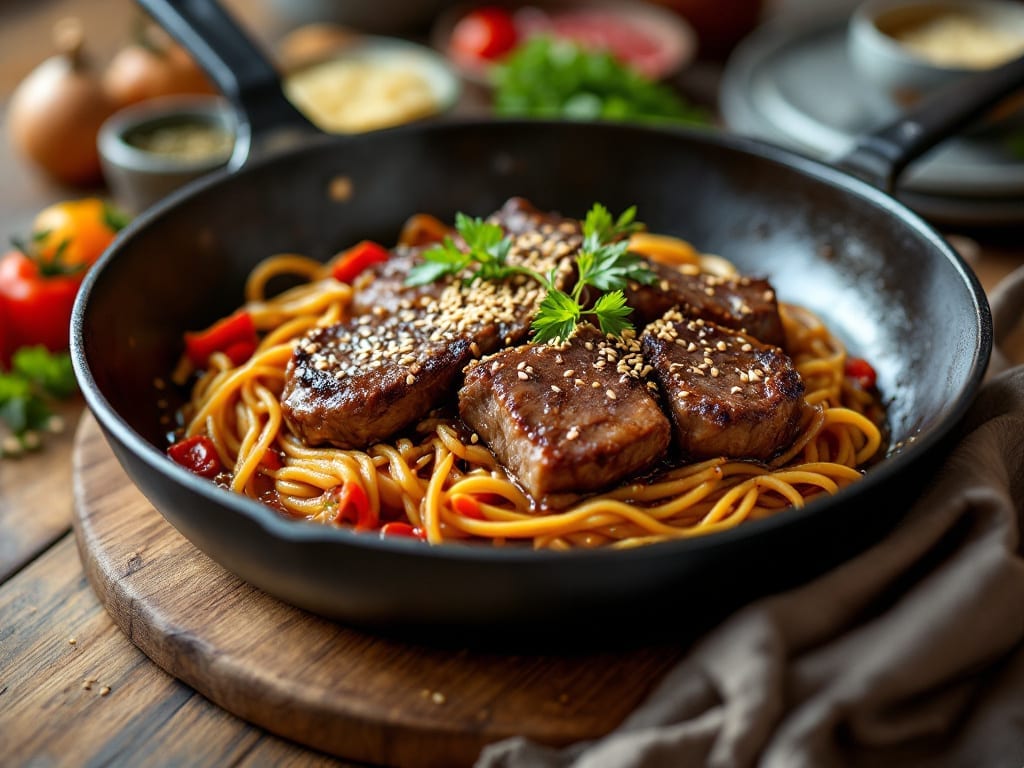
This beef osso bucco crock pot recipe transforms tough knuckle meat into fork-tender perfection with minimal effort—just six hours of slow braising. The secret lies in crosshatching the meat and browning it before slow cooking, which creates that signature rich sauce and melt-in-your-mouth texture.
I developed this method after years of perfecting traditional osso bucco, adapting it for the convenience of a crock pot without sacrificing restaurant-quality results.
The beauty of this approach is how it simplifies the process while delivering authentic Italian flavors. You’ll start with a quick marinade of garlic, herbs, and white wine, then brown the meat in a hot pan to build deep flavor.
After that, it’s just a matter of letting the crock pot work its magic, transforming the tough knuckles into tender, flavorful slices that practically fall apart. The sauce reduces naturally, creating a velvety broth that’s perfect for serving over risotto or polenta.
By the time you’re ready to serve, you’ll have perfectly tender beef osso bucco with a sauce so rich and flavorful it’ll make you forget you didn’t spend hours in the kitchen.
Each bite delivers that perfect balance of meaty richness and aromatic herbs, all achieved with just a few simple steps and six hours of slow cooking. This is comfort food at its finest—elegant enough for company but easy enough for any weeknight.
The best part? Leftovers reheat beautifully, making this an excellent meal prep option. Serve with a sprinkle of fresh parsley and a wedge of lemon to brighten the dish. Here’s everything you need to make this crock pot osso bucco a success.
Ingredients for beef osso bucco crock pot
Six ingredients transform tough knuckles into melt-in-your-mouth perfection—no fancy skills needed.
| Ingredient | Amount | Notes |
|---|---|---|
| Beef Knuckle 🥩 | 3 lb | Crosshatched for even cooking |
| All-Purpose Flour 🌾 | ½ cup | For dredging meat |
| Olive Oil 🫒 | ¼ cup | Extra-virgin for browning |
| Garlic Cloves 🧄 | 6 cloves | Minced for marinade |
| Dry White Wine 🍷 | 1 cup | Sauvignon Blanc preferred |
| Beef Broth 💧 | 2 cups | Low-sodium preferred |
| Tomato Paste 🍅 | 2 tbsp | Smooth, not chunky |
| Fresh Rosemary 🌿 | ½ tsp | Chopped, not dried |
| Fresh Thyme 🌿 | ½ tsp | Leaves only, chopped |
| Bay Leaves 🍃 | 2 whole | Fresh if possible |
| Salt 🧂 | 1 ½ tsp | Kosher or sea salt |
| Black Pepper 🌶️ | 1 tsp | Freshly ground |
| Lemon Wedges 🍋 | 2 whole | For serving |
| Fresh Parsley 🌿 | ¼ cup | Chopped, for garnish |
The beef knuckle is the star, so don’t skimp. Look for well-marbled cuts at your butcher—they’ll have the best selection. If your grocery store doesn’t carry knuckles, ask them to order it or check specialty markets. I usually grab mine from Whole Foods or my local butcher shop. Crosshatching the meat (making shallow cuts in a diamond pattern) is absolutely essential—it ensures even cooking and maximum tenderness. If you’re not comfortable with that, just ask your butcher to do it for you when you pick up the meat. The flour is just for dredging before browning—don’t skip this step, it creates that beautiful crust!
No white wine? Dry chicken broth with a splash of lemon juice works in a pinch. Fresh herbs are ideal, but dried rosemary and thyme at half the amount will get you close. The tomato paste can be the squeeze tube kind from Trader Joe’s—it’s perfect for small amounts and keeps forever. If you’re using dried bay leaves, toast them lightly in a dry pan first to wake up the flavor. The beef broth? Low-sodium is key—you don’t want to over-salt your dish. For the wine, anything crisp and dry like Sauvignon Blanc or Pinot Grigio works perfectly. If you’re feeling fancy, grab a bottle of Italian white wine from the store’s wine section.
This dish tastes even better the next day—honestly, the flavors meld and deepen overnight. Store leftovers in an airtight container in the fridge for up to 5 days. For freezing, portion into individual containers so you can reheat just what you need. The sauce thickens as it cools, so add a splash of beef broth when reheating if it’s too thick. Serve with a sprinkle of fresh parsley and those lemon wedges—trust me on this. The bright citrus cuts through the richness perfectly. If you’re prepping for the week, make a double batch—the extra sauce is perfect for drizzling over pasta or polenta later.
Why You’ll Love This Recipe
- Hands-Off Magic: I swear by this crock pot version—just sear the beef knuckle, dump in the wine, garlic, and flour slurry, then walk away. The slow cook transforms tough cuts into melt-in-your-mouth tenderness without babysitting the stove.
- Wine-Infused Depth: That splash of dry white wine? It’s the secret weapon—deglazing the pan and infusing the beef with bright, savory richness. The garlic cloves soften just enough to melt into every bite, like a hug from a Tuscan grandmother.
- Leftovers That Shine: Between us, the first night is always the best, but the second? Even better. The flavors deepen overnight, and reheated slices stay juicy. I portion it into freezer bags—perfect for lazy Mondays or unexpected company.
- Budget-Friendly Luxury: Beef knuckle is often cheaper than cuts like ribeye, and this method makes it feel like a restaurant dish. A single knuckle feeds four, and the flour-and-wine trick stretches every ingredient without sacrificing taste.
Step-by-step instructions for slow-braised knuckle
Here’s the method that transforms tough knuckle into melt-in-your-mouth perfection.
Crosshatch and Dredge the Beef Knuckle
Pat the 3 lb beef knuckle completely dry with paper towels—this ensures maximum browning later. Using a sharp knife, make deep crosshatch marks about ¼ inch apart all over the meat. This creates surface area for better flavor penetration and tenderness.
Place the 0.5 cup all-purpose flour in a shallow dish. Season the knuckle generously with 1.5 tsp salt and 1 tsp black pepper, then dredge it thoroughly in the flour, shaking off any excess. The flour creates a golden crust that locks in juices during cooking. Let the dredged knuckle sit at room temperature for 30 minutes while you prepare the crock pot.
Sear the Knuckle in Olive Oil
Heat the 0.25 cup olive oil in a large skillet over medium-high heat until shimmering. Place the knuckle in the pan, fat-side down, and press gently with a spatula to help it make contact with the oil. Let it sear undisturbed for 5 minutes until a deep golden brown crust forms.
Flip the knuckle and sear the other side for another 5 minutes. The oil should smell rich and nutty—this is your signal that the Maillard reaction is working. Transfer the seared knuckle to your crock pot, reserving any browned bits in the pan for later.
Build the Flavor Base
Return the skillet to medium heat and add the 6 minced garlic cloves. Sauté for 30 seconds until fragrant—don’t let them burn. Stir in the 2 tbsp tomato paste and cook for 1 minute, stirring constantly, until it darkens slightly. This creates a rich foundation for your sauce.
Deglaze the pan with the 1 cup dry white wine, scraping up all those flavorful browned bits. Let it simmer for 2 minutes until reduced by half. Pour this mixture into the crock pot along with the 2 cups beef broth, 0.5 tsp chopped fresh rosemary, 0.5 tsp chopped fresh thyme, and 2 whole bay leaves. The wine and broth will create a silky, aromatic braising liquid.
Slow-Braise to Perfection
Place the knuckle in the crock pot, fat-side up, and arrange the 2 lemon wedges on top. Cover and cook on low heat for 6 hours. This long, gentle cooking time is what transforms tough connective tissue into fork-tender meat. Don’t peek or stir—the knuckle needs to develop its own steam and flavors undisturbed.
After 6 hours, check for doneness by inserting a meat thermometer into the thickest part. It should read 205°F and the meat should pull apart easily with two forks. If it’s not quite there, continue cooking for another 30 minutes. The knuckle will be incredibly tender—almost falling-apart tender.
Finish and Serve
Remove the knuckle from the crock pot and transfer it to a serving platter. Discard the bay leaves and lemon wedges. Skim any excess fat from the braising liquid, then ladle the sauce over the knuckle. Garnish with the 0.25 cup chopped fresh parsley for a pop of color and freshness.
Slice the knuckle against the grain into ½-inch thick pieces and serve immediately with the rich braising sauce. Each bite should be incredibly tender with layers of savory, wine-infused flavors. The slow cooking process has broken down all the connective tissue, creating melt-in-your-mouth perfection.
Pro Tips For Making Beef Osso Bucco Crock Pot
- Brown the Knuckle First: Skip the crock pot until the beef knuckle hits 400°F for 10 minutes—sear it in olive oil until deep golden. I learned this the hard way: unseared meat turns out gray and bland, no matter how long you slow-cook. That crust locks in flavor and keeps the meat from falling apart later.
- Don’t Skip the Wine Deglaze: After browning, splash in the white wine immediately—it scrapes up the fond (those sticky bits) that’ll make your sauce sing. I used to pour it in later, and the sauce always tasted flat. Let it reduce by half before adding to the crock pot.
- Use a Meat Thermometer: Pull the beef at 200°F internal—it’ll climb to 205°F while resting, which is perfect for osso bucco. I’ve torn apart tough meat by guessing, and you’ll hate yourself if the knuckle’s still rubbery. A cheap probe thermometer changes everything.
- Add Garlic Late: Toss the minced garlic cloves in the last 30 minutes of cooking—raw garlic burns easily in the crock pot and turns bitter. I was skeptical until I tried it: the aroma hits you when you serve, and the flavor’s bright, not cooked-out.
Essential equipment for this recipe
Crock Pot Essentials
Start with a 6-quart crock pot—this size accommodates the 3 lb knuckle with room to spare for the sauce and aromatics. I recommend the Hamilton Beach 6-Quart Programmable Slow Cooker for consistent low-heat performance.
If you own a multi-cooker like an Instant Pot, use the Slow Cook function on Low for 6 hours—it mimics crock pot results perfectly. 🌡️
Searing Pan Must-Haves
A 12-inch cast-iron skillet is ideal for searing the knuckle—its heavy base distributes heat evenly for that deep golden crust. I use a Lodge Pre-Seasoned Cast Iron Skillet because it develops a natural nonstick surface over time.
For a budget-friendly alternative, a stainless steel pan like All-Clad Stainless works well, though you may need to add 1 extra tablespoon of olive oil to prevent sticking.
Meat Thermometer
Never guess doneness—use a meat thermometer to ensure perfect tenderness. The ThermoWorks Smoke is my go-to because it has dual probes (one for the crock pot and one for the meat) and a backlit display for easy reading in dim kitchens.
For a more affordable option, the Taylor Precision Digital Thermometer gives accurate readings without breaking the bank.
Sharp Knife for Crosshatching
The Wüsthof Classic 8-Inch Chef’s Knife is my favorite for crosshatching the knuckle—its German steel stays sharp longer and cuts through tough connective tissue like butter. If you’re not ready to invest in a high-end knife, a sharp chef’s knife from Victorinox (around $20) will work just fine.
Just ensure it has a serrated edge to create those deep diamond patterns without tearing the meat.
Optional: Immersion Blender
For a silky-smooth sauce, blend the braising liquid directly in the crock pot using an immersion blender like the Ninja BN601. This eliminates transferring hot liquid to a separate pot, reducing cleanup.
If you don’t have one, ladle the sauce into a blender (in 2-cup batches) and pulse until smooth. Just be cautious—hot liquids can splatter, so hold the lid slightly ajar.
Serving Tools
Serve with a long, sharp carving knife (like the Dexter-Russell 12-Inch) to slice the knuckle cleanly against the grain. A slotted spoon helps transfer the meat to plates without dropping it into the sauce.
For garnishing, keep fresh parsley and lemon wedges prepped in small bowls nearby—I like using ceramic serving dishes to keep everything warm while plating. 🍽️
Nutrition facts
Frequently asked questions
Can I use beef shank instead of knuckle for this crock pot recipe?
Yes, but with adjustments! Beef shank is leaner than knuckle, so it won’t be as tender. For best results, increase cooking time to 8 hours on low heat and add 1 extra cup of broth to prevent drying. The crosshatching step is even more important for shank to help break down its connective tissue.
Why does my osso bucco sauce turn out watery?
Watery sauce usually means the liquid wasn’t reduced enough. After cooking, remove the meat and simmer the sauce uncovered on the stovetop for 10-15 minutes to thicken it. If it’s still too thin, mix 1 tbsp cornstarch with 2 tbsp cold water, stir into the sauce, and cook until thickened. Skim excess fat first for cleaner results.
How do I make this recipe in a smaller crock pot?
Reduce the recipe by half for a 3-4 quart crock pot. Use 1.5 lb knuckle, ½ cup wine, and 1 cup broth. Cook for 5-6 hours on low heat. The smaller volume will concentrate flavors beautifully, but check doneness at 5 hours since it cooks faster in smaller containers.
What’s the best way to reheat leftovers?
Reheat gently in the microwave for 2-3 minutes with a splash of beef broth to maintain moisture. For stovetop reheating, simmer on low heat for 10 minutes until warmed through. Avoid high heat—it can make the meat dry. Leftovers taste even better the next day as flavors meld!
Can I substitute red wine for white in this recipe?
Technically yes, but it won’t be traditional. Red wine adds deeper color but can make the sauce taste heavy. If using red, reduce it by ¼ cup and add ¼ cup extra broth to balance. For best results, stick with white wine—it complements the delicate beef flavors perfectly.

- Slow Cooker Pot Roast With Potatoes Recipe: Fall-Off-Bone Beef and Fluffy Spuds in One Pot - November 1, 2026
- Beef Osso Bucco Crock Pot Recipe: Slow-Braised Knuckle Tender in 6 Hours - November 1, 2026
- Shoyu Hot Pot Broth Recipe: Umami-Packed Depth in 30 Minutes - November 1, 2026