
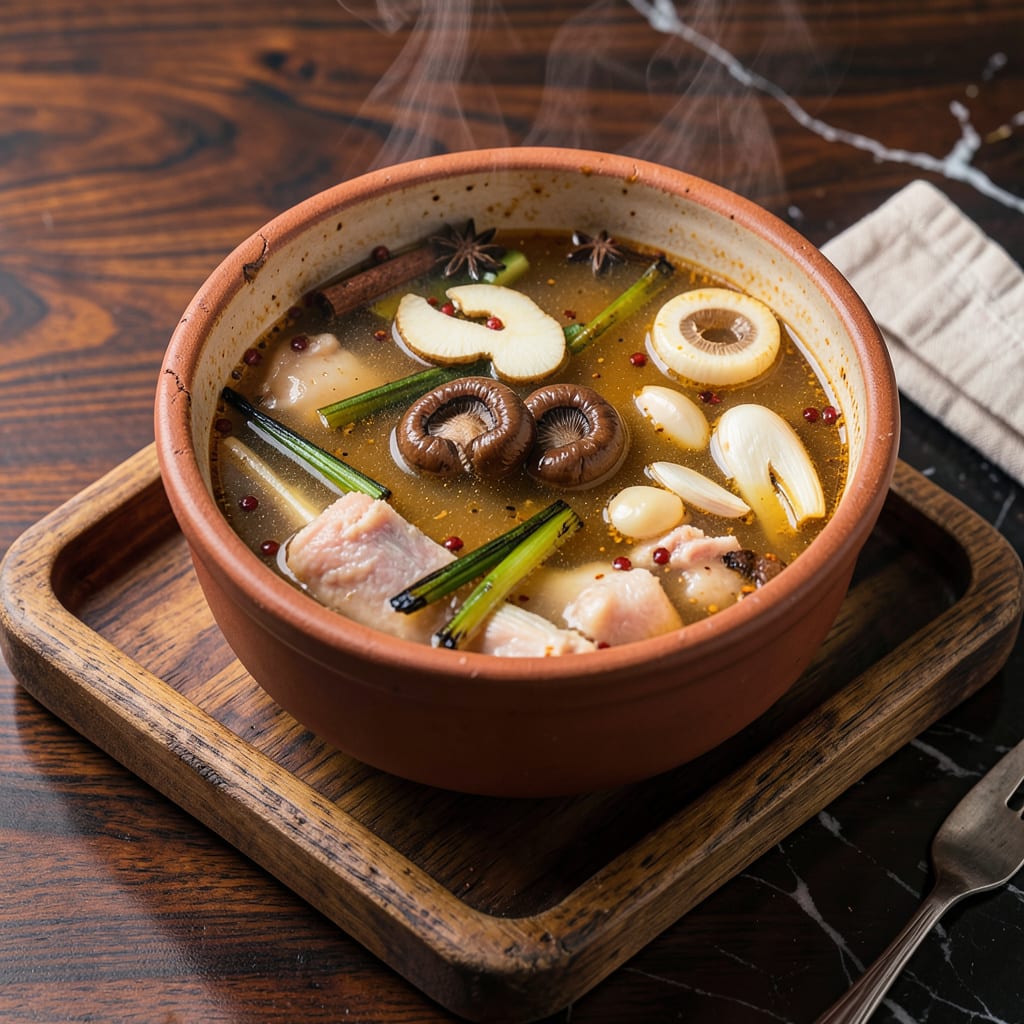
A perfectly balanced hot pot broth transforms a simple meal into an unforgettable communal experience. This recipe delivers a rich, aromatic base that serves as the foundation for endless dipping possibilities, whether you prefer a clear bone broth or a deeply spiced chili version. The secret lies in slow-simmered ingredients that build layers of umami and complexity.
What sets this apart is its versatility—designed to complement everything from delicate seafood to hearty meats and fresh vegetables. The broth’s depth comes from carefully selected aromatics and proteins, simmered to extract maximum flavor. By the time it reaches your table, you’ll have a restaurant-quality foundation ready for a customizable, interactive dining experience.
Ingredients for Best Hot Pot Broth
This rich broth starts with bones and aromatics you can find at any Asian market or well-stocked grocery.
| Ingredient | Amount | Notes |
|---|---|---|
| Chicken Bones 🍗 | 4 lb | Necks, backs, or carcasses preferred |
| Pork Bones 🐖 | 2 lb | Femur or neck bones ideal |
| Dried Shiitake Mushrooms 🍄 | 1 oz | Rinsed, stems removed |
| Fresh Ginger 🌿 | 6 oz | Unpeeled, smashed with knife |
| Garlic Cloves 🧄 | 12 cloves | Lightly crushed, skins on |
| Scallions 🧅 | 1 bunch | Cut into 3-inch pieces |
| Star Anise Pods ⭐ | 6 pieces | Whole, not ground |
| Cinnamon Sticks 🌰 | 2 pieces | 3-inch pieces preferred |
| Sichuan Peppercorns 🌶️ | 1 tbsp | Lightly toasted for aroma |
| Gochugaru (Korean Chili Flakes) 🌶️ | ¼ cup | Adjust for heat preference |
| Soy Sauce 🫙 | ½ cup | Low-sodium preferred |
| Shaoxing Wine 🍷 | ¼ cup | Dry sherry as substitute |
| Rock Sugar 🍬 | 1 oz | Or substitute brown sugar |
| Chicken Stock 🍲 | 12 cups | Low-sodium for better control |
[recipeingredientscaler]
The bones are everything here. Chicken necks and backs give the richest gelatin, while pork femur bones add depth. Ask your butcher to cut them into smaller pieces—more surface area means more flavor. For the mushrooms, dried shiitake (the kind with thick caps) are non-negotiable; they’re the umami powerhouse. Ginger and garlic should be fresh—none of that pre-minced stuff. I grab mine from H Mart when I’m stocking up for a crowd (they sell bones in bulk).
No Shaoxing wine? Dry sherry works in a pinch, but skip the cooking wine—it’s too salty. Rock sugar balances the salt; brown sugar in a 1:1 ratio if you can’t find it. For the chili flakes, gochugaru is ideal (mild and smoky), but regular red pepper flakes work too. If you’re making this vegetarian, swap the bones for mushroom stems and kombu, and use vegetable stock instead of chicken. The spices? Toast them lightly before adding—wakes up the flavors.
Broth keeps 5 days in the fridge, but it’s even better frozen. Portion into quart containers—that’s enough for 4-6 people. The fat will solidify on top; just scrape it off before reheating. I always make a double batch and freeze half—saves time for next hot pot night. The flavor actually deepens after a day or two, so don’t stress about leftovers.
Why You’ll Love This Recipe
- Dump-and-Simmer Simple: I just toss the bones, mushrooms, ginger, and garlic into a pot—no fancy prep. The longest part is waiting for it to bubble, and honestly, that’s when my kitchen smells like a five-star restaurant.
- Umami Bomb Waiting: Those dried shiitakes and double bones (chicken and pork) create this rich, savory depth that store-bought broths can’t touch. First sip always makes me pause—it’s that good.
- Hot Pot, Any Occasion: I’ve served this for lazy Sundays with friends, quick weeknight dinners, and even as a fancy centerpiece when my in-laws visit. The broth adapts—spicy for adults, mild for kids, and always satisfying.
- Leftovers = Free Meals: The broth freezes beautifully, so I make a huge batch and stash it. Toss it with noodles, use it for ramen, or reheat for another hot pot night—saves me money and time.
Instructions
This broth builds layers of flavor through careful simmering and aromatic infusion—let’s create that perfect balance of richness and heat.
Step 1: Toast the Spices and Bloom the Aromatics
Heat a large stockpot over medium-high heat until hot. Add the 1 tbsp Sichuan peppercorns, 6 pieces star anise pods, and 2 pieces cinnamon sticks. Toast for 1-2 minutes, stirring constantly, until the spices become fragrant and the peppercorns start to darken slightly. This toasting step wakes up the essential oils and creates a more complex flavor profile.
Immediately add the 6 oz fresh ginger (smashed but unpeeled), 12 cloves garlic cloves (lightly crushed with skins on), and 1 bunch scallions (cut into 3-inch pieces). Stir for another 2 minutes until the garlic begins to color and the ginger releases its aroma. The skins on the garlic and ginger add subtle bitterness that balances the richness of the broth.
Step 2: Develop the Base with Bones and Mushrooms
Add the 4 lb chicken bones and 2 lb pork bones to the pot, stirring to coat them in the aromatic mixture. Let them sear for 5-7 minutes, turning occasionally, until they develop a light golden color. This browning step creates fond (those browned bits) that will dissolve into the broth, adding incredible depth.
Pour in the 12 cups chicken stock, then add the 1 oz dried shiitake mushrooms. Bring the mixture to a gentle boil, then immediately reduce the heat to maintain a steady simmer. You’ll notice foam rising to the surface—this is impurities from the bones. Skim this off with a fine-mesh strainer for a cleaner, clearer broth.
Step 3: Build Complexity with Fermented and Sweet Elements
After simmering for 1 hour, add the 0.5 cup soy sauce, 0.25 cup Shaoxing wine, and 1 oz rock sugar. The soy sauce adds umami depth, the wine contributes brightness and helps tenderize any meat remnants on the bones, while the rock sugar balances the saltiness with subtle sweetness.
Now stir in the 0.25 cup gochugaru (Korean chili flakes). This is where you control the heat level—start with the full amount for medium spice, or reduce to 2 tablespoons for milder broth. The chili flakes will bloom in the hot liquid, releasing their color and capsaicin gradually. Let the broth return to a simmer.
Step 4: Long Simmer for Maximum Flavor Extraction
Partially cover the pot and maintain a gentle simmer for 3-4 hours. You want small bubbles breaking the surface occasionally—not a rolling boil, which would make the broth cloudy. During this time, the collagen from the bones will break down, creating a rich, velvety mouthfeel.
Check the broth periodically. The scallions should soften completely, the garlic will mellow into sweetness, and the mushrooms will have released all their earthy flavor. The broth is ready when it has reduced by about 25% and developed a deep amber color with a glossy sheen from the rendered fat.
Step 5: Strain and Prepare for Serving
Set a fine-mesh strainer over another large pot or heatproof bowl. Line it with cheesecloth if you want an exceptionally clear broth. Carefully ladle the broth through the strainer, pressing gently on the solids to extract all the liquid. Discard the spent bones and aromatics—they’ve given all their flavor to the broth.
Taste and adjust the seasoning if needed. The broth should have a perfect balance: salty from the soy, sweet from the rock sugar, with a slow-building heat from the chili and Sichuan peppercorns. For immediate use, keep it at a bare simmer. For later, cool completely before refrigerating (it will keep for 5 days) or freezing (up to 3 months).
Storing and Reheating best hot pot broth
Fridge Storage Tips
After your broth cools to room temperature (about 2 hours), transfer it to airtight containers. I prefer glass jars or BPA-free plastic—I’ve had great luck with Pyrex storage containers. The broth will keep beautifully for up to 5 days in the fridge. You’ll notice the fat solidifies on top; this actually helps preserve the flavor. 💡
Freezing for Later
For longer storage, portion the cooled broth into quart-sized freezer bags or containers. Leave about 1-inch headspace to allow for expansion. I’ve found that flat bags freeze more efficiently and stack neatly. Your broth will maintain peak flavor for up to 3 months in the freezer. Label with the date—trust me, you’ll forget otherwise.
Reheating on Stovetop
Pour your chilled broth into a pot and heat over medium-low until it reaches a gentle simmer. Add ¼ cup water or stock if it seems too concentrated. Stir occasionally to prevent sticking. The flavors actually deepen after storage, so you might find it tastes even better the second time around. I often make extra just for this reason.
Microwave Method
For quick reheating, transfer broth to a microwave-safe container and cover loosely. Heat on 50% power in 2-minute intervals, stirring between each. This prevents hot spots and maintains the delicate balance of flavors. A 16-ounce portion typically takes about 4-6 minutes total. Be careful when removing—the container will be hot!
Reviving the Flavor
If your reheated broth tastes slightly flat, add a splash of Shaoxing wine or a pinch of rock sugar to brighten it up. Sometimes I drop in a fresh star anise pod while reheating for an extra aromatic boost. The spices will reawaken beautifully in the hot liquid, making it taste almost freshly made. ⚡
Portable Hot Pot Setup
For tabletop hot pot, transfer reheated broth to a heat-safe ceramic or metal pot. Place it on a portable butane burner—I recommend the Iwatani ZA-3HP for its consistent flame control. Keep the broth at a gentle simmer throughout your meal, adding more liquid if needed. The beauty of hot pot is that the broth continues to develop flavor as you cook ingredients in it.
Nutrition Facts
Frequently Asked Questions
Can I make this broth in an Instant Pot?
Yes! Use the Pressure Cook setting for 45 minutes after sautéing the aromatics. The bones won’t break down as completely as stovetop, so add 1 tbsp gelatin powder for body. Strain and reduce uncovered for 20 minutes to concentrate flavors.
What’s the best way to split broth for dual-flavor hot pot?
Use a divided hot pot (or place a metal divider in your pot). Keep one side mild (remove chili flakes) and add doubanjiang to the other for spicy. Simmer both sides separately to maintain distinct flavors. The divider prevents mixing while cooking.
Why did my broth turn cloudy?
Cloudiness usually comes from boiling too vigorously or not skimming foam. Next time, maintain a gentle simmer and skim every 15 minutes for the first hour. For clear broth, strain through cheesecloth-lined sieve. The cloudiness doesn’t affect taste!
Can I reuse leftover broth from hot pot?
Strain out solids and refrigerate within 2 hours. The reused broth will be even richer from cooking all the ingredients. Just add 1 cup fresh stock when reheating to balance the concentrated flavors.

- 8 Bean Soup Recipe Crock Pot: Hearty Vegetable Medley in One Pot - September 25, 2026
- 4C Bread Crumbs Meatballs Recipe: Crispy Crust and Juicy Centers - September 25, 2026
- 6 Oz Chocolate Chip Cookie Recipe: Perfectly Balanced Crispy Edges and Chewy Hearts - September 25, 2026