
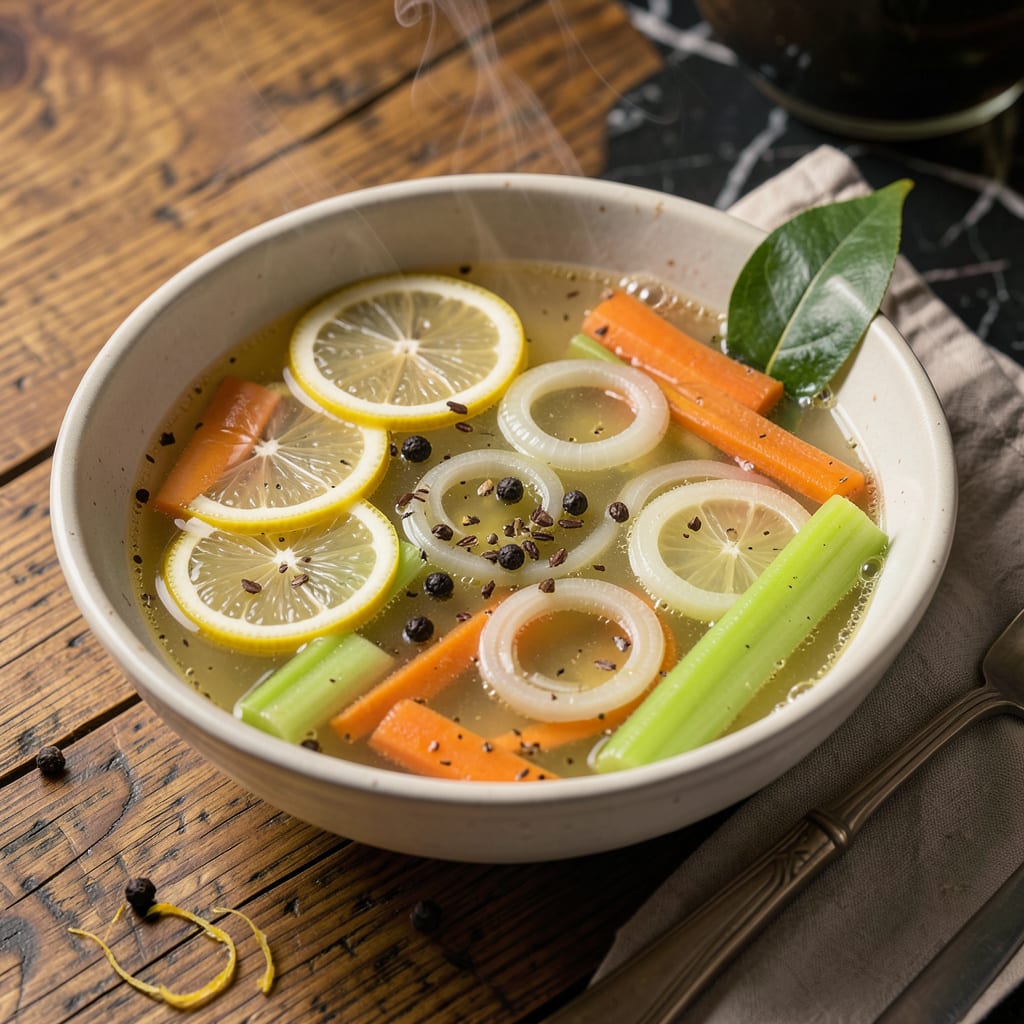
Court bouillon represents the essence of French culinary precision—a delicate poaching broth that transforms simple ingredients into an elegant foundation for seafood. This recipe maintains the traditional technique while embracing modern flexibility, allowing you to adapt the aromatic base to your preferred flavor profile. The result is a light yet deeply flavorful liquid that enhances without overpowering.
The method relies on a careful balance of white wine, fresh herbs, and vegetables simmered just long enough to extract their essence. What emerges is a versatile broth capable of poaching everything from delicate fish fillets to hearty shellfish, all while infusing them with subtle, sophisticated flavor. The strained broth itself becomes a refined sauce base, proving that simplicity often yields the most impressive results.
Ingredients for Melting Pot Court Bouillon
This refined French broth begins with white wine, aromatic vegetables, and carefully selected herbs to create its signature delicate yet profound flavor profile.
| Ingredient | Amount | Notes |
|---|---|---|
| Dry white wine 🍷 | 2 cups | Sauvignon Blanc or Pinot Grigio preferred |
| Water 💧 | 4 cups | Filtered for cleanest flavor |
| Fresh lemon slices 🍋 | 2 whole | Unpeeled, thinly sliced |
| Yellow onion 🧅 | 1 whole | Thinly sliced, approximately 1 cup |
| Carrots 🥕 | 2 whole | Peeled, sliced into rounds |
| Celery stalks 🌿 | 2 whole | Cut into 1-inch pieces |
| Fresh flat-leaf parsley 🌿 | ½ cup | Stems included, loosely packed |
| Fresh thyme sprigs 🌿 | 4 sprigs | Whole, unchopped |
| Bay leaves 🌿 | 2 whole | Dried, high-quality |
| Whole black peppercorns 🌶️ | 1 tsp | Lightly crushed |
| Kosher salt 🧂 | 1 tbsp | Diamond Crystal preferred |
| Whole coriander seeds 🌿 | ½ tsp | Lightly toasted |
| Fennel seeds 🌿 | ¼ tsp | Optional for anise note |
| Lemon zest strips 🍋 | 3 pieces | 1-inch strips, no pith |
| White fish bones or shrimp shells 🐟 | 1 cup | Optional for depth, rinsed |
The wine selection is paramount for authentic flavor. Sauvignon Blanc or Pinot Grigio provide the ideal acidity without overpowering. For vegetables, seek firm, fresh specimens—this isn’t the place for limp produce. The herbs should be vibrant green and aromatic; I source mine from Whole Foods or local farmers markets when possible. Whole spices are non-negotiable—pre-ground loses its potency within weeks. The optional fish bones or shells should be immediately used or frozen; never use previously thawed seafood remnants as they develop off-flavors.
In a pinch, vermouth can substitute for white wine at a 1:1 ratio, though the flavor profile will shift slightly. Dried herbs are unacceptable here—they’ll make your broth muddy. If missing fresh thyme, tarragon offers an interesting alternative, but reduce quantity by half. The lemon can be replaced with white wine vinegar (1 tbsp), though you’ll lose the citrus aroma. For a more pronounced anise note, increase fennel seeds to ½ teaspoon, but be judicious as it can dominate. The peppercorns must remain whole—crushed ones will make the broth cloudy.
The strained broth keeps 3 days refrigerated in a sealed container, though its flavor peaks within 24 hours. For longer storage, freeze in ice cube trays for up to 3 months—perfect for portioning. Never boil the broth when reheating; gentle warming preserves its delicate character. The spent vegetables and herbs make excellent compost material. If using the optional fish bones, strain immediately after cooking to prevent bitterness from developing.
Why You’ll Love This Recipe
- No-Knife Needed: Honestly, the hardest part is slicing the lemon—everything else just gets halved or tossed in whole. I’ve made this with a screaming toddler on my hip, and the carrots and onion barely need prep beyond a rough chop.
- Wine Does the Work: That dry white wine isn’t just for show—it mellows into this bright, aromatic broth that makes even basic fish or shrimp taste like a restaurant special. The lemon slices steep just enough to add zing without overpowering, so you get depth without fuss.
- My Seafood Safety Net: Between us, this is my backup plan for everything: poached salmon, mussels, or even just soaking crusty bread when I’m too lazy to cook. It’s forgiving, fast, and somehow makes me look like I planned ahead.
- Stretches Like Magic: One batch covers dinner and freezes into portioned broth cubes for risotto or soup later. I’ve stretched it to three meals by adding different proteins—budget hero status, no fancy skills required.
Step-by-Step Instructions for Melting Pot Court Bouillon
This refined technique ensures a perfectly balanced broth with layered flavors and aromatic complexity.
Step 1: Toast the Spices and Prepare Aromatics
Begin by lightly toasting the 0.5 tsp whole coriander seeds and 0.25 tsp fennel seeds in a dry skillet over medium heat for 1-2 minutes until fragrant. This brief toasting intensifies their essential oils and prevents any raw, bitter notes in the finished broth. Immediately transfer to a mortar and lightly crush with the 1 tsp whole black peppercorns—just enough to crack them open without pulverizing.
Meanwhile, prepare your aromatics: thinly slice the 1 whole yellow onion, peel and round-slice the 2 whole carrots, and cut the 2 whole celery stalks into 1-inch pieces. The uniform size ensures even extraction of flavors during simmering. Gather the 2 whole fresh lemon slices, 3 pieces lemon zest strips, 0.5 cup fresh flat-leaf parsley, 4 sprigs fresh thyme sprigs, and 2 whole bay leaves—these will infuse the broth with bright, herbal notes.
Step 2: Build the Flavor Base with Wine Reduction
In a large stockpot, combine the 2 cups dry white wine with the 4 cups water and bring to a gentle simmer over medium-high heat. The wine’s acidity will brighten the broth while its alcohol content helps extract flavors from the aromatics. Add the 1 cup white fish bones or shrimp shells (if using) and simmer for 5 minutes—this initial cooking removes any impurities and prevents cloudiness in the final broth.
Strain out and discard the fish bones or shells, then return the liquid to the pot. Add the prepared onion, carrots, celery, lemon slices, lemon zest, parsley, thyme, bay leaves, and the toasted spices. The liquid should just cover the vegetables—this ratio ensures proper extraction without diluting the flavors. Bring to a bare simmer; you should see small bubbles breaking the surface occasionally, not a rolling boil.
Step 3: Simmer for Optimal Flavor Extraction
Partially cover the pot and maintain at a gentle simmer for 30-40 minutes. This controlled heat allows the vegetables to release their flavors gradually without breaking down completely. The broth should develop a pale golden hue and a clean, aromatic scent—citrusy from the lemon, slightly sweet from the carrots, and herbaceous from the thyme and parsley.
Resist the urge to stir during simmering, as this can break up the vegetables and make straining more difficult. Instead, occasionally skim off any foam that rises to the surface with a fine-mesh skimmer. The foam contains impurities that could make your broth cloudy. After 30 minutes, test the flavor: the broth should taste bright and well-balanced, with no single ingredient dominating.
Step 4: Strain and Finish the Broth
Remove the pot from heat and let the broth sit undisturbed for 5 minutes to allow the vegetables to settle at the bottom. Line a fine-mesh strainer with cheesecloth and set it over a clean pot or large heatproof bowl. Carefully ladle the broth through the strainer, avoiding the settled vegetables at the bottom—this prevents any sediment from clouding your finished product.
Discard the solids and return the strained broth to the pot. Stir in the 1 tbsp kosher salt and taste carefully—the broth should be seasoned enough to stand on its own but not overly salty, as reduction during cooking will intensify the flavors. For immediate use, keep the broth at a bare simmer. For later use, cool completely before refrigerating or freezing—the flavors will continue to develop and meld over time.
Flavor Customization for This Recipe
Citrus-Forward Twist
For a brighter, more vibrant broth, I love adding 2 additional strips of orange zest alongside the lemon. The combination creates a complex citrus profile that works beautifully with delicate white fish like branzino or flounder. You can also swap one lemon slice for a lime slice—this subtle change adds a tropical note that pairs wonderfully with shrimp. 🍊
Herb Garden Variation
While the classic recipe calls for parsley and thyme, I often experiment with different herb combinations. Try replacing the thyme with 3 tarragon sprigs for an anise-like elegance, or add 2 basil stems for a Mediterranean touch. For a bolder approach, 1 rosemary sprig adds piney depth—just remove it after 20 minutes to prevent bitterness.
Spiced Fusion Blend
To give your broth a melting pot twist, add 1 star anise pod and 1-inch piece of ginger (sliced) to the simmering liquid. This creates a subtle Asian-inspired aroma that works beautifully with salmon or scallops. For a Latin flair, include 1 dried guajillo chile (seeds removed) and 1 cinnamon stick—the warmth complements heartier fish like halibut or cod.
Umami Boost Option
For extra depth, I sometimes add 1 tbsp white miso paste or 1 tsp fish sauce to the finished broth. Stir it in after straining when the broth is still warm—the heat helps it dissolve completely. This works particularly well if you’re using the broth as a base for soups or sauces. The umami notes become more pronounced when paired with mussels or clams.
Vegetable Medley Swap
While the classic mirepoix works perfectly, I enjoy using fennel bulb (thinly sliced) instead of celery for a sweeter, more aromatic base. Leeks can replace onions for a milder allium presence. For a spring variation, add 5 asparagus spears (trimmed) during the last 10 minutes of simmering—they’ll infuse the broth with fresh, green notes without turning mushy.
Smoky Depth Addition
A tiny amount of smoked ingredient can transform the broth. Try adding 1 smoked black tea bag (like Lapsang Souchong) during simmering, or ¼ tsp smoked paprika at the end. This works particularly well with oily fish like mackerel or sardines. For a campfire-inspired version, briefly char the onion and lemon slices over an open flame before adding them to the pot. The subtle smokiness adds incredible complexity. 🔥
Nutrition Facts
Frequently Asked Questions
What’s the best wine to use for this broth?
Sauvignon Blanc or Pinot Grigio work best for their crisp acidity. Avoid oaky Chardonnays as they can overpower the delicate flavors. A dry vermouth makes a good substitute if you’re avoiding alcohol.
Can I make this broth ahead of time?
The broth keeps 3 days refrigerated in an airtight container. For longer storage, freeze in ice cube trays for up to 3 months. Reheat gently without boiling to preserve its delicate character.
What seafood works best with this broth?
Delicate white fish like cod, halibut, or sea bass are ideal. For shellfish, try shrimp, mussels, or scallops. Poach for 8-12 minutes depending on thickness—the broth should just bubble around the edges.
Why is my broth cloudy instead of clear?
Cloudiness usually comes from boiling too vigorously or stirring during simmering. Always maintain a gentle simmer and skim any foam that rises. Straining through cheesecloth-lined sieve helps achieve perfect clarity.

- 8 Bean Soup Recipe Crock Pot: Hearty Vegetable Medley in One Pot - September 25, 2026
- 4C Bread Crumbs Meatballs Recipe: Crispy Crust and Juicy Centers - September 25, 2026
- 6 Oz Chocolate Chip Cookie Recipe: Perfectly Balanced Crispy Edges and Chewy Hearts - September 25, 2026