
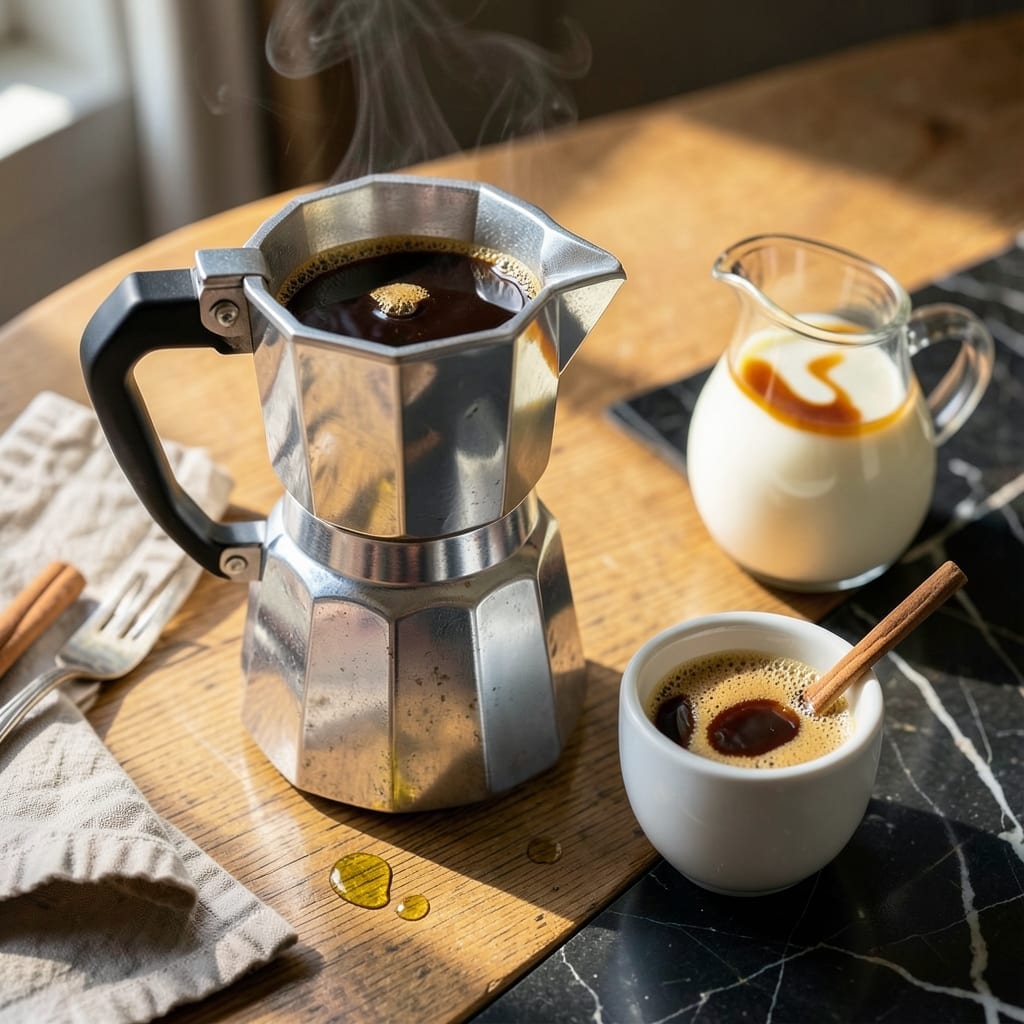
My morning ritual transformed when I discovered the proper way to use a stovetop moka pot. This Italian classic delivers a rich, espresso-like brew that rivals any café, right in your kitchen.
The key lies in precise measurements and heat control. Using the correct water-to-coffee ratio prevents bitter or weak results. Medium-low heat ensures steady extraction without burning the grounds.
You’ll achieve a velvety, full-bodied coffee with a crema-like foam on top. The process takes under 10 minutes from start to finish, with minimal effort for maximum flavor.
Perfect for espresso lovers who want café quality at home. This method works with any Bialetti model.
Ingredients for Bialetti Moka Pot
Coffee, water, and a few extras for your perfect morning brew at home.
| Ingredient | Amount | Notes |
|---|---|---|
| Medium-Fine Ground Coffee ☕ | ½ cup | Freshly ground for best extraction |
| Filtered Water 💧 | 1 ½ cups | Just below the valve |
| Sugar 🍚 | 1 tsp | Optional, adjust to taste |
| Whole Milk 🥛 | ½ cup | Warm for serving |
| Hazelnut Syrup 🍯 | 1 tbsp | Flavored syrup, optional |
| Cinnamon Stick 🌿 | 1 whole | For aroma while brewing |
| Vanilla Extract 🌿 | ¼ tsp | Pure extract preferred |
| Heavy Cream 🥛 | 2 tbsp | Optional for richness |
| Chocolate Shavings 🍫 | 1 tbsp | Dark or milk chocolate |
| Brown Sugar 🍚 | 1 tsp | For caramel notes |
The coffee grind is everything here. Medium-fine is ideal—too coarse and you’ll get weak extraction, too fine and it’ll taste bitter. Lavazza or Illy espresso blends work great for this method. Use filtered water if your tap water has a strong taste (it makes a difference). Most grocery stores carry good options, but Whole Foods has a nice selection of Italian roasts.
No moka pot? A French press won’t give the same result, but it’s your best backup. Pre-ground coffee at half the amount works in a pinch, though freshly ground is always better. Want it sweeter? Maple syrup or agave can replace the sugar. The milk can be swapped for any dairy-free alternative—oat milk froths nicely for a latte-style drink.
Brewed coffee stays fresh for about 20 minutes in the pot, but it’s best served immediately. Store leftover grounds in an airtight container for up to 2 weeks. The syrup and chocolate shavings keep for months in a cool, dark place.
Why You’ll Love This Recipe
- No-Fuss Brew: I just fill the chamber, screw it together, and set it on the stove—no fancy equipment, no waiting in line at a café.
- Rich & Nutty: The hazelnut syrup swirls into the coffee for this warm, toasty depth that feels like a hug in a cup.
- Morning or Midnight: Honestly, it’s my 3 PM pick-me-up and my after-dinner treat—same pot, different mood.
- Penny-Pincher’s Latte: Skip the $7 coffee shop drink; this gives me café quality for the cost of a few cents of beans and milk.
Step-by-Step Instructions for Bialetti Moka Pot Coffee
Master the art of brewing with this classic stovetop method—rich, bold, and satisfying every time.
Step 1: Prepare the Moka Pot and Add Water
Begin by disassembling your Bialetti pot and filling the bottom chamber with 1.5 cups filtered water, just below the valve. This precise level is crucial—too much water will dilute the coffee, while too little can cause the pot to overheat and burn the grounds.
I always use filtered water to avoid any metallic or chlorine flavors that can interfere with the coffee’s natural profile. The valve is your guide; never exceed it. Insert the filter basket and set it aside while you prepare the coffee.
Step 2: Add Coffee and Flavorings to the Basket
Measure 0.5 cup medium-fine ground coffee into the filter basket. For best extraction, use coffee ground specifically for a Moka pot—slightly coarser than espresso but finer than drip. Gently level the grounds with the back of a spoon, but don’t tamp or pack them down.
Add 1 whole cinnamon stick directly into the basket on top of the grounds for a subtle, warming aroma. The cinnamon infuses beautifully during brewing, adding depth without overpowering. Avoid stirring, as this can compact the coffee and restrict water flow.
Step 3: Assemble and Brew on Medium Heat
Screw the top chamber onto the base securely—firm but not over-tightened. Place the pot on a stovetop over medium heat. Using high heat can scorch the coffee, while too low heat will produce a weak, under-extracted brew.
As the water heats, you’ll hear a gentle gurgling sound. This signals the water is rising through the grounds. Keep the lid open to watch the coffee flow into the top chamber. When the stream turns a light honey color, remove the pot from heat immediately to prevent bitter over-extraction.
Step 4: Sweeten and Serve with Enhancements
Once brewed, stir 1 tsp sugar and 1 tsp brown sugar into the coffee in the top chamber for a balanced sweetness with caramel undertones. The sugars dissolve quickly in the hot liquid. Pour the coffee into cups, dividing it evenly for four servings.
For a richer experience, warm 0.5 cup whole milk and froth it lightly before pouring 2 tbsp heavy cream into each cup. The cream adds a velvety texture that complements the bold coffee. Finish with 1 tbsp hazelnut syrup and a sprinkle of 1 tbsp chocolate shavings for a decadent touch, along with 0.25 tsp vanilla extract stirred in for aromatic depth.
Pro Tips For Making Bialetti Moka Pot
- Preheat the Base: Always start with a hot stovetop—medium-low heat—and warm the bottom chamber with hot water before adding coffee. I learned this the hard way after burning three batches because the grounds cooked too fast.
- Grind Just Right: Use medium-fine grounds, like table salt, not powder—any finer and you’ll clog the filter, any coarser and the extraction will be weak and watery.
- Don’t Tamp the Coffee: Resist the urge to press down the grounds in the filter basket; just level it off gently so water can flow through evenly without compacting.
- Pull It Early: Remove the pot from heat as soon as the coffee starts bubbling up—it finishes brewing from residual heat, and leaving it on will scorch the last bit.
Pro Cooking Tips for Great bialetti moka pot
Heat Control
Always use medium-low heat—this prevents burning the grounds while ensuring steady extraction. I keep my gas stove at 3-4/10 for consistent results. Too high heat scorches the coffee, creating bitter notes that ruin the brew.
Water Temperature
Start with hot water from the tap (about 160°F) in the bottom chamber. This gives you a faster, more controlled brew and reduces the risk of overheating the aluminum pot. Cold water takes longer and can lead to uneven extraction.
Coffee Grind Size
Use a medium-fine grind, similar to table salt. Too fine creates resistance, leading to over-extraction and bitterness. Too coarse results in weak, watery coffee. I prefer grinding fresh beans right before brewing for peak flavor. 🌟
Assembly Tips
Don’t over-tighten the top chamber—just snug is enough. Over-tightening can warp the gasket and make disassembly difficult. Also, always check that the gasket is properly seated to prevent leaks during brewing.
Brew Monitoring
Watch for the coffee stream to turn light honey-colored—this is your cue to remove from heat immediately. If it starts spurting or darkens, you’ve waited too long, and the coffee will taste burnt. I set a timer for 5-7 minutes as a backup.
Post-Brew Care
After brewing, rinse the pot with warm water only—no soap. This preserves the seasoning of the aluminum. Disassemble completely and let all parts air-dry to prevent rust or mineral buildup. Store with the lid off to avoid trapped moisture.
Nutrition Facts
Frequently Asked Questions
What grind size works best?
Use a medium-fine grind, like table salt. Too fine causes bitter over-extraction; too coarse makes weak coffee. Freshly ground beans always yield the best flavor.
How do I prevent bitter coffee?
Remove from heat when the stream turns light honey-colored. Brewing longer scorches the grounds. Also, use medium-low heat and avoid packing the coffee too tightly.
Can I use pre-ground coffee?
Yes, but reduce the amount by half. Pre-ground is often too fine for moka pots. For best results, ask your barista for a grind suitable for stovetop espresso makers.
How do I clean my moka pot?
Rinse with warm water only—no soap. Disassemble completely and air-dry all parts. Store with the lid off to prevent moisture buildup and rust.

- 6 Oz Chocolate Chip Cookie Recipe: Perfectly Balanced Crispy Edges and Chewy Hearts - September 25, 2026
- 6-Inch Coffee Cake Recipe: Vanilla Bean Swirls and Buttery Streusel Topping - September 25, 2026
- 1 Hour Soup Recipe: Velvety Richness Without the Wait - September 25, 2026