
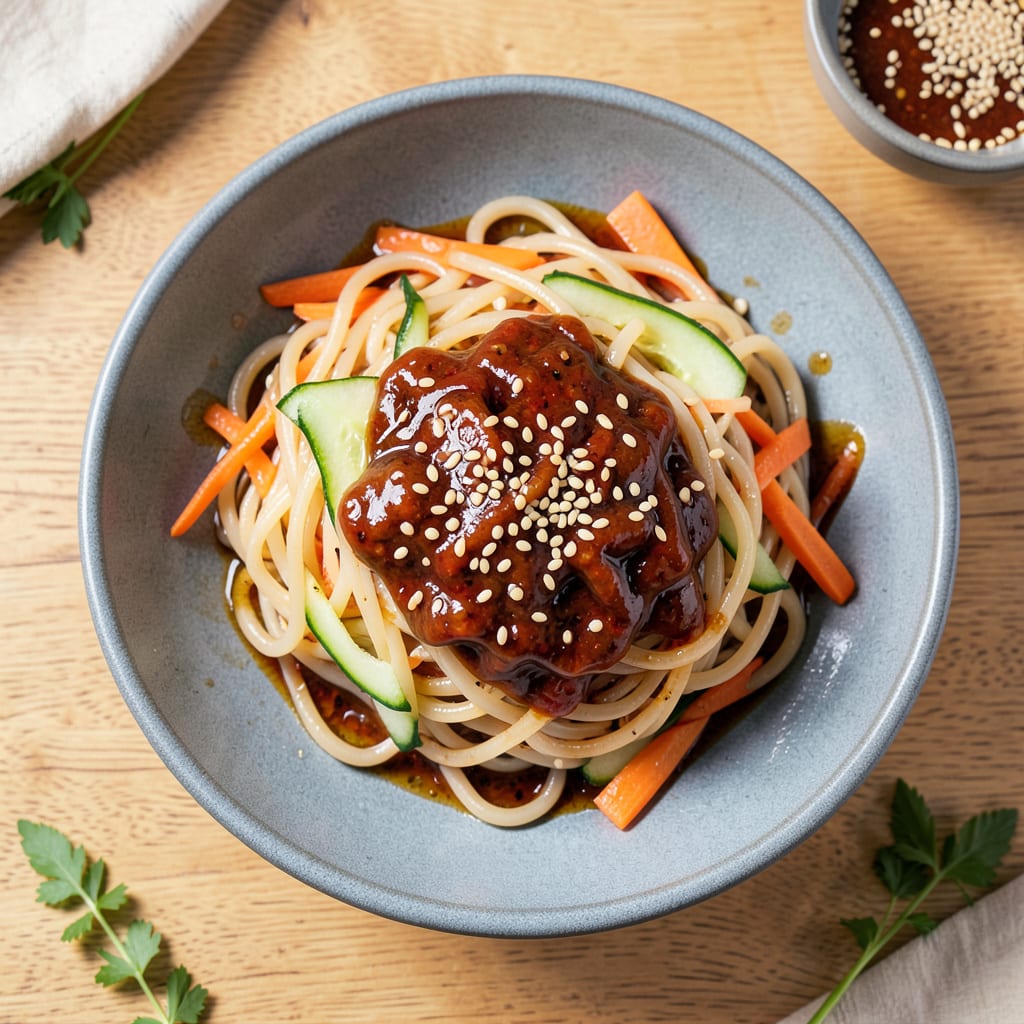
This Korean-inspired fusion bowl brings the vibrant flavors of Bibibop-style sweet potato noodles to your home kitchen. The dish combines chewy glass noodles made from sweet potato starch with crisp-tender vegetables and a perfectly balanced spicy-sweet sauce that delivers restaurant-quality results every time.
The key to authenticity lies in mastering the noodle texture—achieved through precise soaking and cooking—and building layers of flavor through stir-fried vegetables and a homemade sauce. This recipe offers flexibility with protein options while maintaining the signature Bibibop experience in a single bowl.
Ingredients for Bibibop Sweet Potato Noodles
Authentic Korean glass noodles and vibrant vegetables combine with a signature spicy-sweet sauce for restaurant-quality fusion bowls at home.
| Ingredient | Amount | Notes |
|---|---|---|
| Sweet Potato Starch Noodles (dangmyeon) 🍜 | 8 oz | Dried glass noodles, uncooked |
| Sesame Oil 🫒 | 2 tbsp | Toasted variety for depth |
| Soy Sauce 🫙 | ⅓ cup | Low-sodium preferred |
| Gochujang (Korean Chili Paste) 🌶️ | 3 tbsp | Adjust for heat preference |
| Rice Vinegar 🍚 | 2 tbsp | Unseasoned variety |
| Brown Sugar 🍯 | 2 tbsp | Light or dark, packed |
| Garlic Cloves 🧄 | 5 cloves | Minced for maximum flavor |
| Fresh Ginger 🌿 | 1 tbsp | Peeled and grated |
| Carrots 🥕 | 2 whole | Julienned for texture |
| Red Bell Pepper 🌶️ | 1 whole | Thinly sliced |
| Zucchini 🥒 | 1 whole | Julienned or spiralized |
| Green Onions 🧅 | 4 whole | Thinly sliced for garnish |
| Vegetable Oil 🫒 | 2 tbsp | Neutral flavor for stir-frying |
| Sesame Seeds 🌾 | 2 tbsp | Toasted for garnish |
| Extra-Firm Tofu 🧈 | 14 oz | Pressed and cubed (optional protein) |
The sweet potato starch noodles (dangmyeon) are essential for authentic texture. Optimal quality requires Korean brands like Sempio or Dongwon, available at H Mart or Asian specialty markets. These noodles absorb flavors exceptionally well during soaking and cooking. For the gochujang, Chung Jung One offers consistent heat and depth. Fresh ginger and garlic are non-negotiable—pre-minced versions lack the necessary aromatic intensity for this dish’s flavor profile.
Vegetable substitutions can accommodate preference or availability. Shiitake mushrooms add umami depth if replacing zucchini, while snap peas offer crunch instead of bell peppers. For protein variations, tempeh or chickpeas work well instead of tofu. The sauce balance is critical: if reducing spice, maintain the 3:1 ratio of soy sauce to vinegar while adjusting gochujang. Brown sugar can be substituted with coconut sugar at equal volume for a less refined option.
Store unopened noodles in a cool, dry place for up to 12 months. Once opened, transfer to an airtight container and use within 1 week. The prepared sauce keeps refrigerated for 5 days—the flavors intensify over time. Gochujang maintains quality for 6 months refrigerated after opening. For optimal texture, cook noodles immediately before assembling bowls to prevent sticking.
Why You’ll Love This Recipe
- No Boiling Required: I’ll be real—these dangmyeon noodles cook in 3 minutes flat with just hot water. No watching pots, no timing stress, just pour, soak, and drain while the sauce comes together.
- Sweet, Spicy, Tangy Alchemy: That first bite where the chewy noodles hit the gochujang’s heat, then the rice vinegar’s bright zip cuts through? I’ve made this weekly for months and still get excited for it.
- Meal Prep Overachiever: Honestly, this sauce (sesame oil, soy, gochujang) keeps for 5 days, and the noodles reheat like a dream—no mush, no sad leftovers. I double the batch and thank myself all week.
- $10 Feeds Four: Between us, sweet potato starch noodles are dirt cheap, and a little gochujang goes a long way. My grocery bill stays low, but the flavor makes it taste like a $20 takeout order. (Yes, even with extra veggies tossed in.)
Instructions
This method ensures perfectly textured noodles with balanced spicy-sweet flavors in every bite.
Step 1: Prepare the Sweet Potato Noodles
Bring a large pot of water to a rolling boil. Add the 8 oz Sweet Potato Starch Noodles (dangmyeon) and cook for 6-7 minutes until they become translucent but still maintain a slight chew. Drain immediately in a colander and rinse under cold water to stop the cooking process.
Transfer the drained noodles to a large bowl and toss with 1 tbsp Sesame Oil to prevent sticking. This step is crucial as the starch noodles tend to clump together when cooled. Set aside while you prepare the remaining components.
Step 2: Create the Spicy-Sweet Sauce
In a medium bowl, whisk together the 0.33 cup Soy Sauce, 3 tbsp Gochujang (Korean Chili Paste), 2 tbsp Rice Vinegar, and 2 tbsp Brown Sugar until the sugar fully dissolves. The sauce should be smooth with a deep reddish-brown color.
Add the 5 cloves Garlic Cloves (finely minced) and 1 tbsp Fresh Ginger (grated) to the sauce mixture. Stir well to incorporate the aromatics completely. This sauce base will coat the noodles and vegetables with its complex sweet-spicy flavor profile.
Step 3: Stir-Fry the Vegetables and Tofu
Heat 2 tbsp Vegetable Oil in a large wok or skillet over medium-high heat until shimmering. Add the julienned 2 whole Carrots, thinly sliced 1 whole Red Bell Pepper, and julienned 1 whole Zucchini. Stir-fry for 4-5 minutes until the vegetables are crisp-tender.
Push the vegetables to one side of the pan and add the cubed 14 oz Extra-Firm Tofu (if using). Cook for 2-3 minutes until lightly browned on all sides. The tofu should develop a slight crust while maintaining its shape. Combine the tofu with the vegetables in the pan.
Step 4: Combine All Components
Add the prepared sweet potato noodles to the vegetable-tofu mixture in the pan. Pour the sauce evenly over the noodles and toss everything together using tongs. Cook for an additional 2-3 minutes over medium heat, stirring constantly, until the noodles are fully coated and heated through.
The noodles should glisten with sauce and the vegetables should be evenly distributed. The sauce will thicken slightly as it coats the noodles, creating a glossy finish. Remove from heat when the dish reaches your desired consistency.
Step 5: Garnish and Serve
Transfer the noodle mixture to serving bowls. Drizzle with the remaining 1 tbsp Sesame Oil and sprinkle generously with 2 tbsp Sesame Seeds and thinly sliced 4 whole Green Onions. The sesame seeds add a nutty crunch while the green onions provide fresh contrast.
Serve immediately while hot. Each serving should showcase the translucent noodles coated in the vibrant sauce, with colorful vegetables and tofu (if used) distributed throughout. The dish should present with a balance of textures and the aromatic scent of sesame and garlic.
Make-Ahead Tips for bibibop sweet potato noodles
Prep Ahead Sauce
The spicy-sweet sauce actually tastes better when made in advance—I recommend whisking together the 0.33 cup Soy Sauce, 3 tbsp Gochujang, 2 tbsp Rice Vinegar, and 2 tbsp Brown Sugar up to 3 days ahead. Store it in a glass jar in the fridge. The flavors meld beautifully, and you’ll save precious time on cooking day. 💡
Veggie Prep Shortcut
Julienne all your vegetables—2 whole Carrots, 1 whole Red Bell Pepper, and 1 whole Zucchini—the night before. Store them in separate airtight containers with paper towels to absorb moisture. This keeps them crisp and ready for quick stir-frying. I love using my OXO mandoline for perfectly even cuts.
Noodle Pre-Soak
For perfectly textured noodles, soak the 8 oz Sweet Potato Starch Noodles in warm water for 15 minutes before cooking. This softens them just enough to reduce boiling time. Drain and toss with 1 tbsp Sesame Oil, then refrigerate in a sealed container for up to 12 hours. They’ll cook evenly when you’re ready to assemble.
Protein Prep
If using 14 oz Extra-Firm Tofu, press and cube it the day before. Store in a container with a paper towel to absorb excess moisture. For meat lovers, marinate 1 lb thinly sliced beef in 2 tbsp soy sauce and 1 tbsp sesame oil overnight. This ensures maximum flavor with minimal day-of effort.
Garnish Station
Toast your 2 tbsp Sesame Seeds in advance and store at room temperature. Thinly slice 4 whole Green Onions and keep in a small container with a damp paper towel. Having these ready means you can garnish immediately after cooking, preserving that perfect hot serving temperature.
Assembly Strategy
Cook your noodles and stir-fry vegetables separately, then combine with sauce just before serving. This prevents soggy noodles and maintains that restaurant-quality texture. I keep everything in separate containers until the last moment—it’s worth the extra dishes for that Bibibop-level freshness. ✨
Nutrition Facts
Frequently Asked Questions
What’s the best way to prevent the noodles from sticking together?
Rinse them immediately after boiling with cold water, then toss with 1 tbsp Sesame Oil while still warm. This creates a protective coating that keeps the strands separated.
Can I make this dish gluten-free?
Yes! Sweet potato starch noodles are naturally gluten-free. Just ensure your soy sauce is certified GF (tamari works well) and check all other sauce ingredients for hidden gluten.
How do I adjust the spice level for kids?
Reduce the gochujang to 1 tbsp and add 1 tbsp honey to balance flavors. Serve extra sauce on the side so everyone can customize their bowl.
What’s the secret to getting that restaurant-quality glossy finish?
Cook the sauce with the noodles for the full 2-3 minutes over medium heat. The starch from the noodles combines with the sauce to create that signature shiny coating.

- 8 Bean Soup Recipe Crock Pot: Hearty Vegetable Medley in One Pot - September 25, 2026
- 4C Bread Crumbs Meatballs Recipe: Crispy Crust and Juicy Centers - September 25, 2026
- 6 Oz Chocolate Chip Cookie Recipe: Perfectly Balanced Crispy Edges and Chewy Hearts - September 25, 2026