
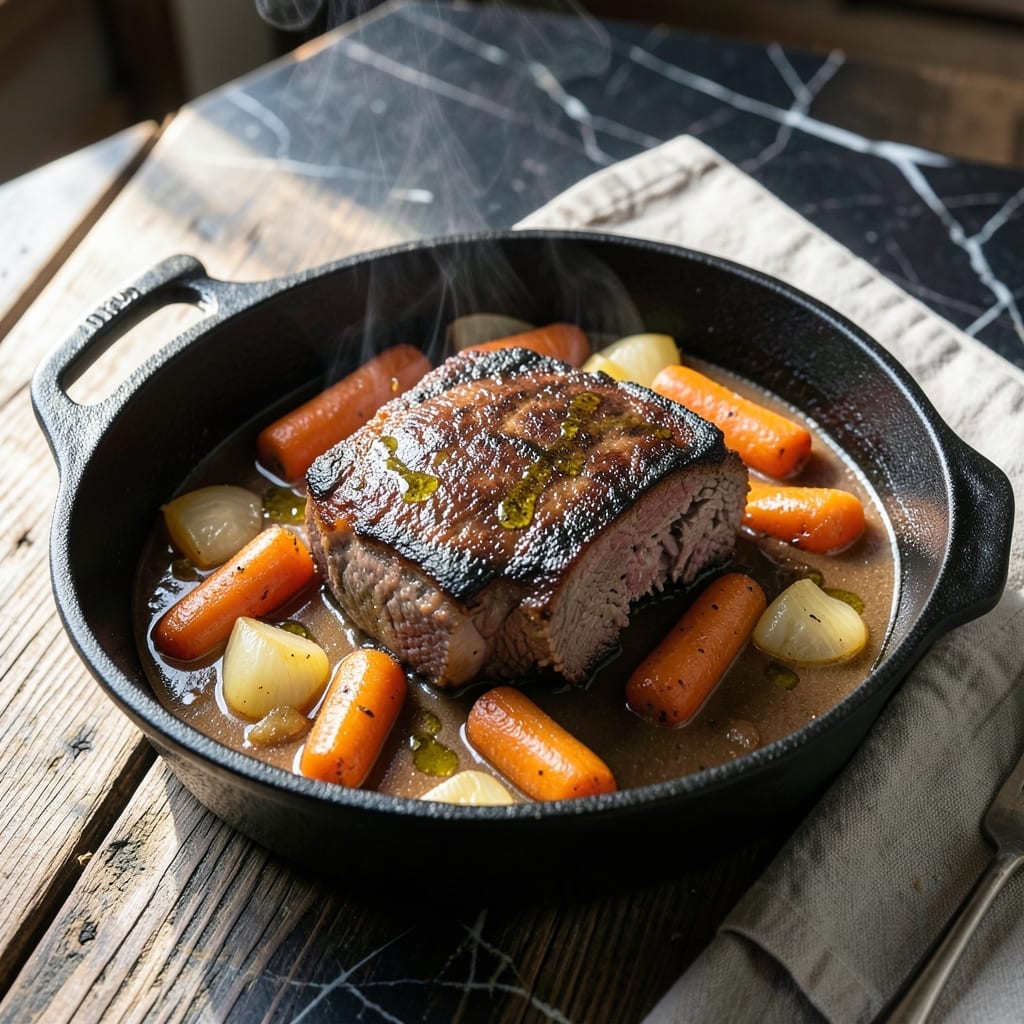
Bison pot roast transforms a lean wild game cut into a melt-in-your-mouth masterpiece through slow cooking. This method honors the meat’s natural richness while ensuring it emerges tender and full of flavor.
The secret lies in the long, gentle cooking process that breaks down the fibers without drying out the leaner meat. Aromatic vegetables and herbs build a deep, savory base that complements the bison’s robust character.
What results is a hearty dish that feels both rustic and refined. The meat becomes fork-tender, soaking up the rich braising liquid that reduces into a velvety sauce.
Serve this with mashed potatoes or crusty bread to soak up every last drop. The rewards are worth the wait.
Ingredients for Bison Pot Roast
Lean bison chuck meets aromatic vegetables and bold seasonings for a slow-cooked masterpiece.
| Ingredient | Amount | Notes |
|---|---|---|
| Bison Chuck Roast 🦬 | 2 ½ lb | Well-marbled, trimmed of excess fat |
| Kosher Salt 🧂 | 2 tsp | Diamond Crystal preferred for even seasoning |
| Black Pepper 🌶️ | 1 tsp | Freshly ground for best flavor |
| Olive Oil 🫒 | 2 tbsp | Divided for searing and sautéing |
| Yellow Onion 🧅 | 1 whole | Large, diced into 1-inch pieces |
| Carrots 🥕 | 3 whole | Medium, peeled and cut into chunks |
| Celery Stalks 🌿 | 3 whole | Cut into large pieces |
| Garlic Cloves 🧄 | 6 cloves | Smashed for maximum flavor |
| Dried Thyme 🌿 | 1 tsp | Rubbed between fingers to release oils |
| Dried Rosemary 🌿 | 1 tsp | Crushed lightly before adding |
| Bay Leaves 🍃 | 2 pieces | Dried, whole leaves |
| Red Wine 🍷 | 2 cups | Dry variety like Cabernet Sauvignon |
| Beef Stock 🥘 | 2 cups | Low-sodium preferred for control |
| Tomato Paste 🍅 | 2 tbsp | Double-concentrated for depth |
| All-Purpose Flour 🌾 | 2 tbsp | For thickening the sauce |
The bison chuck roast is the star—look for well-marbled cuts from a reputable butcher or specialty grocer like Whole Foods. Avoid overly lean pieces, as the fat keeps the meat moist during the long cook. The meat should be deep red, not brown, with a clean, mild scent. If your market doesn’t carry bison, order online from Wild Fork Foods or Snake River Farms.
No red wine? Substitute with 1.5 cups beef stock plus 0.5 cup balsamic vinegar for similar depth. Dried herbs can be swapped for fresh at a 1:3 ratio—so 1 tbsp fresh thyme instead of 1 tsp dried. For a gluten-free version, cornstarch or arrowroot replaces the flour for thickening. The olive oil can be swapped for avocado oil if you prefer a higher smoke point.
Store raw bison in the coldest part of your fridge for up to 3 days. Leftovers keep beautifully for 4-5 days refrigerated or can be frozen for 3 months. The sauce thickens as it cools—reheat gently with a splash of water to restore its velvety texture.
Why You’ll Love This Recipe
- Set It and Forget: I brown the bison chuck in olive oil, toss in onions and spices, then let the slow cooker do the rest.
- Rich, Deep Flavor: The bison’s natural richness paired with caramelized onions and a hint of black pepper makes every bite crave-worthy.
- Feeds the Whole Crew: One pot, plenty of servings—ideal for Sunday dinner or meal prepping lunches for the week.
- Leftovers for Days: Honestly, it tastes even better the next day, and I love turning extras into sandwiches or tacos.
Step-by-Step Instructions for Bison Pot Roast
This method transforms tough cuts into fall-apart tender meat with rich, deeply flavored sauce.
Step 1: Season and Sear the Bison Chuck Roast
Pat the 2.5 lb bison chuck roast dry with paper towels. This crucial step ensures a proper sear. Season all sides generously with the 2 tsp kosher salt and 1 tsp black pepper, pressing the seasoning into the meat so it adheres well.
Heat 1 tbsp olive oil in a Dutch oven over medium-high heat until shimmering. Add the bison chuck roast and sear undisturbed for 4-5 minutes per side until a deep brown crust forms. The meat should release easily from the pan when properly seared. Transfer to a plate and set aside.
Step 2: Sauté the Aromatic Vegetables
In the same pot, add the remaining 1 tbsp olive oil. Add the diced yellow onion, chunked carrots, and cut celery stalks. Cook for 6-8 minutes, stirring occasionally, until the vegetables begin to soften and develop golden edges.
Add the 6 cloves garlic cloves, 1 tsp dried thyme, and 1 tsp dried rosemary. Stir for 1 minute until fragrant. Then add the 2 tbsp tomato paste and cook for another 2 minutes, stirring constantly, until it darkens slightly and coats the vegetables.
Step 3: Deglaze and Build the Braising Liquid
Pour in the 2 cups red wine, scraping the bottom of the pot to release all the browned bits. This step captures all the concentrated flavor from searing. Bring to a simmer and cook for 3-4 minutes until the liquid reduces by about half.
Add the 2 cups beef stock and 2 pieces bay leaves. Return the bison chuck roast to the pot along with any accumulated juices. The liquid should come about two-thirds up the side of the meat. If needed, add a bit more beef stock to maintain this level.
Step 4: Braise Until Fork-Tender
Bring the liquid to a gentle simmer, then reduce heat to low. Cover and cook for 3 to 3.5 hours, turning the meat occasionally, until the bison chuck roast is fork-tender and easily pulls apart with a fork.
About 30 minutes before serving, transfer the meat to a plate. Skim excess fat from the surface of the braising liquid. Mix the 2 tbsp all-purpose flour with 2 tbsp of the hot braising liquid to create a slurry, then whisk it back into the pot. Simmer for 5-7 minutes until the sauce thickens enough to coat the back of a spoon.
Step 5: Serve the Bison Pot Roast
Return the meat to the pot and turn to coat in the thickened sauce. Remove the bay leaves before serving. The sauce should be rich and glossy, clinging to the tender meat and vegetables.
Let the bison chuck roast rest in the sauce for 10 minutes before serving. This allows the meat to reabsorb some of the juices, ensuring every bite is moist and flavorful. Serve hot with the vegetables and sauce spooned over the top.
Pro Tips For Making Bison Pot Roast
- Sear It Hard: Bison is leaner than beef, so get your pan screaming hot—about 2 tablespoons of olive oil until it shimmers—then sear the chuck roast until it’s deeply browned, at least 3-4 minutes per side. I learned this the hard way when my first attempt turned out gray and bland.
- Salt the Night Before: Pat the bison dry, then coat it with kosher salt (about 1 teaspoon per pound) and let it sit uncovered in the fridge overnight. Sounds weird, but it works: the salt draws out moisture, then reabsorbs, seasoning the meat all the way through.
- Skip the Overcrowding: If your pot is too small, resist the urge to cram in all the onions at once—cook them in batches or they’ll steam instead of caramelize. After burning three batches, I finally figured out that patience here actually changes the outcome.
- Use a Meat Thermometer: Bison cooks faster than beef, so pull it at 135°F for medium-rare or 145°F for medium—any higher and it’ll turn tough. My grandmother swore by this, and she was right: guessing leads to dry, chewy meat.
Serving Suggestions for Leftovers
Classic Comfort Pairings
I love serving this with creamy mashed potatoes that soak up the rich, velvety sauce. For extra flair, use Yukon Golds and fold in ½ cup sour cream at the end. The tangy creaminess complements the deep flavors perfectly.
Bread for Sauce
A crusty sourdough loaf or warm baguette is essential for mopping up every last drop. I toast slices lightly with garlic butter for added richness. The contrast of textures makes each bite more satisfying.
Fresh Green Sides
A simple green salad with a bright vinaigrette cuts through the richness. Toss mixed greens with lemon juice and olive oil. The acidity refreshes your palate between bites of the hearty roast. 🥗
Roasted Vegetables
Brussels sprouts or asparagus roasted with balsamic glaze add a caramelized depth. Toss with 1 tbsp olive oil and roast at 400°F for 20 minutes. The slight char mirrors the sear on the bison.
Wine Pairing
A bold Cabernet Sauvignon stands up to the robust flavors. The tannins in the wine complement the meat’s richness. I prefer a Napa Valley vintage for its balanced fruit and earth notes. 🍷
Garnish Ideas
Finish with fresh parsley or thyme leaves for a pop of color and aroma. A sprinkle of flaky sea salt like Maldon enhances each bite. These small touches elevate the presentation beautifully.
Nutrition Facts
Frequently Asked Questions
Can I use beef instead of bison?
Yes, beef chuck roast works as a substitute. Use the same weight and cooking method, but reduce cooking time by 30-45 minutes since beef has more fat. Bison is leaner, so it needs the full braising time to stay tender.
Why does my pot roast come out dry?
Overcooking or insufficient liquid are common culprits. Ensure the braising liquid covers at least two-thirds of the meat and maintain a gentle simmer. Check at 2.5 hours to prevent drying out.
Can I make this in a slow cooker?
Sear the meat first, then transfer everything to the slow cooker. Cook on low for 7-8 hours or high for 4-5 hours until fork-tender. Thicken the sauce on the stovetop afterward.
How do I store leftovers?
Cool completely, then refrigerate in an airtight container for up to 4-5 days. For longer storage, freeze for up to 3 months. Reheat gently with a splash of water to restore moisture.

- 4C Bread Crumbs Meatballs Recipe: Crispy Crust and Juicy Centers - September 25, 2026
- 6 Oz Chocolate Chip Cookie Recipe: Perfectly Balanced Crispy Edges and Chewy Hearts - September 25, 2026
- 6-Inch Coffee Cake Recipe: Vanilla Bean Swirls and Buttery Streusel Topping - September 25, 2026