
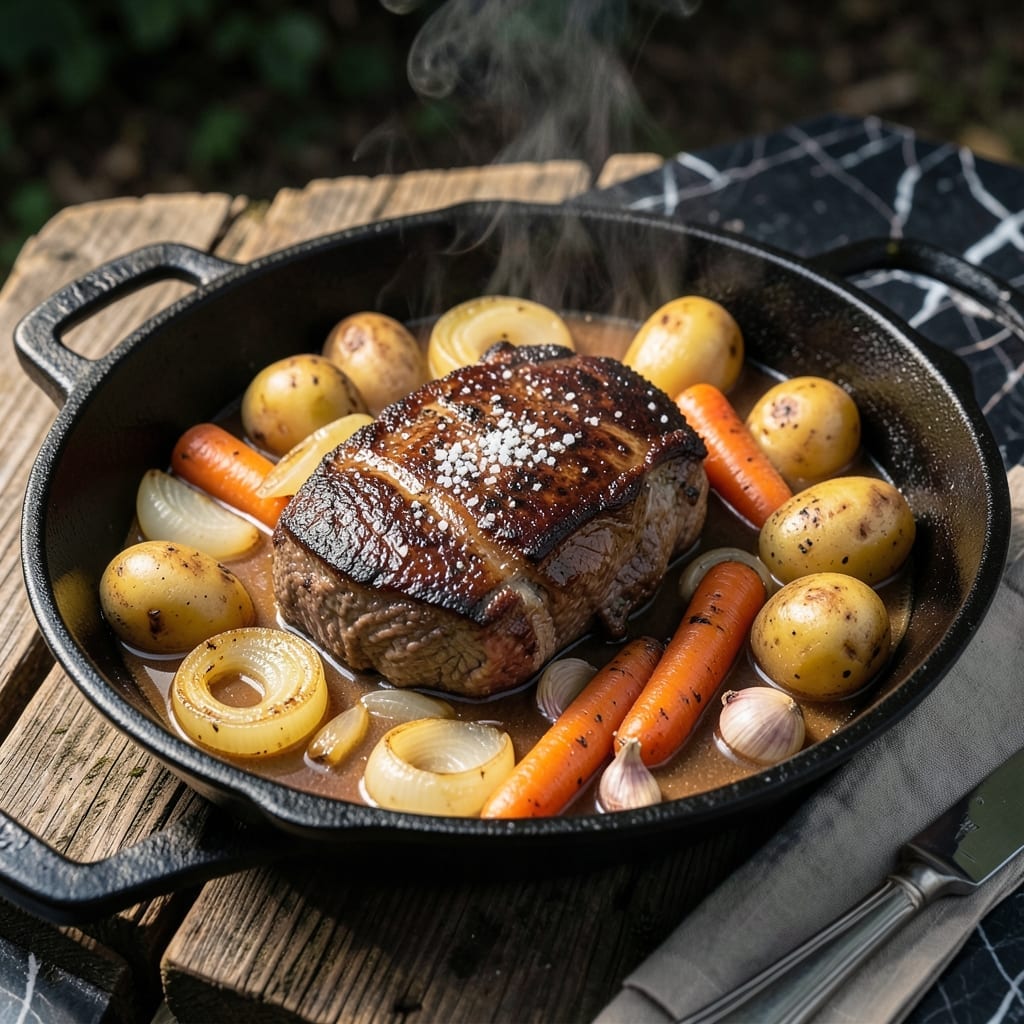
There’s something primal about cooking over an open flame, and this pot roast captures that smoky essence perfectly. The slow cooking process transforms tough cuts into tender, fall-apart meat infused with deep, wood-fired flavors.
I developed this method after years of campfire cooking, learning how to control heat and timing without modern equipment. The key is using a heavy Dutch oven and maintaining consistent coals for even cooking.
The result is a meal that tastes like it’s been simmering for hours in a professional kitchen. Each bite delivers rich, tender beef with vegetables that absorb all the smoky goodness from the fire.
This isn’t just camping food—it’s a restaurant-quality dish that happens to be cooked outdoors. The technique works as well at home with an oven as it does over a campfire.
Ingredients for Campfire Pot Roast
A heavy Dutch oven and a handful of bold ingredients yield restaurant-quality results over open flame.
| Ingredient | Amount | Notes |
|---|---|---|
| Chuck Roast 🥩 | 3 lb | Well-marbled for tenderness |
| Carrots 🥕 | 4 whole | Large, peeled, cut into chunks |
| Yellow Onion 🧅 | 1 whole | Large, quartered |
| Yukon Gold Potatoes 🥔 | 1 ½ lb | Peeled, cut into large pieces |
| Garlic Cloves 🧄 | 6 cloves | Smashed, peeled |
| Beef Broth 💧 | 2 cups | Low-sodium preferred |
| Red Wine 🍷 | 1 cup | Dry variety recommended |
| Tomato Paste 🍅 | 2 tbsp | For depth of flavor |
| Fresh Thyme Sprigs 🌿 | 4 pieces | Whole for easy removal |
| Fresh Rosemary Sprigs 🌿 | 2 pieces | Whole for easy removal |
| Bay Leaves 🍃 | 2 pieces | Dried for aroma |
| Olive Oil 🫒 | 2 tbsp | For searing meat |
| Kosher Salt 🧂 | 1 ½ tsp | Diamond Crystal preferred |
| Black Pepper 🌶️ | 1 tsp | Freshly ground |
The chuck roast is non-negotiable—well-marbled chuck from a reputable butcher or Costco ensures the fall-apart tenderness promised. Look for bright red meat with visible fat streaks; this fat renders down during the long cook, basting the meat in its own juices. Yukon Gold potatoes hold their shape better than russets, while the carrots and onions should be cut into uniform chunks for even cooking. Fresh herbs from the farmers market elevate the flavor profile significantly.
No red wine? Substitute an additional cup of beef broth with a tablespoon of balsamic vinegar for acidity. Dried thyme and rosemary can replace fresh at one-third the amount. If tomato paste isn’t on hand, 2 tbsp ketchup (in a pinch) works, though the flavor will be slightly sweeter. For a deeper smoky note, add 1 tsp liquid smoke to the broth.
This pot roast reheats beautifully, with flavors intensifying over 2-3 days in the fridge. For longer storage, freeze in airtight containers for up to 3 months. The rendered fat on top solidifies—skim it off before reheating or repurpose it for cooking.
Why You’ll Love This Recipe
- I’ll be real: the flavors taste even better the next day, and it reheats like a dream for sandwiches or stew.
- One Pot Wonder: I toss the chuck roast, potatoes, and carrots into my Dutch oven, and the campfire does the rest—no stirring, no fuss.
- Feeds the Whole Crew: Between us, this is my go-to for family gatherings or meal prepping for the week—it stretches easily to feed 6-8 without extra effort.
- Leftovers for Days: I’ll be real: the flavors taste even better the next day, and it reheats like a dream for sandwiches or stew.
Step-by-Step Instructions for Campfire Pot Roast
Master these techniques to achieve fall-apart tender meat with deep, smoky flavor over open flame.
Step 1: Sear and Season the Chuck Roast
Heat a Dutch oven over your campfire with the 2 tbsp olive oil until shimmering hot. Pat the 3 lb chuck roast dry with paper towels, then season generously with the 1.5 tsp kosher salt and 1 tsp black pepper, pressing the seasoning into all surfaces.
Sear the meat on all sides for 3-4 minutes per side until deeply browned. This caramelization builds a flavor foundation that permeates the entire dish. Remove the roast and set aside—it should have a rich, mahogany crust.
Step 2: Build the Aromatic Base
In the same Dutch oven, add the 4 whole carrots, 1 whole yellow onion (quartered), and 6 cloves garlic cloves. Sauté for 4-5 minutes until the vegetables begin to soften and develop golden edges.
Stir in the 2 tbsp tomato paste and cook for 1-2 minutes until it darkens slightly and clings to the vegetables. This step intensifies the umami depth. Add the 1 cup red wine and scrape up any browned bits from the bottom—this deglazing releases essential flavor.
Step 3: Combine and Simmer Over Fire
Return the seared chuck roast to the Dutch oven. Add the 1.5 lb Yukon Gold potatoes, 2 cups beef broth, 4 pieces fresh thyme sprigs, 2 pieces fresh rosemary sprigs, and 2 pieces bay leaves. The liquid should come about halfway up the roast.
Cover tightly and position the Dutch oven over the campfire, maintaining a gentle simmer. Cook for 3-4 hours, turning the roast occasionally, until the meat is fork-tender and easily pulls apart. The potatoes should be soft enough to pierce with a knife, and the carrots should be tender but not mushy.
Step 4: Rest and Serve
Carefully remove the Dutch oven from the fire. Transfer the chuck roast to a cutting board and let it rest for 10-15 minutes under a loose tent of foil. This allows the juices to redistribute, ensuring every bite is moist and flavorful.
Discard the fresh thyme sprigs, fresh rosemary sprigs, and bay leaves from the pot. Serve the pot roast sliced or shredded, surrounded by the vegetables and smoky braising liquid. The meat should be so tender it nearly melts in your mouth, with every element infused with wood-fired richness.
Pro Tips For Making Campfire Pot Roast
- Sear the Chuck First: I learned this the hard way—browning the chuck roast in a hot Dutch oven before adding liquids makes a real difference in flavor. About 3-4 minutes per side until deeply caramelized.
- Cut Potatoes Evenly: Sounds obvious, but chopping Yukon Golds into 2-inch chunks guarantees they cook through without turning to mush. I skip this when I’m lazy, but the dish is noticeably better when I don’t.
- Skip the Water: Resist the urge to add extra liquid—just use enough beef broth to come halfway up the roast. Too much turns your pot roast into soup.
- Add Garlic Late: Toss whole garlic cloves in during the last 30 minutes so they soften but don’t turn bitter. My grandmother swore by this, and she was right.
Troubleshooting campfire pot roast
Uneven Cooking
If some vegetables are mushy while others remain firm, your heat distribution was inconsistent. Rotate the Dutch oven 90 degrees every 30 minutes and maintain even coal placement. I use a Lodge 5-quart Dutch oven for its superior heat retention. 🔥
Tough Meat
When the roast doesn’t reach fork-tender perfection, it likely needs more time. Extend cooking by 30-60 minutes with the lid on. Check liquid levels—add ½ cup hot beef broth if needed to prevent burning.
Burnt Bottom
Scorched food means your fire was too hot. Move the Dutch oven to the edge of the coals or reduce heat by removing some burning wood. Always use a heat diffuser or bed of ashes under the pot for even, gentle heat.
Bland Flavor
Boost underseasoned dishes with a finish of flaky sea salt and extra black pepper. Stir in 1 tbsp balsamic vinegar or a splash of Worcestershire sauce for depth. I keep Diamond Crystal kosher salt on hand for adjustments. 💡
Liquid Evaporation
If your braising liquid reduces too much, add ½ cup hot water or broth to maintain moisture. Ensure the lid fits tightly—my Lodge Dutch oven has a self-basting lid that minimizes evaporation.
Herb Overpowering
When rosemary or thyme tastes too strong, remove the sprigs after 2 hours of cooking. Fresh herbs release more flavor than dried, so adjust quantities if substituting with dried versions.
Nutrition Facts
Frequently Asked Questions
What’s the best wood for campfire cooking?
Hardwoods like oak, hickory, or fruitwoods burn hotter and longer. Avoid softwoods like pine—they create too much smoke and can impart bitter flavors.
Can I make this in a regular oven?
Yes! Use 325°F for 3-4 hours in a covered Dutch oven. The flavor will be slightly different without the smokiness.
How do I know when it’s done?
The meat should pull apart easily with a fork. For food safety, use a meat thermometer—195°F internally guarantees tenderness.
What if I don’t have a Dutch oven?
A heavy stockpot with a tight lid works, but watch heat distribution carefully. A cast iron Dutch oven is ideal for even cooking over flames.

- 4C Bread Crumbs Meatballs Recipe: Crispy Crust and Juicy Centers - September 25, 2026
- 6 Oz Chocolate Chip Cookie Recipe: Perfectly Balanced Crispy Edges and Chewy Hearts - September 25, 2026
- 6-Inch Coffee Cake Recipe: Vanilla Bean Swirls and Buttery Streusel Topping - September 25, 2026