
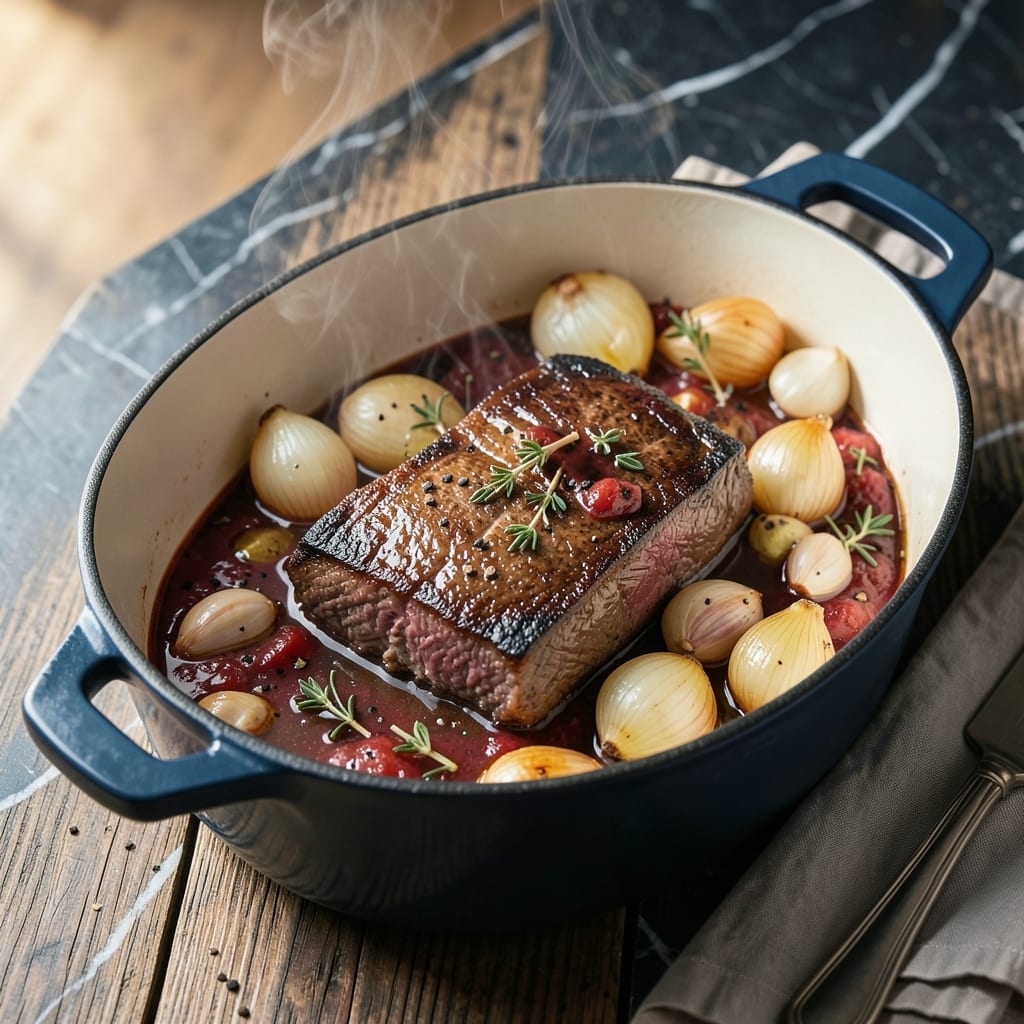
This oven-braised blade pot roast transforms tough cuts into fork-tender perfection with minimal effort. The slow, dry heat coaxes the meat into submission while building deep, complex flavors.
What sets this method apart is the caramelized onion base, which creates a natural sweetness that complements the beef’s richness. A tight-sealing Dutch oven traps steam, ensuring consistent results without constant monitoring.
The blade cut, with its marbling and connective tissue, becomes fall-apart tender after hours in the oven. The onions melt into a jammy consistency that soaks into every bite of the beef.
This is the kind of dish that fills your kitchen with an intoxicating aroma and delivers restaurant-quality results at home. The long cooking time is the secret to its success.
Ingredients for Blade Pot Roast Recipe Oven
Pantry staples and a well-marbled blade steak create this deeply flavorful oven-braised masterpiece.
| Ingredient | Amount | Notes |
|---|---|---|
| Blade Steak 🥩 | 3 lb | Well-marbled, boneless preferred |
| Yellow Onions 🧅 | 4 whole | Large, thinly sliced |
| Garlic Cloves 🧄 | 6 cloves | Peeled, smashed |
| Beef Stock 💧 | 2 cups | Low-sodium preferred |
| Red Wine 🍷 | 1 cup | Dry variety like Cabernet |
| Tomato Paste 🍅 | 2 tbsp | For depth of flavor |
| Fresh Thyme Sprigs 🌿 | 4 whole | Stems removed before serving |
| Bay Leaves 🍃 | 2 whole | Dried, whole |
| Olive Oil 🫒 | 2 tbsp | Divided for searing and finishing |
| Kosher Salt 🧂 | 2 tsp | Diamond Crystal preferred |
| Black Pepper 🌶️ | 1 tsp | Freshly cracked |
| Carrots 🥕 | 3 whole | Peeled, cut into chunks |
| Celery Stalks 🥬 | 3 whole | Cut into large pieces |
The blade steak is non-negotiable here. Look for thick cuts with visible marbling—this fat renders down during the long cook, creating that signature tenderness. Whole Foods or a trusted butcher will have the best selection. Avoid pre-cut stew meat; whole roasts allow you to control the size and quality. The onions should be sweet yellow varieties, as their natural sugars caramelize beautifully.
No red wine? Substitute with additional beef stock plus 1 tbsp balsamic vinegar. Fresh thyme can be replaced with 1 tsp dried thyme (add it with the liquids). If tomato paste isn’t on hand, 1 tbsp ketchup works in a pinch, though the flavor will be slightly sweeter. For the stock, Better Than Bouillon is a reliable brand if you’re not making your own.
This dish tastes even better the next day. Store leftovers in an airtight container in the fridge for up to 4 days, or freeze for 3 months. Reheat gently on the stovetop to preserve the meat’s texture.
Why You’ll Love This Recipe
- I’ll be real: it tastes even better the next day, and the blade steak stretches far enough for sandwiches or tacos.
- One Pan Wonder: I toss everything in, let the oven do the work, and end up with fall-apart tender blade steak and caramelized onions in the same dish.
- Deep, Rich Flavor: The red wine and beef stock braise the meat into something so savory, I swear the garlic cloves melt into the sauce.
- Sunday or Tuesday: Honestly, this feels fancy enough for company but simple enough for a weeknight when I need comfort food fast.
Step-by-Step Instructions for Blade Pot Roast
This method guarantees fork-tender beef with rich, caramelized onions and aromatic vegetables.
Step 1: Sear and Season the Blade Steak
Pat the 3 lb Blade Steak completely dry with paper towels. Season all sides aggressively with the 2 tsp Kosher Salt and 1 tsp Black Pepper. I use Diamond Crystal kosher salt for its clean flavor and even distribution.
Heat 1 tbsp Olive Oil in a large Dutch oven over medium-high heat until shimmering. Sear the blade steak for 4-5 minutes per side until deeply browned. This creates a flavorful crust that will deepen as it braises. Transfer the steak to a plate and set aside.
Step 2: Caramelize the Onions and Build Flavor Base
In the same Dutch oven, add the remaining 1 tbsp Olive Oil and reduce heat to medium. Add the 4 whole Yellow Onions, thinly sliced, and cook for 15-20 minutes, stirring occasionally, until deeply caramelized and golden brown.
Add the 6 cloves Garlic Cloves, 2 tbsp Tomato Paste, 4 whole Fresh Thyme Sprigs, and 2 whole Bay Leaves. Cook for 2 minutes, stirring constantly, until the tomato paste darkens slightly. This step develops the rich, complex base for your braising liquid.
Step 3: Deglaze and Add Braising Liquid
Pour in the 1 cup Red Wine and scrape up all the browned bits from the bottom of the pot with a wooden spoon. Let the wine reduce by half, about 3-4 minutes. This deglazing step captures all the concentrated flavors from searing.
Return the blade steak to the Dutch oven along with any accumulated juices. Add the 2 cups Beef Stock, 3 whole Carrots, and 3 whole Celery Stalks. The liquid should come about halfway up the steak. Bring to a gentle simmer.
Step 4: Braise Until Fork-Tender
Cover the Dutch oven and transfer to a preheated 325°F oven. Braise for 2.5 to 3 hours, turning the steak halfway through cooking. You’ll know it’s done when the blade steak shreds easily with a fork and the onions have melted into the sauce.
Check occasionally and add a splash of water or stock if the liquid level drops too low. The meat should be falling-apart tender, and the sauce should coat the back of a spoon with a rich, glossy consistency.
Step 5: Rest and Serve
Carefully remove the blade steak from the Dutch oven and transfer to a cutting board. Skim any excess fat from the surface of the sauce, then remove and discard the 4 whole Fresh Thyme Sprigs and 2 whole Bay Leaves.
Slice the steak against the grain or shred it into large chunks. Serve the beef smothered in the onion sauce with the braised carrots and celery. The onions should be sweet and jammy, and the sauce should be rich and deeply flavorful.
Pro Tips For Making Blade Pot Roast Recipe Oven
- Sear the Blade First: I learned this the hard way—skipping the sear leaves the pot roast bland. Get a hard crust on all sides of the blade steak in a hot pan before braising, about 3-4 minutes per side.
- Deglaze with Wine: After searing, pour in the red wine to scrape up all those browned bits—this adds a ton of flavor to the braising liquid that you’d otherwise miss.
- Don’t Skip the Rest: Once it’s out of the oven, let the blade roast rest in the liquid for at least 15 minutes before slicing, or all the juices will end up on the cutting board.
- Use Enough Stock: Sounds obvious, but blade steak needs plenty of liquid to break down. Cover at least halfway up the meat with beef stock—about 2-3 cups for a standard roast.
Best Sauces and Condiments for This blade pot roast recipe oven
Classic Horseradish Cream
I always pair this dish with a bold horseradish cream sauce—it cuts through the richness beautifully. Mix ½ cup sour cream with 2 tbsp prepared horseradish and 1 tsp lemon juice. The sharpness wakes up every bite of the tender beef. 💡
Red Wine Reduction
For an elegant touch, reduce 1 cup dry red wine with 1 tbsp butter and 1 tsp brown sugar until syrupy. Drizzle over the beef just before serving. I use the same Cabernet from the braising liquid for consistency.
Chimichurri Sauce
This herbaceous sauce adds freshness to the rich pot roast. Blend 1 cup parsley, 4 garlic cloves, ¼ cup olive oil, and 2 tbsp red wine vinegar. The bright acidity balances the deep, slow-cooked flavors perfectly.
Gravy Enhancement
Strain the braising liquid and reduce it on the stovetop until thickened. I add 1 tbsp cornstarch mixed with 1 tbsp water for a glossy finish. This creates a luxurious gravy that clings to every piece of beef and onion.
Mustard Variations
For a tangy kick, serve with Dijon mustard or a whole-grain version. I love the contrast of the sharp mustard with the sweet, jammy onions. A 1:1 ratio with mayonnaise makes a quick, creamy spread for sandwiches the next day.
Nutrition Facts
Frequently Asked Questions
What’s the ideal oven temperature for this method?
Use 325°F for perfect results. This moderate heat allows the connective tissue to break down slowly while preventing the exterior from drying out.
Can I use a different cut of beef?
Chuck roast works well as a substitute. Avoid lean cuts like sirloin—they lack the marbling and connective tissue needed for fork-tender results.
How do I know when it’s done?
It’s ready when the meat shreds easily with a fork after 2.5 to 3 hours. The internal temperature should reach 195°F for optimal tenderness.
What if my sauce is too thin?
Simmer uncovered on the stovetop to reduce. For faster results, mix 1 tbsp cornstarch with 1 tbsp water and stir into the sauce.

- 6 Oz Chocolate Chip Cookie Recipe: Perfectly Balanced Crispy Edges and Chewy Hearts - September 25, 2026
- 6-Inch Coffee Cake Recipe: Vanilla Bean Swirls and Buttery Streusel Topping - September 25, 2026
- 1 Hour Soup Recipe: Velvety Richness Without the Wait - September 25, 2026