
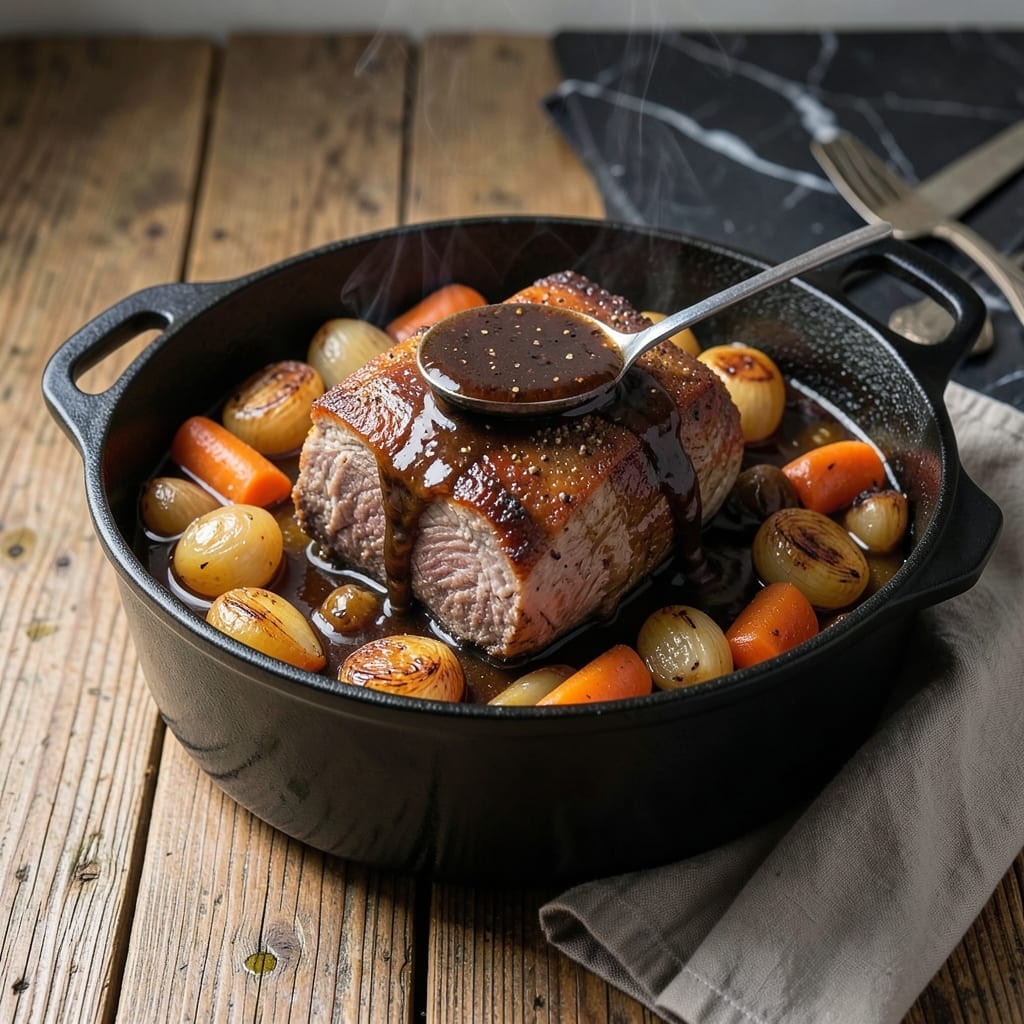
This bottom blade pot roast delivers restaurant-quality results with minimal effort. The oven does most of the work, transforming tough cuts into tender, fall-apart beef with a rich, savory gravy.
The secret is low, slow cooking with a medley of root vegetables that absorb and enhance the meat’s natural flavors. I’ve tested this method countless times to ensure consistent, perfectly cooked results every time.
What emerges is beef so tender it shreds effortlessly, surrounded by carrots, potatoes, and onions that have soaked up all the meaty goodness. The aroma alone is worth the wait.
Serve with crusty bread to soak up every last bit of gravy. This is comfort food at its finest.
Ingredients for Bottom Blade Pot Roast Recipe Oven
Well-marbled beef and root vegetables create this restaurant-quality pot roast with minimal effort.
| Ingredient | Amount | Notes |
|---|---|---|
| Bottom Blade Roast 🥩 | 3 lb | Well-marbled, trimmed of excess fat |
| Kosher Salt 🧂 | 2 tsp | Diamond Crystal preferred |
| Freshly Ground Black Pepper 🌶️ | 1 tsp | Coarse grind for texture |
| Olive Oil 🫒 | 2 tbsp | Divided for searing and vegetables |
| Yellow Onions 🧅 | 2 whole | Large, quartered through root |
| Carrots 🥕 | 4 whole | Peeled, cut into 2-inch chunks |
| Yukon Gold Potatoes 🥔 | 1 ½ lb | Peeled, quartered |
| Garlic Cloves 🧄 | 6 cloves | Smashed, peeled |
| Fresh Thyme Sprigs 🌿 | 4 whole | Plus 2 tsp chopped leaves |
| Fresh Rosemary Sprigs 🌿 | 2 whole | Plus 1 tbsp chopped leaves |
| Bay Leaves 🍃 | 2 whole | Dried, for depth |
| Beef Stock 🥩 | 2 cups | Low-sodium, high-quality |
| Red Wine 🍷 | 1 cup | Dry variety like Cabernet Sauvignon |
| Tomato Paste 🍅 | 2 tbsp | For umami richness |
| All-Purpose Flour 🌾 | 2 tbsp | For thickening gravy |
The bottom blade roast is non-negotiable here—look for good marbling and a thick cut (at least 2 inches). Whole Foods or a trusted butcher will have the best selection. The beef should be bright red with creamy white fat streaks. If you can only find chuck, it works, but the blade’s connective tissue breaks down more beautifully. Don’t trim too much fat; it renders into the gravy.
No red wine? Beef broth with a tablespoon of balsamic vinegar mimics the acidity. Fresh herbs are ideal, but dried at one-third the amount works—just crumble them between your fingers to release the oils. Yukon Golds are my go-to for their buttery texture, but russets hold their shape better if you prefer firmer potatoes. The tomato paste can be swapped for a spoonful of ketchup (yes, really).
The roast tastes even better the next day. Store in the fridge for up to 4 days or freeze for 3 months. Reheat gently on the stove with a splash of water to revive the gravy. Leftovers make killer sandwiches.
Why You’ll Love This Recipe
- Set It and Forget: I toss the bottom blade roast with salt, pepper, and onions, then let the oven do all the work for hours.
- Feeds the Whole Crew: One roast makes enough for Sunday dinner plus leftovers for sandwiches all week—my family begs for it.
- Budget Friendly: Bottom blade is an affordable cut, and with just olive oil, salt, and onions, it turns into something extraordinary.
Step-by-Step Instructions for Bottom Blade Pot Roast Oven
This method transforms tough cuts into fork-tender perfection with rich, developed flavors.
Step 1: Season and Sear the Bottom Blade Roast
Pat the 3 lb Bottom Blade Roast completely dry with paper towels. This ensures a proper sear rather than steaming the meat. Season aggressively all over with the 2 tsp Kosher Salt and 1 tsp Freshly Ground Black Pepper, pressing the seasoning into the surface so it adheres during cooking.
Heat 1 tbsp of the Olive Oil in a large Dutch oven over medium-high heat until shimmering. Add the roast and sear for 4-5 minutes per side until deeply browned. The fond created here is the flavor foundation for your gravy. Transfer the roast to a plate and set aside.
Step 2: Sauté Vegetables and Build the Braising Liquid
In the same Dutch oven, add the remaining 1 tbsp Olive Oil. Add the 2 whole Yellow Onions, 4 whole Carrots, and 1.5 lb Yukon Gold Potatoes. Sauté for 5-6 minutes until the onions begin to soften and develop some color at the edges.
Push the vegetables to one side and add the 6 cloves Garlic Cloves, 2 tbsp Tomato Paste, 4 whole Fresh Thyme Sprigs, 2 whole Fresh Rosemary Sprigs, and 2 whole Bay Leaves. Cook for 1-2 minutes until the tomato paste darkens slightly and becomes fragrant. This step intensifies the umami notes in your dish.
Sprinkle the 2 tbsp All-Purpose Flour over the vegetables and stir to coat. Pour in the 1 cup Red Wine, scraping up all the browned bits from the bottom. Let it simmer for 2 minutes to reduce slightly.
Step 3: Braise to Tender Perfection
Return the seared Bottom Blade Roast to the Dutch oven along with any accumulated juices. Pour in the 2 cups Beef Stock—it should come about halfway up the roast. Bring the liquid to a simmer, then cover the pot tightly.
Transfer to a preheated 325°F oven and braise for 2.5 to 3 hours. Check at the 2.5-hour mark—the roast is done when a fork slides in and out with no resistance. The vegetables should be tender and the braising liquid rich and flavorful.
Step 4: Rest and Serve
Carefully transfer the roast to a cutting board and tent loosely with foil. Let it rest for 15 minutes—this allows the juices to redistribute for maximum tenderness. Skim any excess fat from the braising liquid if desired, though the marbling in the bottom blade makes this largely unnecessary.
Slice the roast against the grain into thick pieces. Serve the meat with the braised vegetables and a generous spoonful of the cooking liquid. The sauce should be thick enough to coat the back of a spoon, with deep, beefy flavor and aromatic herbs throughout.
Pro Tips For Making Bottom Blade Pot Roast Recipe Oven
- Sear It Hard: I learned this the hard way—get that bottom blade roast screaming hot in olive oil before braising, about 3-4 minutes per side. The crust you build here actually changes the outcome of your final dish.
- Salt Overnight: Sounds weird, but it works: dry-brine your roast with kosher salt 12-24 hours ahead. It seasons deep and keeps the meat juicy through the long oven time.
- Skip the Crowding: Resist the urge to pile onions on top of the roast—spread them around so they caramelize, not steam. After burning three batches, I finally figured out this small change makes a real difference.
- Low and Slow: My grandmother swore by this, and she was right: 300°F for 3-4 hours is the sweet spot. Higher heat dries out the blade, and yes, even if you’re impatient like me, the wait is worth it.
Serving Suggestions for This Dish
Plating Presentation
Serve the pot roast on a large platter with the vegetables arranged around the meat. I like to place the beef in the center and surround it with the carrots, potatoes, and onions. This creates a visually appealing, family-style presentation that invites sharing.
Bread Pairings
A crusty baguette or sourdough loaf is perfect for soaking up the rich gravy. Warm the bread in the oven at 350°F for 5-10 minutes before serving. For a softer option, dinner rolls work beautifully too. 🥖
Fresh Herb Garnish
Sprinkle with the reserved 2 tsp chopped thyme leaves and 1 tbsp chopped rosemary leaves just before serving. This adds a pop of fresh color and reinforces the herb flavors in the dish. A few extra sprigs on the platter enhance the presentation.
Wine Pairing
The same dry red wine you used for cooking—like a Cabernet Sauvignon—pairs wonderfully with the finished dish. Its bold flavors stand up to the rich, beefy sauce. Serve slightly below room temperature for the best experience. 🍷
Side Salad
A simple green salad with a light vinaigrette balances the heartiness of the pot roast. Toss 5 oz mixed greens with 2 tbsp olive oil, 1 tbsp balsamic vinegar, salt, and pepper. The acidity cuts through the richness beautifully.
Make-Ahead Tip
This dish actually improves overnight as the flavors meld. Reheat gently on the stovetop with a splash of water or beef stock. The vegetables will soften further, and the gravy will thicken slightly, making it even more delicious. ⏰
Nutrition Facts
Frequently Asked Questions
What temperature should the oven be set to?
Preheat your oven to 325°F for the perfect low and slow braise. This temperature ensures the connective tissue breaks down without drying out the meat.
How do I know when the roast is done?
It’s ready when a fork slides in and out with no resistance after 2.5-3 hours. The meat should shred easily, and the vegetables will be tender.
Can I use a different cut of beef?
Chuck roast works as a substitute, but the bottom blade is ideal for its marbling. Avoid lean cuts like sirloin—they won’t become as tender during braising.
Should I cover the Dutch oven with a lid?
Yes, keep it tightly covered to trap steam and ensure even cooking. This helps tenderize the meat and develop rich, concentrated flavors.

- 6 Oz Chocolate Chip Cookie Recipe: Perfectly Balanced Crispy Edges and Chewy Hearts - September 25, 2026
- 6-Inch Coffee Cake Recipe: Vanilla Bean Swirls and Buttery Streusel Topping - September 25, 2026
- 1 Hour Soup Recipe: Velvety Richness Without the Wait - September 25, 2026