
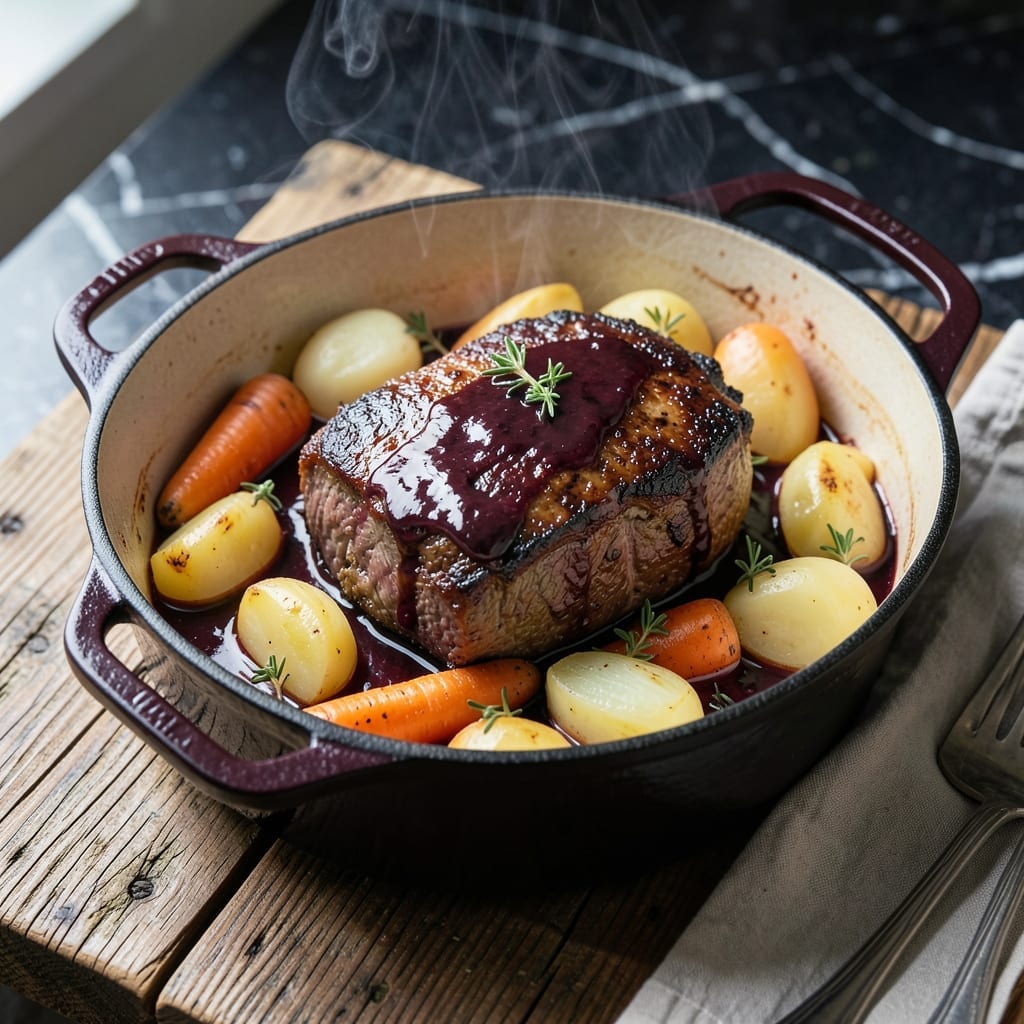
There’s something deeply satisfying about a pot roast that falls apart at the touch of a fork, especially when enriched with bold red wine. This recipe transforms a humble chuck roast into a centerpiece dish worthy of special occasions.
The secret lies in the slow cooking process, allowing the Cabernet to tenderize the meat while building complex flavors. Carrots, onions, and potatoes soak up the wine-infused juices, creating a meal that’s hearty and comforting.
What emerges after hours in the oven is melt-in-your-mouth beef with vegetables that have absorbed every bit of the rich, wine-enhanced sauce. The aroma alone will have everyone gathering around the table.
Perfect for Sunday suppers or when you want to impress without last-minute fuss. Let’s begin.
Ingredients for Cabernet Beef Pot Roast
Pantry staples plus a good bottle of wine. Nothing hard to find here.
| Ingredient | Amount | Notes |
|---|---|---|
| Chuck Roast 🥩 | 3 lb | Boneless, well-marbled preferred |
| Cabernet Sauvignon 🍷 | 2 cups | Dry, bold red wine |
| Beef Broth 🥣 | 1 ½ cups | Low-sodium preferred |
| Yellow Onions 🧅 | 2 whole | Medium, quartered |
| Carrots 🥕 | 4 whole | Large, cut into chunks |
| Yukon Gold Potatoes 🥔 | 1 ½ lb | Peeled and quartered |
| Garlic Cloves 🧄 | 6 cloves | Smashed, peeled |
| Tomato Paste 🍅 | 2 tbsp | For depth of flavor |
| Fresh Thyme Sprigs 🌿 | 4 pieces | Whole sprigs |
| Fresh Rosemary Sprigs 🌿 | 2 pieces | Whole sprigs |
| Bay Leaves 🍃 | 2 pieces | Dried is fine |
| Olive Oil 🫒 | 2 tbsp | For searing meat |
| Kosher Salt 🧂 | 1 ½ tsp | Diamond Crystal preferred |
| Black Pepper 🌶️ | 1 tsp | Freshly ground |
The beef is everything. Chuck roast with good marbling from the butcher counter is worth the ask—Costco has great options if you’re buying in bulk. Look for deep red color and visible fat streaks. The wine? Any bold Cabernet works (I grab whatever’s on sale at Trader Joe’s). The vegetables should be fresh and firm—no wilted carrots or sprouting potatoes.
No Cabernet? Merlot or Zinfandel bring similar depth. Out of fresh herbs? Dried thyme and rosemary at half the amount work fine. No Yukon Golds? Russets or red potatoes hold up well too. The tomato paste can come from a can or those handy squeeze tubes—one tube lasts for ages in the fridge. Beef broth can be replaced with mushroom broth for extra umami.
This tastes even better the next day—3-4 days in the fridge, 3 months frozen. Store leftovers in the cooking liquid to keep everything moist. Reheat gently on the stove (microwave works but can dry things out).
Why You’ll Love This Recipe
- Set It and Forget: I toss everything in one pot, let the oven do the work, and come back to fall-apart tender chuck roast.
- Wine-Deep Flavor: The Cabernet Sauvignon reduces into this rich, velvety sauce that soaks into every bite of beef and carrots.
- Sunday or Wednesday: Honestly, this works for a fancy dinner party or a regular weeknight when I need comfort food.
- Leftovers for Days: I always make extra—the shredded beef makes killer sandwiches or tacos the next day.
Step-by-Step Instructions for Cabernet Beef Pot Roast
Here’s the method. Straightforward, tested, and delivers melt-in-your-mouth results every time.
Step 1: Sear the Chuck Roast to Lock in Flavor
Pat the 3 lb chuck roast dry with paper towels and season generously with the 1.5 tsp kosher salt and 1 tsp black pepper. Heat the 2 tbsp olive oil in a Dutch oven over medium-high heat until shimmering.
Add the roast and sear undisturbed for 4-5 minutes per side until a deep, mahogany crust forms. You’ll know it’s ready to flip when it releases easily from the pot. This searing step creates the Maillard reaction, building complex flavors that will infuse the entire dish.
Step 2: Build the Aromatic Foundation
Remove the roast and reduce heat to medium. Add the 2 whole quartered yellow onions, 4 whole chunked carrots, and 6 cloves smashed garlic to the same pot. Cook for 5 minutes, stirring occasionally, until the onions soften and begin to caramelize.
Stir in the 2 tbsp tomato paste and cook for 1-2 minutes until it darkens slightly and coats the vegetables. This step intensifies the tomato flavor and prevents a raw taste in the finished sauce. Add the 4 pieces fresh thyme sprigs, 2 pieces fresh rosemary sprigs, and 2 pieces bay leaves to bloom their aromas.
Step 3: Deglaze and Add Liquids
Pour in the 2 cups Cabernet Sauvignon and scrape up all the browned bits from the bottom of the pot with a wooden spoon. Let the wine reduce by half, about 5 minutes—this burns off the alcohol while concentrating the flavor.
Return the roast to the pot along with any accumulated juices. Add the 1.5 cups beef broth and 1.5 lb quartered Yukon Gold potatoes. The liquid should come about halfway up the roast. If it doesn’t, add a splash more broth. This ensures even cooking and prevents the top from drying out.
Step 4: Braise Low and Slow to Perfection
Bring the liquid to a simmer, then reduce heat to low. Cover tightly and transfer to a 325°F oven. Braise for 3 to 3.5 hours, turning the roast halfway through, until the meat is fork-tender and nearly falling apart.
You’ll know it’s done when a fork slides in with no resistance and the potatoes are easily pierced. The wine and beef broth will have reduced into a rich, deeply flavored sauce that coats the back of a spoon. If the liquid reduces too much during cooking, add a little hot water to maintain the level.
Step 5: Rest and Serve
Carefully transfer the roast to a cutting board and tent loosely with foil. Let it rest for 15 minutes while you skim excess fat from the sauce if desired. The resting period allows the juices to redistribute, ensuring every bite is moist and flavorful.
Serve the pot roast whole or shredded, smothered in the wine-infused sauce with the vegetables. The meat should be so tender it falls apart at the touch of a fork, with the vegetables absorbing all the rich, savory flavors from the braising liquid. This dish tastes even better the next day, as the flavors continue to meld.
Pro Tips For Making Cabernet Beef Pot Roast
- Sear the Chuck Hard: I learned this the hard way—brown that chuck roast in batches with high heat until deeply caramelized, or your pot roast will taste steamed instead of rich. About 4-5 minutes per side in a screaming hot Dutch oven does the trick.
- Deglaze with Wine First: After searing, pour in the Cabernet while the pan’s still hot and scrape up every browned bit—those stuck-on bits are pure flavor. Let it reduce by half before adding broth.
- Skip the Lean Cuts: Resist the urge to use a pricier, leaner cut; chuck’s fat and connective tissue melt into the sauce after 3-4 hours at 325°F, making it fork-tender. Anything else stays dry.
- Cut Carrots Thick: Sounds weird, but it works: chunky 2-inch pieces hold their shape and sweetness through the long braise, while thin slices turn to mush. Peel them first, though—nobody likes gritty sauce.
Dietary Considerations for cabernet beef pot roast
Gluten-Free Friendly
This creation is naturally gluten-free as written, with no wheat-based thickeners or additives. All ingredients—from the chuck roast to the vegetables and wine—are inherently free of gluten. Just double-check your beef broth label, as some brands add wheat derivatives. I prefer Pacific Foods for guaranteed gluten-free options. 💪
Low-Carb Adaptation
For a lower-carb version, simply swap the potatoes for 2 lb radishes or turnips, cut into chunks. They absorb the wine sauce just as beautifully while reducing carbs by about 70%. The onions and carrots provide natural sweetness without added sugars.
Dairy-Free Note
This dish contains no dairy ingredients, making it perfect for those avoiding lactose. The richness comes entirely from the beef and wine reduction. Even the searing process uses olive oil rather than butter, so there’s no need for substitutions here.
Sodium Considerations
To reduce sodium, use low-sodium beef broth and cut the salt in half. The wine and vegetables provide plenty of flavor without excess salt. I find that 1 tsp kosher salt at the start is enough, with final adjustments made to taste after cooking. 🧂
Alcohol-Free Version
Replace the 2 cups Cabernet with an equal amount of beef broth plus 2 tbsp balsamic vinegar for depth. The vinegar mimics the wine’s acidity, while the extra broth maintains the liquid volume. Simmer as usual—the results are still deeply flavorful.
Allergen Awareness
The primary allergens to watch for are sulfites in the wine and potential cross-contamination in broth. For sulfite-sensitive individuals, look for organic Cabernet or wines labeled low-sulfite. Always verify broth labels for hidden allergens like soy or wheat.
Nutrition Facts
Frequently Asked Questions
What’s the best cut of beef for this dish?
Chuck roast is ideal due to its marbling and connective tissue that breaks down beautifully during slow cooking. A well-marbled 3 lb piece ensures tender, flavorful results. Avoid lean cuts like sirloin, as they dry out.
Can I make this in a slow cooker instead?
Yes! Sear the roast first, then transfer everything to a slow cooker. Cook on low for 8-10 hours or high for 5-6 hours. The texture will be slightly different but just as delicious.
How do I know when it’s done?
The meat is ready when it reaches 195-205°F internally and falls apart easily with a fork. If it resists, give it more time—rushing leads to tough meat.
Can I use a different wine?
Merlot or Zinfandel work well as substitutes. Avoid light wines like Pinot Noir—opt for bold, dry reds to match the beef’s richness.

- 4C Bread Crumbs Meatballs Recipe: Crispy Crust and Juicy Centers - September 25, 2026
- 6 Oz Chocolate Chip Cookie Recipe: Perfectly Balanced Crispy Edges and Chewy Hearts - September 25, 2026
- 6-Inch Coffee Cake Recipe: Vanilla Bean Swirls and Buttery Streusel Topping - September 25, 2026