
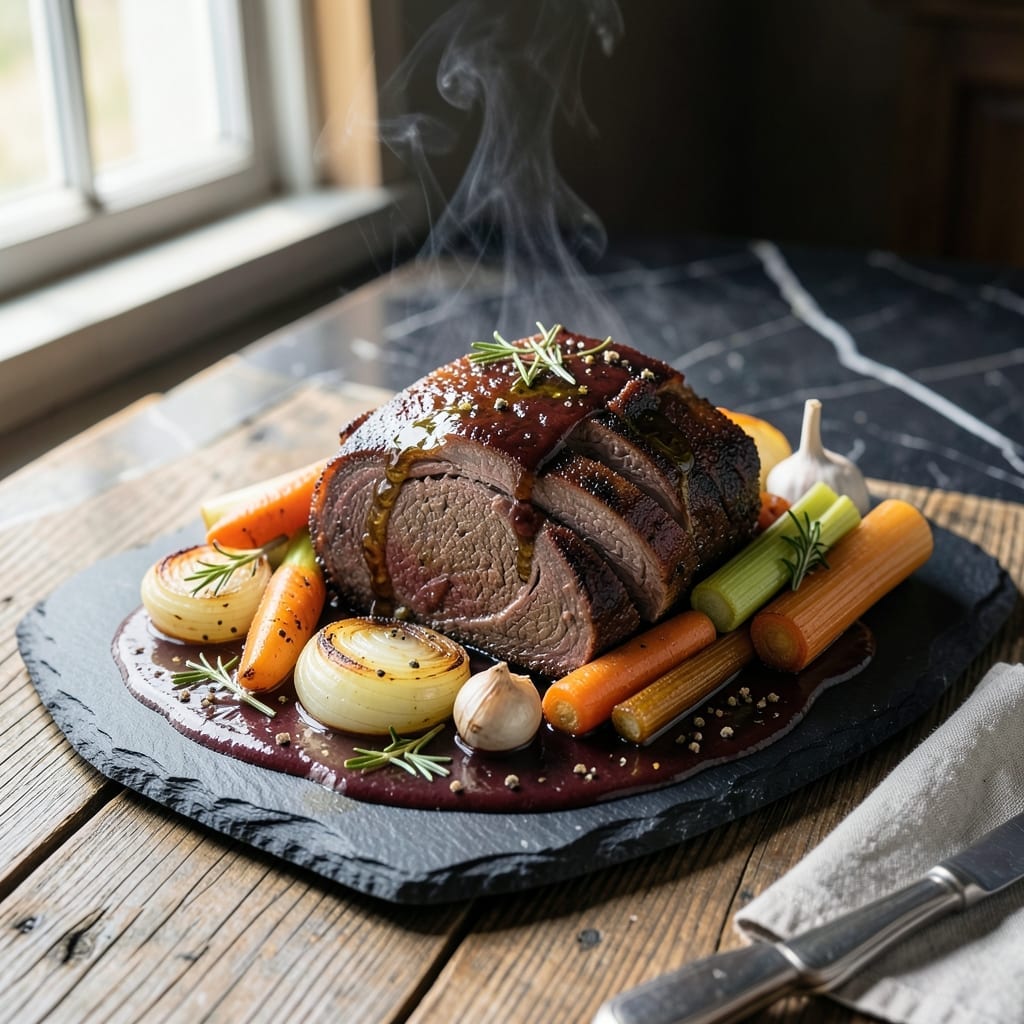
There’s an art to transforming tough cuts of beef into melt-in-your-mouth perfection, and this pot roast masters it. The wine-infused slow cooking process breaks down the chuck roast until it’s fork-tender, while building layers of rich, complex flavor.
What makes this method special is the combination of dry red wine, aromatic vegetables, and fresh herbs. These simple ingredients come together to create a sauce so deep and flavorful, you’ll want to soak it up with every bite. The low and slow approach ensures the meat becomes incredibly tender.
The result is a centerpiece-worthy dish with fall-apart beef, silky sauce, and vegetables that have absorbed all the savory goodness. It’s the kind of meal that makes an ordinary Sunday feel like a special occasion.
Perfect for family dinners or entertaining, this recipe delivers consistent, impressive results every time.
Ingredients for Boneless Chuck Pot Roast
Transform humble chuck roast into elegant perfection with these carefully selected components.
| Ingredient | Amount | Notes |
|---|---|---|
| Boneless Chuck Roast 🥩 | 3 lb | Well-marbled, trimmed of excess fat |
| Dry Red Wine 🍷 | 2 cups | Cabernet Sauvignon or Merlot recommended |
| Beef Stock 🥣 | 2 cups | Low-sodium preferred for control |
| Yellow Onions 🧅 | 2 whole | Large, peeled and quartered |
| Carrots 🥕 | 4 whole | Peeled, cut into 3-inch chunks |
| Celery Stalks 🌿 | 4 whole | Cut into 3-inch pieces |
| Garlic Cloves 🧄 | 6 cloves | Smashed, peeled |
| Fresh Thyme Sprigs 🌿 | 4 whole | Or 1 tbsp dried thyme |
| Fresh Rosemary Sprigs 🌿 | 2 whole | Or 1 tsp dried rosemary |
| Bay Leaves 🍃 | 2 whole | Dried, whole leaves |
| Tomato Paste 🍅 | 2 tbsp | Double-concentrated preferred |
| Olive Oil 🫒 | 2 tbsp | Extra-virgin for searing |
| Kosher Salt 🧂 | 1 ½ tsp | Diamond Crystal brand recommended |
| Black Pepper 🌶️ | 1 tsp | Freshly ground for best flavor |
The chuck roast is non-negotiable here. Certified Angus Beef from Whole Foods or Costco delivers superior marbling, which melts into the sauce during the long braise. Look for pieces with visible fat streaks—this isn’t the time for lean cuts. For the wine, a bold, dry Cabernet adds depth without sweetness. Any grocery store with a decent wine section will have suitable options.
No red wine? Additional beef stock with 1 tbsp balsamic vinegar per cup provides acidity and depth. Fresh herbs are ideal, but dried at one-third the quantity works in a pinch. The tomato paste can be from a can (just use what you open within 5 days). For the stock, Better Than Bouillon makes a rich base if you’re not using homemade.
This dish actually improves overnight as flavors meld. Refrigerate leftovers for up to 4 days or freeze portions for 3 months. Reheat gently to preserve the meat’s tenderness—microwaving can make it tough.
Why You’ll Love This Recipe
- Set and Forget: I toss everything in the pot in the morning and let the slow cooker do its magic—no babysitting required.
- Rich Wine Depth: The dry red wine and beef stock create this deep, savory sauce that soaks into the chuck roast like a dream.
- Feeds the Whole Crew: Between us, it’s my go-to for Sunday dinner with the in-laws or meal-prepping lunches for the week.
- Budget-Friendly Luxury: I get a restaurant-quality meal for the price of a humble chuck roast and a few pantry staples.
Step-by-Step Instructions for Boneless Chuck Pot Roast
Here’s the method. Straightforward, tested, works every time.
Step 1: Sear the Boneless Chuck Roast
Pat the 3 lb Boneless Chuck Roast dry with paper towels. Season all sides generously with the 1.5 tsp Kosher Salt and 1 tsp Black Pepper. This ensures a deep, flavorful crust.
Heat the 2 tbsp Olive Oil in a heavy pot over medium-high heat until shimmering. Sear the roast for 4-5 minutes per side until deeply browned on all surfaces. The fond created here is the flavor foundation for your sauce, so don’t rush this step.
Transfer the roast to a plate and reduce heat to medium. The meat should develop a rich, dark crust that signals the Maillard reaction has worked its magic.
Step 2: Build the Aromatic Base
In the same pot, add the 2 whole Yellow Onions, 4 whole Carrots, and 4 whole Celery Stalks. Cook for 5-6 minutes, stirring occasionally, until the vegetables begin to soften and develop color.
Add the 6 cloves Garlic Cloves, 2 tbsp Tomato Paste, 4 whole Fresh Thyme Sprigs, 2 whole Fresh Rosemary Sprigs, and 2 whole Bay Leaves. Stir continuously for 1-2 minutes until the tomato paste darkens slightly—this removes the raw flavor and deepens its sweetness.
The mixture should become fragrant, with the tomato paste coating the vegetables. This aromatic base will infuse the roast with complex, layered flavors.
Step 3: Deglaze and Slow Cook
Pour in the 2 cups Dry Red Wine, scraping the bottom of the pot to release all the browned bits. Bring to a simmer and cook for 3-4 minutes until the liquid reduces by about half. The alcohol will cook off, leaving concentrated flavor.
Add the 2 cups Beef Stock and return the roast to the pot, along with any accumulated juices. The liquid should come about halfway up the side of the meat. Bring to a gentle simmer, then reduce heat to low.
Cover and cook for 3 to 3.5 hours, turning the roast every 45-60 minutes, until the meat is fork-tender and easily pulls apart. The wine and stock will create a rich, deeply flavored braising liquid.
Step 4: Rest and Serve
Once the roast is tender, transfer it to a cutting board and tent loosely with foil. Let it rest for 15-20 minutes while you skim excess fat from the braising liquid and reduce it to your desired consistency.
The roast should be incredibly tender, with the meat falling apart at the touch of a fork. Slice or pull the meat against the grain for serving, and spoon the rich, wine-infused sauce over the top.
This resting period allows the juices to redistribute, ensuring each serving is moist and packed with the deep, complex flavors developed during the slow cook.
Pro Tips For Making Boneless Chuck Pot Roast
- Sear it Hard: Use a screaming hot pan with a little oil to get a deep brown crust on the chuck roast before braising—this builds flavor that simmering alone can’t match. I learned this the hard way after my first few pot roasts tasted bland despite hours of cooking.
- Deglaze Properly: After searing, pour in about ½ cup of that dry red wine and scrape up every browned bit stuck to the pan. Those little bits are pure flavor, and skipping this step means you’re leaving money on the table.
- Skip the Small Carrots: Cut your carrots into 2-inch chunks so they hold their shape during the long cook. Baby carrots turn to mush, and nobody wants a pot roast swimming in carrot puree.
- Rest Before Slicing: Let the chuck roast rest in its juices for at least 15 minutes after cooking—this keeps it moist when you slice it. I used to cut right in and wondered why my roast seemed dry.
Wine and Beer Pairings for These Flavors
Bold Red Wines
The same dry red wine you cook with—Cabernet Sauvignon or Merlot—pairs beautifully with this dish. Their tannins soften when matched with the rich, fatty beef. I love serving a 2018 Napa Valley Cab for its bold structure. 🍷
Lighter Red Options
For a more approachable pairing, try a Pinot Noir from Oregon’s Willamette Valley. Its bright acidity cuts through the richness while complementing the earthy herbs. A 2020 Eyrie Vineyards is my go-to for this.
Beer Pairings
A robust porter or stout stands up to the deep flavors of this roast. I recommend Guinness Foreign Extra Stout for its coffee-like notes. The carbonation cleanses your palate between bites.
White Wine Surprise
If you prefer white, an oaked Chardonnay with its buttery notes works surprisingly well. Look for a 2021 California Chardonnay with balanced acidity. The oak complements the wine-infused sauce beautifully.
Non-Alcoholic Choice
For a non-alcoholic option, try a sparkling black tea like Gold Peak. Its tannins and carbonation mimic wine’s pairing qualities. Serve well-chilled for best results.
Nutrition Facts
Frequently Asked Questions
Should I trim all fat from the chuck roast?
Leave some fat for flavor—trim only excess pieces. The marbling melts during cooking, enriching the sauce. Removing it all results in drier meat.
Can I make this in a slow cooker instead?
Yes! Sear the roast first, then transfer to your slow cooker with all ingredients. Cook on low for 8-10 hours or high for 5-6 hours.
What if my roast isn’t tender after 3 hours?
Continue cooking 30-minute increments until fork-tender. Tough cuts may need extra time. Check liquid level and add 1 cup water if too low.
Can I use white wine instead of red?
Not recommended—the deep flavor comes from red wine’s tannins. For a non-alcoholic option, use extra beef stock with 1 tbsp balsamic vinegar.

- 4C Bread Crumbs Meatballs Recipe: Crispy Crust and Juicy Centers - September 25, 2026
- 6 Oz Chocolate Chip Cookie Recipe: Perfectly Balanced Crispy Edges and Chewy Hearts - September 25, 2026
- 6-Inch Coffee Cake Recipe: Vanilla Bean Swirls and Buttery Streusel Topping - September 25, 2026