
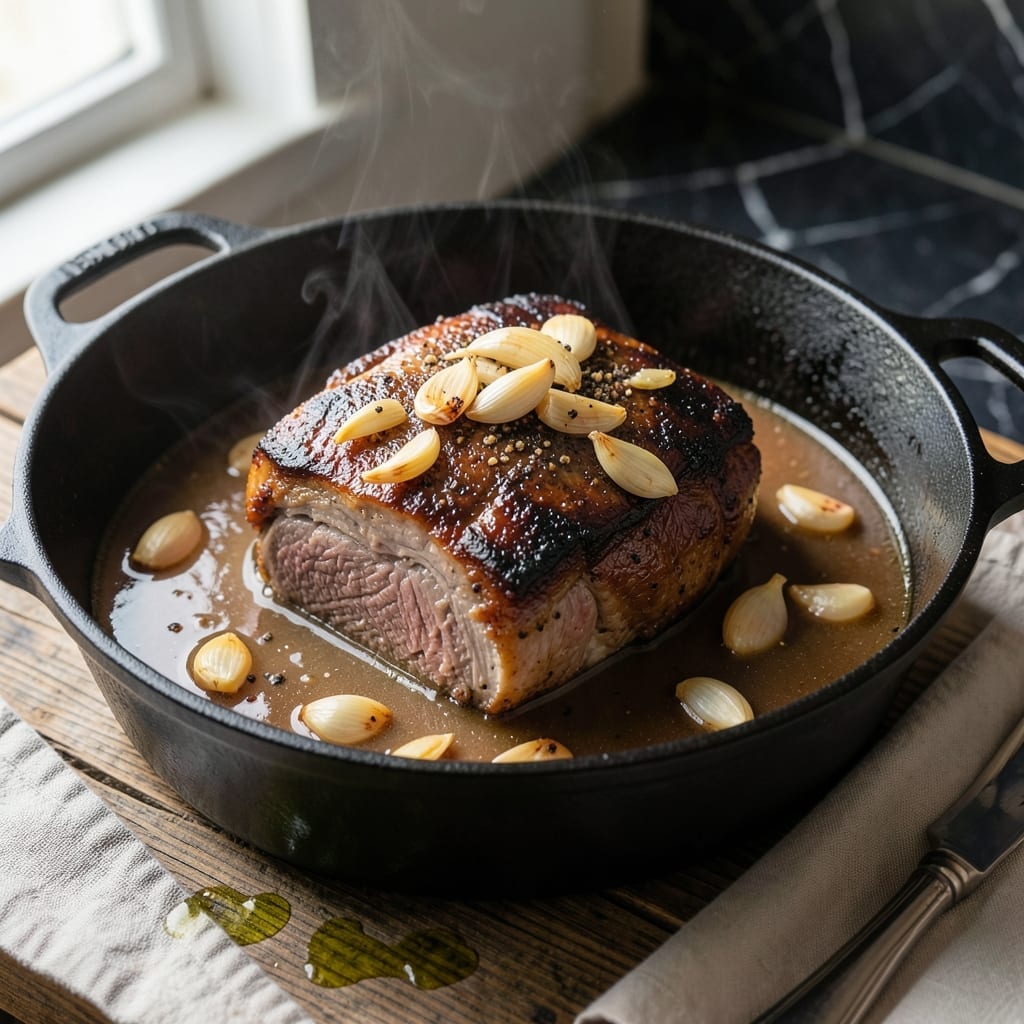
This pot roast recipe strips away everything but the meat, delivering pure carnivore satisfaction with rich, tender beef cooked in its own juices. No vegetables, no fillers—just slow-cooked perfection.
I developed this method to maximize fat retention and flavor while keeping it strictly zero-carb. The beef breaks down into fall-apart tenderness, with every bite packed with natural juices.
What you get is a hearty, indulgent meal that stays true to carnivore principles. The meat stays moist and flavorful, with a deep, savory richness that comes from slow cooking.
Perfect for meal prep or a comforting dinner, this dish proves that simple ingredients can create extraordinary results.
Ingredients for Carnivore Pot Roast
Just beef, fat, and time. Pure carnivore indulgence with maximum flavor extraction.
| Ingredient | Amount | Notes |
|---|---|---|
| Chuck Roast 🥩 | 3 lb | Well-marbled, bone-in preferred |
| Beef Tallow 🧈 | ½ cup | Rendered from suet or purchased |
| Kosher Salt 🧂 | 2 tsp | Diamond Crystal preferred for even distribution |
| Coarse Black Pepper 🌶️ | 1 ½ tsp | Freshly cracked for bold flavor |
| Beef Bone Broth 💧 | 2 cups | Homemade or high-quality store-bought |
| Garlic Cloves 🧄 | 6 cloves | Smashed, peeled for infusion |
| Dried Thyme 🌿 | 1 tsp | Crushed between fingers to release oils |
| Dried Rosemary 🍃 | 1 tsp | Crushed for aromatic intensity |
| Bay Leaves 🌿 | 2 whole | Dried, for slow-cooked depth |
| Red Wine Vinegar 🍷 | 2 tbsp | For brightness and acidity balance |
The chuck roast is non-negotiable—look for heavy marbling and a bone-in cut at Whole Foods or a trusted butcher. The fat cap should be at least 1/4-inch thick for self-basting. I prefer USDA Choice or Prime for optimal fat-to-meat ratio. Beef tallow can be sourced from US Wellness Meats or rendered at home from suet. Avoid lean cuts like sirloin—they’ll dry out.
No beef tallow? Ghee or lard work but alter the flavor profile slightly. For the bone broth, Epic or Kettle & Fire brands are excellent store-bought options. Fresh herbs can substitute dried at triple the volume, but dried concentrates flavor better for long cooking. Skip the vinegar if avoiding all plant-based ingredients—extra salt and fat will compensate.
The roast can rest in its juices for 1-2 hours before serving—flavor intensifies. Leftovers keep 5 days refrigerated in their fat, or freeze for 3 months. Reheat gently in the rendered fat to maintain moisture.
Why You’ll Love This Recipe
- Set It and Forget It: I toss the chuck roast in beef tallow, salt, and pepper, then let the slow cooker do the work for hours.
- Rich and Deep: The beef bone broth soaks into the meat, making every bite juicy and full of savory goodness.
- Meals for Days: One pot roast feeds my family for two nights, and the leftovers taste even better the next day.
- Budget Friendly: Chuck roast is affordable, and with just a few simple ingredients, I create a hearty meal without breaking the bank.
Step-by-Step Instructions for Carnivore Pot Roast
Master the technique for fall-apart-tender meat with rich, concentrated flavor in every bite.
Step 1: Sear the Chuck Roast in Beef Tallow
Pat the 3 lb chuck roast completely dry with paper towels to ensure a proper sear. Season all sides aggressively with the 2 tsp kosher salt and 1.5 tsp coarse black pepper, pressing the seasoning into the meat.
Heat the 0.5 cup beef tallow in a heavy Dutch oven over medium-high heat until shimmering. Add the chuck roast and sear for 5-6 minutes per side until deeply browned. This creates a flavorful crust that will intensify during braising. Don’t rush—wait until it releases easily from the pot before turning.
Step 2: Build the Aromatic Base
After removing the seared chuck roast, add the 6 cloves garlic cloves to the hot beef tallow. Sauté for 1-2 minutes until fragrant and just beginning to color. Be careful not to burn the garlic, as it can turn bitter quickly.
Sprinkle in the 1 tsp dried thyme and 1 tsp dried rosemary, crushing them between your fingers as you add them to release their essential oils. Stir for 30 seconds to bloom the spices in the hot fat, filling your kitchen with their aroma.
Step 3: Deglaze and Begin Braising
Pour in the 2 cups beef bone broth and use a wooden spoon to scrape up all the browned bits from the bottom of the pot—this is where the depth of flavor develops. Add the 2 whole bay leaves and 2 tbsp red wine vinegar, which provides a subtle brightness to balance the richness.
Return the chuck roast to the pot, nestling it into the liquid. The braising liquid should come about halfway up the meat. Bring to a gentle simmer over medium heat—you should see small bubbles breaking the surface, not a rolling boil.
Step 4: Slow Cook to Perfection
Cover the pot tightly and transfer to a preheated 325°F oven. Braise for 2.5 to 3 hours, turning the chuck roast once halfway through cooking. The meat is done when it pulls apart easily with a fork and reaches an internal temperature of 195-200°F.
Check occasionally to ensure the liquid maintains a gentle simmer. If it reduces too much, add a splash of water. The low-and-slow method guarantees the connective tissue breaks down completely while keeping the meat moist and flavorful.
Step 5: Rest and Serve
Carefully transfer the chuck roast to a cutting board and tent loosely with foil. Let it rest for 15-20 minutes—this allows the juices to redistribute throughout the meat. Skim excess fat from the braising liquid if desired, though many carnivore enthusiasts leave it for maximum richness.
Shred or slice the chuck roast against the grain and serve with the strained braising liquid spooned over the top. The meat should be incredibly tender, with every bite infused with the deep, savory flavors of beef and herbs.
Pro Tips For Making Carnivore Pot Roast
- Sear Hard First: I learned this the hard way—get your beef tallow screaming hot before adding the chuck roast, and don’t move it for at least 2-3 minutes per side. That deep crust is what makes the broth taste like it simmered for days.
- Salt Like You Mean It: Go heavier on the kosher salt than feels natural—this cut can handle it, and the long cook time mellows it out. I use about 1 tablespoon per pound, pressing it in so it actually sticks.
- Don’t Drown the Meat: After burning a few batches, I finally figured out: add just enough bone broth to come halfway up the roast, not fully submerged. This keeps the texture right and prevents a watery, weak result.
- Let It Nap: Sounds weird, but it works: pull the pot roast out 10 minutes before serving and let it rest in the hot broth. It reabsorbs the juices and stays moist instead of falling apart on the plate.
Pro Cooking Tips for carnivore pot roast
Perfect Searing Technique
Pat the 3 lb chuck roast bone-dry before seasoning—this ensures a proper Maillard reaction for maximum flavor. Use medium-high heat and don’t move the meat until it releases naturally, about 5-6 minutes per side. 🔥
Low and Slow Braising
Maintain a gentle simmer at 325°F in the oven. I check every 30 minutes to ensure the liquid hasn’t reduced too much. Adding 1 tbsp beef tallow midway can replenish fat if needed.
Herb Infusion Timing
Crush the dried thyme and rosemary between your fingers before adding to release their oils. Bloom them in hot fat for just 30 seconds to avoid bitterness. This step deepens the meat’s flavor profile.
Resting for Juiciness
Let the roast rest 15-20 minutes under foil after cooking. This lets juices redistribute, so every bite stays moist. Skimming fat is optional—many carnivore fans leave it for extra richness.
Internal Temp Check
Use a meat thermometer to confirm 195-200°F internally. At this temp, collagen breaks down completely, giving you that fall-apart texture. I pull mine at 198°F for ideal tenderness.
Fat Cap Utilization
Position the roast fat-side up during braising. This self-bastes the meat as it cooks. A ¼-inch fat cap is ideal for continuous moisture and flavor infusion throughout the process.
Nutrition Facts
Frequently Asked Questions
What’s the best cut for this dish?
Use a well-marbled 3 lb chuck roast with bone-in for maximum flavor and tenderness. The fat cap should be at least ¼-inch thick to ensure self-basting during cooking.
Can I use a slow cooker instead of an oven?
Yes! Cook on low heat for 8-10 hours or high heat for 5-6 hours. The meat will be just as tender, though the flavor may be slightly less concentrated.
Why is my pot roast tough?
It likely needs more time. Braise until it reaches 195-200°F internally for fall-apart tenderness. If it’s still tough, return it to the oven for another 30-60 minutes.
How long does it keep in the fridge?
Store leftovers in their juices for up to 5 days. Reheat gently in the rendered fat to maintain moisture. For longer storage, freeze for up to 3 months.

- 4C Bread Crumbs Meatballs Recipe: Crispy Crust and Juicy Centers - September 25, 2026
- 6 Oz Chocolate Chip Cookie Recipe: Perfectly Balanced Crispy Edges and Chewy Hearts - September 25, 2026
- 6-Inch Coffee Cake Recipe: Vanilla Bean Swirls and Buttery Streusel Topping - September 25, 2026