
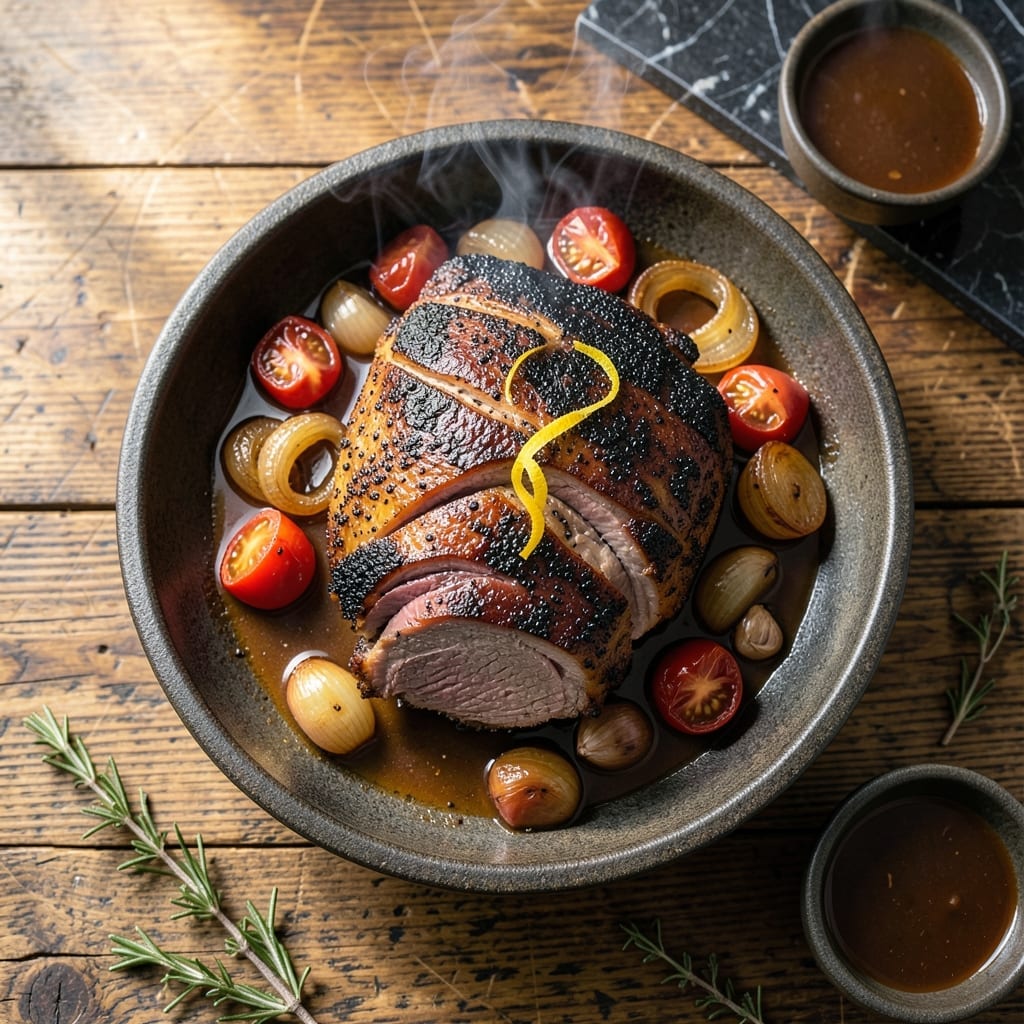
There’s an art to achieving tender meat with deep smoky flavor, and this method delivers it perfectly every time. The key is a long, slow smoke that transforms tough cuts into melt-in-your-mouth perfection.
I’ve refined this technique through countless Sunday dinners, learning that patience and consistent temperature are everything. The wood smoke infuses the beef with complex layers that a oven simply can’t replicate.
What you get is a pot roast with a beautiful bark outside and juicy, tender meat inside. The smoke creates a depth of flavor that pairs beautifully with the natural richness of the beef.
Serve it with roasted vegetables or mashed potatoes to soak up every last drop of flavorful juices.
Ingredients for Smoked Pot Roast
Pantry raid plus a trip to the butcher. Nothing exotic, just good stuff.
| Ingredient | Amount | Notes |
|---|---|---|
| Chuck Roast 🥩 | 3 lb | Well-marbled for best results |
| Kosher Salt 🧂 | 2 tbsp | Diamond Crystal preferred |
| Coarse Black Pepper 🌶️ | 2 tbsp | Freshly ground for bark |
| Garlic Powder 🧄 | 1 tbsp | Not garlic salt |
| Onion Powder 🧅 | 1 tbsp | Enhances beef flavor |
| Smoked Paprika 🌶️ | 1 tbsp | Adds depth to rub |
| Dried Thyme 🌿 | 1 tsp | Optional but recommended |
| Beef Broth 🥩 | 2 cups | Low-sodium preferred |
| Apple Cider Vinegar 🍏 | ¼ cup | Balances richness |
| Hickory Wood Chips 🪵 | 4 cups | Soaked in water 30 minutes |
| Yellow Onion 🧅 | 1 whole | Quartered for cooking |
| Carrots 🥕 | 3 whole | Peeled and chopped |
| Russet Potatoes 🥔 | 3 whole | Peeled and cubed |
| Olive Oil 🫒 | 2 tbsp | For searing roast |
The beef is everything here. Chuck roast with good marbling gives you that fall-apart texture—brisket works too but needs longer. I grab mine from Costco or the local butcher (they’ll cube it for you if you ask nicely). Look for bright red meat with white fat streaks throughout. The rub spices? Penzeys has the best quality, but grocery store brands work fine.
No chuck? Bottom round is a decent backup (just slice against the grain when serving). Out of apple cider vinegar? Red wine vinegar at half the amount gets you close. Hickory giving you trouble? Cherry or oak wood chips work too—each adds a different smoke profile. For the potatoes, Yukon Golds hold up better than russets if you prefer a creamier texture.
This reheats like a dream—honestly tastes better the next day. Keeps 4-5 days in the fridge, freezes for 3 months. I portion leftovers into containers so lunches are sorted for the week (the beef shreds perfectly for sandwiches).
Why You’ll Love This Recipe
- Set It and Forget: I rub the chuck roast with salt, pepper, garlic and onion powder, toss it in the smoker, and walk away for hours.
- Deep Smoky Richness: The slow smoke turns the simple spices into a bark so flavorful I don’t need a fancy sauce.
- Feeds the Gang: One four-pound chuck roast gives us dinner plus next-day tacos and sandwiches.
- Budget Hero: A cheap cut becomes a showstopper with just five pantry staples and time.
Step-by-Step Instructions for Smoked Pot Roast
Here’s the method that turns a tough cut into fall-apart tender, smoky perfection.
Step 1: Create the Bark with a Bold Dry Rub
Pat the 3 lb chuck roast completely dry with paper towels—this is non-negotiable for good bark formation. In a bowl, combine the 2 tbsp kosher salt, 2 tbsp coarse black pepper, 1 tbsp garlic powder, 1 tbsp onion powder, 1 tbsp smoked paprika, and 1 tsp dried thyme.
Rub this mixture aggressively into every surface of the roast, pressing hard so it adheres. I like to let it sit for 30 minutes at room temperature while the smoker preheats—this helps the seasoning penetrate the meat and develop that deep, flavorful crust we’re after.
Step 2: Sear and Prepare the Wood
Heat the 2 tbsp olive oil in a cast-iron skillet over high heat until shimmering. Sear the roast on all sides for 2-3 minutes per side until deeply browned. This step builds the foundation of flavor before the long smoke.
While the roast sears, soak the 4 cups hickory wood chips in water for 30 minutes if you haven’t already. The soaking prevents them from burning too quickly in the smoker, giving you that slow, steady smoke we need for maximum flavor penetration.
Step 3: Set Up the Smoker and Add Vegetables
Preheat your smoker to 225°F using the soaked hickory. Once it’s holding temperature, place the seared roast directly on the grates. Arrange the 1 whole yellow onion (quartered), 3 whole carrots (peeled and chopped), and 3 whole russet potatoes (peeled and cubed) around the meat.
Pour the 2 cups beef broth and 0.25 cup apple cider vinegar into a drip pan beneath the roast. The broth keeps the cooking environment moist, while the vinegar balances the richness of the beef and adds a subtle tang to the final dish.
Step 4: Smoke to Probe-Tender Perfection
Close the smoker and maintain 225°F for the duration. Smoke the roast for 6-8 hours or until the internal temperature reaches 200-205°F. I start checking the temperature after 5 hours—every smoker runs a little differently.
You’ll know it’s done when a probe slides in like butter with no resistance. The meat should be dark mahogany on the outside with a beautiful smoke ring just beneath the surface. The vegetables will have absorbed all that smoky beef flavor and should be tender enough to pierce easily with a fork.
Step 5: Rest and Serve
Transfer the roast to a cutting board and loosely tent with foil. Let it rest for 20-30 minutes—this is crucial for the juices to redistribute. The internal temperature will rise a few degrees during this time, and the meat will become even more tender.
Slice against the grain and serve with the smoked vegetables. Spoon some of the cooking liquid from the drip pan over the top for extra moisture and flavor. The result should be a pot roast that pulls apart with minimal effort, with a deep smoky flavor in every bite.
Pro Tips For Making Smoked Pot Roast
- Season Overnight: Rub the chuck roast with kosher salt, black pepper, garlic powder, and onion powder the night before smoking—this gives the spices time to penetrate deep into the meat.
- Smoke Low and Slow: Keep your smoker between 225-250°F and plan for 1.5-2 hours per pound; I learned this the hard way after pulling a tough roast at 275°F too early.
- Skip the Lean Cuts: Chuck roast’s marbling is non-negotiable for smoked pot roast—leaner cuts like sirloin tip dry out no matter how long you smoke them.
- Rest Before Slicing: Tent the roast with foil and let it rest 15-20 minutes after smoking—this keeps all those juices inside where they belong.
Perfect Pairings for This Dish
Side Dish Stars
Smoked roast pairs beautifully with my creamy mashed potatoes—they soak up the rich juices perfectly. I recommend 2 lbs Yukon Golds for 4 servings, boiled until fork-tender and whipped with ½ cup warm cream and 4 tbsp butter.
Bread Options
A crusty sourdough loaf from your local bakery makes an excellent companion. Toast slices and rub with a garlic clove for added flavor. The chewy texture holds up well to the hearty meat and vegetables.
Fresh Green Balance
Serve a simple green salad with mixed greens, cherry tomatoes, and a light balsamic vinaigrette to cut through the richness. I use 3 parts olive oil to 1 part balsamic with a pinch of Dijon mustard. 🥗
Wine Pairings
A bold Cabernet Sauvignon stands up to the smoky flavors beautifully. Look for bottles from Napa Valley with notes of blackcurrant and oak. For white lovers, a full-bodied Chardonnay with buttery undertones complements the dish.
Beer Lovers
Try a porter or stout—the roasted malt flavors echo the smoke. Guinness works wonderfully, or seek out craft options like Founders Porter. The carbonation also helps cleanse your palate between bites. 🍺
Finishing Touch
Fresh horseradish cream adds a spicy kick that cuts through the fat. Mix ¼ cup prepared horseradish with ½ cup sour cream and 1 tsp lemon juice. Serve on the side for guests to add as desired.
Nutrition Facts
Frequently Asked Questions
What’s the best wood for smoking?
Hickory delivers a strong, classic smoke flavor that pairs perfectly with beef. For a milder touch, try apple or cherry wood. Avoid mesquite—it can overpower the meat’s natural richness.
Can I use a different cut of beef?
Chuck roast is ideal, but brisket or bottom round work too. Brisket needs 8-10 hours at 225°F, while bottom round benefits from slicing against the grain after cooking.
How do I prevent the roast from drying out?
Maintain a consistent 225°F and use a drip pan with beef broth. Pull the roast when it hits 200-205°F internally, then rest it for 20-30 minutes before slicing.
Can I make this in an oven?
Yes, but you’ll miss the smoky depth. Use the same rub and sear, then cook covered at 325°F for 3-4 hours until probe-tender. Add liquid smoke sparingly for a hint of flavor.

- 4C Bread Crumbs Meatballs Recipe: Crispy Crust and Juicy Centers - September 25, 2026
- 6 Oz Chocolate Chip Cookie Recipe: Perfectly Balanced Crispy Edges and Chewy Hearts - September 25, 2026
- 6-Inch Coffee Cake Recipe: Vanilla Bean Swirls and Buttery Streusel Topping - September 25, 2026