
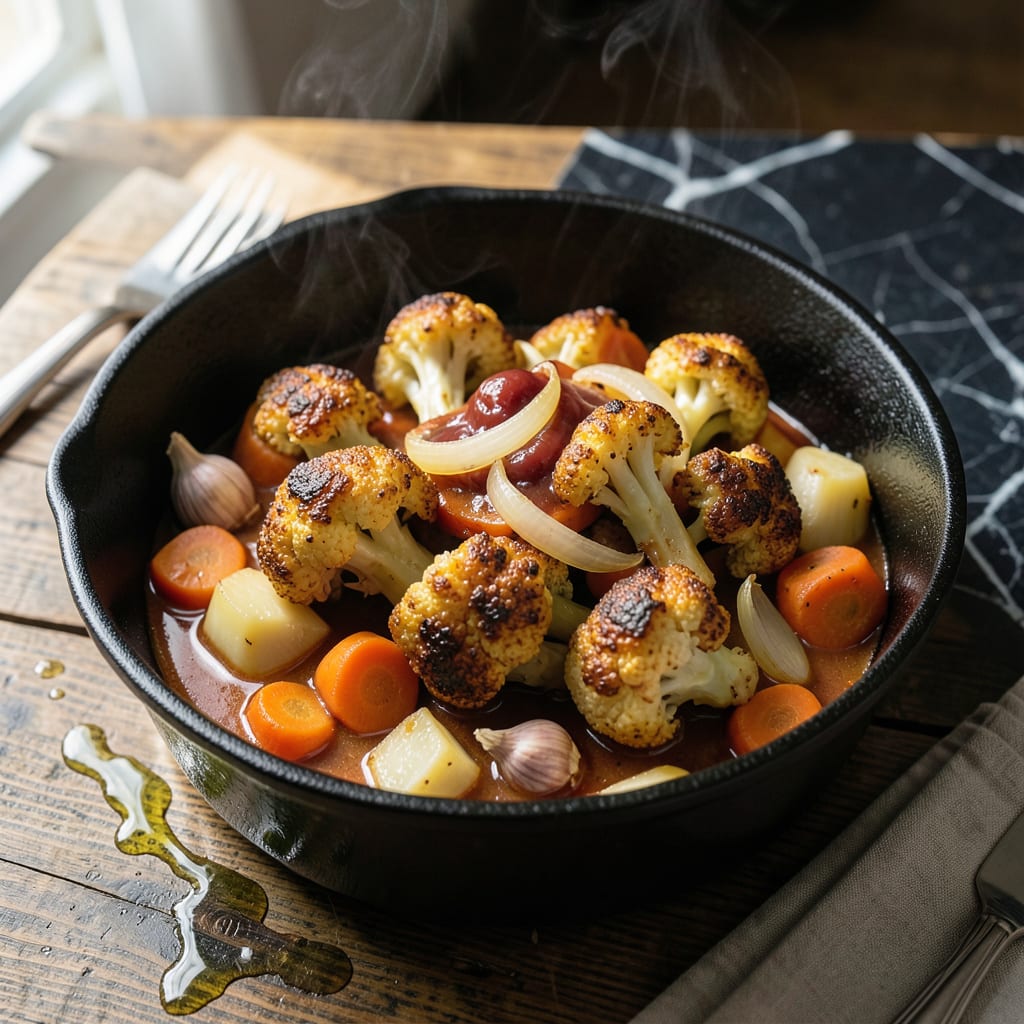
This vegetarian braise transforms humble cauliflower into a hearty centerpiece with rich, meaty depth. The slow-cooked vegetables absorb savory broth, creating a tender texture that rivals traditional pot roast.
A blend of root vegetables and warm spices builds flavor layer by layer. The result is a satisfying, comforting dish that proves plant-based meals can be just as robust as their meat counterparts.
Ingredients for Cauliflower Pot Roast
Transform humble cauliflower into a hearty centerpiece with these bold, savory ingredients.
| Ingredient | Amount | Notes |
|---|---|---|
| Cauliflower 🥦 | 1 whole | Large head, cut into florets |
| Carrots 🥕 | 3 whole | Peeled and cut into chunks |
| Parsnips 🥕 | 2 whole | Peeled and cut into chunks |
| Yellow Onion 🧅 | 1 whole | Large, chopped roughly |
| Garlic Cloves 🧄 | 6 cloves | Minced for depth of flavor |
| Tomato Paste 🍅 | 3 tbsp | For umami richness |
| Vegetable Broth 💧 | 4 cups | Low-sodium preferred for control |
| Red Wine 🍷 | 1 cup | Dry, for acidity and depth |
| Soy Sauce 🫒 | 2 tbsp | Tamari for gluten-free option |
| Smoked Paprika 🌶️ | 1 tsp | For meaty, smoky flavor |
| Dried Thyme 🌿 | 1 tsp | Warm, earthy notes essential |
| Bay Leaf 🍃 | 1 whole | Dried, for aromatic depth |
| Olive Oil 🫒 | 2 tbsp | Extra-virgin for richness |
| All-Purpose Flour 🌾 | 2 tbsp | For thickening the sauce |
| Salt 🧂 | 1 tsp | Kosher or sea salt preferred |
| Black Pepper 🌶️ | ½ tsp | Freshly ground for best flavor |
The cauliflower needs to be fresh and firm—avoid heads with brown spots or softness. Whole Foods and Trader Joe’s consistently stock quality organic cauliflower. Root vegetables like carrots and parsnips should be uniform in size for even cooking. For the red wine, Cabernet Sauvignon or Merlot work beautifully, but any dry red will do. The smoked paprika is critical here—Penzeys offers excellent quality.
No red wine? Beef-free beef broth with a splash of balsamic vinegar mimics the depth. Out of soy sauce? Coconut aminos provides a similar umami kick. Fresh thyme can replace dried at three times the amount. If avoiding gluten, cornstarch or arrowroot can thicken the sauce instead of flour. The vegetable broth should be robust—Better Than Bouillon is a reliable brand.
This dish reheats wonderfully, with flavors deepening over 2-3 days in the fridge. Freeze portions for up to 3 months. Store leftovers in airtight containers to maintain freshness. The braising liquid can be reduced further for a richer sauce.
Why You’ll Love This Recipe
- One Pan Wonder: I toss everything in—cauliflower, carrots, parsnips—and let the oven do the work. One sheet pan, one spatula, done.
- Rich and Hearty: The garlic and onions caramelize into this deep, savory sauce that soaks into every bite. Honestly, it tastes like it simmered all day.
- Meal Prep Magic: I make a big batch Sunday and it reheats beautifully for lunches. Between us, it might taste even better the next day.
- Budget Friendly: Cauliflower and root veggies stretch far and cost little. I’ll be real: it feeds my family of four for under ten bucks.
Step-by-Step Instructions for Cauliflower Pot Roast
This method transforms humble vegetables into a rich, deeply flavorful vegetarian centerpiece.
Step 1: Sear the Cauliflower and Aromatics
Heat the 2 tbsp olive oil in a large Dutch oven over medium-high heat. Add the cauliflower florets in a single layer and sear undisturbed for 5-7 minutes until the bottoms develop a deep golden brown crust. This caramelization builds the foundation of flavor.
Remove the cauliflower and set aside. In the same pot, add the yellow onion, carrots, and parsnips. Sauté for 4-5 minutes until the onion begins to soften and the vegetables develop some color. Stir in the garlic cloves and cook for 30 seconds until fragrant.
Step 2: Build the Braising Liquid
Sprinkle the 2 tbsp all-purpose flour over the vegetables and stir to coat evenly. Cook for 1-2 minutes to remove the raw flour taste. Add the 3 tbsp tomato paste, 1 tsp smoked paprika, 1 tsp dried thyme, 1 tsp salt, and 0.5 tsp black pepper, stirring constantly.
Pour in the 1 cup red wine to deglaze the pot, scraping up any browned bits from the bottom. Simmer for 2-3 minutes until the liquid reduces by about half. Add the 4 cups vegetable broth, 2 tbsp soy sauce, and 1 whole bay leaf, stirring to combine.
Step 3: Braise to Perfection
Return the seared cauliflower to the pot, nestling the florets into the liquid. The liquid should come about halfway up the cauliflower—add a splash of water if needed. Bring to a simmer, then reduce heat to low, cover, and braise for 45-50 minutes.
Check occasionally and stir gently to ensure the cauliflower isn’t sticking. You’ll know it’s done when the florets are fork-tender and the sauce has thickened slightly. The cauliflower should absorb the rich flavors of the braising liquid while maintaining its shape.
Step 4: Rest and Serve
Once the cauliflower is tender, remove the pot from heat and discard the bay leaf. Let the dish rest uncovered for 10 minutes to allow the flavors to meld and the sauce to thicken slightly. The vegetables will continue to soak up the rich, savory broth.
Serve the cauliflower pot roast hot, spooning the thickened sauce and braised vegetables over the top. The cauliflower should be tender yet still hold its form, and the root vegetables should be soft but not mushy. Each bite delivers a hearty, satisfying depth of flavor.
Pro Tips For Making Cauliflower Pot Roast
- Roast High, Then Low: Start the cauliflower at 425°F for 20 minutes to caramelize the edges, then drop to 350°F to cook the carrots and parsnips through without burning them—I learned this the hard way after pulling out a pan of half-charred, half-raw veggies.
- Cut Evenly: Chop the cauliflower into 2-inch florets and slice the carrots and parsnips to match their thickness, so everything finishes at the same time. Sounds obvious, but I used to end up with mushy carrots and undercooked cauliflower.
- Skip the Crowded Pan: Use a large enough roasting pan so the veggies sit in a single layer with space between them. After burning three batches, I finally figured out that steam from overcrowding turns them soggy instead of crisp.
- Add Garlic Late: Toss the garlic cloves in with the veggies only during the last 20 minutes of roasting to prevent bitter, burnt bits. My grandmother swore by this, and she was right.
Perfect Pairings for This cauliflower pot roast
Bread Pairings
I love serving this with crusty sourdough bread to soak up the rich braising liquid. Toast slices with garlic butter for extra flavor. A warm baguette works equally well if you prefer something lighter. 🥖
Simple Sides
Steamed green beans with lemon zest add a bright contrast to the hearty dish. Alternatively, mashed potatoes make it even more comforting—use Yukon Golds for creaminess.
Fresh Elements
A crisp kale salad with apple slices and walnuts cuts through the richness. I toss mine with a light apple cider vinaigrette for tangy balance.
Wine Choices
A bold Cabernet Sauvignon stands up to the deep flavors beautifully. For white wine lovers, Chardonnay with its buttery notes complements the dish’s richness. 🍷
Garnish Ideas
Fresh parsley or thyme sprigs add a pop of color and aroma. A sprinkle of toasted breadcrumbs gives satisfying crunch without overpowering.
Extra Comfort
For a cozy meal, serve over creamy polenta instead of bread. The smooth texture pairs perfectly with the tender cauliflower and root vegetables. 💛
Nutrition Facts
Frequently Asked Questions
Can I use frozen cauliflower?
Fresh is best for texture, but frozen works in a pinch. Thaw completely and pat very dry first to avoid a watery sauce. Add 5-10 minutes to braising time.
What can I substitute for red wine?
Use 1 cup beef-free broth plus 1 tbsp balsamic vinegar for similar depth. Apple cider vinegar works too, but reduce to 2 tbsp to avoid overpowering.
How do I prevent mushy vegetables?
Cut root veggies into uniform 2-inch chunks and add them 20 minutes into braising. Check doneness at 45 minutes—they should be tender but hold shape.
Can I make this in a slow cooker?
Yes! Sear cauliflower first, then cook on low for 6-7 hours or high for 3-4 hours. Add flour at the end to thicken the sauce.

- 4C Bread Crumbs Meatballs Recipe: Crispy Crust and Juicy Centers - September 25, 2026
- 6 Oz Chocolate Chip Cookie Recipe: Perfectly Balanced Crispy Edges and Chewy Hearts - September 25, 2026
- 6-Inch Coffee Cake Recipe: Vanilla Bean Swirls and Buttery Streusel Topping - September 25, 2026