
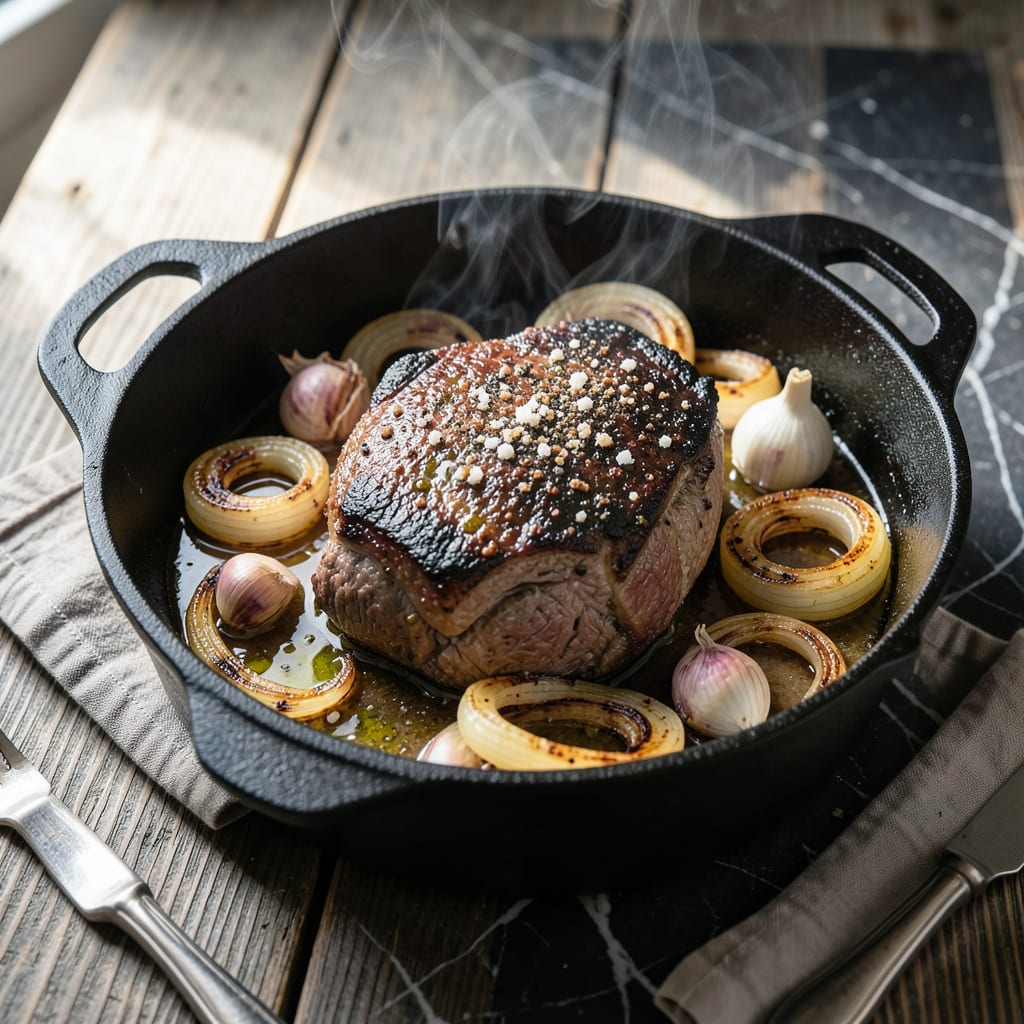
This Dutch oven pot roast transforms tough cuts of beef into fall-apart tender perfection with minimal effort. The slow cooking process allows the meat to become incredibly tender while the root vegetables absorb rich, savory flavors.
Using a heavy Dutch oven ensures even heat distribution for restaurant-quality results. The sealed environment locks in moisture, creating a deeply flavorful sauce that enhances every bite of the beef and vegetables.
Ingredients for Roaster Pot Roast
A well-stocked kitchen plus a few fresh picks brings this dish to life with restaurant-quality depth.
| Ingredient | Amount | Notes |
|---|---|---|
| Chuck Roast 🥩 | 3 lb | Well-marbled, bone-in optional |
| Kosher Salt 🧂 | 1 ½ tsp | Diamond Crystal preferred |
| Freshly Ground Black Pepper 🌶️ | 1 tsp | Coarse grind for texture |
| Olive Oil 🫒 | 2 tbsp | Divided for searing and deglaing |
| Yellow Onion 🧅 | 1 whole | Large, roughly chopped |
| Garlic Cloves 🧄 | 6 cloves | Smashed, peeled |
| Carrots 🥕 | 3 whole | Peeled, cut into 2-inch chunks |
| Yukon Gold Potatoes 🥔 | 1 ½ lb | Peeled, quartered |
| Celery Stalks 🌿 | 3 whole | Cut into 2-inch pieces |
| Tomato Paste 🍅 | 2 tbsp | For depth of flavor |
| Dry Red Wine 🍷 | 1 cup | Bold variety like Cabernet |
| Beef Stock 🥣 | 2 cups | Low-sodium preferred |
| Fresh Thyme Sprigs 🌿 | 4 whole | Plus extra for garnish |
| Bay Leaves 🍃 | 2 whole | Dried, whole |
| Unsalted Butter 🧈 | 1 tbsp | Optional, for finishing |
[recipeingredientscaler]
The beef is non-negotiable here. Chuck roast with visible marbling yields the most tender results—avoid lean cuts like sirloin that dry out. Most butchers will cube it for you, but a whole roast (bone-in for extra flavor) works too. I source mine from Whole Foods or a trusted local butcher. The root vegetables should be uniform in size to ensure even cooking, and freshness is key for optimal texture.
No red wine? Substitute beef stock with a splash of balsamic vinegar for acidity. Fresh thyme can be replaced with dried at one-third the amount. If tomato paste isn’t on hand, 1 tbsp ketchup plus 1 tsp Worcestershire sauce (though check for anchovies if strict vegetarian) works in a pinch. For the stock, Better Than Bouillon or Homemade are superior to canned.
This dish tastes even better the next day. Store leftovers in an airtight container in the fridge for up to 5 days or freeze for 3 months. Reheat gently on the stovetop with a splash of stock to restore moisture.
Why You’ll Love This Recipe
- Set It and Forget: I just season the chuck roast, sear it, add the onion, and let the oven do the work.
- Deep, Rich Flavor: The olive oil and caramelized yellow onion give it a savory depth that’s hard to beat.
- Weeknight Hero: Honestly, it’s my go-to for busy evenings—minimal prep, maximum payoff.
- Leftovers for Days: One roast feeds us for two meals, and the leftovers make killer sandwiches.
Step-by-Step Instructions for Roaster Pot Roast
This Dutch oven method delivers fall-apart tender meat with deeply flavored vegetables.
Step 1: Season and Sear the Chuck Roast
Pat the 3 lb chuck roast dry with paper towels, then season all sides evenly with 1.5 tsp kosher salt and 1 tsp freshly ground black pepper. I use a coarse grind for better texture on the crust. The seasoning should form a visible layer—don’t be shy.
Heat 1 tbsp olive oil in a Dutch oven over medium-high heat until shimmering. Sear the roast for 4-5 minutes per side until deeply browned. You want a dark, caramelized crust—this is where the flavor develops. Transfer the roast to a plate and set aside.
Step 2: Sauté Aromatics and Deglaze
In the same pot, add the remaining 1 tbsp olive oil. Add the roughly chopped yellow onion, 3 whole carrots, 1.5 lb yukon gold potatoes, and 3 whole celery stalks. Sauté for 5-6 minutes until the onion begins to soften and brown slightly.
Stir in 2 tbsp tomato paste and cook for 1-2 minutes until it darkens in color. Add 6 cloves garlic cloves, 4 whole fresh thyme sprigs, and 2 whole bay leaves, then pour in 1 cup dry red wine. Scrape the browned bits from the bottom of the pot as the wine simmers for 2-3 minutes.
Step 3: Braise the Roast with Vegetables
Return the seared roast to the pot, nestling it among the vegetables. Pour in 2 cups beef stock—the liquid should come about halfway up the roast. Bring to a simmer, then cover with a tight-fitting lid.
Transfer the Dutch oven to a preheated 325°F oven and braise for 2.5-3 hours. You’ll know it’s done when the meat yields easily to a fork and the vegetables are knife-tender. Check occasionally and add a splash of stock if the liquid reduces too much.
Step 4: Rest and Finish the Sauce
Carefully remove the roast and vegetables to a serving platter, tenting with foil to keep warm. Skim excess fat from the braising liquid, then place the pot on the stovetop over medium heat. Simmer for 5-7 minutes until the liquid reduces slightly and thickens to a gravy-like consistency.
For a richer finish, whisk in 1 tbsp unsalted butter until melted and fully incorporated. Taste and adjust seasoning if needed, then pour the sauce over the roast and vegetables before serving. The sauce should coat the back of a spoon with a glossy sheen.
Pro Tips For Making Roaster Pot Roast
- Sear It Hard: Use high heat and don’t move the chuck roast for at least 3-4 minutes per side to get a deep crust—this locks in the juices and adds flavor that simmering alone can’t.
- Salt Overnight: I learned this the hard way—dry-brine the roast with kosher salt 12-24 hours before cooking. It seasons the meat all the way through and keeps it juicy.
- Skip Cold Meat: Always pull the chuck roast from the fridge 30-60 minutes before searing. Cold meat steams instead of browns, and nobody wants a pale pot roast.
- Slice Against Grain: After resting, slice the roast against the grain for shorter, more tender fibers—sounds simple, but it actually changes the outcome.
Storing and Reheating This roaster pot roast
Refrigerator Storage
Let your pot roast cool for no more than 2 hours before transferring to airtight containers. I use glass containers with snap-tight lids to prevent leaks. Store in the fridge at 40°F or below for up to 4 days. The flavors deepen overnight, making leftovers even more delicious. ❄️
Freezer Storage
For longer storage, portion the roast and vegetables into freezer-safe bags or containers. Leave 1 inch of headspace for expansion and squeeze out excess air to prevent freezer burn. This dish freezes beautifully for up to 3 months without losing texture or flavor.
Stovetop Reheating
This is my preferred method for maintaining moisture. Transfer the roast and vegetables to a pot, add ¼ cup beef stock, and heat over medium-low heat for 10-15 minutes. Stir occasionally and add more stock if needed. The sauce will thicken slightly as it reheats. 🔥
Microwave Reheating
For quick meals, place individual portions in a microwave-safe dish, cover with a damp paper towel, and heat on 70% power for 2-3 minutes. Stir, then continue in 1-minute intervals until reaching 165°F. Add a splash of stock to restore moisture if it looks dry.
Oven Reheating
Preheat your oven to 300°F. Place the roast and vegetables in an oven-safe dish, add ½ cup beef stock, cover with foil, and heat for 20-25 minutes. This method works well for larger portions and keeps everything tender.
Nutrition Facts
Frequently Asked Questions
What cut of beef works best?
Use chuck roast with good marbling for the most tender results. Avoid lean cuts like sirloin that can dry out during long cooking. A 3 lb piece serves 4-6 people perfectly.
Can I make this without wine?
Yes! Substitute the 1 cup red wine with 1 cup beef stock plus 1 tbsp balsamic vinegar for similar depth. The acidity helps tenderize the meat.
How do I know when it’s done?
The meat should pull apart easily with a fork after 2.5-3 hours at 325°F. Vegetables should be tender when pierced with a knife.
Can I cook this in a slow cooker?
Yes! Sear the roast first, then transfer to a slow cooker with all ingredients. Cook on low for 8 hours or high for 5-6 hours.

- 4C Bread Crumbs Meatballs Recipe: Crispy Crust and Juicy Centers - September 25, 2026
- 6 Oz Chocolate Chip Cookie Recipe: Perfectly Balanced Crispy Edges and Chewy Hearts - September 25, 2026
- 6-Inch Coffee Cake Recipe: Vanilla Bean Swirls and Buttery Streusel Topping - September 25, 2026