
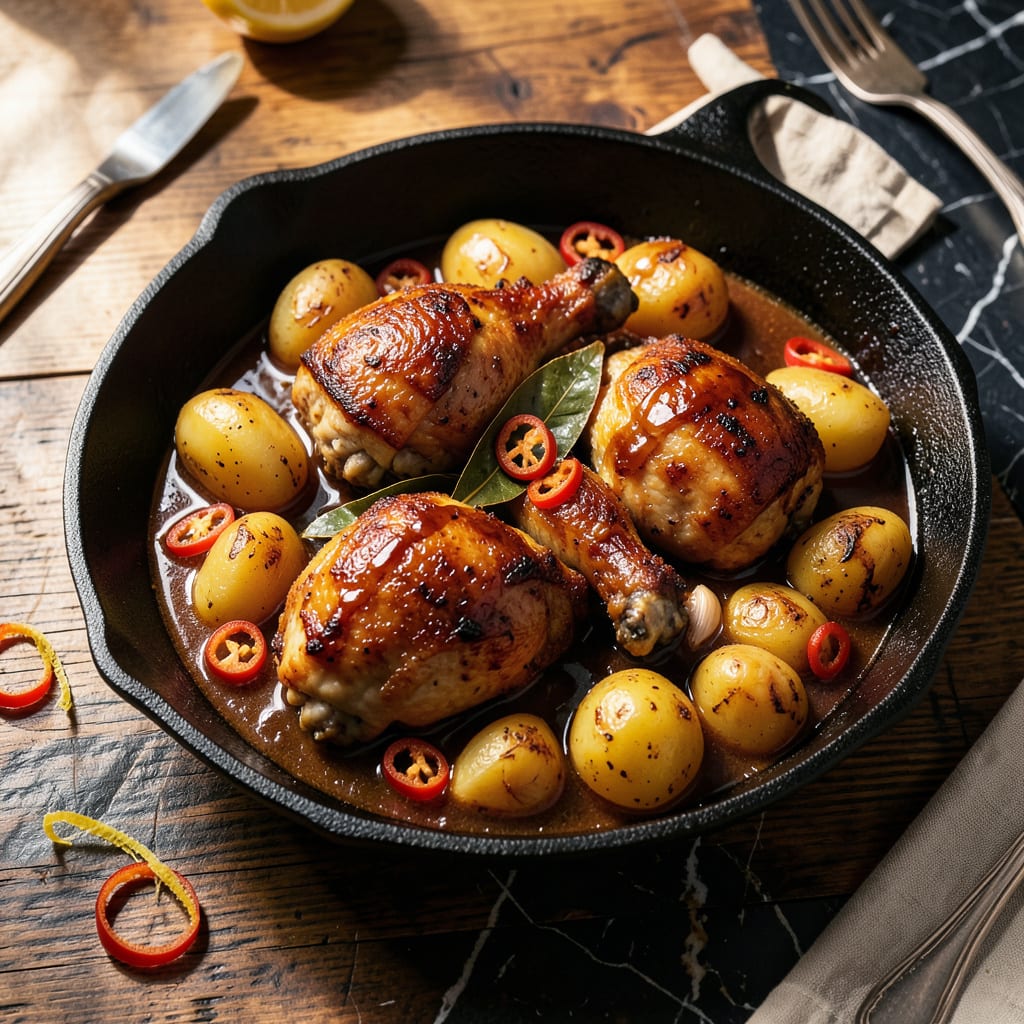
Filipino chicken adobo with potatoes transforms simple ingredients into a deeply flavorful, comforting meal that’s become a staple in my kitchen. This one-pot dish balances tangy vinegar, rich soy sauce, and aromatic garlic to create a sauce that’s both bold and comforting. The addition of potatoes makes it a complete meal, with their tender texture soaking up every bit of the savory adobo broth.
The beauty of this recipe lies in its simplicity and versatility. Whether you’re cooking for a weeknight dinner or a special gathering, the hands-off braising method delivers fall-off-the-bone chicken and perfectly tender potatoes every time. Serve with steamed rice to experience why this dish holds such an important place in Filipino cuisine and home cooking traditions.
Ingredients for Chicken Adobo with Potatoes
This one-pot meal combines pantry staples with fresh ingredients to create authentic Filipino comfort food at home.
| Ingredient | Amount | Notes |
|---|---|---|
| Bone-In Chicken Thighs 🍗 | 2 lb | Skin-on for richer flavor |
| Yukon Gold Potatoes 🥔 | 1 ½ lb | Cut into 1.5-inch chunks |
| Soy Sauce 🫙 | ¾ cup | Use low-sodium if preferred |
| White Vinegar 🫒 | ½ cup | Cane or distilled variety |
| Garlic Cloves 🧄 | 8 cloves | Minced for maximum flavor |
| Bay Leaves 🌿 | 2 whole | Dried, for aromatic depth |
| Black Peppercorns 🌶️ | 1 tsp | Whole, lightly crushed |
| Brown Sugar 🍚 | 1 tbsp | Light or dark variety |
| Neutral Cooking Oil 🫒 | 2 tbsp | Vegetable or canola preferred |
| Water 💧 | 1 cup | For balancing sauce consistency |
| Green Onions 🧅 | 4 whole | Thinly sliced for garnish |
The chicken thighs are essential for optimal texture and flavor. Bone-in, skin-on thighs yield the most succulent results, while boneless versions can be used for convenience. Potatoes should be Yukon Gold—their waxy texture holds up well during braising. For soy sauce, Silver Swan or Kikkoman are widely available brands that deliver consistent quality. Garlic should be fresh and plump; avoid pre-minced varieties as they lack intensity.
White vinegar can be substituted with cane vinegar for a more traditional Filipino profile, or apple cider vinegar for a milder tang. Brown sugar may be replaced with coconut sugar at a 1:1 ratio. If bay leaves are unavailable, a pinch of dried thyme offers a similar aromatic quality. For those avoiding gluten, tamari or coconut aminos work as soy sauce alternatives. The black peppercorns should be freshly crushed for maximum potency.
The adobo sauce actually improves with time—store leftovers in an airtight container for up to 5 days. Potatoes may absorb more liquid upon storage, so add a splash of water when reheating. For longer preservation, freeze the dish without potatoes for up to 3 months; add fresh potatoes when reheating. Green onions are best added fresh before serving to maintain their bright flavor and texture.
Why You’ll Love This Recipe
- One-Pan Magic: I love that this entire dish comes together in a single skillet—no extra bowls, no complicated steps. Just sear the chicken thighs, toss in the potatoes and garlic, then let the soy-vinegar sauce work its magic while you do something else.
- That Tangy-Savory Balance: The first time I tried this, the contrast of the crispy chicken skin with the tender potatoes soaked in that garlicky, slightly sour adobo sauce? Ridiculous. The vinegar cuts through the richness, and the soy sauce caramelizes just enough to make every bite addictive.
- My Secret Meal Prep: This reheats beautifully—honestly, it might taste even better the next day. I make a big batch on Sunday, and by Wednesday, the potatoes have absorbed all that garlicky sauce like little flavor sponges. (Yes, even cold straight from the fridge.)
- Budget-Friendly Crowd Pleaser: Bone-in thighs are cheap, potatoes stretch the meal, and the sauce is just pantry staples. I’ve served this to picky kids and foodie friends alike, and everyone goes back for seconds. Leftovers? They disappear fast.
Step-by-Step Instructions for Chicken Adobo With Potatoes
This one-pot method delivers tender chicken, perfectly cooked potatoes, and a rich, tangy sauce every time.
Step 1: Sear the Chicken Thighs for Maximum Flavor
Heat the 2 tbsp neutral cooking oil in a large, heavy pot over medium-high heat. When the oil shimmers and just begins to smoke, add the 2 lb bone-in chicken thighs skin-side down. Cook undisturbed for 6-8 minutes until the skin renders its fat and becomes deep golden brown.
Resist the urge to move the chicken during this initial sear—this develops the fond that will flavor your sauce later. Flip the thighs and cook for an additional 3-4 minutes until the second side is lightly browned. Remove the chicken to a plate and set aside.
Step 2: Build the Aromatic Foundation
In the same pot with the rendered chicken fat, add the 8 cloves garlic cloves (minced) and 1 tsp black peppercorns (lightly crushed). Sauté over medium heat for 1-2 minutes until the garlic turns light golden and becomes fragrant. Be careful not to let it burn.
Add the 2 whole bay leaves and 1 tbsp brown sugar, stirring constantly for 30 seconds until the sugar begins to melt and caramelize. This creates a sweet, aromatic base that balances the tangy vinegar you’ll add later. The kitchen should smell rich and toasty at this stage.
Step 3: Simmer the Chicken and Potatoes
Return the chicken to the pot along with any accumulated juices. Add the 1.5 lb Yukon Gold potatoes (cut into 1.5-inch chunks), 0.75 cup soy sauce, 0.5 cup white vinegar, and 1 cup water. Stir gently to combine, making sure the potatoes are mostly submerged in the liquid.
Bring the mixture to a boil over high heat, then immediately reduce to low heat. Cover and simmer for 30-35 minutes, stirring occasionally, until the chicken reaches an internal temperature of 165°F and the potatoes are fork-tender. The sauce should reduce slightly and take on a glossy sheen.
Step 4: Reduce the Sauce to Perfection
Once the chicken and potatoes are cooked, remove the lid and increase the heat to medium. Simmer uncovered for 8-10 minutes, allowing the sauce to reduce by about one-third. You’re looking for a consistency that lightly coats the back of a spoon.
Taste and adjust the seasoning if needed. The sauce should have a perfect balance of salty, sweet, and tangy flavors. If it’s too sharp from the vinegar, add a pinch more brown sugar. If it’s too salty, a splash of water will help balance it.
Step 5: Rest and Garnish for Serving
Remove the pot from heat and let it rest for 5 minutes before serving. This allows the flavors to meld and the sauce to thicken slightly. Discard the bay leaves and whole peppercorns if you prefer a smoother texture.
Transfer to a serving dish and garnish with the 4 whole green onions (thinly sliced). The green onions add a fresh, bright contrast to the rich, savory dish. Serve with steamed rice to soak up all the delicious sauce.
Storing and Reheating This Recipe
Refrigerator Storage
Once completely cooled (about 2 hours at room temperature), transfer your adobo to airtight glass containers. I prefer Pyrex with snap-on lids because they don’t absorb odors. The dish keeps beautifully in the fridge for up to 5 days, with flavors actually deepening over time. 💡
Freezing for Later
For longer storage, freeze the adobo (without potatoes) in quart-sized freezer bags for up to 3 months. Lay bags flat to maximize space and label with the date. When ready to eat, thaw overnight in the fridge before reheating. The sauce may separate slightly—just stir well after thawing.
Stovetop Reheating
My favorite method: Warm in a saucepan over medium-low heat for 8-10 minutes, stirring occasionally. Add ¼ cup water to prevent sticking and help the sauce regain its silky consistency. If the potatoes seem dry, drizzle a little extra sauce over them before serving.
Microwave Method
For quick meals, microwave individual portions in 1-minute intervals at 70% power. Cover with a damp paper towel to retain moisture. Stir between intervals until reaching 165°F. The potatoes may need an extra splash of water to stay tender.
Sauce Consistency Fix
If your reheated sauce seems too thick, whisk in 2-3 tbsp water while warming. For thin sauce, simmer uncovered for 5 extra minutes to reduce. The balance of flavors remains intact—just adjust the texture to your preference.
Potato Refresh Tip
If storing for more than 2 days, remove potatoes before refrigerating. They tend to absorb too much sauce and become mushy. Add freshly cooked potatoes when reheating for the best texture. This small step makes a big difference in quality. ❄️
Nutrition Facts
Frequently Asked Questions
Can I use boneless chicken thighs instead?
Yes, boneless thighs work well but reduce cooking time by 5-7 minutes. They cook faster than bone-in, so check for doneness at 25 minutes. The flavor will be similar, though bone-in versions create a richer broth.
Why did my sauce turn out too sour?
This usually happens when vinegar isn’t balanced. Add 1 tsp brown sugar and simmer for 5 minutes to mellow the acidity. Next time, let the vinegar cook longer during the simmering stage.
What’s the best way to thicken the sauce?
Simmer uncovered for 8-10 minutes after cooking. For quicker results, mix 1 tsp cornstarch with cold water and stir in during the last 2 minutes. The sauce should coat the back of a spoon.
Can I make this in a slow cooker?
Brown the chicken first, then transfer everything to the slow cooker. Cook on low for 6 hours or high for 3-4 hours. Add potatoes during the last 90 minutes to prevent mushiness.
What if I don’t have white vinegar?
Cane vinegar gives the most authentic flavor, but apple cider vinegar works in a pinch. Use the same ½ cup measurement. Avoid balsamic—it’s too sweet and will overpower the dish.

- 8 Bean Soup Recipe Crock Pot: Hearty Vegetable Medley in One Pot - September 25, 2026
- 4C Bread Crumbs Meatballs Recipe: Crispy Crust and Juicy Centers - September 25, 2026
- 6 Oz Chocolate Chip Cookie Recipe: Perfectly Balanced Crispy Edges and Chewy Hearts - September 25, 2026