
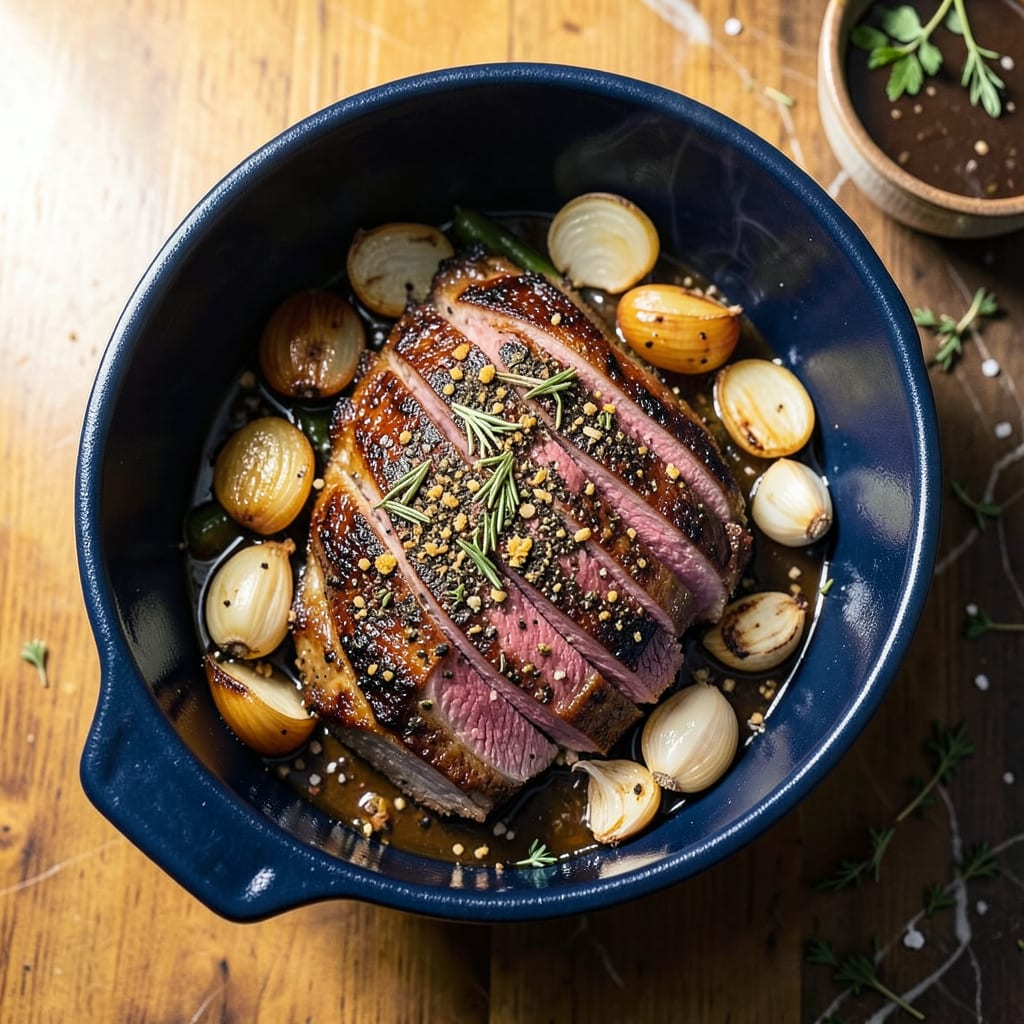
Cooking prime rib in a crock pot transforms this luxurious cut into a tender, foolproof centerpiece with minimal hands-on effort. The slow, even heat breaks down connective tissue while preserving juiciness—no expensive equipment or advanced techniques required. This method delivers consistent results, whether you’re serving a holiday crowd or treating yourself to a special weeknight meal.
What sets this approach apart is the precision: a simple herb crust, the right temperature settings, and careful timing ensure perfect doneness every time. The result is fall-apart tender prime rib with a rich, flavorful crust that rivals traditional roasting methods. All that’s left is to carve and serve—dinner is ready to impress.
Ingredients for Prime Rib Recipe Crock Pot
Sixteen ingredients transform prime rib into a slow-cooked masterpiece with restaurant-quality tenderness and minimal active preparation time.
| Ingredient | Amount | Notes |
|---|---|---|
| Bone-In Prime Rib Roast 🥩 | 4 lb | First-cut preferred for even cooking |
| Kosher Salt 🧂 | 2 tbsp | Diamond Crystal brand recommended |
| Freshly Ground Black Pepper 🌶️ | 2 tbsp | Coarse grind for crust formation |
| Dried Thyme Leaves 🌿 | 1 tbsp | French thyme preferred for flavor |
| Dried Rosemary 🌿 | 1 tbsp | Crushed between fingers to release oils |
| Garlic Powder 🧄 | 1 tbsp | Not garlic salt substitute |
| Onion Powder 🧅 | 1 tbsp | Freshly opened for potency |
| Worcestershire Sauce 💧 | 2 tbsp | Lea & Perrins preferred brand |
| Beef Broth 🍲 | 1 cup | Low-sodium for controlled seasoning |
| Extra-Virgin Olive Oil 🫒 | 2 tbsp | First cold-press quality |
| Unsalted Butter 🧈 | 2 tbsp | European-style preferred for richness |
| Fresh Horseradish Root 🌿 | 2 tbsp | Peeled and finely grated |
| Red Wine 🍷 | ½ cup | Dry variety like Cabernet Sauvignon |
| Yellow Onion 🧅 | 1 whole | Large, thinly sliced for aromatic base |
| Carrots 🥕 | 3 whole | Cut into 2-inch chunks for flavor |
[recipeingredientscaler]
Optimal quality requires selecting a well-marbled first-cut prime rib roast from reputable butchers or high-end grocery chains like Whole Foods or Costco. The Diamond Crystal kosher salt and coarse black pepper form the crust foundation—professional kitchens use these for their purity and consistent grain size. Freshness matters with dried herbs: Penzeys or recently purchased supermarket brands ensure potency. The Worcestershire sauce should be Lea & Perrins for authentic umami development without artificial additives.
For substitutions, garlic cloves (6 minced) can replace garlic powder at a 3:1 ratio, though texture will differ. Dijon mustard (1 tbsp) works as a horseradish alternative with milder heat. When selecting wine, any dry red (Cabernet Sauvignon, Merlot) suffices—avoid sweet varieties that caramelize excessively. The beef broth may be substituted with mushroom broth for vegetarian adaptation, though flavor profile will shift. Standard practice is maintaining liquid volume ratios when modifying ingredients.
Storage considerations prioritize food safety with raw meat. Keep the prime rib refrigerated at 38-40°F until cooking, using within 3-5 days of purchase. Prepared leftovers maintain quality for 4 days refrigerated or 3 months frozen when vacuum-sealed. The herb mixture can be pre-combined and stored in airtight containers for up to 6 months, preserving potency for future use. Always bring meat to room temperature (about 1 hour) before slow cooking for even doneness.
Why You’ll Love This Recipe
- Set-and-Forget Magic: Honestly, I just rub that bone-in roast with kosher salt, pepper, and those dried herbs—thyme and rosemary cling like they’re meant to be there—then let the crock pot do the heavy lifting. No basting, no stress, just walk away and come back to something that smells like a steakhouse took over your kitchen.
- Herb-Crusted Luxury: That crust? It’s all about the slow heat turning the salt, pepper, and herbs into this crackly, fragrant armor. The thyme and rosemary don’t just season—they infuse, so every bite tastes like it’s been roasting for hours (because it has, but you didn’t lift a finger).
- Holiday or Tuesday: I’ve served this at Christmas dinner and, yes, on a random Tuesday when I craved something fancy without the fuss. The crock pot makes it adaptable—feed a crowd or just me for three days of leftovers (which, by the way, make insane French dip sandwiches).
- Budget-Friendly Splurge: Here’s what sold me—a bone-in prime rib feels like a splurge, but slow-cooking it means no waste. The leftovers stretch into tacos, hash, or even a rich beef broth. One roast, four meals, and zero guilt about the price per plate.
Step-by-Step Instructions for Crock Pot Prime Rib
This method delivers perfectly tender prime rib with minimal active cooking time and maximum flavor development.
Step 1: Prepare the Dry Rub and Season the Roast
In a small bowl, combine the 2 tbsp kosher salt, 2 tbsp freshly ground black pepper, 1 tbsp dried thyme leaves, 1 tbsp dried rosemary, 1 tbsp garlic powder, and 1 tbsp onion powder. Crush the rosemary between your fingers as you add it to release its aromatic oils. This blend creates a robust crust that will infuse the meat during the long, slow cooking process.
Pat the 4 lb bone-in prime rib roast completely dry with paper towels—this ensures the rub adheres properly. Apply the spice mixture evenly over all surfaces of the roast, pressing gently to create a uniform coating. The salt will begin drawing out moisture immediately, so proceed to the next step without delay.
Step 2: Sear the Roast for Depth of Flavor
Heat the 2 tbsp extra-virgin olive oil in a large skillet over medium-high heat until it shimmers but doesn’t smoke. Add the seasoned roast and sear for 3-4 minutes per side until a deep, golden-brown crust forms. This Maillard reaction creates complex flavors that will permeate the meat during slow cooking.
During searing, add the 2 tbsp Worcestershire sauce to the pan and let it reduce slightly, using a spoon to baste the roast with the caramelized mixture. Transfer the seared roast to your slow cooker, placing it bone-side down to elevate the meat from the cooking liquid.
Step 3: Build the Cooking Environment
To the same skillet, add the thinly sliced yellow onion and cook over medium heat for 3-4 minutes until softened and beginning to caramelize. Add the 3 whole carrots cut into 2-inch chunks and cook for an additional 2 minutes. Deglaze the pan with the 0.5 cup red wine, scraping up all browned bits from the bottom.
Pour this vegetable mixture into the slow cooker around the roast. Add the 1 cup beef broth and 2 tbsp unsalted butter to the slow cooker. The liquid should come about halfway up the roast—this creates the ideal moist heat environment for tenderizing the meat without boiling it.
Step 4: Slow Cook to Perfection
Cover the slow cooker and cook on low setting for 6-7 hours. This extended cooking time at a consistent 190-200°F breaks down collagen without drying out the meat. Avoid the temptation to check or stir during cooking—each time you lift the lid, you add 20-30 minutes to the cooking time.
The roast is done when it reaches an internal temperature of 145°F for medium-rare or 160°F for medium when tested with an instant-read thermometer inserted into the thickest part. You’ll notice the meat has shrunk slightly from the bone and offers minimal resistance when probed.
Step 5: Rest and Serve with Pan Juices
Carefully transfer the roast to a cutting board and tent loosely with foil. Let it rest for 15-20 minutes—this allows the muscle fibers to relax and reabsorb juices. Meanwhile, strain the cooking liquids through a fine-mesh sieve into a saucepan, pressing on the solids to extract all flavor.
Simmer the strained juices over medium heat for 5-7 minutes until reduced by about one-third. Whisk in the 2 tbsp freshly grated horseradish root just before serving. Slice the roast against the grain and serve with the reduced pan juices spooned over the top, ensuring each serving gets some of the flavorful crust.
Serving Suggestions for This prime rib recipe crock pot
Classic Plating Style
For an elegant presentation, slice the prime rib against the grain into ½-inch thick pieces and fan them slightly on a warm platter. Drizzle the reduced pan juices over the top, then sprinkle with flaky sea salt and freshly cracked black pepper. I love garnishing with fresh rosemary sprigs for a pop of color and aroma. 🌿
Wine Pairing Essentials
A full-bodied red wine complements the richness perfectly. I recommend a Cabernet Sauvignon with dark fruit notes or a Syrah for its peppery finish. For white wine lovers, an oaked Chardonnay with buttery undertones balances the herb crust beautifully. Serve at 60-65°F for optimal flavor.
Side Dish Harmony
Creamy garlic mashed potatoes soak up the pan juices wonderfully—I use Yukon Gold potatoes and whole milk for extra richness. For freshness, pair with roasted Brussels sprouts tossed with balsamic glaze and toasted pecans. The contrast in textures makes every bite exciting.
Bread Basket Options
A crusty sourdough baguette or warm popovers are perfect for mopping up those delicious juices. I like to serve them with whipped horseradish butter—just mix ½ cup softened butter with 1 tbsp prepared horseradish. Toast the bread lightly before serving for extra crunch.
Au Jus Enhancement
For an extra flavor boost, stir 1 tsp Dijon mustard and ½ tsp soy sauce into the reduced pan juices. This adds depth without overpowering the natural beef flavors. I also like to float thin butter slices on top just before serving—they melt slowly, creating a luxurious sheen.
Family-Style Serving
For casual gatherings, keep the roast whole on a wooden board with a sharp carving knife. Arrange small bowls of horseradish cream, grainy mustard, and pickled onions around it. Let guests carve their own slices—it becomes part of the experience. The bone makes a dramatic centerpiece! 💛
Nutrition Facts
Frequently Asked Questions
Do I need to sear the roast before slow cooking?
Searing is highly recommended for developing deep, caramelized flavors. The 3-4 minutes per side in a hot skillet creates the Maillard reaction, which adds complexity to the final dish. If you skip this step, the meat will still cook through but lack that rich crust.
Can I use a boneless roast instead?
Yes, but bone-in roasts generally stay juicier during long cooking. For boneless, reduce cooking time by about 1 hour since it cooks faster. The bone also adds flavor to the cooking liquid, so you might want to add extra aromatics to compensate.
What if my roast finishes cooking early?
If done before serving time, turn the crock pot to warm setting and let it rest in the liquid. The temperature will hold safely for up to 2 hours. Avoid reheating, as this can dry out the meat—just carve and serve when ready.
Why is my prime rib tough after slow cooking?
Toughness usually means it didn’t cook long enough to break down collagen. Check that your crock pot maintains 190-200°F on low. If unsure, use a probe thermometer to verify the internal temperature reaches at least 145°F for medium-rare.
Can I make this recipe in an Instant Pot?
Yes, but adjust the method: use the sauté function to sear, then pressure cook on high for 20 minutes per pound. Let pressure release naturally for 15 minutes before quick-releasing. The texture will differ slightly from slow cooking.

- 8 Bean Soup Recipe Crock Pot: Hearty Vegetable Medley in One Pot - September 25, 2026
- 4C Bread Crumbs Meatballs Recipe: Crispy Crust and Juicy Centers - September 25, 2026
- 6 Oz Chocolate Chip Cookie Recipe: Perfectly Balanced Crispy Edges and Chewy Hearts - September 25, 2026