
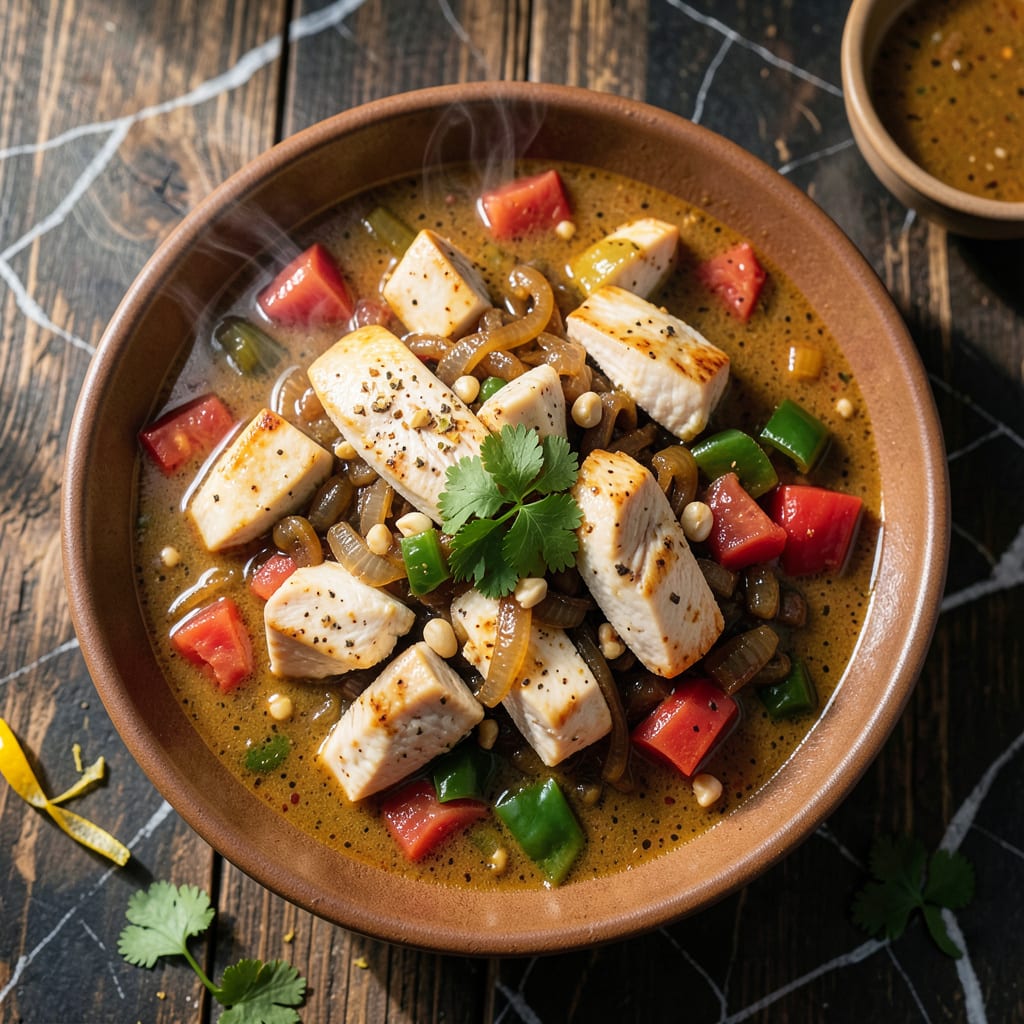
This low-fat chicken curry delivers all the bold, spiced flavors you love without the extra calories. I’ve refined this recipe to use minimal oil while maximizing taste through carefully balanced spices and slow simmering.
The result is a tender, aromatic dish that’s light yet deeply satisfying. Perfect for a healthy weeknight meal that doesn’t compromise on flavor or richness.
Ingredients for Chicken Curry Low Fat
Every spice has a purpose in this light but flavor-packed curry dish.
| Ingredient | Amount | Notes |
|---|---|---|
| Boneless Skinless Chicken Breasts 🍗 | 1 ½ lb | Cut into 1-inch pieces |
| Onion 🧅 | 1 whole | Finely diced, medium size |
| Garlic Cloves 🧄 | 4 cloves | Minced for depth |
| Fresh Ginger Root 🌿 | 1 tbsp | Peeled and grated |
| Green Bell Pepper 🌶️ | 1 whole | Diced into small pieces |
| Diced Tomatoes 🍅 | 1 can | 14.5 oz can, undrained |
| Unsweetened Coconut Milk 🥥 | 1 can | Light variety for lower fat |
| Ground Cumin 🌿 | 1 ½ tsp | Toasted for warmth |
| Ground Coriander 🌿 | 1 ½ tsp | Freshly ground preferred |
| Turmeric Powder 🌶️ | 1 tsp | For color and earthiness |
| Garam Masala 🌶️ | 1 tsp | Or substitute curry powder |
| Cayenne Pepper 🔥 | ¼ tsp | Adjust for heat preference |
| Olive Oil 🫒 | 1 tbsp | Light or extra-light variety |
| Low-Sodium Chicken Broth 🍲 | 1 cup | For added depth |
| Fresh Cilantro 🌿 | ¼ cup | Chopped, for garnish |
The chicken is key here—boneless, skinless breasts stay lean while soaking up all those spices. I grab mine from Whole Foods or Trader Joe’s for quality without the price markup. For the coconut milk, light unsweetened keeps it low-fat but still creamy (the canned stuff in the Asian aisle is usually full-fat, so check labels). Fresh ginger and garlic make a huge difference—don’t skip them.
No garam masala? Curry powder at a 1:1 ratio works fine. Out of fresh cilantro? Parsley or mint bring a different but nice brightness. If you’re avoiding coconut, low-fat evaporated milk can stand in for the coconut milk (add a pinch of curry powder for depth). The cayenne is flexible—half the amount for mild heat, double it if you like it spicy.
This tastes even better the next day once the flavors meld. Keeps 4-5 days in the fridge, or freeze for 3 months. I portion leftovers into containers for easy lunches.
Why You’ll Love This Recipe
- One Pot Wonder: I love that everything—chicken, onion, ginger, and bell pepper—cooks together in a single pan. Minimal mess, maximum flavor.
- Aroma Overload: The garlic and fresh ginger hit your nose before the curry even hits the plate. Honestly, it’s the smell that gets me every time.
- Meal Prep Magic: This curry reheats beautifully, so I make a big batch and pack it for lunch all week. (Yes, even on a Tuesday night)
- Light but Filling: Using skinless chicken breasts keeps it lean, but the spices make it taste indulgent. I never feel like I’m missing out.
Step-by-Step Instructions for Chicken Curry
Here’s the method that delivers rich, aromatic flavor while keeping things light and satisfying.
Step 1: Sauté the Aromatics for Maximum Depth
Heat the 1 tbsp olive oil in a large, heavy-bottomed pot over medium heat. Add the 1 whole onion, finely diced, and cook for 5-6 minutes until translucent and just beginning to soften at the edges. This builds the flavor foundation without risking burnt bits.
Stir in the 1 tbsp fresh ginger root (peeled and grated), 4 cloves garlic cloves (minced), and 1 whole green bell pepper (diced). Sauté for another 3 minutes until the mixture is fragrant and the peppers start to soften. Keep the heat moderate—you want to coax out the aromas, not burn the spices.
Step 2: Toast the Spices and Brown the Chicken
Add the 1.5 tsp ground cumin, 1.5 tsp ground coriander, 1 tsp turmeric powder, 1 tsp garam masala, and 0.25 tsp cayenne pepper. Toast the spices for 1 minute, stirring constantly, until their scent intensifies and they deepen slightly in color.
Immediately add the 1.5 lb boneless skinless chicken breasts, cut into 1-inch pieces. Sear for 4-5 minutes, stirring occasionally, until the chicken turns opaque on all sides and develops a light golden hue. This step locks in moisture while infusing the meat with the warm spices.
Step 3: Simmer in Liquid for Tenderness
Pour in the 1 can diced tomatoes (undrained) and 1 cup low-sodium chicken broth. Scrape the bottom of the pot to release any browned bits—this adds depth to the sauce. Bring the mixture to a gentle simmer, then reduce the heat to low.
Cover and let it cook for 15 minutes, stirring once halfway through. The chicken should be nearly cooked through and tender when pierced with a fork.
Step 4: Finish with Coconut Milk and Garnish
Stir in the 1 can unsweetened coconut milk (light variety) and simmer uncovered for 5-7 minutes until the chicken is fully cooked and the sauce thickens slightly. The sauce should coat the back of a spoon but still have a pourable consistency.
Taste and adjust seasoning if needed. Remove from heat and let it sit for 2 minutes to allow the flavors to meld. Just before serving, stir in the 0.25 cup fresh cilantro, chopped, reserving a small handful for garnish. Serve hot over steamed rice or with naan for a complete, satisfying meal.
Pro Tips For Making Chicken Curry Low Fat
- Trim the Chicken: Pat the boneless skinless chicken breasts dry with paper towels before cubing—this helps them brown better without needing extra oil. I learned this the hard way after my first few batches stewed instead of seared.
- Bloom the Spices: Cook the minced garlic, ginger, and any dry spices in a splash of water or broth for 1-2 minutes before adding the chicken. Sounds weird, but it works to build flavor without oil.
- Skip the Overcooking: Pull the chicken off the heat as soon as it hits 160°F—it’ll finish cooking while resting. After burning three batches of dry curry, I finally figured out timing is everything with lean breast meat.
- Use Bell Pepper Late: Add the diced green bell pepper during the last 10 minutes of cooking so it stays crisp and bright. My grandmother swore by this, and she was right: mushy peppers ruin the texture.
Essential Equipment for Perfect Results
Heavy-Bottomed Pot
A 5-6 quart Dutch oven or heavy pot is essential for even heat distribution. I use my Le Creuset enameled cast iron—it prevents hot spots that can burn spices. Avoid thin aluminum pots that warp or heat unevenly, especially for long simmers.
Wooden Spoon
Wood doesn’t scratch your pot’s surface like metal can, and it’s perfect for stirring the curry without breaking up the chicken. A 12-inch wooden spoon gives you the reach you need. I keep mine right by the stove for this exact purpose.
Chef’s Knife
A sharp 8-inch chef’s knife makes quick work of dicing the onion, bell pepper, and chicken. I swear by Wüsthof or Victorinox for quality that lasts. Dull knives slip and require more force—dangerous and inefficient. 💡
Cutting Board
Use a large plastic or wood cutting board (at least 12×18 inches) to give yourself space. I prefer wood for its knife-friendly surface and natural antimicrobial properties. Always wash with hot, soapy water after handling raw chicken.
Measuring Spoons
Accurate spice measurement is crucial for balanced flavor. I use magnetic stainless steel measuring spoons that stay organized. A 1 tsp and ½ tsp are the most used for this recipe. Don’t eyeball it—spices can overpower quickly.
Ladle for Serving
A 1-cup ladle makes serving this curry over rice or into bowls mess-free. I like the OXO Good Grips version—it’s comfortable and the soft handle doesn’t slip. Plus, it nests nicely in the pot while the curry simmers. 🥗
Nutrition Facts
Frequently Asked Questions
Can I use chicken thighs instead of breasts?
Yes, but use skinless thighs and trim visible fat to keep it low-fat. Thighs stay juicier during cooking. Reduce simmering time to 12 minutes since dark meat cooks faster.
How do I make it spicier without adding fat?
Increase the cayenne to ½ tsp or add ½ tsp red pepper flakes. Fresh chili peppers like serrano also work well. Stir in at the same time as other spices for even flavor.
Can I skip the coconut milk entirely?
For a dairy option, use 1 cup low-fat Greek yogurt stirred in at the end. For non-dairy, try unsweetened almond milk with 1 tsp cornstarch to thicken.
How long will leftovers keep?
Store in an airtight container in the fridge for 4-5 days. Freeze for up to 3 months in portion-sized containers. Thaw overnight before reheating.

- 8 Bean Soup Recipe Crock Pot: Hearty Vegetable Medley in One Pot - September 25, 2026
- 4C Bread Crumbs Meatballs Recipe: Crispy Crust and Juicy Centers - September 25, 2026
- 6 Oz Chocolate Chip Cookie Recipe: Perfectly Balanced Crispy Edges and Chewy Hearts - September 25, 2026