
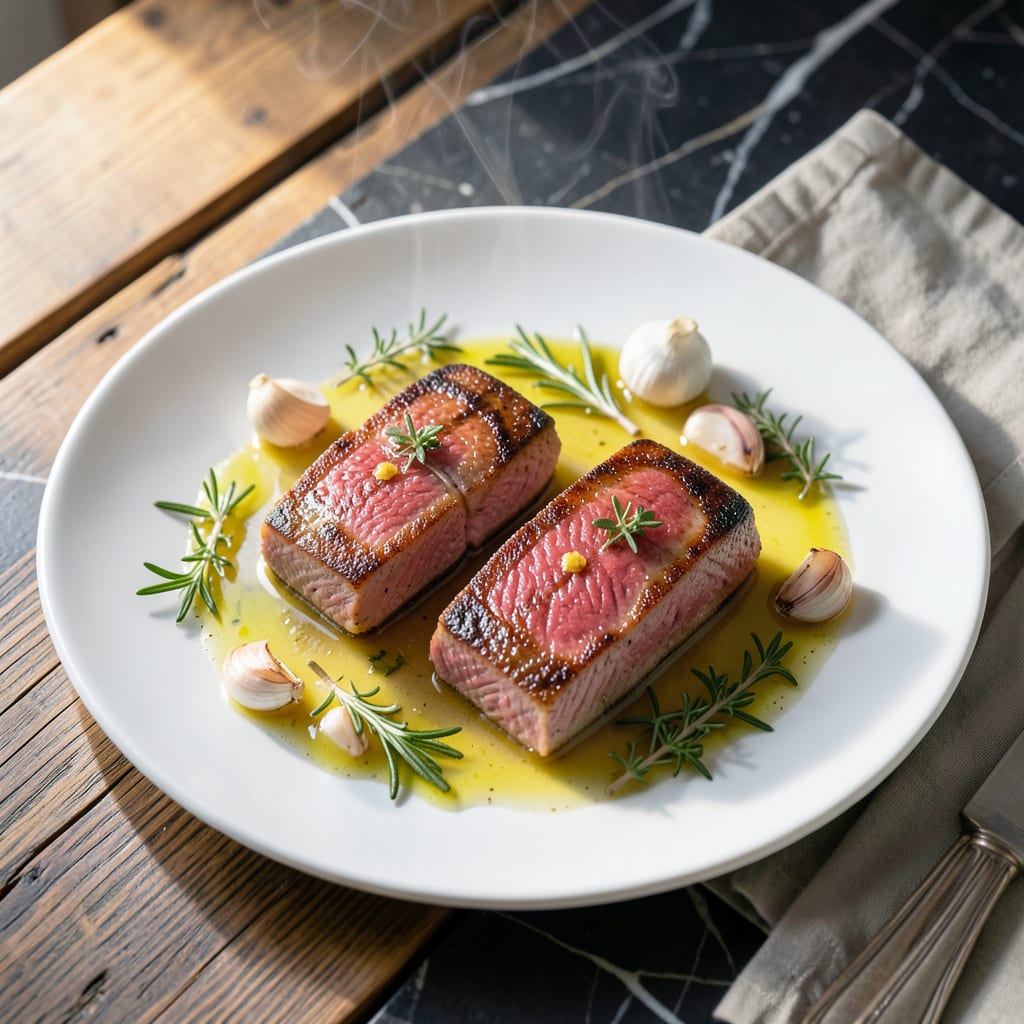
This fat-free tuna dish proves that bold Mediterranean flavors don’t require oil. I developed this method to keep the fish moist and flavorful without added fats.
Using a simple poaching technique with lemon, herbs, and broth, the tuna stays tender and juicy. It’s a light yet satisfying meal that works for any day of the week.
Ingredients for Fat Free Tuna
Mediterranean simplicity at its finest with fresh herbs, citrus, and tender tuna steaks poached to perfection.
| Ingredient | Amount | Notes |
|---|---|---|
| Tuna Steaks 🐟 | 1 ½ lb | Sushi-grade, about 1 inch thick |
| Low-Sodium Chicken Broth 🍲 | 2 cups | Or substitute vegetable broth |
| Fresh Lemon Juice 🍋 | ½ cup | About 3-4 large lemons |
| Lemon Zest 🍋 | 1 tbsp | From 1-2 lemons |
| Garlic Cloves 🧄 | 6 cloves | Thinly sliced for poaching |
| Fresh Rosemary Sprigs 🌿 | 4 whole | Plus extra for garnish |
| Fresh Thyme Sprigs 🌿 | 6 whole | Stems removed before serving |
| Bay Leaves 🍃 | 2 whole | Dried or fresh |
| Red Pepper Flakes 🌶️ | ½ tsp | Adjust for heat preference |
| Kalata Olives 🫒 | ½ cup | Pitted and halved |
| Cherry Tomatoes 🍅 | 1 cup | Halved for garnish |
| Fresh Parsley 🌿 | ¼ cup | Chopped for garnish |
| Black Peppercorns 🌶️ | 1 tsp | Lightly crushed for poaching |
| Kosher Salt 🧂 | 1 tsp | Plus more to taste |
Optimal quality requires sushi-grade tuna steaks—look for vibrant color and a clean, ocean-like scent at Whole Foods or a trusted seafood counter. The broth forms the poaching liquid, so use low-sodium to control seasoning. Fresh herbs are non-negotiable here: rosemary and thyme infuse beautifully during cooking. I source my herbs from Trader Joe’s for consistent freshness and potency.
No fresh herbs? Dried herbs at one-third the amount work in a pinch, though the flavor won’t be as bright. For the broth, vegetable broth maintains the pescatarian profile. If you can’t find Kalata olives, Kalamata from a jar are an excellent substitute. The lemon juice can be bottled (I won’t judge), but freshly squeezed delivers superior acidity and aroma.
Poached tuna keeps for 2-3 days in the fridge—store it submerged in the cooking liquid to maintain moisture. The garnishes (olives, tomatoes, parsley) are best added fresh. Leftovers make excellent salads or sandwiches, though the tuna is most tender when served immediately after cooking.
Why You’ll Love This Recipe
- One Pan Magic: I just sear the tuna steaks, then let them simmer in the broth with lemon and garlic—minimal cleanup, maximum flavor.
- Zesty Perfection: The lemon zest and juice brighten up the tuna so much that I don’t miss the fat at all.
- Meal Prep Hero: I make a batch on Sunday, and it tastes just as good reheated for lunch the next day.
- Budget Friendly: Tuna steaks stretch further in this broth-based dish, so I get a fancy-feeling meal without the fancy price.
Step-by-Step Instructions for Fat Free Tuna
Master this oil-free poaching technique for perfectly tender tuna with Mediterranean flair.
Step 1: Prepare the Aromatic Poaching Liquid
In a wide, deep skillet, combine the 2 cups low-sodium chicken broth, 0.5 cup fresh lemon juice, 1 tbsp lemon zest, 6 cloves garlic cloves, 4 whole fresh rosemary sprigs, 6 whole fresh thyme sprigs, 2 whole bay leaves, 1 tsp black peppercorns, 1 tsp kosher salt, and 0.5 tsp red pepper flakes.
Bring to a gentle simmer over medium heat—you should see small bubbles breaking the surface, not a rolling boil. This ensures the tuna cooks evenly without toughening. Let the liquid simmer for 5 minutes to allow the flavors to meld and infuse the broth with bright citrus and herbal notes.
Step 2: Poach the Tuna Steaks to Perfection
Carefully lower the 1.5 lb tuna steaks into the simmering liquid, ensuring they are fully submerged. The liquid should just cover the steaks—if not, add a splash of water. Maintain a gentle simmer and poach for 8-10 minutes, depending on thickness, until the fish flakes easily when tested with a fork.
Resist the urge to stir or prod the steaks. The tuna is done when it turns opaque and reaches an internal temperature of 145°F. Overcooking will result in dry, tough fish. Remove the skillet from heat and let the tuna rest in the warm liquid for 2 minutes to finish cooking gently.
Step 3: Prepare the Mediterranean Garnish
While the tuna poaches, pit and halve the 0.5 cup Kalata olives and halve the 1 cup cherry tomatoes. Chop the 0.25 cup fresh parsley finely. These garnishes will add freshness, color, and a briny contrast to the delicate tuna.
Remove the tuna from the poaching liquid using a slotted spatula and transfer to a serving platter. Discard the rosemary, thyme, and bay leaves from the liquid. If desired, strain the poaching liquid and reserve it for a light sauce or drizzle over the tuna before serving.
Step 4: Plate and Serve Immediately
Arrange the poached tuna steaks on a platter and surround them with the halved cherry tomatoes and Kalata olives. Spoon a small amount of the warm poaching liquid over the fish to keep it moist. This enhances the flavor without adding any oil.
Sprinkle the chopped fresh parsley over the top for a pop of color and freshness. Serve immediately while the tuna is warm and at its most tender. The absence of added fat allows the natural flavors of the fish and Mediterranean herbs to shine through in every bite.
Pro Tips For Making Fat Free Tuna
- Sear High, Simmer Low: Crank the heat to high for a 2-minute sear on each side of the tuna steaks, then drop to low for the broth poaching—I learned this the hard way after ending up with dry, overcooked tuna.
- Zest Before Juicing: Always zest the lemon first before cutting it open for juice, because once it’s halved, it’s nearly impossible to get clean zest without bitter pith.
- Skip the Overcooking: Pull the tuna from the broth as soon as it turns opaque—about 5-7 minutes total—since it’ll keep cooking off the heat if you wait.
- Use Fresh Garlic: Sounds obvious, but jarred minced garlic just doesn’t hold up in this light broth like freshly crushed cloves do—after trying both, I never go back.
Flavor Customization for These Flavors
Citrus Boost
Add 1 tbsp orange zest to the poaching liquid for a brighter, more complex citrus profile. I also love adding 2 strips of orange peel during cooking—they infuse the broth with a subtle sweetness that complements the lemon beautifully. 🍊
Herb Variations
Swap the rosemary and thyme for fresh dill and fennel fronds for a more Greek-inspired flavor. Alternatively, try tarragon and chives for a French twist. Just
Spice It Up
For heat lovers, increase the red pepper flakes to 1 tsp or add 1 sliced jalapeño to the poaching liquid. I also enjoy a pinch of smoked paprika for depth. These additions won’t compromise the fat-free nature of the dish.
Vegetable Additions
Enhance the poaching liquid with ½ cup sliced fennel bulb or ¼ cup thinly sliced red onion. These vegetables soften during cooking and add extra flavor layers. Remove them before serving if you prefer a cleaner presentation.
Finishing Touches
Before serving, sprinkle with 1 tbsp capers for a briny punch or 1 tsp lemon zest for extra freshness. A squeeze of fresh lemon juice just before eating brightens all the flavors wonderfully. ✨
Broth Swaps
For a more intense flavor, use 1 cup white wine and 1 cup broth in the poaching liquid. The wine adds acidity and complexity. If using wine, choose a dry variety like Pinot Grigio to avoid overpowering the tuna.
Nutrition Facts
Frequently Asked Questions
What’s the best way to keep the tuna moist without oil?
Poaching in a flavorful broth is key. The 8-10 minutes in simmering liquid with herbs and citrus keeps it tender. Avoid boiling to prevent drying out.
Can I use canned tuna instead of fresh steaks?
Not recommended. Canned tuna is pre-cooked and too delicate for poaching. Fresh sushi-grade steaks hold up best to this method for optimal texture.
How do I know when the tuna is done?
Check for an internal temperature of 145°F. The flesh should flake easily with a fork and turn opaque. Overcooking makes it tough.
What can I use if I don’t have fresh herbs?
Use dried herbs at 1/3 the amount. While less vibrant, they still infuse flavor. Dried rosemary and thyme work well in the poaching liquid.

- 8 Bean Soup Recipe Crock Pot: Hearty Vegetable Medley in One Pot - September 25, 2026
- 4C Bread Crumbs Meatballs Recipe: Crispy Crust and Juicy Centers - September 25, 2026
- 6 Oz Chocolate Chip Cookie Recipe: Perfectly Balanced Crispy Edges and Chewy Hearts - September 25, 2026