
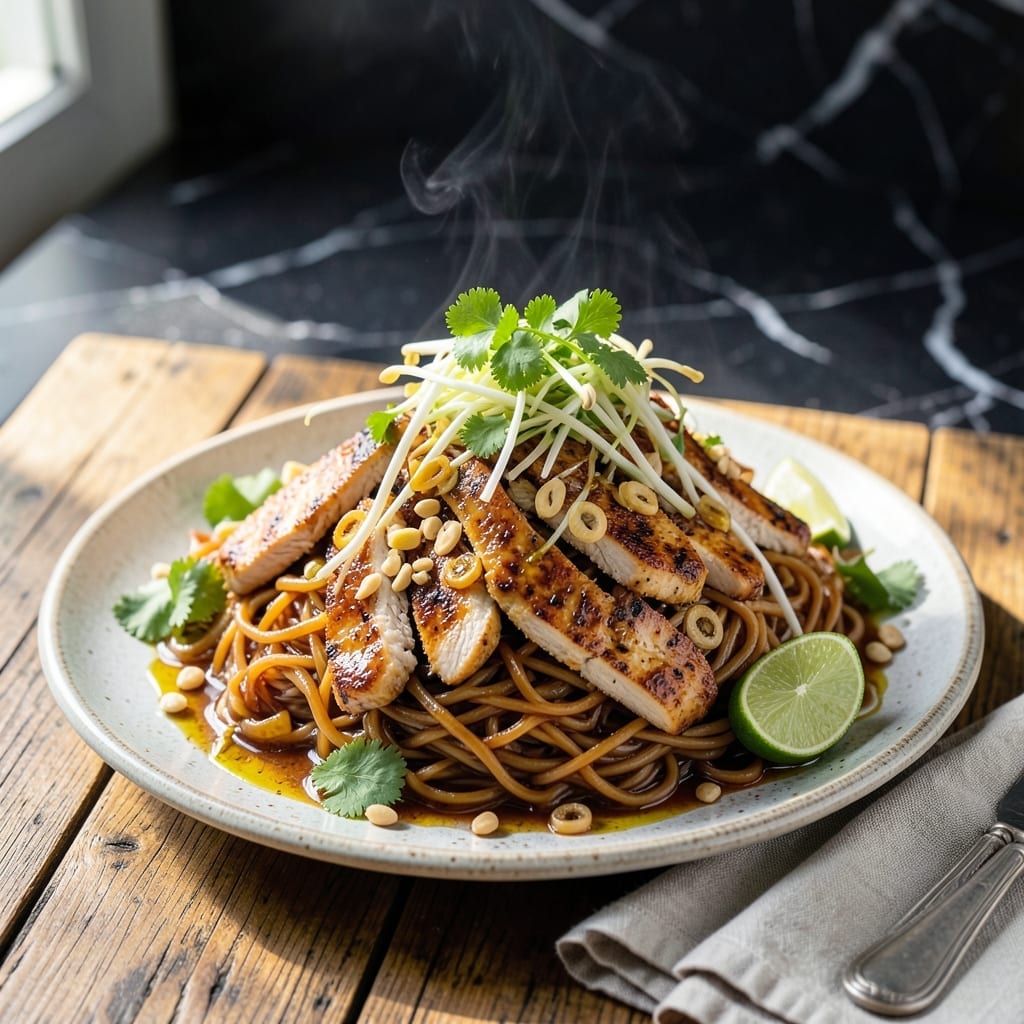
This Instant Pot version brings authentic street food flavors to your kitchen in under 30 minutes. The pressure cooker locks in the vibrant taste of tamarind, fish sauce, and lime that defines classic pad thai.
Chicken stays tender while rice noodles absorb the rich, tangy sauce. The key is layering ingredients properly and using the sauté function at just the right moment to create that signature wok-seared flavor.
You’ll achieve perfectly balanced sweet, sour, and umami notes in every bite. The dish comes together quickly without sacrificing the complex flavors that make pad thai so beloved.
Serve garnished with crushed peanuts, lime wedges, and fresh cilantro for the full experience. This method delivers restaurant-quality results with minimal effort.
Ingredients for Chicken Pad Thai Instant Pot
Authentic street food flavors come together with pantry staples and fresh garnishes for this dish.
| Ingredient | Amount | Notes |
|---|---|---|
| Rice Noodles 🍜 | 8 oz | Flat, medium-width preferred |
| Boneless Chicken Breast 🍗 | 1 lb | Thinly sliced for even cooking |
| Tamarind Paste 🌿 | 3 tbsp | Pure, no added sugar |
| Fish Sauce 🐟 | 3 tbsp | Thai brand recommended for authenticity |
| Brown Sugar 🍚 | 3 tbsp | Light or dark, packed |
| Lime Juice 🍋 | ¼ cup | Freshly squeezed, about 2-3 limes |
| Soy Sauce 🫒 | 2 tbsp | Low-sodium preferred |
| Garlic Cloves 🧄 | 4 cloves | Minced for maximum flavor |
| Shallot 🧅 | 1 whole | Finely sliced for sauce |
| Large Eggs 🥚 | 2 whole | Lightly beaten for texture |
| Bean Sprouts 🌱 | 1 cup | Fresh, rinsed and drained |
| Crushed Peanuts 🥜 | ½ cup | Unsalted, for garnish |
| Fresh Cilantro 🌿 | ¼ cup | Chopped, for garnish |
| Lime Wedges 🍋 | 4 pieces | For serving alongside |
| Vegetable Oil 🫒 | 2 tbsp | Neutral flavor, for sautéing |
The tamarind paste is non-negotiable for authenticity. Asian markets carry pure versions without additives, but Amazon or World Market work if you’re in a pinch. Look for Thai Kitchen or Maesri brands—they deliver consistent quality. Fish sauce should be Thai (not Vietnamese) for the right balance. Red Boat or Tiparos are top-tier choices available at most specialty grocers.
No tamarind? Equal parts lime juice and brown sugar can mimic the tangy-sweet balance, though the depth won’t be the same. Substitute chicken with shrimp or firm tofu—adjust cooking time accordingly. For a gluten-free version, tamari replaces soy sauce 1:1. The noodles must be rice-based; wheat noodles will turn to mush under pressure.
Store tamarind paste in the fridge for up to 1 year once opened. Fresh cilantro and lime keep for about 1 week in the crisper. The dish actually improves overnight as flavors meld—perfect for 2-3 days of leftovers. Freezing isn’t recommended; the noodles lose texture.
Why You’ll Love This Recipe
- One Pot Wonder: I just toss everything in the Instant Pot and walk away—no babysitting, no stirring.
- Sweet-Tangy Magic: The tamarind paste and brown sugar create that restaurant-quality balance I crave.
- Weeknight Hero: Honestly, it’s my 6 p.m. panic button when I need dinner fast but want it flavorful.
- Budget Stretcher: Boneless chicken breast and rice noodles feed my family for two nights without breaking the bank.
Step-by-Step Instructions for Chicken Pad Thai Instant Pot
This authentic method delivers restaurant-quality results with minimal hands-on time.
Step 1: Sauté Aromatics and Chicken
Set the Instant Pot to Sauté mode and add the 2 tbsp vegetable oil. When shimmering, add the minced 4 cloves garlic cloves and finely sliced 1 whole shallot, stirring constantly for 30-45 seconds until fragrant but not browned.
Add the 1 lb boneless chicken breast, thinly sliced, and cook for 4-5 minutes until the pieces turn opaque and begin to brown. Break up any clumps with your spatula. The chicken should be nearly cooked through at this stage—it will finish under pressure.
Step 2: Build the Sauce Base
Pour in the 3 tbsp tamarind paste, 3 tbsp fish sauce, 3 tbsp brown sugar, 2 tbsp soy sauce, and 0.25 cup lime juice. Stir vigorously to dissolve the brown sugar and combine all elements into a cohesive sauce.
Add the 8 oz rice noodles, ensuring they are fully submerged in the liquid. Break them in half if needed to fit. The noodles will soften slightly during this stage but remain firm until pressure cooking begins.
Step 3: Pressure Cook to Perfection
Secure the lid and set the Instant Pot to High Pressure for 3 minutes. The pressure will build quickly due to the hot base. Once cooking completes, perform a quick release—this prevents the noodles from overcooking and turning mushy.
Open the lid carefully, as there will be residual steam. The noodles should be tender but still have a slight bite, and the chicken should be fully cooked to 165°F internally. If the sauce appears too thick, add ¼ cup of hot water to reach your desired consistency.
Step 4: Incorporate Eggs and Finish
Set the Instant Pot back to Sauté mode. Push the noodles and chicken to one side, creating a well. Pour the 2 whole large eggs, lightly beaten, into the empty space. Stir gently with a spatula until the eggs are just set, about 1-2 minutes.
Fold the eggs into the noodles and chicken, mixing everything together. Add the 1 cup bean sprouts and stir to combine. The sprouts should remain crisp—overcooking will make them soggy. Taste and adjust seasoning if needed, though the initial balance should be spot-on.
Step 5: Garnish and Serve
Transfer the pad thai to serving plates. Top each portion with 0.5 cup crushed peanuts and 0.25 cup fresh cilantro, dividing evenly. The peanuts add crunch, while the cilantro brightens the dish with freshness.
Serve immediately with 4 pieces lime wedges on the side. Encourage guests to squeeze lime over their portions for an extra zing. The dish should have a harmonious balance of sweet, sour, salty, and umami flavors, with all elements distinctly present in each bite.
Pro Tips For Making Chicken Pad Thai Instant Pot
- Soak the Noodles: Cover rice noodles in warm water for 10-12 minutes before pressure cooking—I learned this the hard way after ending up with a gummy, undercooked mess.
- Slice Chicken Thin: Cut boneless chicken breast into ¼-inch strips so it cooks through in the 3-minute pressure cycle without turning rubbery.
- Balance the Sauce: Mix tamarind paste, fish sauce, and brown sugar in a 2:2:1 ratio before adding to the pot—this keeps the flavors consistent instead of guessing mid-cook.
- Quick Release Carefully: Let the pressure release naturally for 2 minutes, then quick release to prevent noodles from overcooking into mush.
Make-Ahead Tips for This Dish
Prep Ahead Strategy
I always prep the sauce components the night before—mix the 3 tbsp tamarind paste, 3 tbsp fish sauce, 3 tbsp brown sugar, and 2 tbsp soy sauce in a jar. This saves 5 minutes of measuring during cooking. The lime juice should be added fresh right before cooking for best flavor. 💡
Noodle Pre-Soaking
Soak the 8 oz rice noodles in warm water for 10-15 minutes before starting. This head start prevents them from turning mushy during pressure cooking. Drain well and toss with a bit of oil to prevent sticking. Trust me, this small step makes a huge difference.
Protein Preparation
Slice the 1 lb boneless chicken breast into thin strips and store in an airtight container with the minced 4 cloves garlic and finely sliced 1 whole shallot. Thismarinates while you prep other ingredients, adding extra flavor without extra effort.
Garnish Station
Chop the 0.25 cup fresh cilantro and crush the 0.5 cup peanuts up to 2 days ahead. Store them separately in sealed containers. Cut the 4 pieces lime wedges just before serving to preserve their juiciness. ✨
Equipment Prep
Have all your tools ready: measuring spoons, cutting board, and a spatula. I keep my Instant Pot liner pre-measured with water marks at 1 cup and 2 cup levels. This saves guesswork when adjusting sauce consistency.
Reheating Tip
If making ahead, undercook the noodles by 1 minute during pressure cooking. When reheating, add 2 tbsp water and use the Sauté function for 2-3 minutes to restore the perfect texture. The flavors deepen overnight, making leftovers even more delicious.
Nutrition Facts
Frequently Asked Questions
Can I use shrimp instead of chicken?
Yes! Use 1 lb of peeled, deveined shrimp and reduce the pressure cooking time to 2 minutes. Add shrimp after sautéing aromatics to prevent overcooking.
Why is my pad thai mushy?
Oversoaking noodles or skipping the quick release can cause this. Soak rice noodles for only 10-15 minutes and release pressure immediately after cooking.
Can I make this gluten-free?
Substitute tamari for soy sauce and ensure all other ingredients are certified gluten-free. The rice noodles are naturally gluten-free.
How do I adjust the sauce thickness?
If too thick, add ¼ cup hot water after pressure cooking. For a thicker sauce, use the Sauté function to reduce it for 2-3 minutes.

- 6 Oz Chocolate Chip Cookie Recipe: Perfectly Balanced Crispy Edges and Chewy Hearts - September 25, 2026
- 6-Inch Coffee Cake Recipe: Vanilla Bean Swirls and Buttery Streusel Topping - September 25, 2026
- 1 Hour Soup Recipe: Velvety Richness Without the Wait - September 25, 2026