
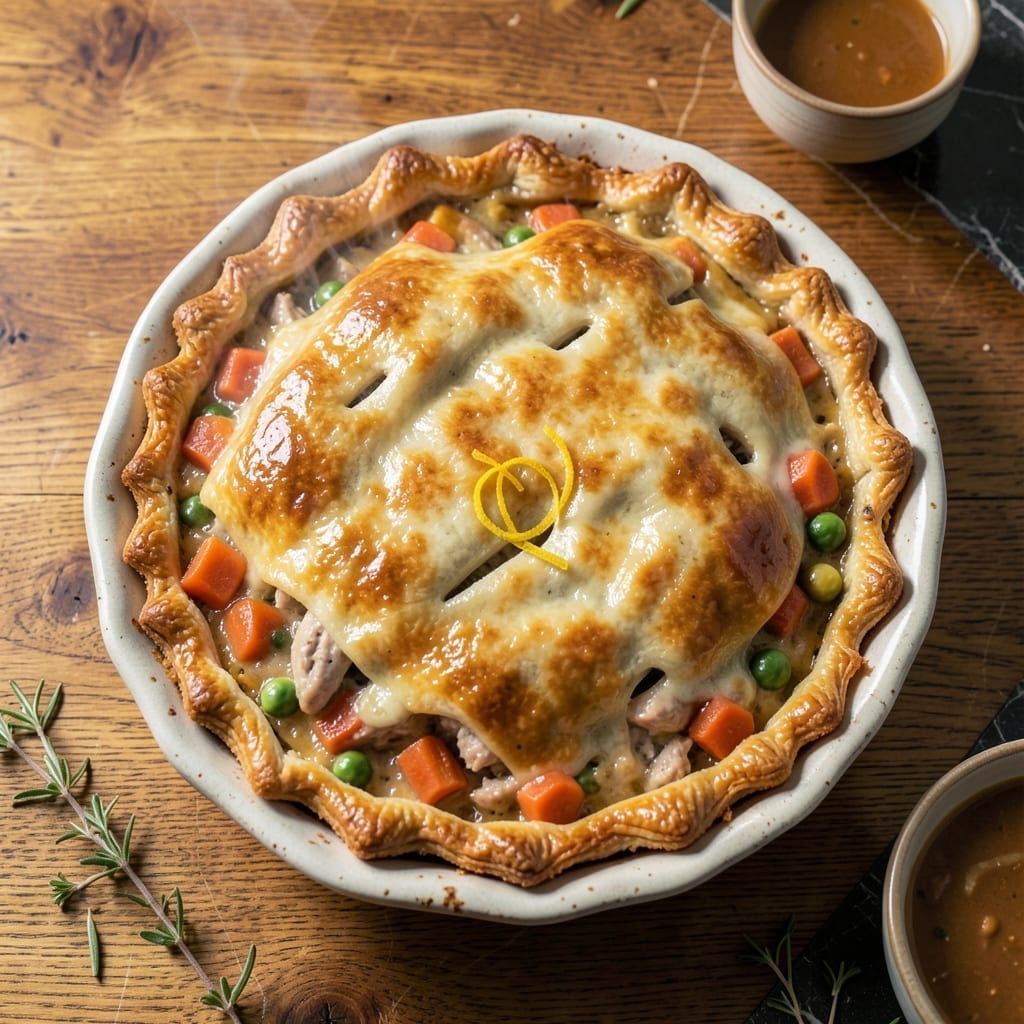
This streamlined crust recipe cuts traditional prep time in half while delivering the same buttery layers you expect from classic chicken pot pie.
Using cold ingredients and a simple folding technique creates flaky texture without the usual fuss. The dough comes together in 15 minutes and bakes to golden perfection.
It’s designed specifically for pot pie, with enough structure to hold the filling while staying tender. The result is a crust that’s crisp on the outside, flaky throughout.
No special equipment needed—just a bowl, rolling pin, and standard oven. Ready to bake in under an hour.
Ingredients for Chicken Pot Pie Crust Recipe Quick
Eight ingredients create buttery, flaky layers for pot pie with minimal effort.
| Ingredient | Amount | Notes |
|---|---|---|
| All-Purpose Flour 🌾 | 2 ½ cups | Plus extra for dusting surface |
| Unsalted Butter 🧈 | 1 cup | Cold, cut into cubes |
| Ice Water 💧 | ½ cup | Plus 1 tbsp as needed |
| Kosher Salt 🧂 | 1 tsp | Diamond Crystal preferred |
| Granulated Sugar 🍚 | 1 tsp | Optional for browning |
| Large Egg 🥚 | 1 whole | For egg wash finish |
| White Vinegar 🧪 | 1 tbsp | Enhances flakiness |
| Baking Powder 🧂 | ½ tsp | Ensures light texture |
The butter is critical here—use high-fat European-style like Plugrá or Kerrygold for maximum flakiness. Cold temperature is non-negotiable; if your kitchen is warm, freeze the cubes for 10 minutes before incorporating. The flour should be unbleached all-purpose (King Arthur is reliable). Ice water must stay icy throughout the process—add a handful of cubes to your measuring cup to keep it cold.
No vinegar? Lemon juice at the same amount works equally well. For a richer crust, substitute half the water with ice-cold vodka—it inhibits gluten formation. If you’re out of baking powder, omit it; the texture will be slightly denser but still serviceable. The egg wash can be replaced with melted butter or cream for a dairy-based finish.
The dough can rest in the refrigerator for up to 2 days or freeze for 1 month. For same-day use, chill at least 30 minutes before rolling. Baked crust keeps well at room temperature for 1 day, though it’s best consumed fresh from the oven.
Why You’ll Love This Recipe
- One Bowl Wonder: I mix the flour, cold butter, and ice water right in the same bowl—no extra dishes, no fuss.
- Buttery Heaven: That flaky crust with the hint of sugar and salt? It’s the reason I always make extra.
- Freezer Friendly: I roll out a double batch and freeze one for next week’s pot pie.
- Budget Keeper: Five basic ingredients I already have in my pantry, and it tastes like a million bucks.
Step-by-Step Instructions for Chicken Pot Pie Crust
This streamlined method delivers flaky, golden layers without the lengthy chilling times of traditional recipes.
Step 1: Prepare the Dry Ingredients and Cold Butter
In a large bowl, whisk together the 2.5 cups All-Purpose Flour, 1 tsp Kosher Salt, 1 tsp Granulated Sugar, and 0.5 tsp Baking Powder until evenly combined. The sugar is optional but adds a subtle golden hue to the finished crust.
Add the 1 cup Unsalted Butter, cold and cut into ½-inch cubes, to the dry mixture. Toss the cubes in the flour to coat evenly. This prevents the butter from sticking together and ensures each piece stays distinct as you work it into the dough.
Step 2: Cut in the Butter for Flaky Texture
Using a pastry cutter or your fingers, work the cold butter into the flour mixture until the largest pieces are the size of small peas. I prefer using my fingertips for this—press each cube between thumb and forefinger, flattening it into a thin disc before breaking it up. This creates thin layers of butter that will steam during baking, producing those coveted flaky layers.
Stop when the mixture resembles coarse crumbs with visible butter flakes. Avoid overworking it; you want those butter pieces to remain intact. The texture should look uneven, not uniform. This step is crucial for achieving that signature flakiness without the long chilling rest.
Step 3: Incorporate the Liquid Ingredients
Create a well in the center of the mixture. Pour in the 0.5 cup Ice Water and 1 tbsp White Vinegar. The vinegar tenderizes the gluten slightly, ensuring a more forgiving crust. Gently fold the mixture with a wooden spoon or silicone spatula until the dough just begins to come together.
At this point, the dough will look shaggy and slightly dry. Resist the urge to add more water. The butter will release moisture as it warms, and the dough will hydrate fully during the brief rest. If it’s too dry, add ice water 1 tablespoon at a time until it holds together when pressed.
Step 4: Form and Rest the Dough
Turn the dough out onto a lightly floured surface and gently knead it 2-3 times just until it forms a cohesive ball. Divide it into two equal portions, flatten each into a 1-inch-thick disc, and wrap them in plastic wrap. Chill for 15 minutes—just enough time to firm the butter without delaying your cooking process.
This abbreviated rest is the key to the “quick” promise. Traditional pie crusts rest for an hour or more, but the cold butter and brief chill here maintain flakiness while cutting the time significantly. The dough will still roll out smoothly and hold its shape when baked.
Step 5: Roll, Fit, and Finish with Egg Wash
On a floured surface, roll one disc into a 12-inch circle about ⅛-inch thick. Fit it into your pie dish, pressing lightly into the edges without stretching. Trim any excess, leaving a slight overhang for crimping. Roll the second disc similarly for the top crust.
Before baking, brush the top crust with a beaten large egg for a glossy, golden finish. Cut a few slits to allow steam to escape. Bake as your recipe directs, typically at 375-400°F until the crust is deep golden brown and the filling is bubbly. The egg wash ensures a professional sheen and enhances browning.
Pro Tips For Making Chicken Pot Pie Crust Recipe Quick
- Chill the Butter: Cut your unsalted butter into small cubes and freeze for 15 minutes before mixing—I learned this the hard way after ending up with a tough, flat crust instead of flaky layers.
- Use Ice-Cold Water: Fill a glass with water and ice cubes, then measure from that for the ice water. About 4-6 tablespoons is perfect, and colder water means a more tender crust.
- Skip Overworking: Mix just until the dough comes together, even if it looks shaggy. After burning three batches to crispy sadness, I finally figured out overworking = tough crust.
- Rest the Dough: Give it a solid 20-30 minutes in the fridge before rolling—my grandmother swore by this, and she was right. It relaxes the gluten and makes rolling a breeze.
Troubleshooting Great chicken pot pie crust recipe quick
Soggy Bottom Crust
Prevent this by blind-baking the bottom crust for 10 minutes at 375°F before adding filling. I also brush the crust with a thin layer of beaten egg white before adding the wet mixture. This creates a moisture barrier that keeps the base crisp. 💡
Crust Shrinking
Dock the dough properly by poking holes with a fork before baking. This releases trapped air that can cause contraction. Always roll the crust slightly larger than your dish—about 1 inch overhang—to account for shrinkage during baking.
Over-Browning Top
If your top crust browns too quickly, tent it loosely with aluminum foil halfway through baking. For extra protection, lower the oven temperature to 350°F and extend the baking time by 5-10 minutes. This gives the filling time to heat through without burning the crust.
Dough Too Sticky
Chill the dough for an additional 5-10 minutes if it’s sticking to your counter. Use all-purpose flour for dusting, but apply it sparingly—too much can make the crust tough. I keep a small bowl of flour nearby and re-dust as needed.
Crust Not Flaky
Ensure your butter stays cold until baking. If the dough feels warm while working, refrigerate it for 10 minutes to rechill. Also, avoid overworking the dough—stop mixing as soon as it comes together. The visible butter flakes in the dough are what create those flaky layers. 🥧
Filling Leaking
Seal the edges tightly by crimping with a fork or your fingers. For extra insurance, brush the bottom crust’s edge with water before placing the top crust. This helps the layers adhere. Vent the top crust adequately with 4-5 slits to allow steam to escape without bursting.
Nutrition Facts
Frequently Asked Questions
Can I use store-bought pie dough instead?
Yes, but the texture won’t be as flaky. For best results, use all-butter puff pastry as a shortcut. It bakes up crisp and golden with minimal effort.
Why does the butter need to stay cold?
Cold butter creates steam during baking, which makes the layers separate and become flaky. If it melts too soon, the crust will be dense instead of light.
How do I prevent the bottom crust from getting soggy?
Blind-bake it for 10 minutes at 375°F before adding filling. Brushing with egg white also creates a moisture barrier.
Can I make this ahead of time?
The dough keeps in the fridge for 2 days or freezes for 1 month. Thaw overnight before rolling for best results.

- 6 Oz Chocolate Chip Cookie Recipe: Perfectly Balanced Crispy Edges and Chewy Hearts - September 25, 2026
- 6-Inch Coffee Cake Recipe: Vanilla Bean Swirls and Buttery Streusel Topping - September 25, 2026
- 1 Hour Soup Recipe: Velvety Richness Without the Wait - September 25, 2026