
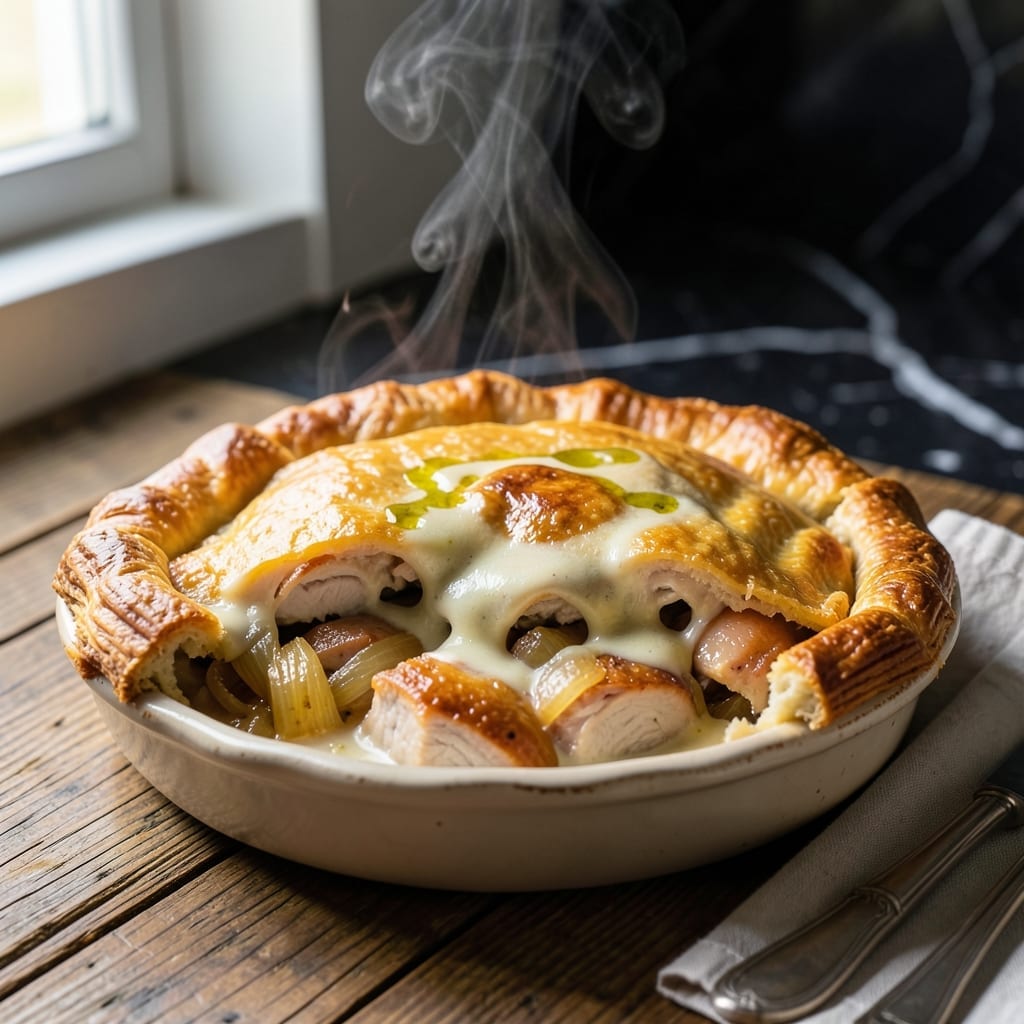
A proper roux transforms chicken pot pie from good to extraordinary, creating that creamy foundation every great filling needs.
I’ve perfected this buttery base through years of testing, ensuring it thickens without lumping and delivers rich, velvety results. The key is equal parts fat and flour cooked to just the right shade—pale gold for a mild flavor.
This method guarantees a smooth, stable sauce that coats every piece of chicken and vegetable in your pie. No curdling, no breaking—just consistent, creamy perfection.
Once mastered, you’ll have the building block for a pot pie that rivals any bakery version. Here’s how to get it right every time.
Ingredients for Chicken Pot Pie Roux
Butter, flour, and stock build that velvety base you crave in every bite.
| Ingredient | Amount | Notes |
|---|---|---|
| Unsalted Butter 🧈 | ½ cup | Cut into small cubes for even melting |
| All-Purpose Flour 🌾 | ½ cup | Sifted for lump-free roux |
| Whole Milk 🥛 | 2 cups | Whole for creaminess |
| Chicken Stock 🍲 | 2 cups | Low-sodium preferred |
| Bone-In Chicken Breast 🍗 | 1 ½ lb | Skin-on for flavor, diced |
| Yellow Onion 🧅 | 1 whole | Medium, finely diced |
| Carrots 🥕 | 2 whole | Medium, peeled and diced |
| Celery Stalks 🌿 | 2 whole | Diced, leaves included |
| Garlic Cloves 🧄 | 3 cloves | Minced for depth |
| Frozen Peas 🌱 | 1 cup | No need to thaw |
| Fresh Thyme Leaves 🌿 | 1 tbsp | Stripped from stems |
| Salt 🧂 | 1 ½ tsp | Diamond Crystal kosher |
| Black Pepper 🌶️ | ½ tsp | Freshly ground |
| Dry White Wine 🍷 | ½ cup | Sauvignon Blanc recommended |
The butter and flour are your foundation—use high-fat European-style butter (like Plugrá or Kerrygold) and all-purpose flour for the smoothest roux. The chicken stock should be homemade or low-sodium so you can control the salt. For the chicken, bone-in, skin-on breasts give the best flavor, but boneless works in a pinch. Pick up fresh thyme from the produce section if you can—it’s worth the extra minute.
No white wine? Extra chicken stock with a squeeze of lemon works fine. Out of fresh thyme? Dried thyme at one-third the amount. If using pre-diced carrots or celery (the good stuff, not the pre-shredded kind), check that they’re still crisp. The peas can be swapped for frozen green beans or corn. Milk alternatives? Half-and-half makes it even richer, or use 2% for a lighter version.
This filling actually improves overnight. Store the finished pie in the fridge for up to 4 days, or freeze unbaked for 3 months. The roux itself keeps 2-3 days in the fridge—just whisk in a splash of milk before using.
Why You’ll Love This Recipe
- One Pot Wonder: I love that the roux comes together right in the same pot I use to poach the chicken—no extra dishes, just rich flavor building in layers.
- Creamy Comfort: The butter and flour create this velvety base that soaks up the chicken stock like a dream, making every bite taste like home.
- Feeds the Freezer: I always double the batch and freeze half—those bone-in breasts stretch far, and the filling reheats beautifully.
- Budget Keeper: Between us, a whole chicken breast and pantry staples make this taste like a fancy meal without the price tag.
Step-by-Step Instructions for Chicken Pot Pie Roux
Follow this method and you’ll create a velvety, lump-free roux that forms the perfect creamy base.
Step 1: Create the Butter-Flour Roux Foundation
In a heavy-bottomed saucepan or Dutch oven, melt the 0.5 cup unsalted butter over medium heat. I use a wooden spoon to stir as it melts—this prevents hot spots from burning the butter. You want it fully melted but not browned.
Add the 0.5 cup all-purpose flour all at once and whisk continuously for 2-3 minutes. The mixture should bubble and foam as it cooks. Keep whisking until it turns a pale golden color and smells lightly nutty—this is your visual and sensory cue that the roux is ready for liquid.
Step 2: Gradually Incorporate the Liquids
With the heat still at medium, slowly pour in the 2 cups whole milk while whisking constantly. I pour from the measuring cup in a thin, steady stream. The mixture will thicken immediately and may look lumpy at first—keep whisking, it will smooth out.
Add the 2 cups chicken stock in the same gradual manner, continuing to whisk. The sauce will thin out as you add the stock, then gradually thicken as it heats. Cook for 3-4 minutes until the mixture coats the back of a spoon and leaves a clear path when you run your finger through it.
Step 3: Build Flavor with Aromatics
Reduce heat to medium-low and add the finely diced yellow onion, carrots, and celery stalks. Cook for 5-6 minutes, stirring occasionally, until the vegetables soften and the onion becomes translucent.
Add the minced garlic cloves and 1 tbsp fresh thyme leaves, cooking for 1 minute until fragrant. Here’s the thing—don’t let the garlic brown or it will turn bitter. The roux should now have a rich, savory aroma that signals it’s ready for the next step.
Step 4: Deglaze and Finish the Roux
Pour in the 0.5 cup dry white wine and stir, scraping up any browned bits from the bottom of the pan. The wine adds acidity that balances the richness and helps develop the complex flavor profile we want.
Season with 1.5 tsp salt and 0.5 tsp black pepper. Simmer the roux for 2-3 minutes until it reaches your desired consistency—it should be thick enough to coat the back of a spoon but still pourable. Taste and adjust seasoning if needed.
At this stage, your roux is ready to receive the cooked bone-in chicken breast and frozen peas to complete the filling. The base should be smooth, creamy, and deeply flavorful.
Pro Tips For Making Chicken Pot Pie Roux
- Cook the Roux Longer: I learned this the hard way—cook your butter and flour mixture until it turns a light golden brown, about 5-7 minutes. This removes the raw flour taste and deepens the flavor.
- Poach the Chicken First: Simmer the bone-in chicken breasts in the stock until just cooked through, then shred. It keeps the meat juicy and infuses the broth with extra flavor.
- Skip the Cold Milk: Warm your whole milk slightly before adding it to the roux. Cold milk can cause the mixture to seize up, and nobody wants lumpy filling.
- Strain the Stock: After poaching the chicken, strain the stock before using it in the roux. This removes any stray bits and ensures a silky-smooth sauce.
Regional Styles of This Dish
Southern Style
In the South, we often add a touch of hot sauce or cayenne pepper to the roux for a subtle kick. I like using Crystal or Tabasco—just ½ tsp enhances the flavors without overpowering. The creamy base pairs beautifully with flaky buttermilk biscuit topping instead of traditional pie crust. 🌶️
New England Tradition
New England pot pies often feature a lighter, golden-colored roux cooked a bit longer for deeper flavor. I’ve seen cooks use half-and-half instead of milk for extra richness. The filling typically includes potatoes along with the classic chicken and veggie mix.
Midwest Comfort
Midwestern versions tend to be heartier, with a darker roux for more toasty notes. Some home cooks add 1 tbsp cornstarch to the flour for extra thickening power. I love how this style often includes mushrooms for added earthiness.
French Influence
A French-inspired pot pie might use a velouté sauce (roux + stock) as the base, with white wine and herbs de Provence for complexity. The roux is often cooked to a blonde stage—just past pale—before liquids are added. This version feels a bit more sophisticated.
Texas Twist
Everything’s bigger in Texas, including the flavors. Here, you might find smoked paprika or cumin added to the roux for a Southwestern flair. I’ve seen recipes that swap some chicken stock for beer—a light lager works best. The crust often has a hint of cheddar cheese mixed in. ✨
Nutrition Facts
Frequently Asked Questions
What’s the best fat-to-flour ratio for a perfect roux?
Use equal parts by volume: 0.5 cup butter to 0.5 cup flour. This 1:1 ratio ensures proper thickening without a pasty texture. Whisk constantly for 2-3 minutes until golden.
Can I make this ahead of time?
Yes! The roux keeps in the fridge for 2-3 days. Store in an airtight container and whisk in a splash of milk before using to restore creaminess.
Why did my roux turn lumpy?
Lumps happen when flour isn’t fully incorporated before adding liquid. Always whisk flour into melted butter until smooth. If lumps form, keep whisking—they’ll usually dissolve as it cooks.
Can I use oil instead of butter?
Yes, but butter adds flavor. If using oil, pick a neutral one like vegetable or canola. The texture will be slightly different but still effective for thickening.

- 6 Oz Chocolate Chip Cookie Recipe: Perfectly Balanced Crispy Edges and Chewy Hearts - September 25, 2026
- 6-Inch Coffee Cake Recipe: Vanilla Bean Swirls and Buttery Streusel Topping - September 25, 2026
- 1 Hour Soup Recipe: Velvety Richness Without the Wait - September 25, 2026