
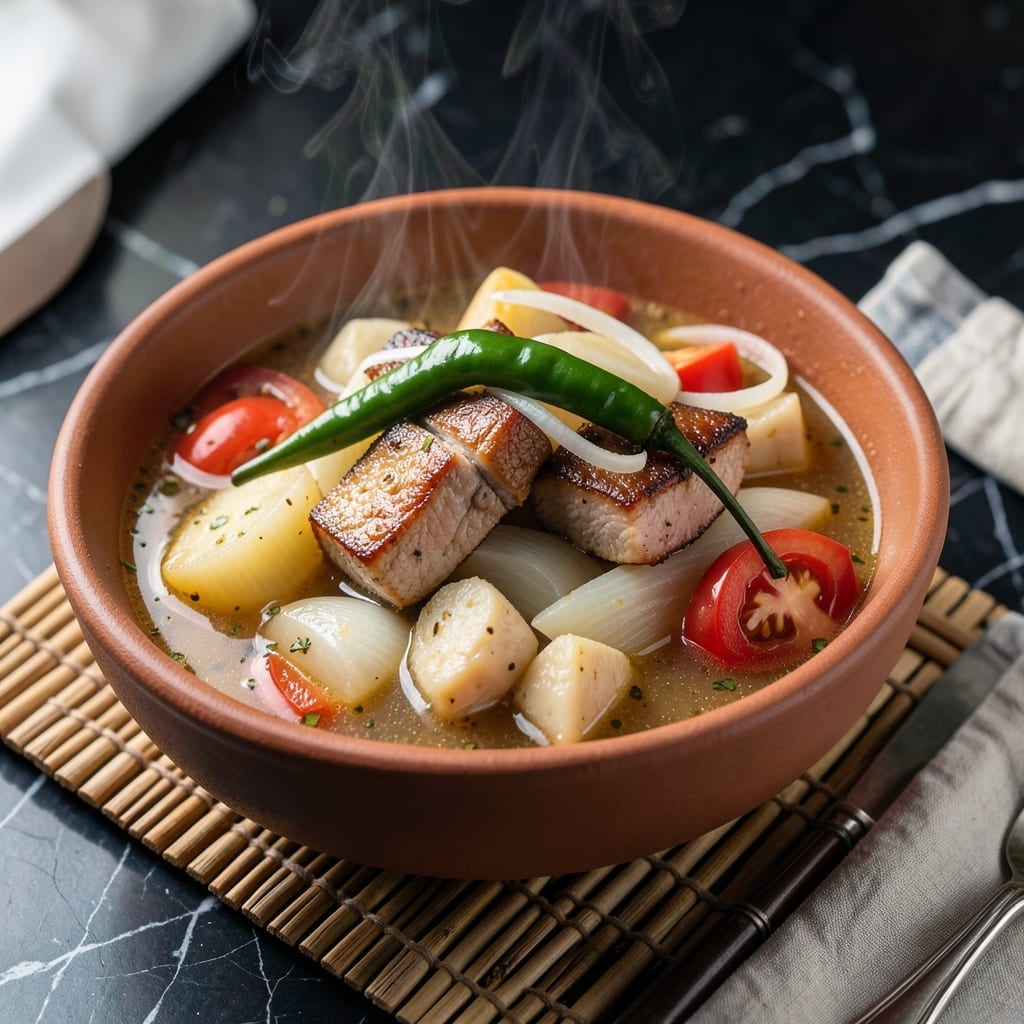
This Instant Pot version of sinigang delivers the classic Filipino sour broth with a fraction of the effort. The pressure cooker transforms tough pork into tender perfection while infusing the tamarind base with rich, tangy depth.
Traditional sinigang requires hours of simmering, but this method achieves the same complex flavors in under an hour. The key is layering the tamarind paste with aromatic vegetables and pork that practically falls apart.
You’ll end up with a steaming bowl of bright, sour broth packed with tender meat and soft vegetables. The balance of tangy, savory, and slightly sweet flavors makes this dish irresistibly comforting.
Perfect for busy weeknights when you crave authentic taste without the wait. The Instant Pot makes it effortless to achieve restaurant-quality results at home.
Ingredients for Instant Pot Sinigang
Pork, tamarind, and fresh vegetables create this bright, comforting Filipino classic instantly.
| Ingredient | Amount | Notes |
|---|---|---|
| Pork Shoulder 🥩 | 1 ½ lb | Cut into 1-inch chunks, bone-in preferred |
| Tamarind Paste 🍈 | ½ cup | Or tamarind soup base packets |
| White Onion 🧅 | 1 whole | Quartered for broth depth |
| Tomatoes 🍅 | 2 whole | Medium, quartered |
| Long Green Chili 🌶️ | 2 whole | Optional for heat (serrano works) |
| Daikon Radish 🥬 | ½ lb | Peeled, cut into 1-inch pieces |
| Taro Root 🥔 | ½ lb | Peeled, cubed (or substitute potato) |
| String Beans 🌿 | 8 oz | Trimmed, cut into 2-inch lengths |
| Okra 🥬 | 6 pieces | Whole, stems removed |
| Spinach 🍃 | 2 cups | Fresh, roughly chopped |
| Water 💧 | 6 cups | For pressure cooking liquid |
| Fish Sauce 🐟 | 2 tbsp | For umami depth (omit for vegetarian) |
| Salt 🧂 | 1 tsp | Adjust to taste |
| Black Pepper 🌶️ | ½ tsp | Freshly ground preferred |
The pork is the foundation here. Pork shoulder with good marbling breaks down beautifully under pressure—avoid lean cuts like tenderloin. Most Asian markets sell pre-cut pork for sinigang, but any butcher can cube it for you. For the tamarind, Mama Sita’s or Knorr soup base packets are foolproof if you can’t find paste. Look for tamarind with no added preservatives for the cleanest flavor.
No tamarind? Guava paste or green mangoes give that signature sour tang (adjust sweetness to taste). Daikon and taro can be swapped for russet potatoes or jicama—just keep the chunks similar in size. String beans not around? Baby bok choy or zucchini work great. The fish sauce is traditional, but soy sauce or coconut aminos can sub in a pinch for a different but still savory depth.
This tastes even better the next day once the flavors meld. Refrigerate in an airtight container for up to 3 days. The pork freezes beautifully for 3 months, but the vegetables are best fresh (they get mushy when thawed).
Why You’ll Love This Recipe
- Set It and Forget: I toss in the pork, tamarind paste, and veggies, press a button, and walk away—no babysitting required.
- Tangy Punch: The tamarind paste hits that perfect sour-savory balance, and the green chili adds just the right kick.
- Crowd Pleaser: Honestly, it’s the one dish my picky nephew and my foodie sister-in-law both beg me to make.
- Budget Stretcher: A cheap pork shoulder cut transforms into a hearty meal that feeds us for two nights straight.
Step-by-Step Instructions for Instant Pot Sinigang
Here’s the method. Straightforward, tested, works every time.
Step 1: Sauté Aromatics and Pork
Set your Instant Pot to Sauté mode. Add the 1.5 lb pork shoulder chunks and sear until lightly browned on all sides—this builds a flavor foundation. Remove the pork and set aside.
In the same pot, add the 1 whole white onion, 2 whole tomatoes, and 2 whole long green chili. Sauté for 2-3 minutes until the onion softens and the tomatoes start to break down. This step extracts the aromatics into the oil.
Step 2: Pressure Cook the Base Ingredients
Add the 0.5 lb daikon radish, 0.5 lb taro root, and the seared pork back into the pot. Pour in the 6 cups water and stir in the 0.5 cup tamarind paste. Secure the lid and set the valve to Sealing.
Cook on High Pressure for 15 minutes. The tamarind will infuse the broth with its signature tang, while the pork becomes fork-tender. Let the pressure release naturally for 10 minutes, then quick-release any remaining pressure.
Step 3: Add Delicate Vegetables
Open the lid and stir in the 8 oz string beans, 6 pieces okra, and 2 tbsp fish sauce. These vegetables cook quickly, so adding them now prevents them from turning mushy.
Set the Instant Pot to Sauté mode again and simmer for 5-7 minutes until the string beans are tender-crisp and the okra is bright green. Taste the broth and adjust seasoning with the 1 tsp salt and 0.5 tsp black pepper.
Step 4: Finish with Spinach and Serve
Turn off the Instant Pot and stir in the 2 cups spinach. The residual heat will wilt the spinach in 1-2 minutes. Avoid over-stirring to keep the leaves intact.
Ladle the sinigang into bowls, ensuring each serving has a mix of pork, vegetables, and that rich, tangy broth. The pork should be fall-apart tender, and the broth should have a balanced sourness with a hint of umami from the fish sauce. Serve hot with steamed rice.
Pro Tips For Making Instant Pot Sinigang
- Sear the Pork: I learned this the hard way—browning the pork shoulder in batches for 2-3 minutes per side before pressure cooking adds a depth of flavor that skipping this step just can’t match.
- Bloom the Tamarind: Sauté the tamarind paste with the onions and tomatoes for 1-2 minutes before adding liquid. It mellows the sharpness and blends the sourness into the broth better.
- Don’t Overfill: Resist the urge to max out the Instant Pot. Fill it no more than halfway, especially with pork and veggies, or you’ll risk a messy, incomplete cook.
- Use Ripe Tomatoes: Sounds obvious, but underripe tomatoes stay hard and sour. Pick the softest, reddest ones you can find—they’ll melt into the broth and sweeten the tamarind.
Flavor Customization for This instant pot sinigang
Sour Level Adjustments
For a more intense tang, add an extra 2 tbsp tamarind paste after pressure cooking. I often taste and adjust at this stage. If you prefer a milder sourness, start with ⅓ cup tamarind and add more gradually. 💡
Vegetable Variations
Swap daikon radish for russet potatoes for a heartier texture. I love using baby bok choy instead of string beans for a milder flavor. For extra color, add 1 cup sliced bell peppers with the tomatoes.
Protein Swaps
Try 1.5 lb beef shank for a richer broth—it needs 20 minutes pressure cooking. Shrimp works too: add 1 lb peeled shrimp in the last 3 minutes of sautéing. For vegetarians, 1 lb firm tofu cubes absorb the broth beautifully.
Spice Control
Remove seeds from the long green chili for mild heat, or add 1 chopped Thai chili for serious spice. I also love a dash of chili garlic sauce stirred in at the end. Remember, the tamarind itself adds a tangy kick that balances the heat.
Umami Boosters
Enhance depth with 1 tbsp oyster sauce or 1 tsp shrimp paste cooked with the aromatics. For a seafood twist, add 4 dried shrimp to the sauté step. These small additions make the broth taste more complex and restaurant-style. 🌟
Herb Finishes
Stir in ¼ cup chopped cilantro or Thai basil at the end for freshness. I sometimes add 1 stalk lemongrass (bruised) during pressure cooking for a citrusy aroma. Remove it before serving to avoid tough bits.
Nutrition Facts
Frequently Asked Questions
Can I use a different souring agent instead of tamarind?
Yes! Green mangoes or guava paste work well for tang. Start with 1 cup and adjust to taste.
How do I prevent the vegetables from turning mushy?
Add delicate veggies like spinach and okra last. Cook them for only 5-7 minutes on Sauté mode.
What if my broth isn’t sour enough?
Stir in extra tamarind paste 1 tbsp at a time after pressure cooking. Taste as you go.
Can I make this vegetarian?
Swap pork for 1 lb firm tofu or mushrooms. Use vegetarian fish sauce or soy sauce.

- 6 Oz Chocolate Chip Cookie Recipe: Perfectly Balanced Crispy Edges and Chewy Hearts - September 25, 2026
- 6-Inch Coffee Cake Recipe: Vanilla Bean Swirls and Buttery Streusel Topping - September 25, 2026
- 1 Hour Soup Recipe: Velvety Richness Without the Wait - September 25, 2026